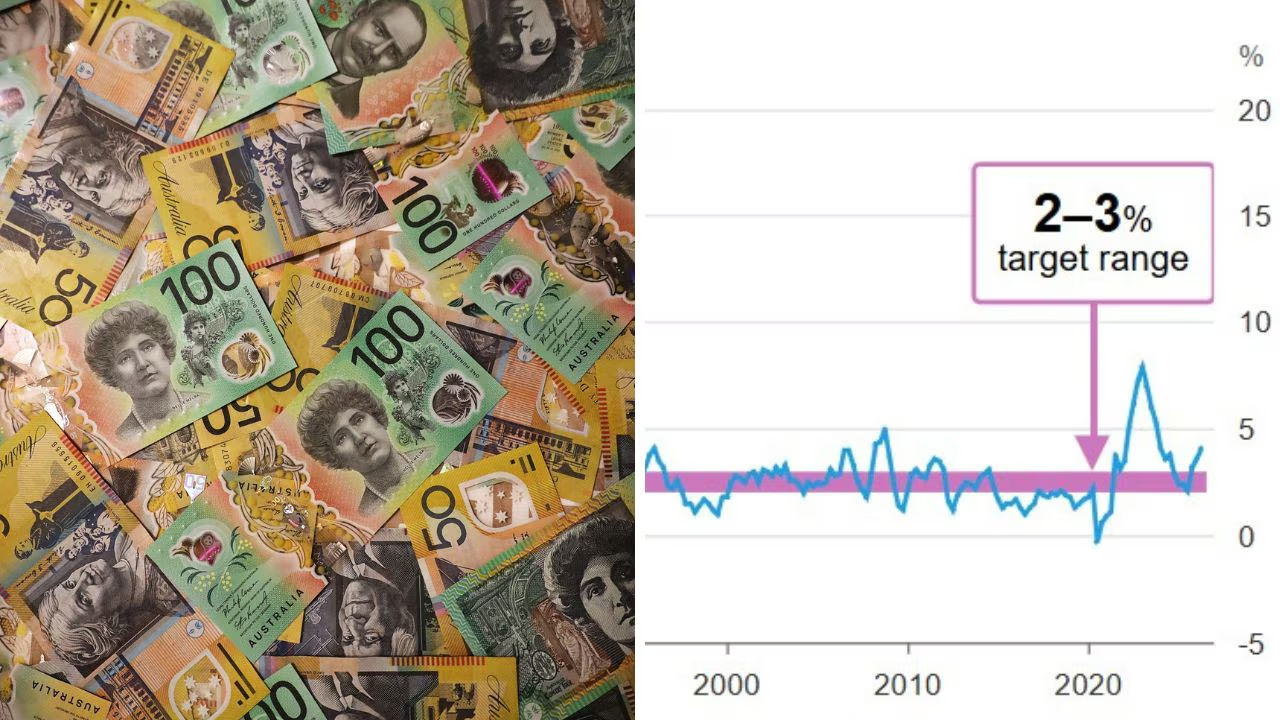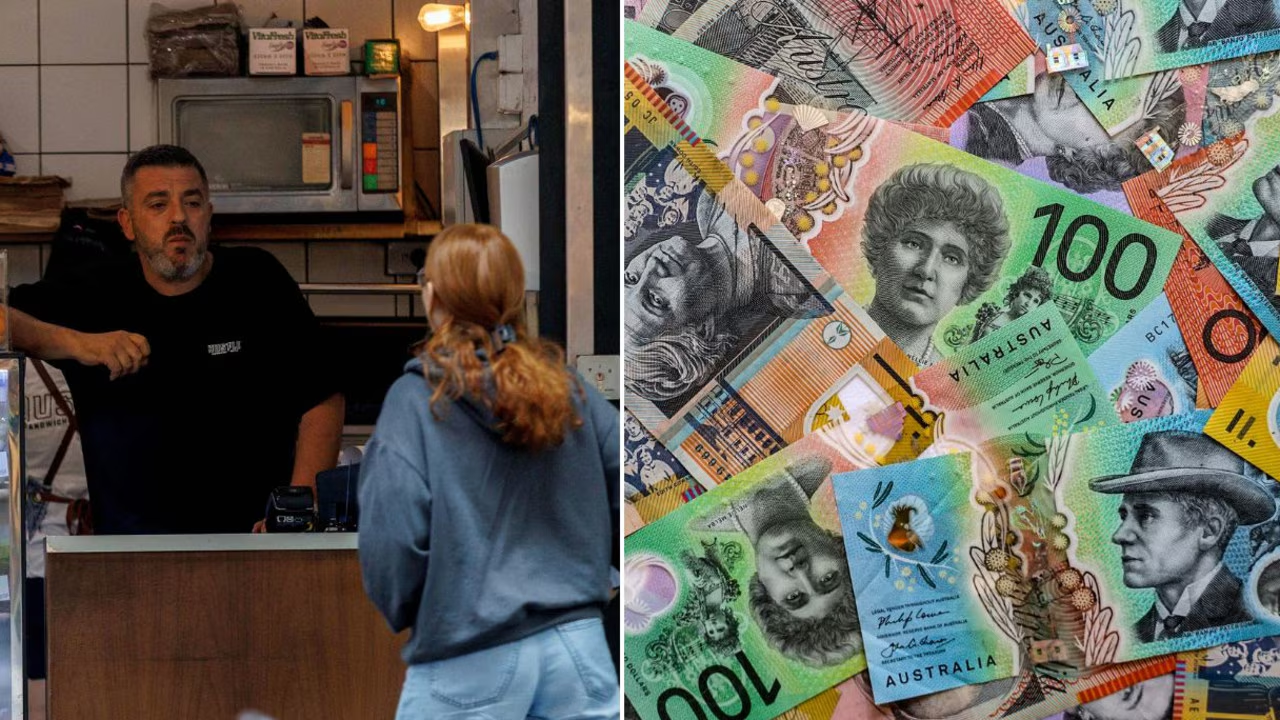
The average Australian full-time worker is now earning less in real terms than a year ago - as new figures reveal wage growth was outpaced by inflation for the first time in years.Households are slipping into negative income territory as inflation remains high and annual earning growth marks the lowest increase since November 2022. New Australian Bureau of Statistics (ABS) data released on Thursday revealed the average full-time Australian worker made $2083 in May 2026, marking an annual growth of 3.7 per cent. In the same time period, inflation rose to 3.8 per cent, essentially marking reverse growth for the everyday worker. AMP chief economist Shane Oliver said the “natural” reaction to these numbers would be to “demand high wages growth”. “But if that occurs in the absence of stronger productivity, that could just mean more inflation and we don’t solve the problem when we just end up chasing our tail,” he told NewsWire. “If I could see stronger productivity occurring in the economy, then it would worry me so much... but we don’t have decent productivity growth in the country.”“In other words, businesses having to pay say 3.7 per cent (in wages), but workers delivering more than that just results in cost pressures for the business which they then pass on as higher prices.” The ABS revealed growth in average weekly earnings for full-time adults for the six months to May 2026 was 1.6 per cent, signifying the lowest six-monthly increase since May 2022.The data showed the public sector rose by 2.3 per cent, proving stronger than the 1.4 per cent growth achieved by the private sector. With rising costs biting at everyone’s heels, Dr Oliver said these figures indicate what has been a tough time for the average household.“The main reason that an Australian might regard this as relevant is that it highlights the cost of living pressures,” he said. “I think the inclination of the average Australian would be to think, well, we need to get paid more, and therefore to demand higher paid rises.” “It’s natural for people to want a high wage rise. As an economist, I worry that if we all demand high wages and it’s not backed up by productivity, then it just adds to prices.”This comes after the Reserve Bank’s decision to hold the cash rate at 4.35 per cent after three rate hikes earlier in 2026. The widely predicted move was described as “hawkish” with the RBA warning it won’t hesitate to hike rates again if needed. In a statement the board said the impact of the US-Iran war on inflation had been less than expected, although headline inflation remained too high. Dr Oliver recommended workers should strive to “upskill” amid stalling wage growth and said there’s “no easy solutions” during this “difficult time”.“If workers can retrain themselves and get a higher skill level and that’s probably the way to get a higher wage over time,” he said. The senior economist also warned if “businesses see their margins under more pressure over time as a result of wage growth” then “they could start slowing down their hiring”. The Fair Work Commission increased Australia’s national minimum wage by 6 per cent which came into effect on July 1, 2026. The new rate is now $26.44 per hour which crossed the $1000 total weekly income threshold for the first time.
Harsh reality of Aussies wages revealed
The average Australian full-time worker is now earning less in real terms than a year ago - as new figures reveal wage growth was outpaced by inflation for the first time in years.
557 words~3 min read