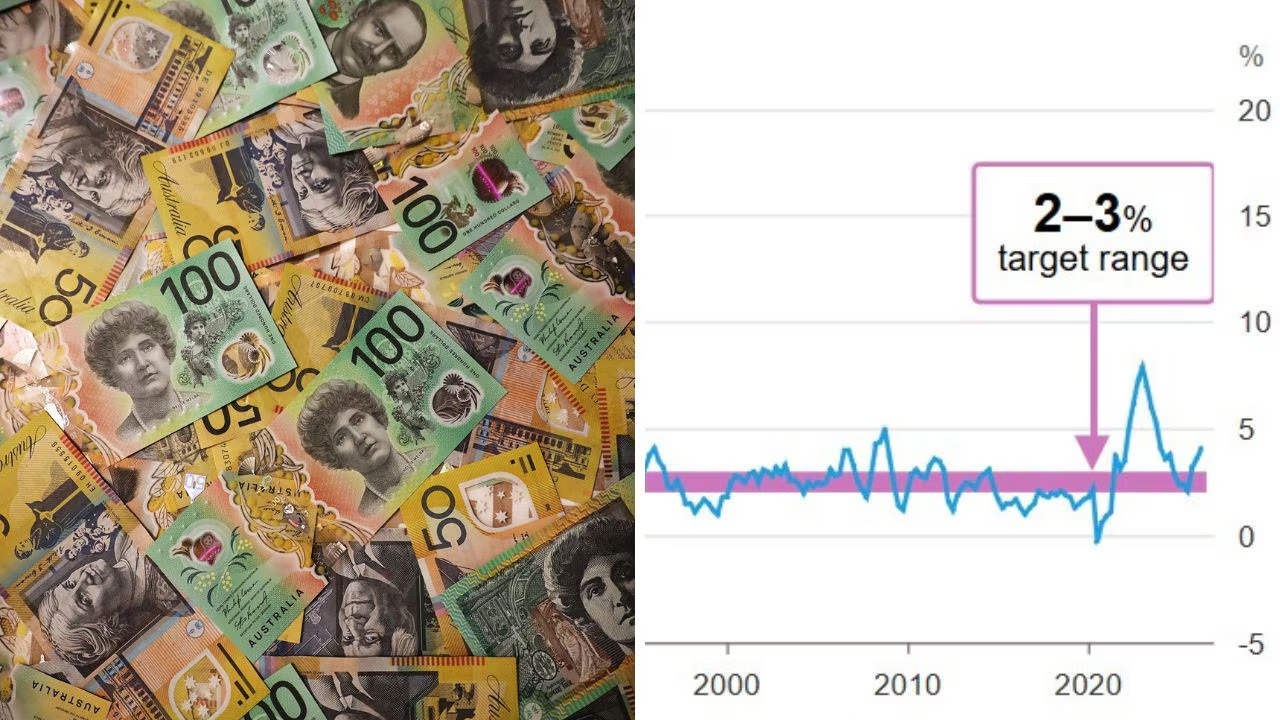
Aussies are piling a record amount of cash into savings accounts and term deposits, only to make a “guaranteed loss” as high inflation eats away at their wealth, a fund manager warns.The average return for online savings accounts was 3.10 per cent per annum last month, while bank term deposits sat at 3.6 per cent, according to Reserve Bank of Australia (RBA) figures.Both investments yielded less than the headline inflation figure of 4 per cent, meaning they grew more slowly than prices rose across the economy. Trilogy Funds Head of Direct Property Laurence Parisi told news.com.au that the yield on savers’ money was “below zero after accounting for inflation”. “Putting your money into either a bank savings account or a term deposit isn’t going to protect or grow your wealth with inflation at 4 per cent,” Mr Parisi said. “It’s a guaranteed loss in real terms with inflation remaining stubbornly high.”Bonus savings accounts, which provide a higher interest rate when you meet conditions such as a minimum monthly deposit, did beat inflation with an average 4.8 per cent rate.But the Australian Competition & Consumer Commission (ACCC) found in 2023 that the majority of bonus savings accounts — 71 per cent — didn’t actually receive the rate because they failed to meet their conditions. It comes as cash and term deposits reached a record $2 trillion, or 10 per cent of total household wealth in the March quarter, as Aussies cautiously stockpiled funds amid economic uncertainty.“Cash, while often considered a defensive investment, does not offer effective protection against elevated inflation, which we are seeing in Australia today,” said Mr Parisi, who argued that commercial property — a focus of Trilogy Funds — was an asset class that could provide stable income and long-term capital growth.“Investors may need to consider reallocating some of their cash investments to other income investments to outpace inflation, which the RBA expects will remain relatively high over the remainder of the year given the war in the Middle East.” But Glen James, personal finance educator and host of the money money money podcast, offered a different view. Cash might net a real return below zero in “some economic cycles” but “that’s okay, as long as we understand what we’re dealing with”, Mr James told news.com.au.“As a general rule in personal finance, we need cash at hand for emergencies, and we need cash for short-term goals like holidays or other savings targets over the years,” he said.“I wouldn’t invest in growth assets without at least a five-to-seven-year time horizon, so for that money, cash is exactly where it should be.”Mr James said cash such as an emergency fund should not be invested in the sharemarket to chase a better return, because that would make it less liquid in case it was needed. “The whole purpose of an emergency fund is to be in cash and at call,” he said.“The real effect of inflation on that money is simply the cost of doing business in this life. “Think of it as the cost of an insurance policy for having your own cash ready when you need it.”Aussies who were cash heavy and genuinely wouldn’t need that money within the next four to five years, however, “really need to make sure it’s put to work”.“In the moment you might not feel the impact of inflation, but the textbook is right that you’re slowly losing buying power. “The key is always having some plan or strategy for your money. Investing in growth assets is a hedge against inflation.”In response to questions, Australian Banking Association CEO Simon Birmingham said there were “plenty of savings and term deposit products on the market offering higher rates than inflation”. “Always check the terms and conditions on your account to make sure you are maximising your rate of return and also talk to your bank to see if they can offer a better rate,” Mr Birmingham said.“It could pay to shop around, compare what’s on offer and make sure your savings are working as hard as you are.“In the year to March 2026, Australian banks paid $128 billion in interest on deposits and banks will continue to support customers to make the most of their savings.”Average interest rates for cash in June (source: RBA)Online savings accounts: 3.6 per centBonus savings accounts: 4.8per centBanks’ term deposits (all terms): 3.6 per cent
‘Below zero’: Returns from savings, term deposits turn negative as inflation soars
Aussies are piling a record amount of cash into savings accounts and term deposits, only to make a “guaranteed loss” as high inflation eats away at their wealth, a fund manager warns.
724 words~3 min read