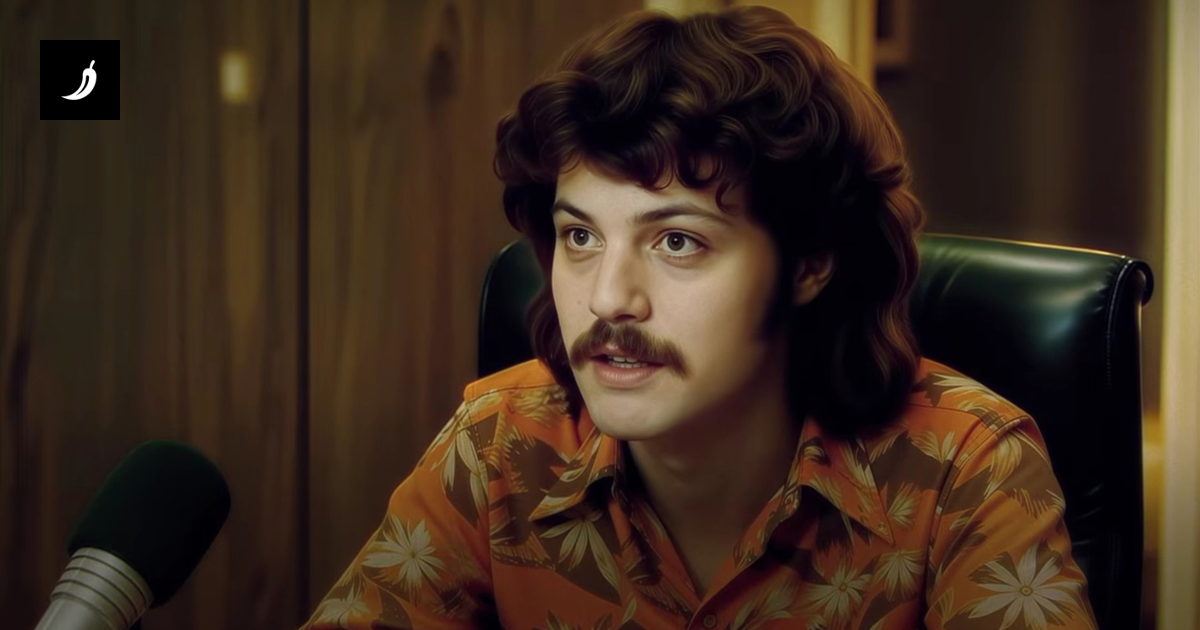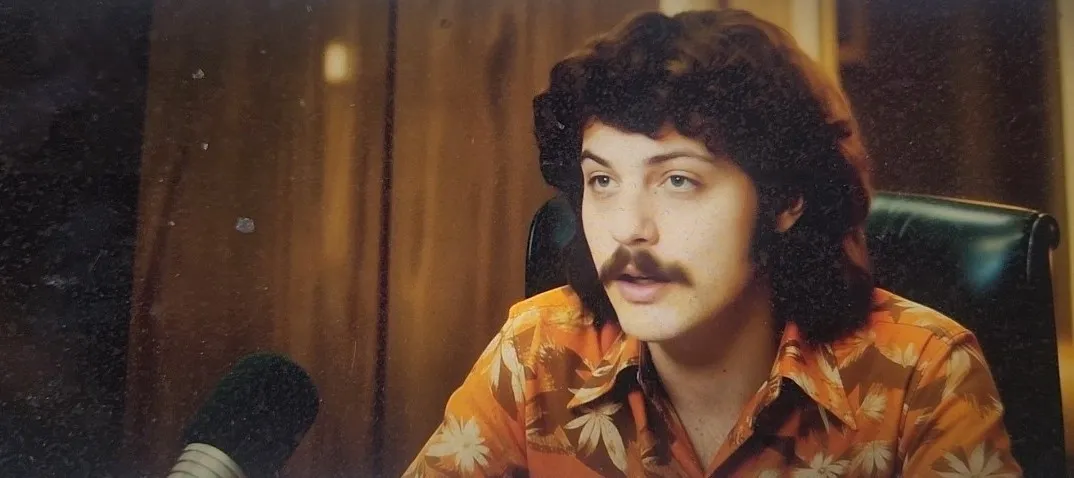
About a year ago, a Los Angeles man named Adam Ripp got a call from Irwin Mazur.Mazur is the first manager of Billy Joel who had a famous falling out with the star. He was calling his pal Ripp, a filmmaker, with a piece of early Billy content — one he said he’d be free and clear to use.The content was a long-lost extended interview that a 22-year-old pre-“Piano Man” Joel gave at the college radio station of Long Island’s C.W. Post in 1971 with Mazur at his side. The student who conducted the hour-long session, Ed Mann, was Mazur’s cousin. He recorded it himself, Mazur told Ripp, and so owned the masters and thus, it seemed, the rights. And now Ripp, who has his own contentious family connection to Joel, had both Mann and Mazur’s blessings to make a movie with it.Ripp decided to do exactly that. But rather than simply use animation, talking heads or archival footage over the audio, he chose to go another way: he would use AI to re-create both Joel and the scene in the college-radio studio. So drawing off photos Mazur and others at the time took (and owned), he enlisted a Canadian AI company and had them trained on only those photos.The result is a 20-minute artifact for which this writer, at least, struggles to find comparison: a young American icon as a machine imagined he looked and moved then, with the audio of the words he can and did say. Titled 1971: Billy Joel’s Lost Interview, the doc will premiere at the Long Island Music and Entertainment Hall of Fame on September 25 as part of the organization’s Music Documentary Film Festival and is seeking further distribution.“There were many ways we could have gone, but the tools have gotten so good it seemed like a missed opportunity not to try to re-create Billy so we could really get a sense of how he moved and looked like,” Ripp told The Hollywood Reporter. (You can see an AI still from the film above and watch a teaser of the young AI-generated Joel below.)Artistically, the film provides a head-spinning portrayal of what an artist we don’t have much candid early video of might have looked like. Culturally, it raises, in a surprisingly visceral way, that decidedly 2020’s-era question of who controls an artist’s legacy when anyone with an idea and access to some tools can have a say in it. (Though these people are not just anyone; more on that momentarily.)
A Man Secured a Lost Billy Joel Interview. Then He Re-Created the Singer in AI. (Exclusive)
The strange story of an AI Billy Joel project that the icon had nothing to do with and likely is unhappy about
1,489 words~7 min read