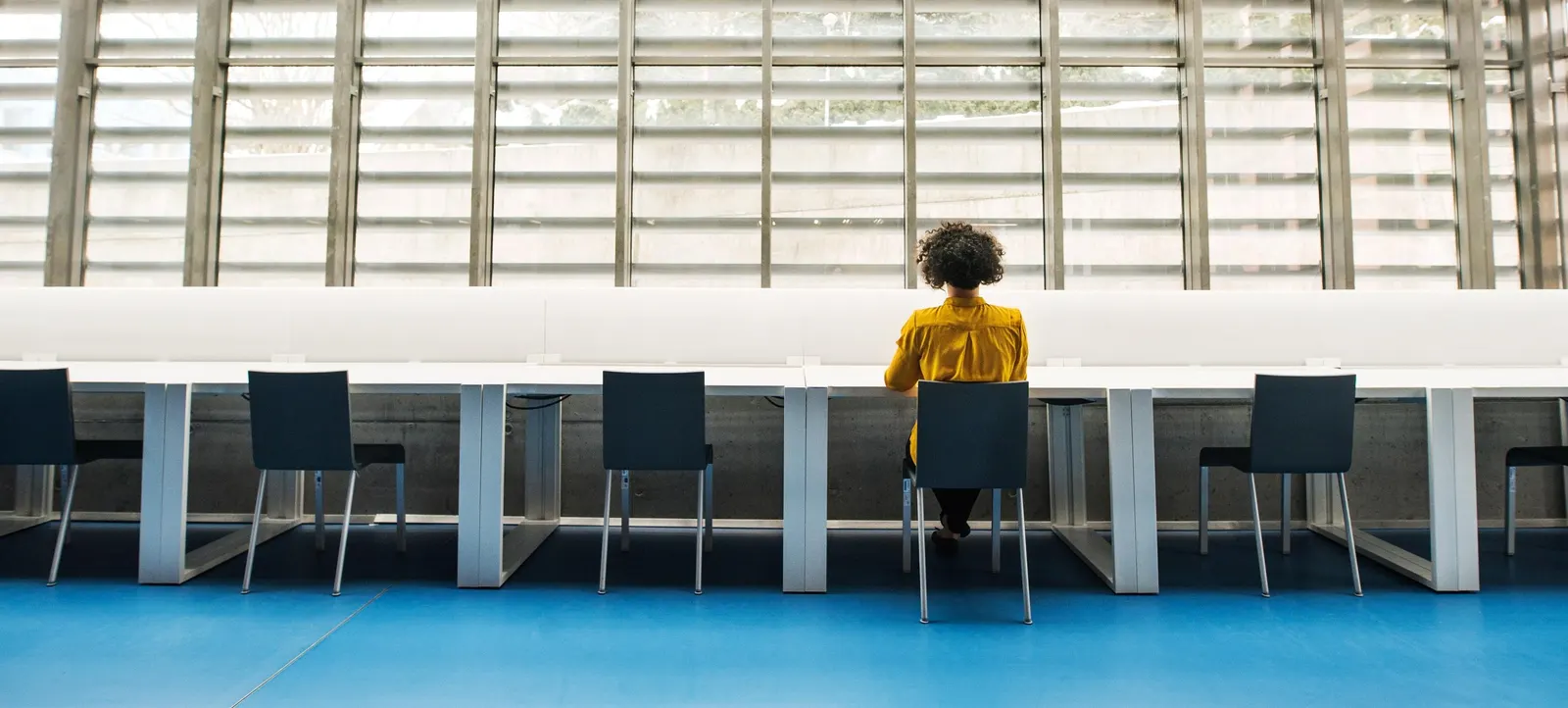
If employees can perform effectively elsewhere, counting occupied desks tells leaders remarkably little.gettyA curious thing happens in offices whenever the weather becomes unusually good.The desks empty.Someone suggests moving the afternoon meeting online. The office WhatsApp chat fills with photographs of laptops in gardens. By lunchtime, a building designed for hundreds of employees can feel strangely abandoned while work continues perfectly well from kitchens, patios and anywhere else with Wi-Fi.For executives, there is an obvious question hiding inside that scene: Why are we paying for all this space?It is a reasonable question. Commercial real estate is expensive, hybrid work is established and employees have demonstrated that much knowledge work can happen almost anywhere. An empty office on a sunny Wednesday can look like particularly compelling evidence that firms should shrink their physical footprint.But perhaps we are drawing the wrong conclusion from empty desks.Occupancy Is A Surprisingly Poor Measure Of ValueFor most of the twentieth century, offices had a simple purpose. They were where work happened. If employees weren’t there, in many cases neither was the work.Technology broke that relationship.A financial analyst can build a model at home. A lawyer can review documents from a coffee shop. A marketing team can hold a meeting across four countries without anyone sharing a room. Once work became portable, organizations began confronting an uncomfortable mismatch between the buildings they owned and the behavior of the people using them.Research on hybrid working has made the picture more complicated rather than less. That matters because it challenges an assumption behind many return-to-office debates: that more office attendance must produce better organizational outcomes.It doesn’t necessarily follow.If employees can perform effectively elsewhere, counting occupied desks tells leaders remarkably little. A half-empty office could represent wasted money. It could also represent a workforce being given sensible autonomy.The numbers look identical. The firms may be completely different.People Don’t Need An Office Every Day. They Need It On The Right DaysThis is where the debate about remote versus office work becomes unnecessarily binary.There are days when working from home is simply better. Writing a report, analyzing data or preparing a difficult presentation may benefit from several uninterrupted hours away from conversations and meetings. Commuting an hour to sit at a desk wearing headphones while joining virtual calls with colleagues elsewhere is difficult to defend as an efficient use of anyone’s time.There are other days when being together matters enormously.Research examining collaboration has found that remote working can make communication more siloed, with employees interacting with a narrower group of colleagues. That doesn’t mean remote work fails. It suggests that some of the interactions organizations value are harder to engineer digitally, particularly the weak ties and unplanned encounters that connect people outside their immediate teams.Think about how much organizational knowledge travels informally. Someone overhears a problem and knows exactly who can solve it. A junior employee watches how a senior colleague handles a difficult conversation. Two people continue talking for ten minutes after a meeting and discover that their projects overlap.Nobody schedules these moments.That is partly why they matter.The office may therefore be becoming less important as a place to complete work and more important as a place where relationships around work are formed.Stop Asking Employees To Come In Without Giving Them A ReasonThe quickest way to make employees resent an office is to require them to attend one simply because the organization owns it.People notice pointless presenteeism immediately. If someone spends money commuting into a city only to participate in six Teams calls they could have joined from home, telling them that office attendance is important for “collaboration” is unlikely to be persuasive.Research into autonomy at work consistently finds that giving people meaningful control over how they perform their jobs is associated with stronger motivation and wellbeing. That makes rigid attendance mandates particularly interesting. An organization may gain a fuller office while simultaneously weakening something far more valuable: employees’ sense that they are trusted to make sensible decisions.There is a better approach.Make the office worth attending.Put collaboration, mentoring, difficult discussions and relationship-building on days when people are together. Protect other days for focused work. Give teams some influence over the rhythm rather than assuming one policy will suit accountants, designers, salespeople and software engineers equally well.The question for leaders shouldn’t be, “How do we get people back?”It should be, “What would make being together worth the journey?”Maybe An Empty Office Isn’t The ProblemThere is still a financial reality here. Firms paying enormous rents for buildings that remain almost permanently empty should obviously question whether they need so much space. Hybrid working may ultimately require smaller offices, different leases and buildings designed around collaboration rather than rows of individual desks.But utilization deserves more sophisticated thinking than dividing the number of employees present by the number of available chairs.Consider the almost empty office on a beautiful summer afternoon. Perhaps dozens of employees really are sitting in their gardens. If their work is getting done, customers are happy and teams are performing, it is difficult to argue that filling the building would automatically improve anything.Then imagine the same office two days later, busy because a team is launching a project, new employees are meeting colleagues and managers are having conversations that work better face-to-face.The building has not changed.Its purpose has.That may be where the future of the office is heading. We spent decades treating offices as containers for workers and then became surprised when employees questioned why they needed to be contained.Research increasingly suggests that the real advantages of being together concern connection, collaboration and learning rather than simply occupying the same building. If that is right, the successful office of the future may sometimes look surprisingly empty.Perhaps leaders should become less concerned about whether employees are sitting at their desks and much more interested in what happens when they choose to come through the door.
Why The Office May Matter Most When Nobody Wants To Be There
An empty office doesn’t necessarily mean wasted space. Here’s why hybrid work is changing the purpose of offices from attendance to connection and collaboration.
971 words~4 min read