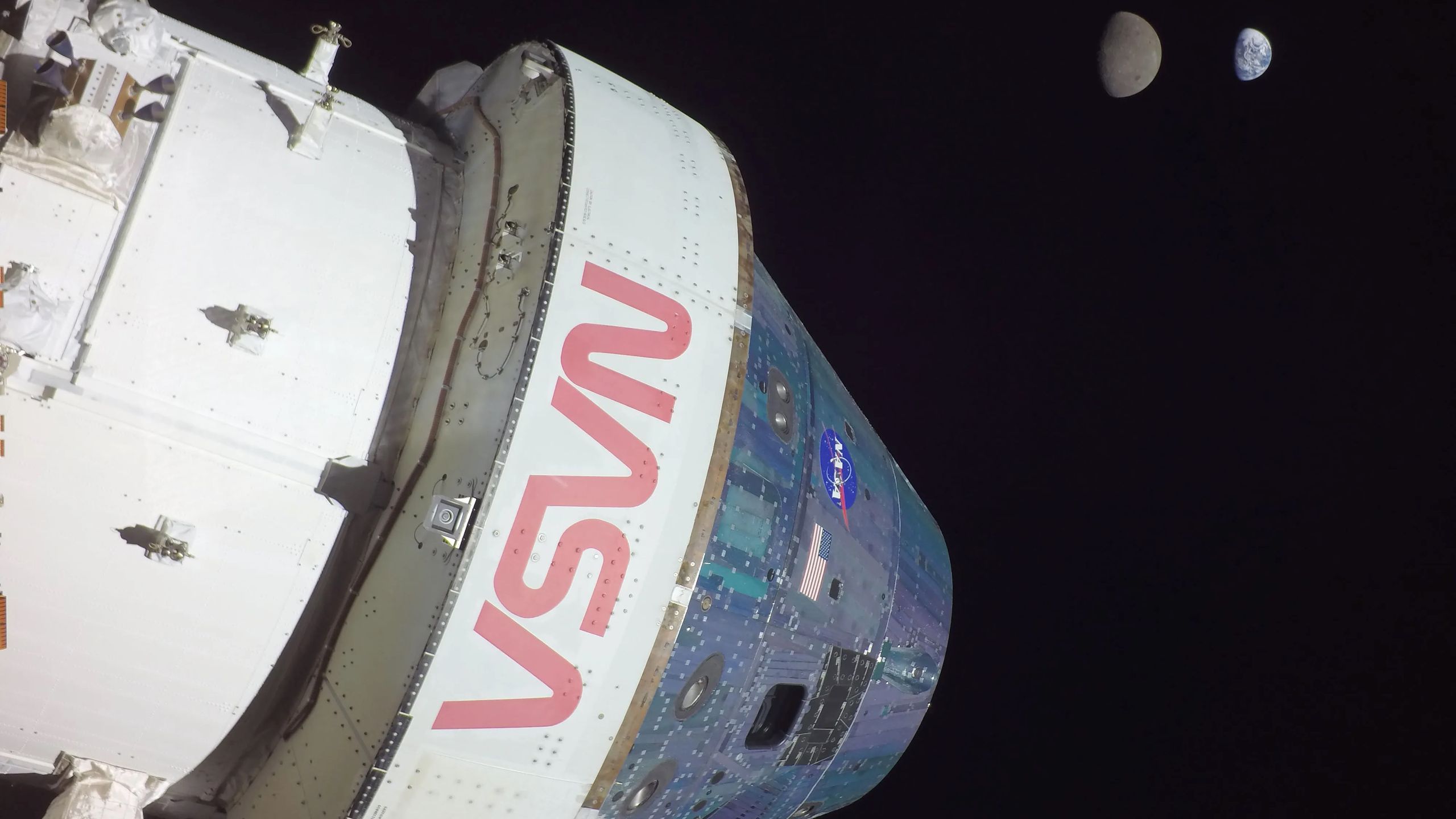
NASA's uncrewed Orion spacecraft, seen during the Artemis I mission to lunar orbit in late 2022.
(Image credit: NASA)
A radiation-shielding vest might one day protect astronauts from dangerous, random outbursts from the sun, a new study finds.More than 50 years after the final Apollo mission, NASA's Artemis program aims to return humans to the moon. To succeed, this project must protect astronauts from solar radiation, especially the intense and unpredictable radiation from solar storms. Coating an entire spacecraft with a meaningfully thick layer of radiation shielding remains impractical due to weight constraints, but wrapping astronauts in protective garments may potentially be helpful.In the new study, researchers experimented with the AstroRad vest, which was designed by the Israeli startup StemRad with support from the Israel Space Agency and aerospace giant Lockheed Martin. The garment was created to protect astronauts from explosions from the sun known as solar particle events.
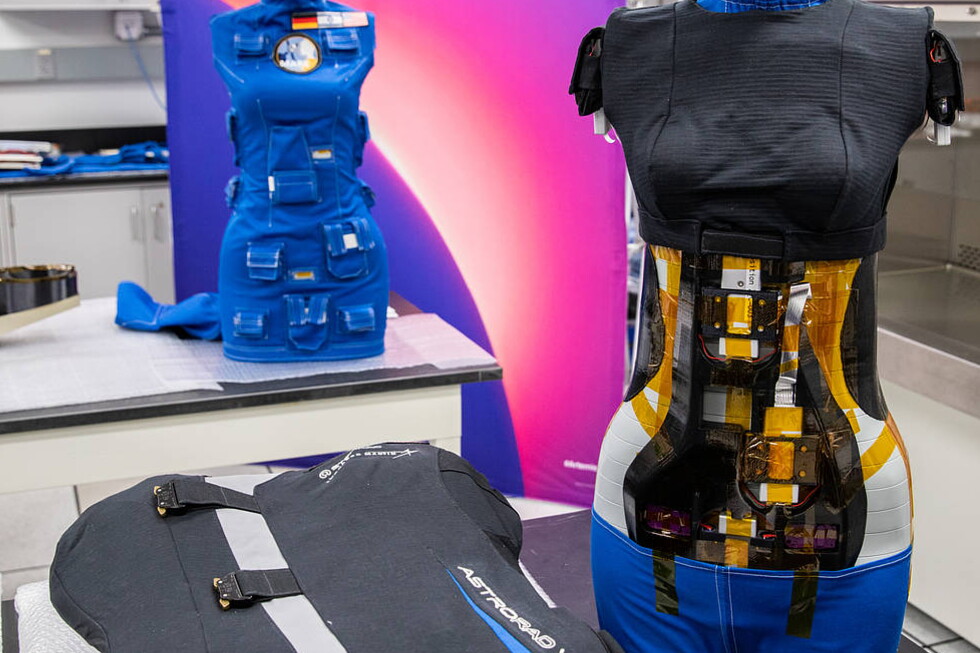
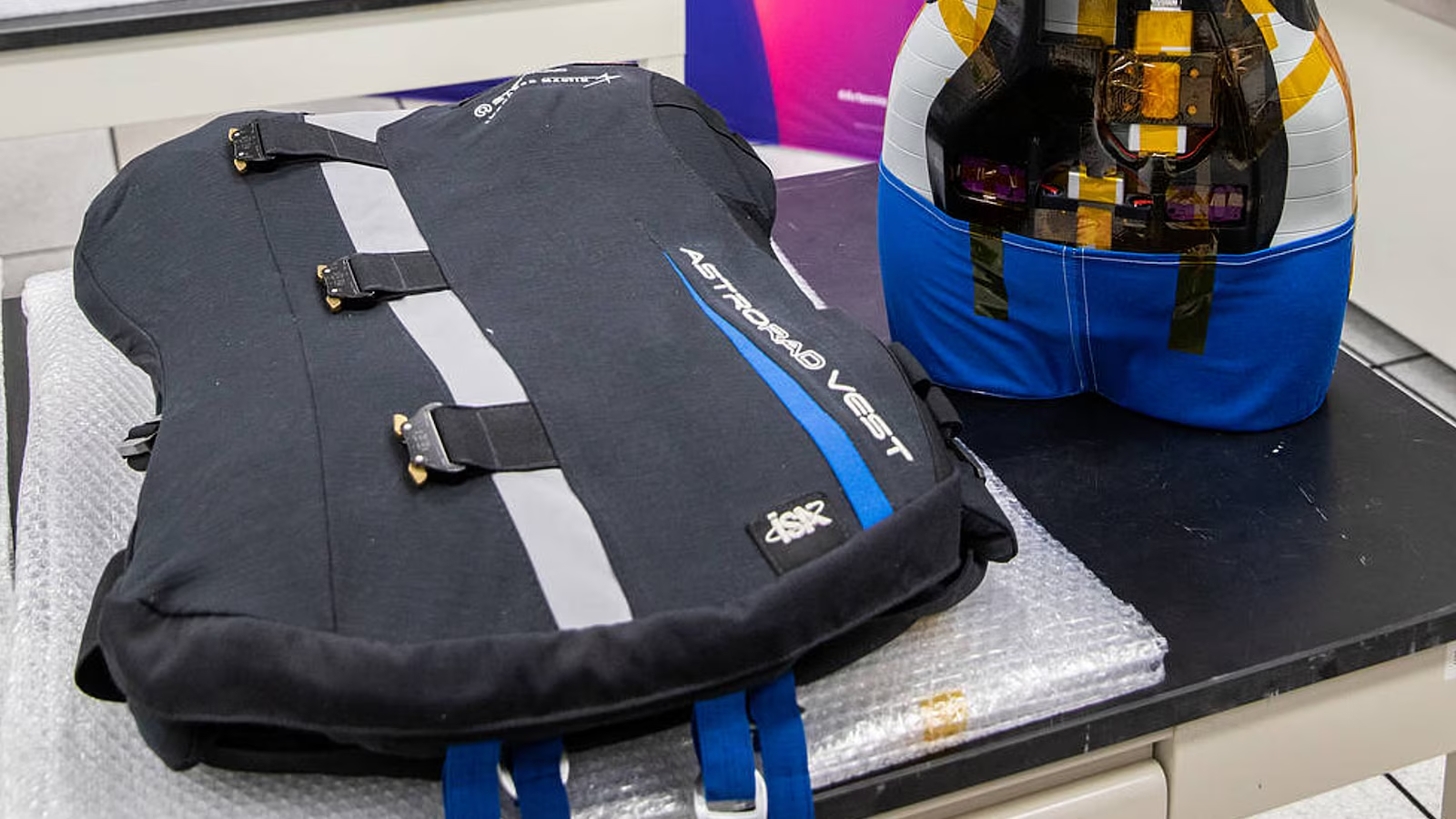
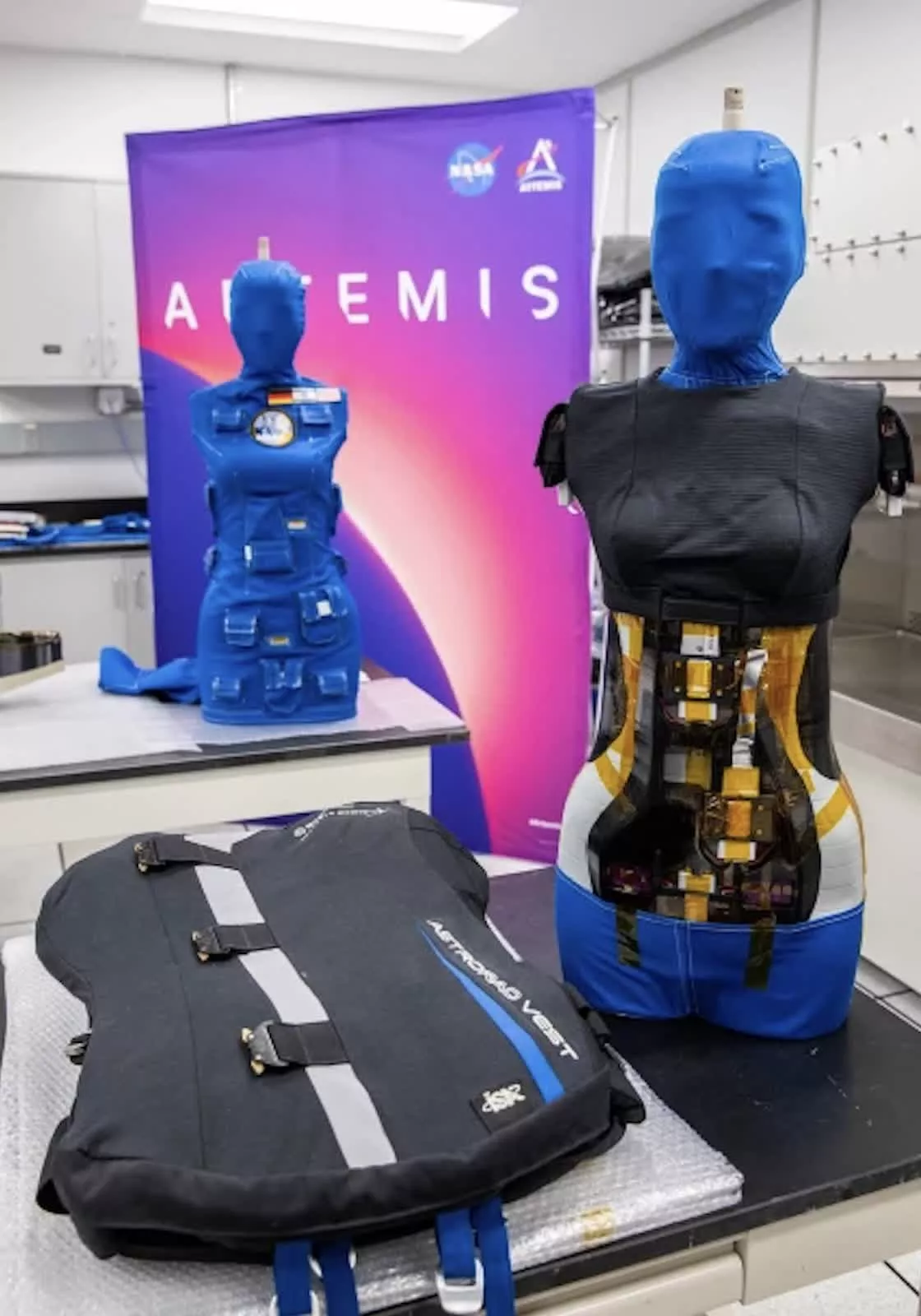
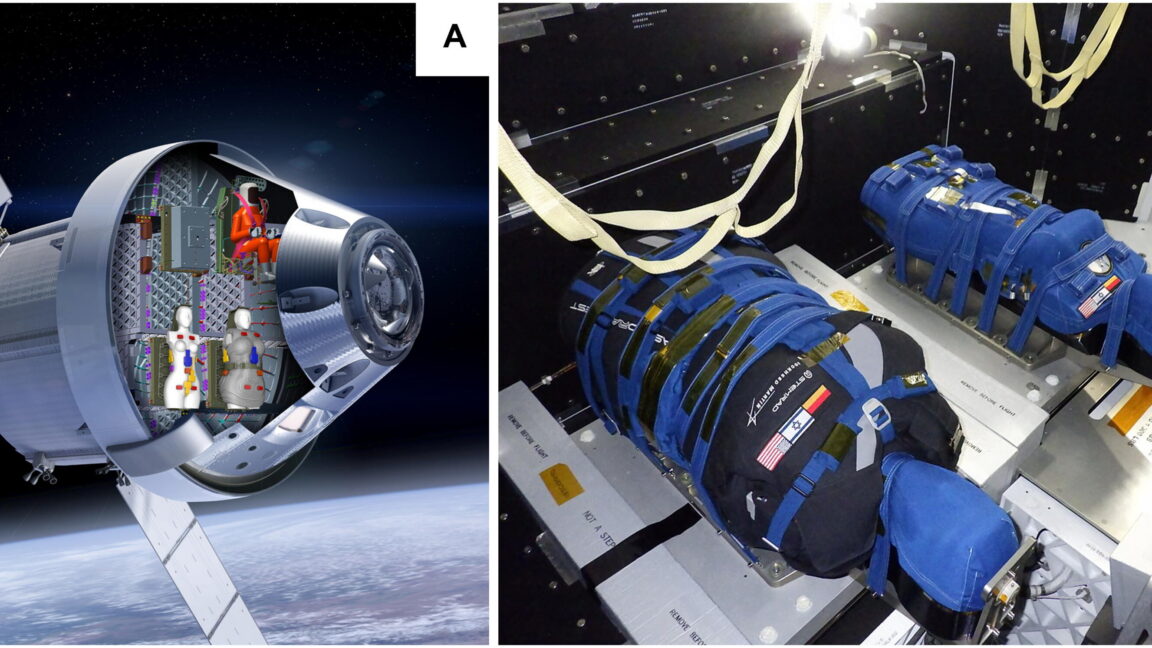
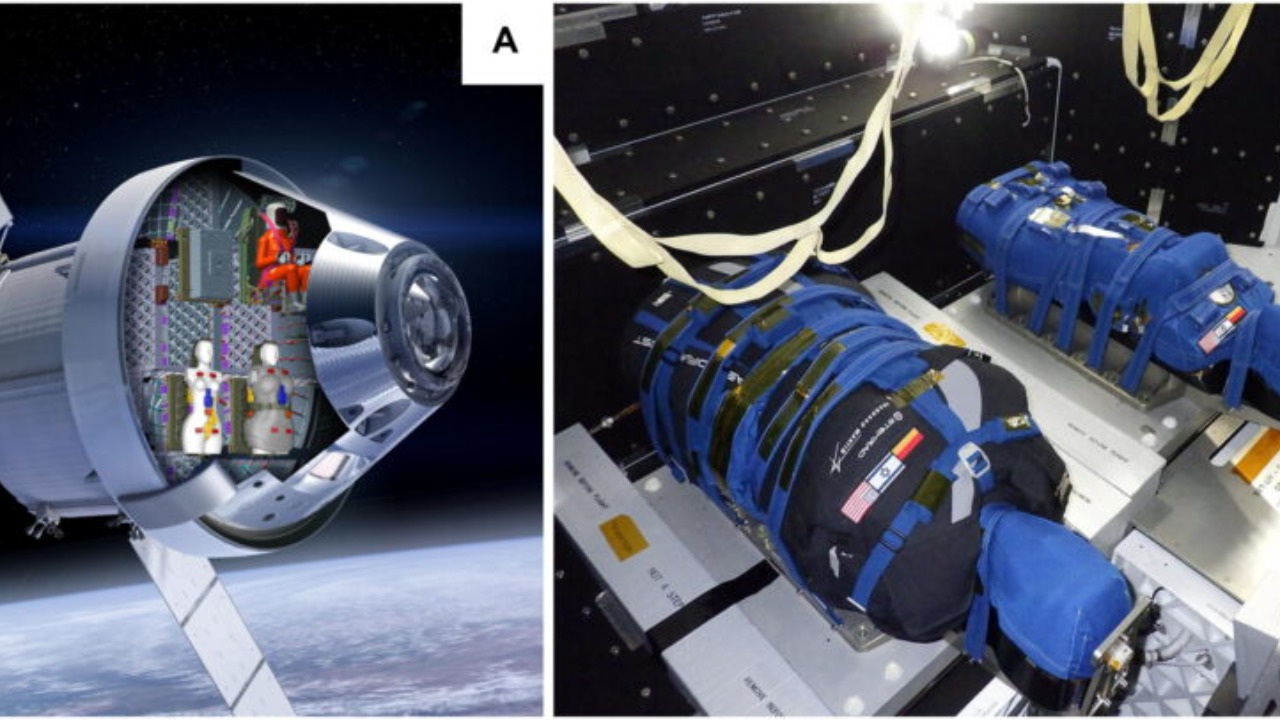
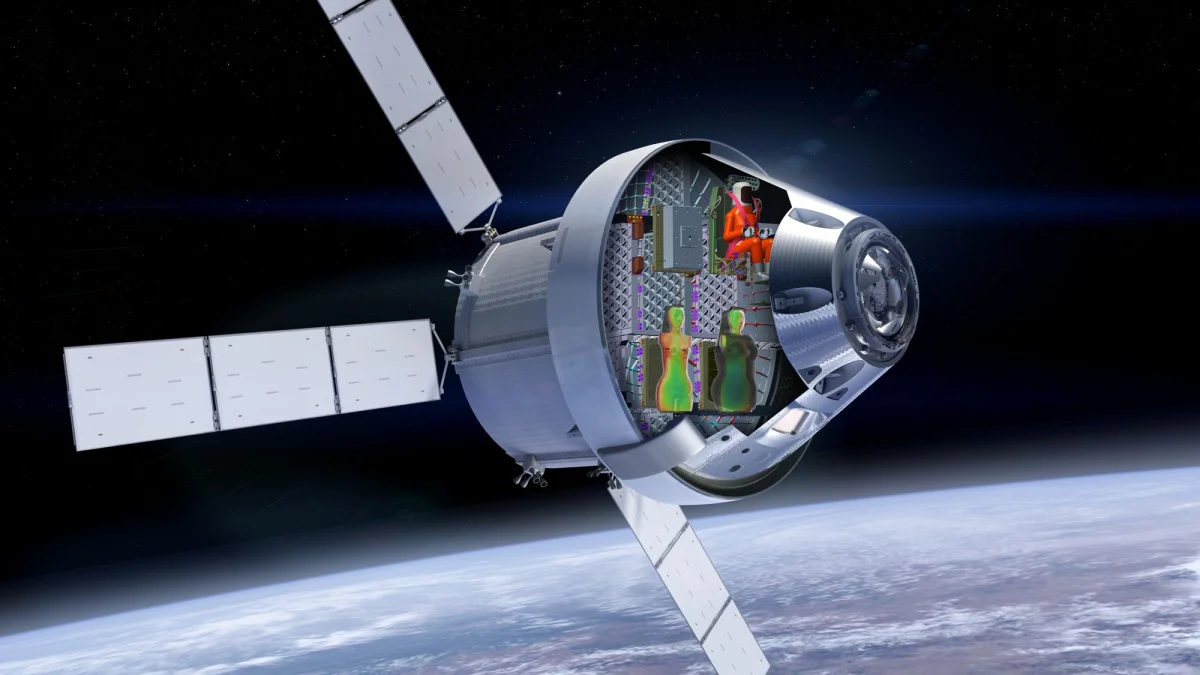
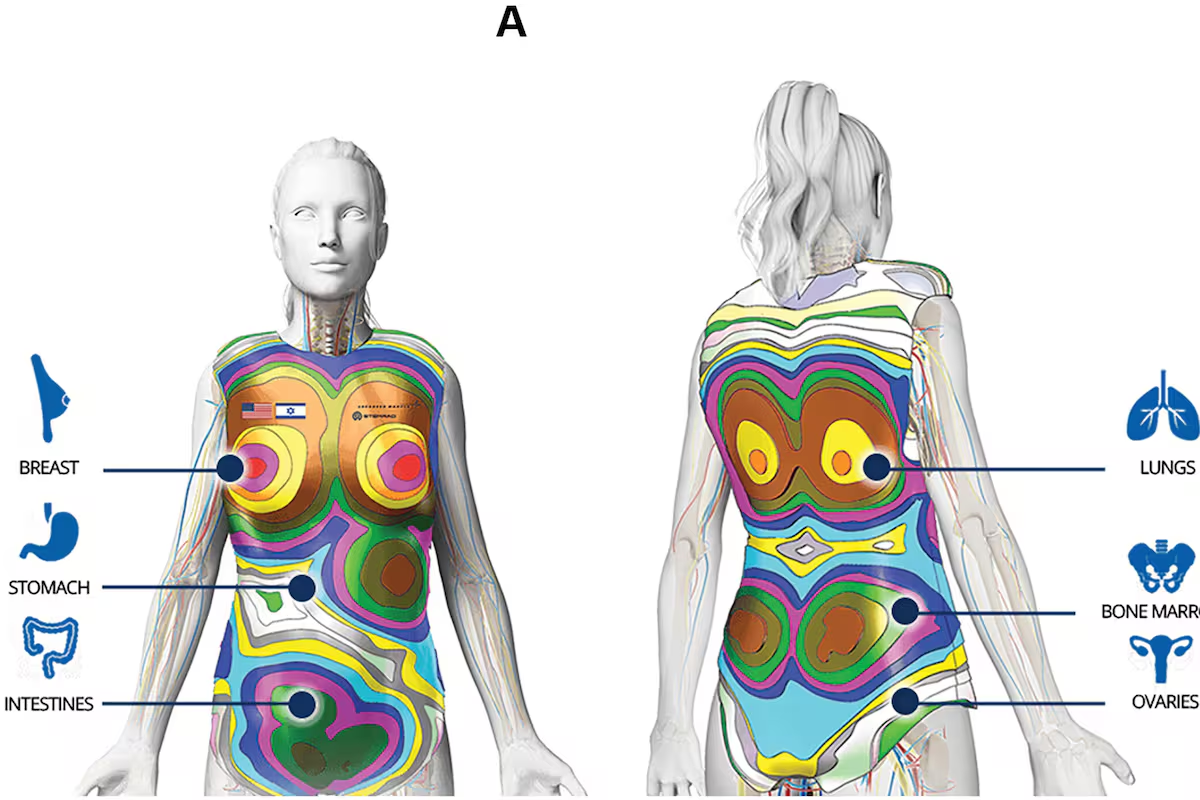
The "phantoms" Helga and Zohar inside the Orion spacecraft at NASA's Vehicle Assembly Building prior to the launch of Artemis I. Zohar, right, wore the AstroRad vest while Helga did not. (Image credit: NASA/Lockheed Martin/DLR)"Radiation in space is unavoidable, and a single major solar particle event can make a substantial contribution to an astronaut's lifetime risk of radiation-induced cancer," study co-author Oren Milstein, CEO and co-founder of StemRad, told Space.com. "By significantly reducing that contribution, personal shielding could be particularly important for future lunar and Mars missions."When it comes to protection against radiation, lead is excellent at blocking hazardous forms of light, such as X-rays and gamma rays. However, lead is much less effective at defending against the kinds of dangerous particles that can hurtle through space. For instance, when fast high-energy electrons known as beta particles strike dense lead atoms, they can trigger a shower of X-rays that are more harmful than the beta particles themselves. And if neutrons strike lead atoms, they can knock loose a spray of neutrons from the atoms' nuclei, worsening the impact from the radiation.Instead, AstroRad relies on a high-density plastic rich in hydrogen. Among the elements, hydrogen possesses the highest density of electrons per atom, which can help create a dense shield to protect against incoming particles. At the same time, hydrogen atoms normally do not have neutrons, so if neutrons hit them, they cannot generate the kind of dangerous neutron sprays that can happen with lead atoms.Moreover, the plastic in AstroRad is much lighter than lead. This makes it easier to move around in garments incorporating the plastic, and more practical for space missions in which weight is a major limitation.The scientists combined thousands of hexagonal rods of the rigid plastic together like scales to create a flexible garment. All in all, each vest weighed about 57 pounds (26 kilograms).The scientists developed a vest rather than a full-body suit or a helmet because "different organs and tissues have very different sensitivities to radiation, so shielding every part of the body equally is not the most effective approach," study co-author Jordan Houri, lead scientist for space exploration at StemRad, told Space.com. "At the same time, a full-body suit would be much harder to put on and move around in."The shielding thickness of the AstroRad vest was based on how sensitive to radiation the underlying organs were. This strategy provides about a 30% greater reduction in the dose of radiation a person receives compared with distributing the same amount of shielding uniformly across the body, Houri said.The researchers tested their vest during NASA's uncrewed Artemis I moon mission in late 2022 using a pair of extraordinarily complex dummies called phantoms. These artificial torsos were constructed of plastics that mimicked the density of human tissue, bone and organs, and each was equipped with more than 5,600 radiation sensors on and in them.The two phantoms were designed to be adult females, since previous research found that breasts and ovaries are especially susceptible to radiation damage."Women are predicted to face a higher risk of radiation-induced cancer," Milstein said. "Targeted shielding could help narrow that difference in risk between male and female astronauts."Since the phantoms mimicked women, they were given women's names, Zohar and Helga. "Helga was contributed to the experiment by the German Aerospace Center, and Helga is a traditional German name," Milstein said. "Zohar was contributed by the Israel Space Agency, which selected the name through a public outreach campaign. Zohar is a traditional Hebrew name meaning 'radiance,' which we thought was particularly fitting."