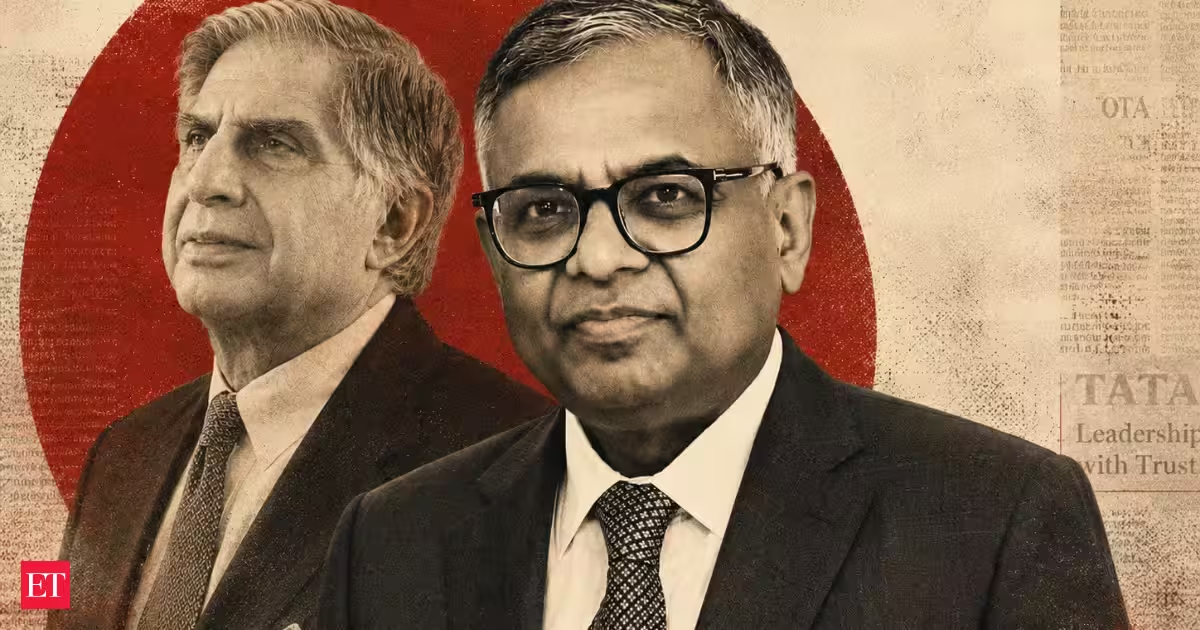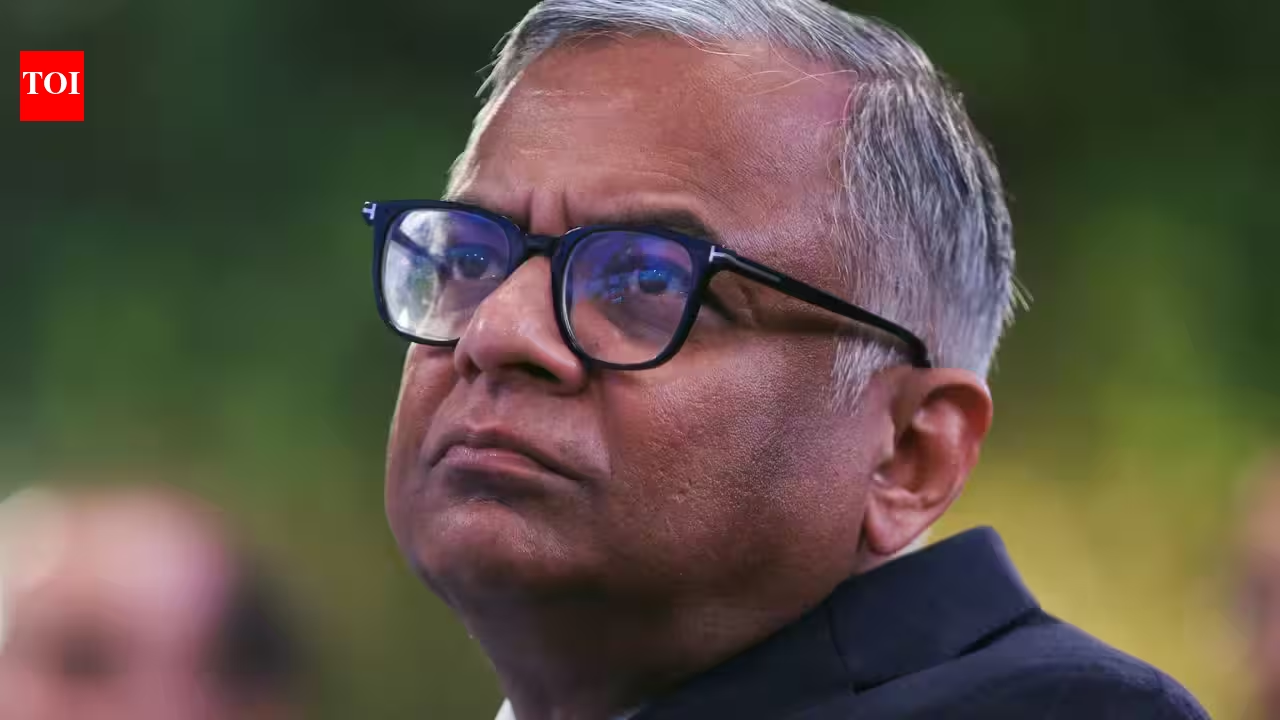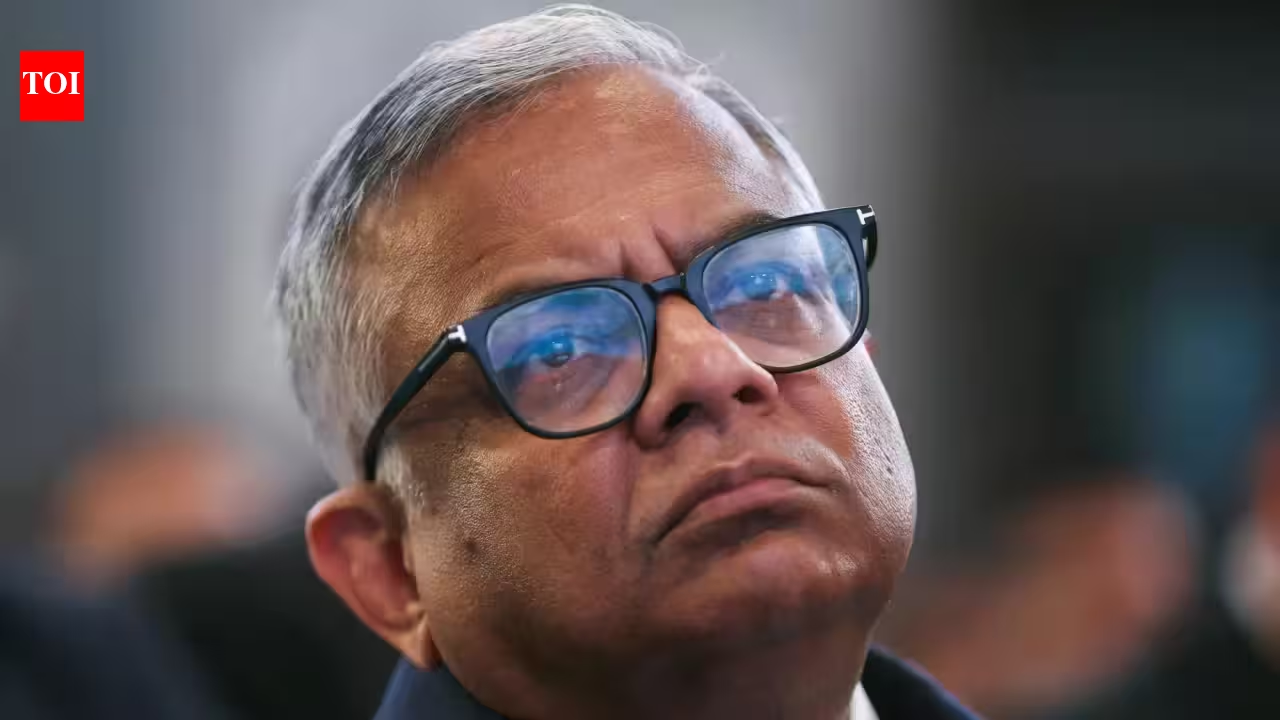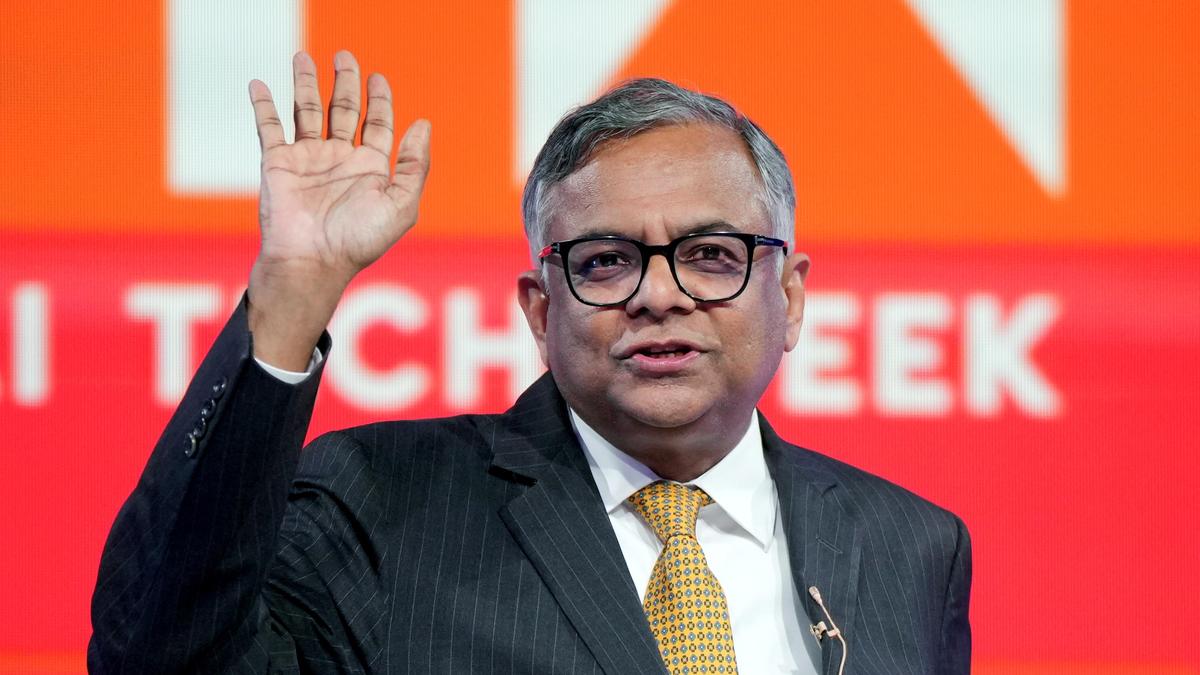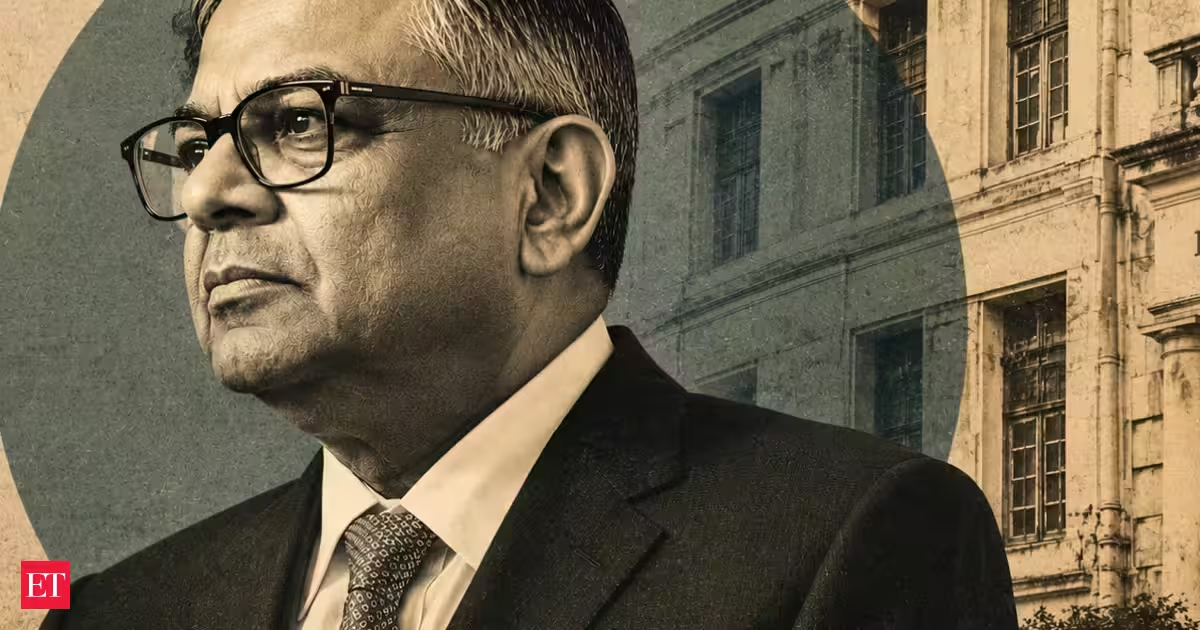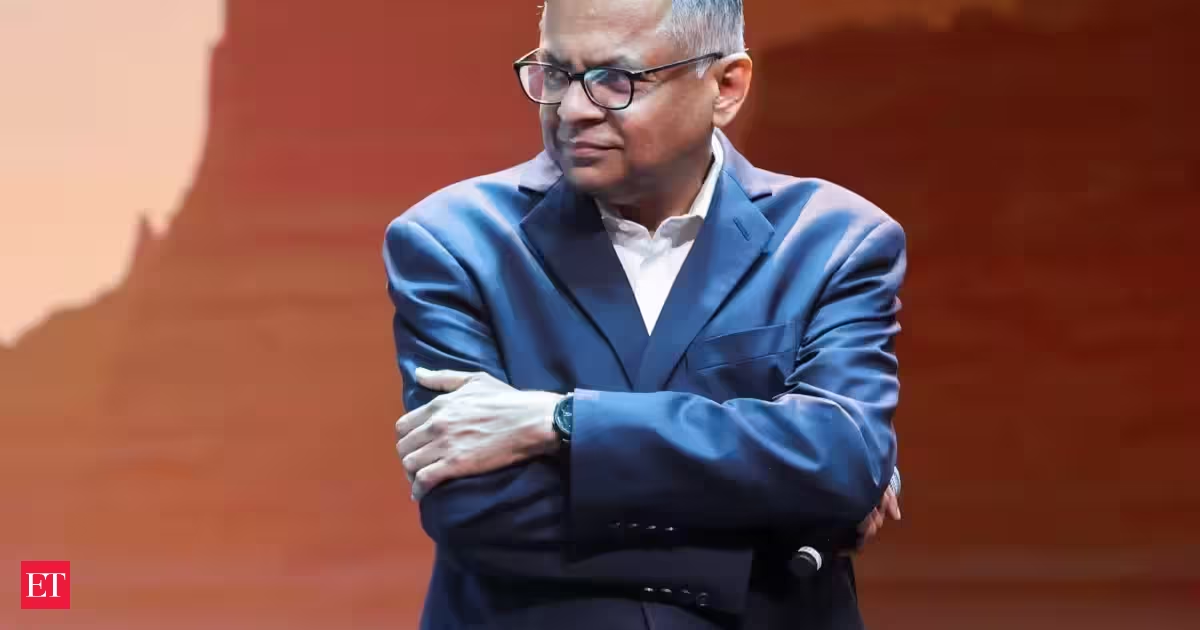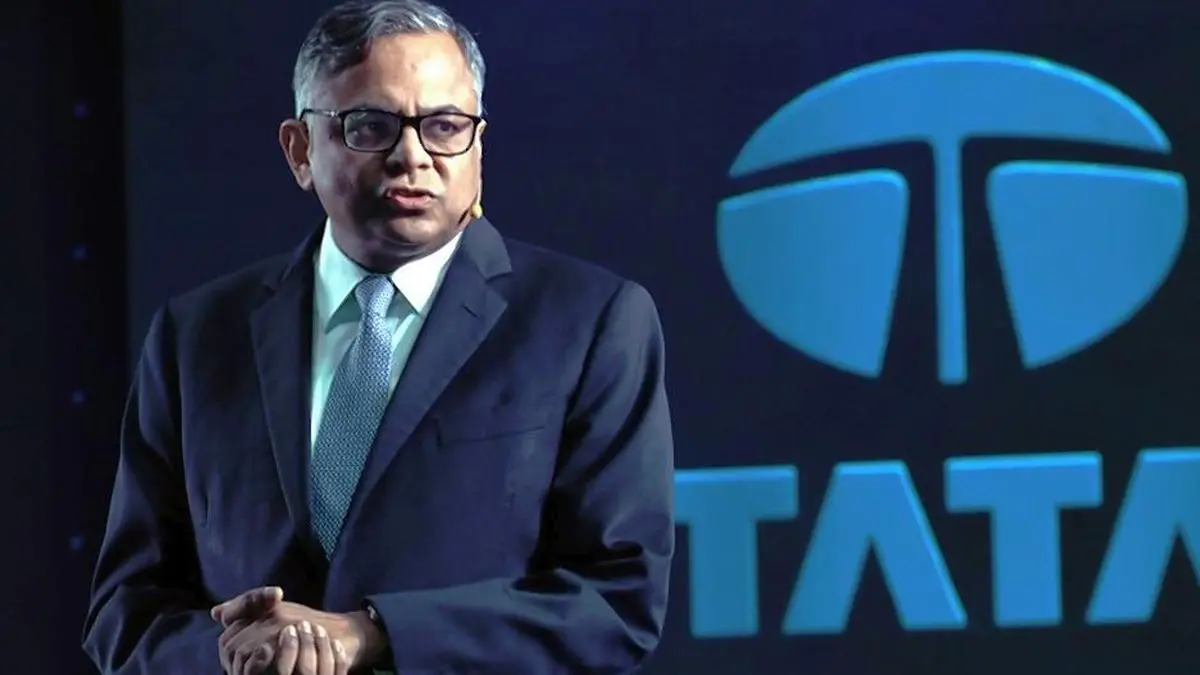
Under Chandra’s leadership, the Tata Group witnessed significant value creation, with its market capitalisation more than tripling to ₹27 lakh crore
| Photo Credit:
After standing at the helm of Tata Sons for nearly a decade, Chairman N Chandrasekaran on Wednesday formally confirmed that his tenure as Chairman will conclude in 2027.Chandrasekaran took over the leadership role in 2017 following the ousting of Cyrus Mistry in 2016. During his tenure, he steered the group towards new-age businesses such as digital platforms and semiconductor manufacturing, while also re-entering sectors like aviation that had long been associated with the Tata brand.Legacy That WasHaving secured a second term as Chairman in 2022, the Board appeared optimistic about Chandrasekaran’s vision for the group. The Tata Sons he inherited after Mistry’s four-year tenure had to navigate a troubled telecom business, particularly in the aftermath of a high-profile legal battle with Japanese telecom company NTT Docomo, as well as several shareholder disputes. Mistry had notably complained of being treated as a “lame duck” during his tenure at Tata Sons.Despite these challenges, Chandrasekaran not only reinvested in neglected sectors but also ventured into new businesses. Under his leadership, the group established Tata Electronics, expanded its design and manufacturing ambitions, and entered battery manufacturing through Agratas. The group also launched Tata Digital, an omnichannel platform anchored by the Neu app, which integrates businesses across electronics (Croma), grocery (BigBasket), pharmacy and diagnostics (Tata 1mg), and fashion (Tata Cliq).The group also welcomed Air India back into the Tata fold during Chandrasekaran’s tenure, nearly 69 years after the airline was nationalised. In telecom, Tata Sons embraced the indigenous telecom network stack by acquiring Tejas Networks. Overall, the group’s capital expenditure increased from ₹8,131 crore in FY21 to ₹45,499 crore in FY26.“Chandrasekaran’s tenure brought stability to the Tata Group after a turbulent period. He played a key role in consolidating businesses, improving strategic alignment across companies, and strengthening performance across several listed entities,” said Shriram Subramanian, Founder and Managing Director of proxy advisory firm InGovern.Legacy That IsUnder Chandrasekaran’s leadership, the Tata Group witnessed significant value creation, with its market capitalisation more than tripling to ₹27 lakh crore and its debt-to-equity ratio declining from 16 times to 0.9 times. According to InGovern, the market capitalisation and stock performance of several Tata companies improved substantially over the last decade, reflecting investor confidence in the group’s direction.Meanwhile, Tata Sons’ net worth grew from ₹43,252 crore in 2018 to ₹1.79 lakh crore in 2026, with growth accelerating sharply after 2021.In the FY26 annual report, Chandrasekaran reiterated his confidence in the group’s new ventures, which marked a departure from its traditionally conservative approach.Legal and industry experts who spoke to businessline said there is little reason for his successor to pull back from these commitments. However, with a new Chairman set to take charge, questions remain over how the group will navigate its next phase of growth.“Chandrasekaran’s decision to step down comes as a surprise, yet he has chosen to do so entirely on his own terms. His departure gives the Tata Sons Board an opportunity to appoint a successor whose vision aligns closely with both Tata Sons and Tata Trusts, a crucial priority for ensuring organisational harmony. The key challenges for the next leader will be ensuring prudent capital allocation and turning around loss-making entities swiftly,” said Subramanian.Published on August 12, 2026