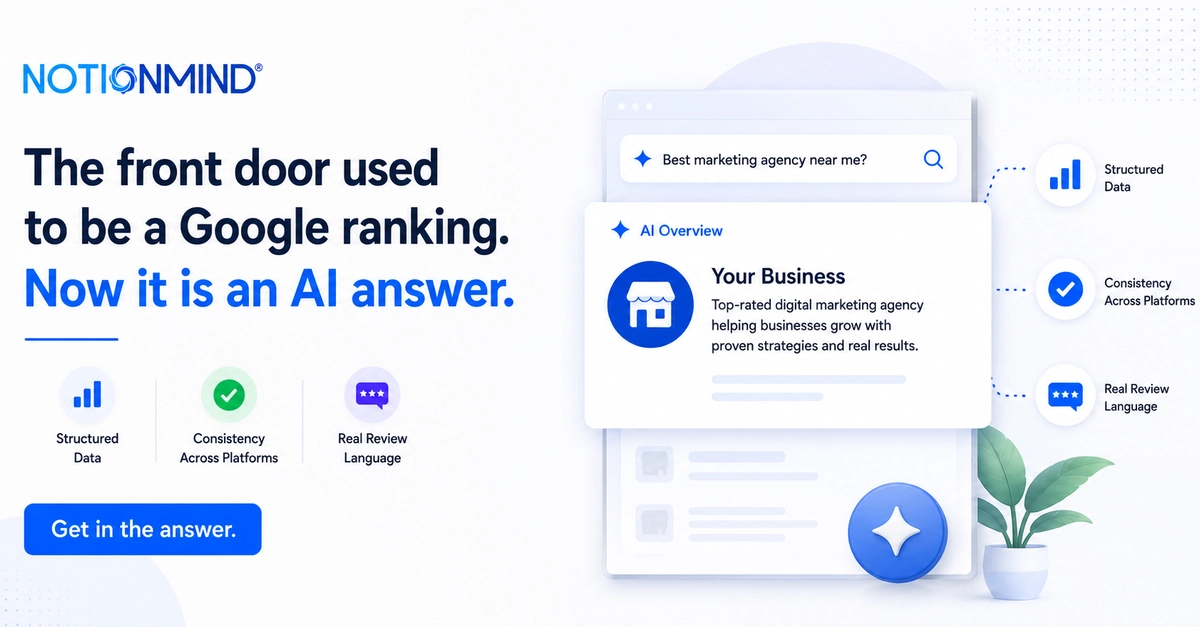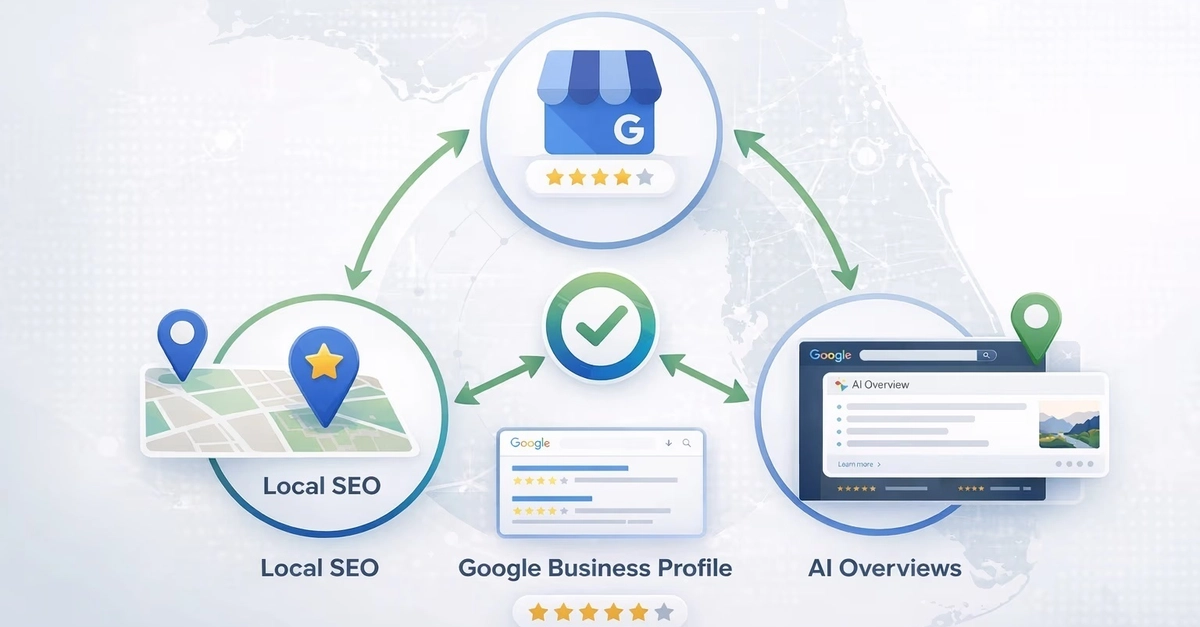
If you build or maintain websites for local businesses, you've probably already noticed organic click-through rates dropping even as rankings hold steady. The reason: AI Overviews now appear in roughly 68% of local searches (versus ~39% for the classic three-pack local results), and for "near me" or pricing-style queries, AI-generated answers show up 80–97% of the time. ChatGPT itself is reportedly the third most-used source for local recommendations, behind Google and Facebook.
Ranking #1 in classic SERPs no longer guarantees you get mentioned when an LLM synthesizes an answer. As developers, that means the job has expanded: we're no longer optimizing purely for a crawler that returns links — we're optimizing for models that read, verify, and cite structured facts.
This post is a practical, implementation-level walkthrough: what's changed, what to build, and where to instrument tracking so you can actually prove impact to a client or stakeholder.
What's different, technically, about AI search
Classic search: crawl → index → rank → return links.