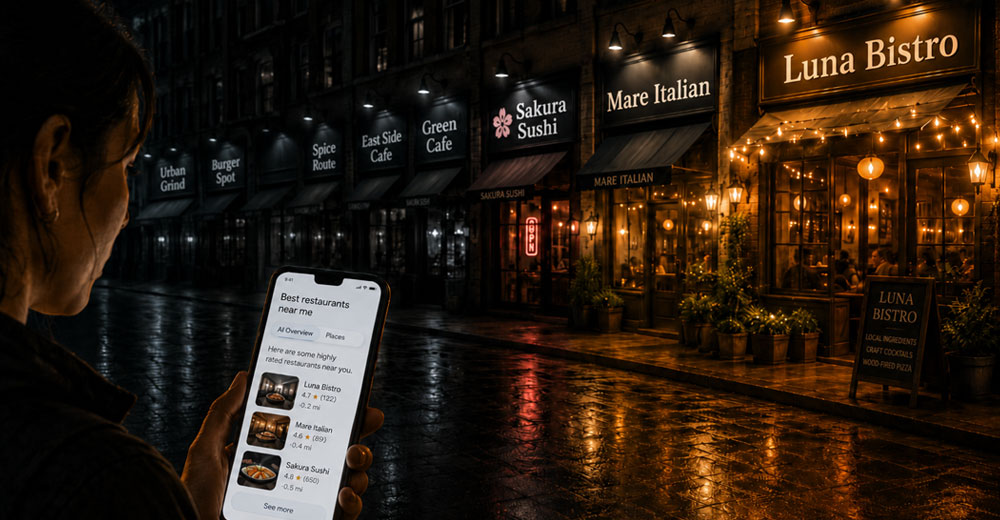
Forty-five percent of consumers now use an AI assistant to find a local service, up from six percent a year ago. In the same window, ChatGPT was measured recommending just 1.2 percent of all local business locations. Put those two numbers next to each other and you have the local-search story of 2026 in a sentence: people are asking AI which plumber, which restaurant, which estate agent to use, and for almost every business the answer it gives does not include them. The old game was ranking on a page of ten blue links. The new game is being the one name the assistant says out loud, and most local businesses have not noticed the rules changed.
I run a web and AI agency on Mallorca, so I watch this from the worst possible vantage point: a place whose entire economy runs on strangers deciding where to eat, stay, and buy. For years that decision started with a Google search and a map full of pins. Increasingly it starts with a question typed into ChatGPT or Gemini, and the response is not a list to browse. It is a short, confident recommendation of two or three places, and everything else may as well not exist.
The New Local Search Is a Single Answer
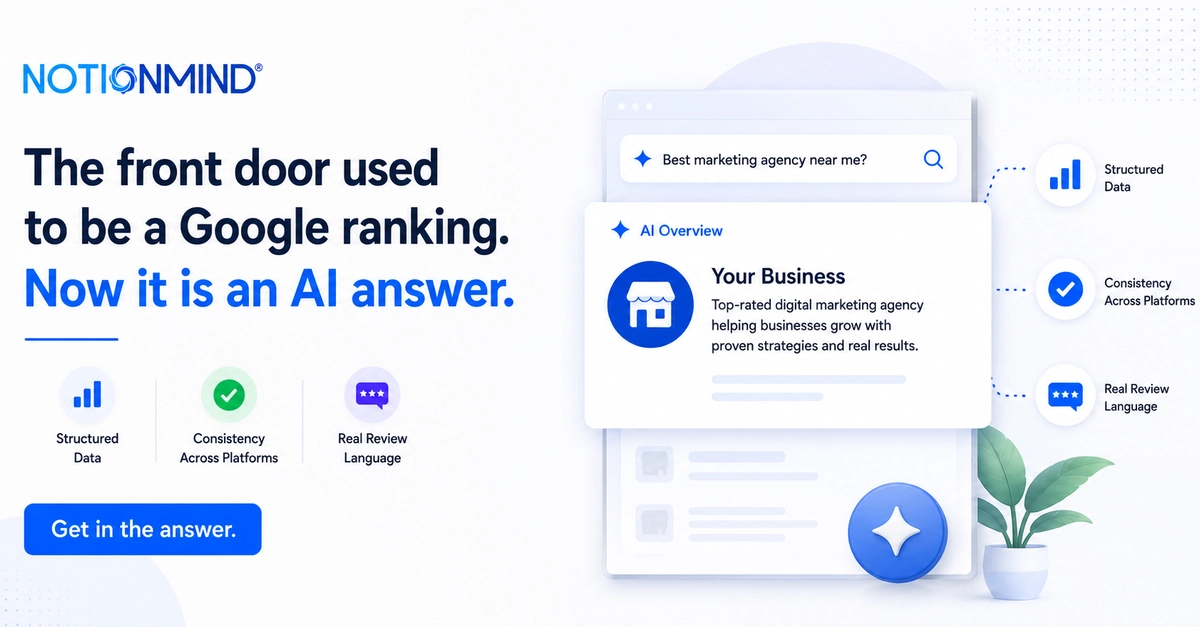
The behavioral shift underneath this is faster than anything I have seen in fifteen years of building websites. BrightLocal's 2026 survey put AI use for finding local services at 45 percent, a more than sevenfold jump in a single year. Google has not collapsed, it still holds around 90 percent of conventional search-engine share, but the experience changed underneath the market share. Roughly 68 percent of Google searches now end without a click to the open web, and AI Overviews, the summary box Google writes for you, appear in about 68 percent of local searches and sit above both the paid ads and the organic results.