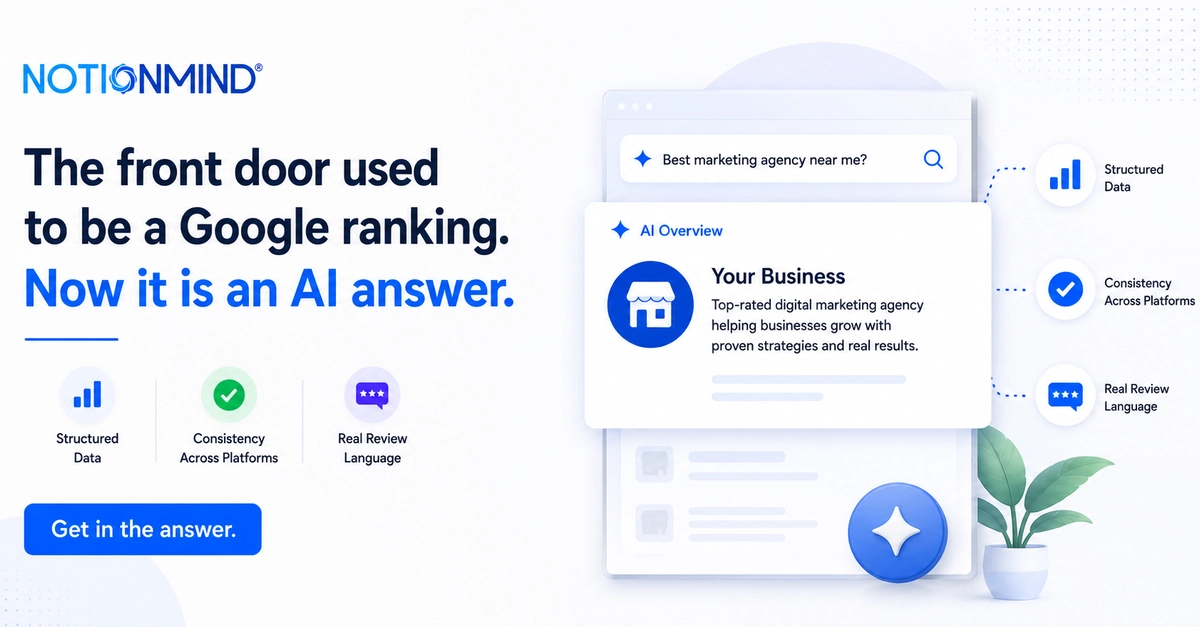
Most businesses did not see this shift coming. Customers stopped scrolling through ten blue links. They started typing full questions into ChatGPT, Google AI Overview, and Bing Copilot, and expected one direct answer. If an AI tool does not trust your business enough to mention it, you do not appear in that answer. This piece comes from the team at Notionmind Dev.to And companies across India, USA, and other countries are already rethinking how AI search optimization fits into the way they get found online. The old playbook built rankings. This one builds machine trust.
Why Old SEO Falls Short on Its Own
Ranking on page one of Google used to be enough. Not anymore. AI tools do not browse your website the way a human does. They pull from structured data, verified listings, consistent contact details, and review language across the web.
Think about it this way. An AI tool asked to recommend a service provider will not scan your meta descriptions. It will cross reference your listings, check review patterns, and look for signals that your business is real and consistent. If anything conflicts, you are out of the answer entirely.
A business with a polished website but conflicting information across directories will lose to a simpler competitor whose facts all match. AI does not care how good your design looks. It cares whether the facts line up.