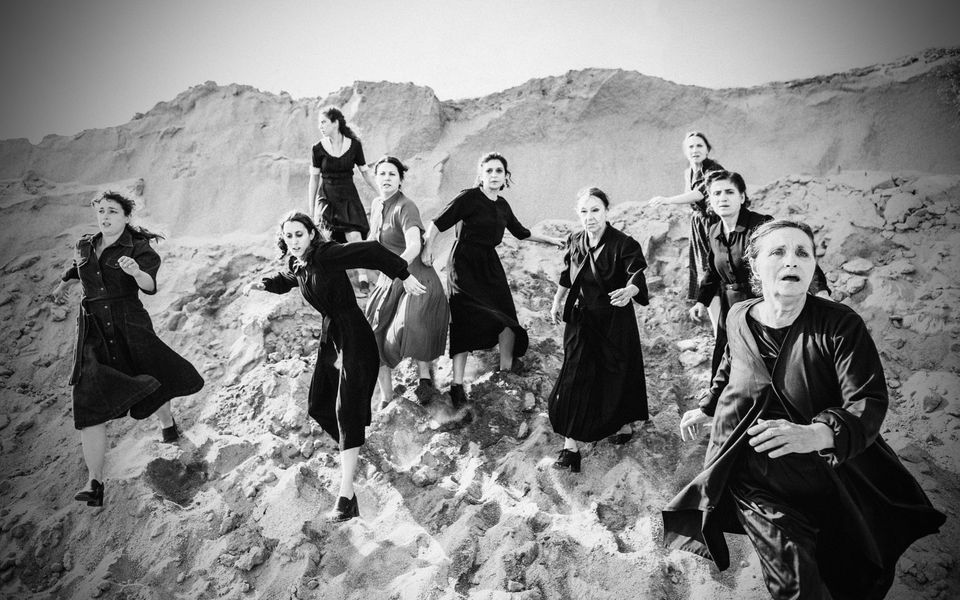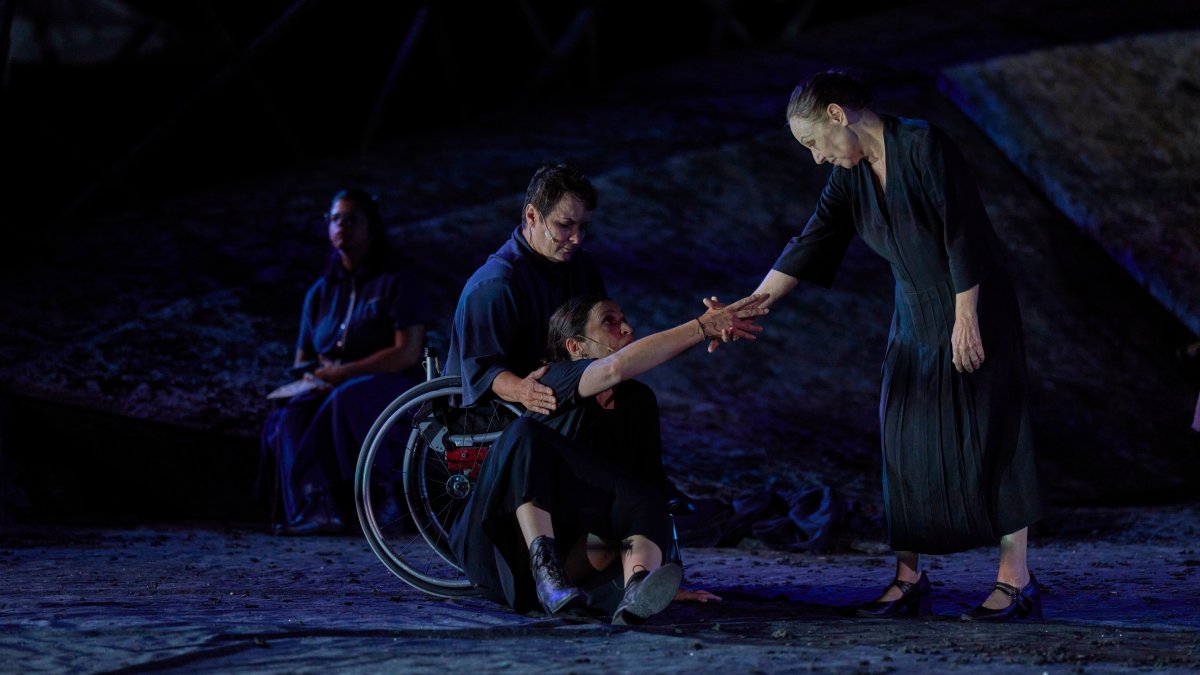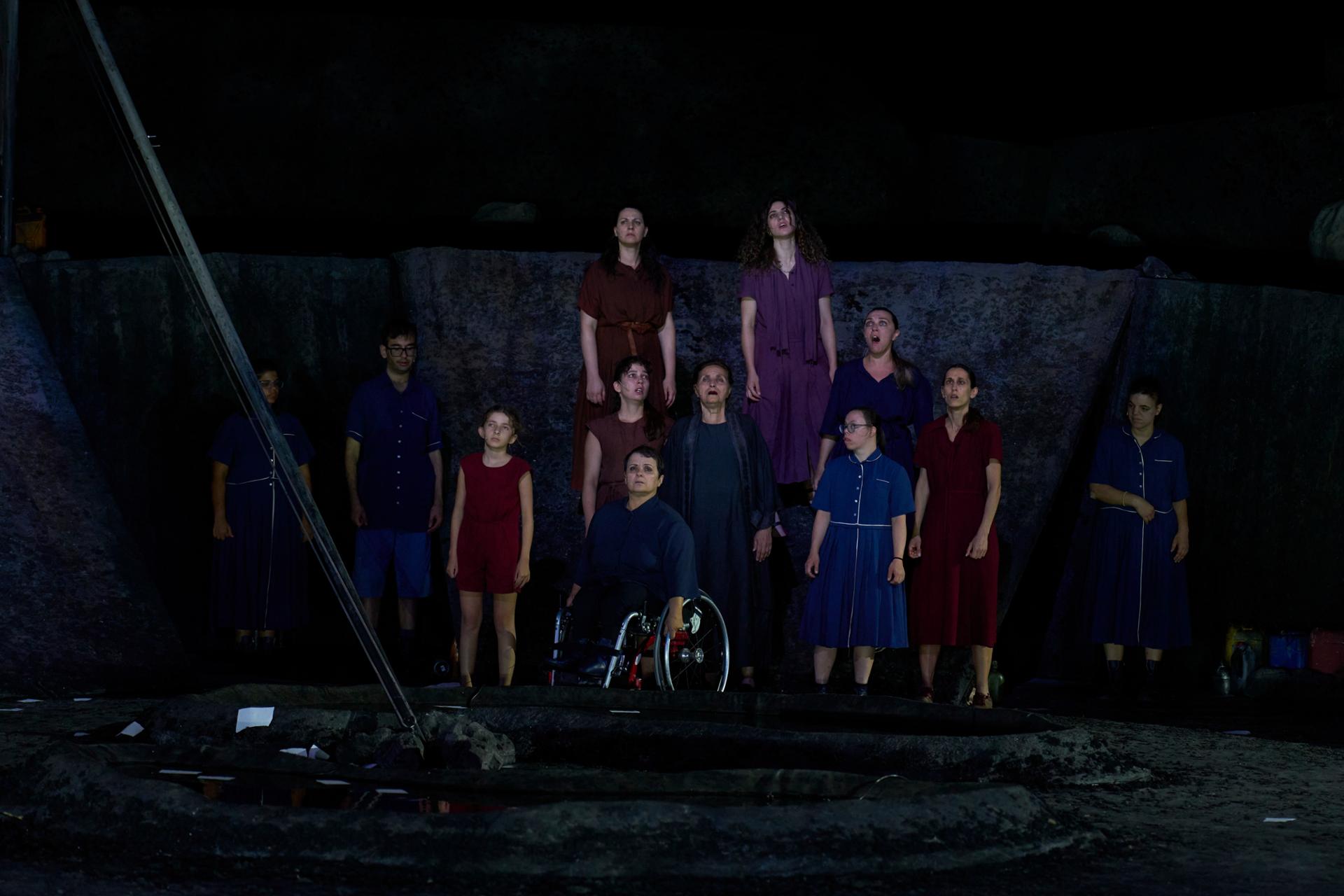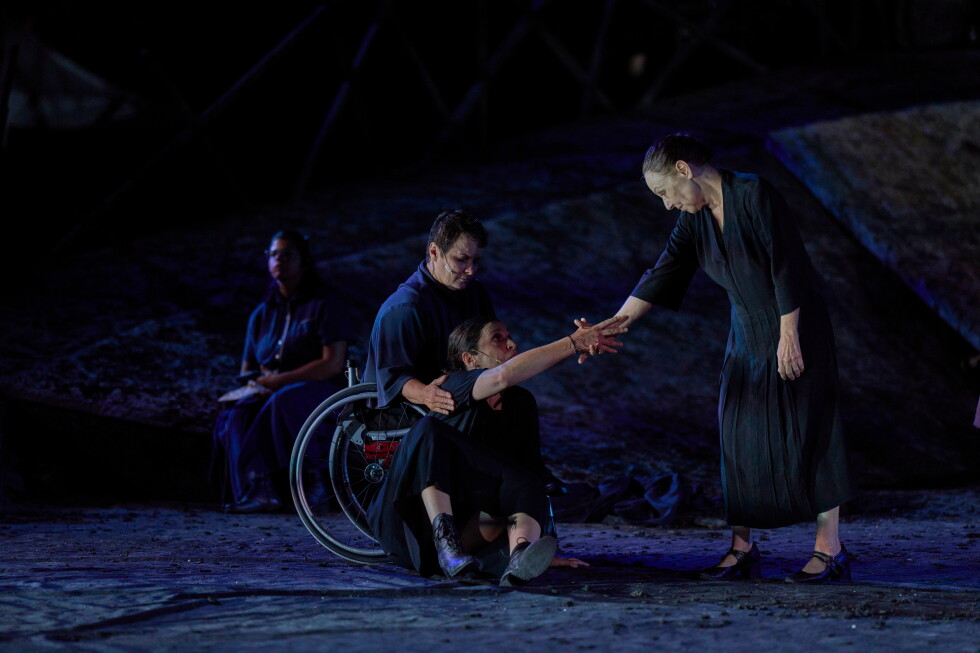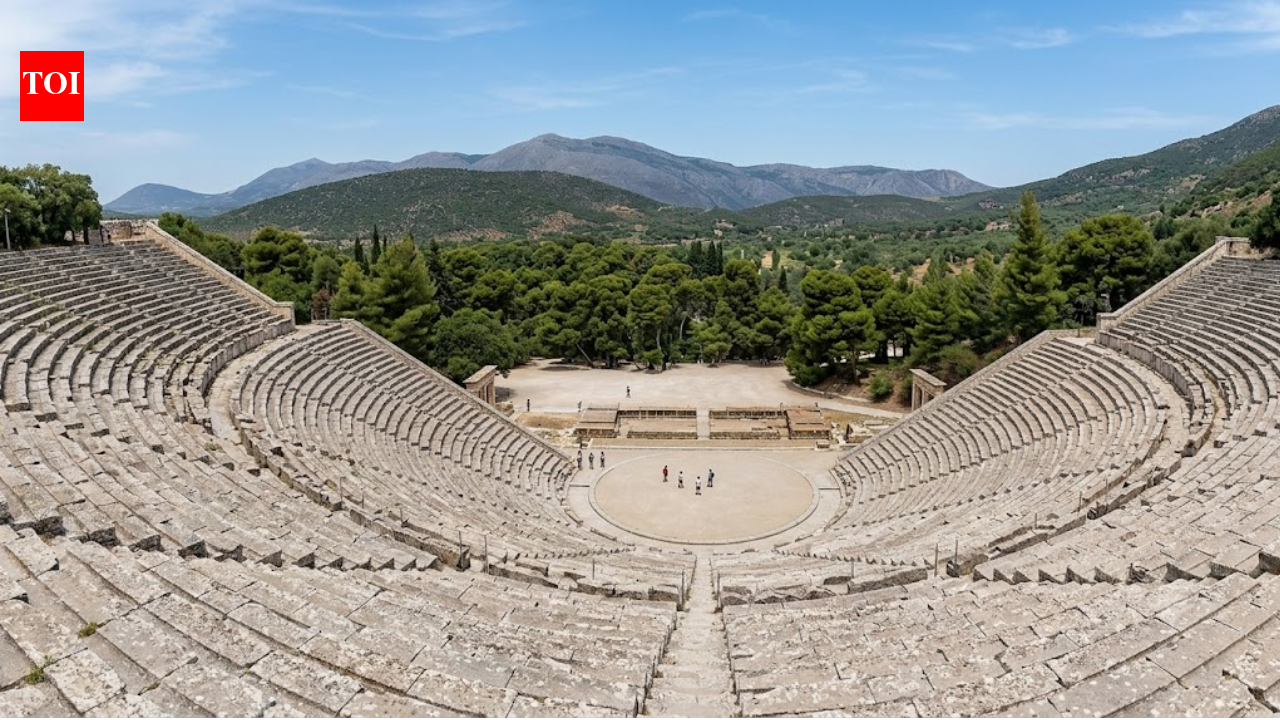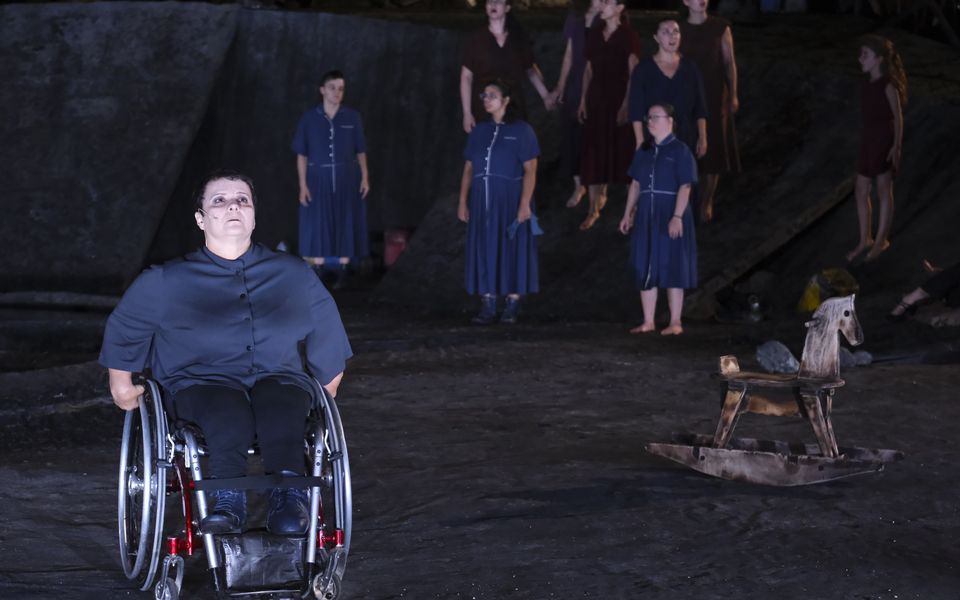
A small gray model of the set for “The Trojan Women” is passed from hand to hand, from the front seats of a bus to the very back. Fingers trace the miniature stage-set models where, a few hours later, the actors in director Eleni Efthymiou’s production will perform on the stage of the ancient theater of Epidaurus.
Another model, made of porous material, allows passengers to experience the texture of the venue, evoking the feel of the theater’s stone tiers and seating. A portfolio of miniature costumes completes the tactile introduction. Made from the same fabrics used in the production, the tiny garments invite visitors to feel sleeves and folds while reading descriptions of each character in Braille.
The journey
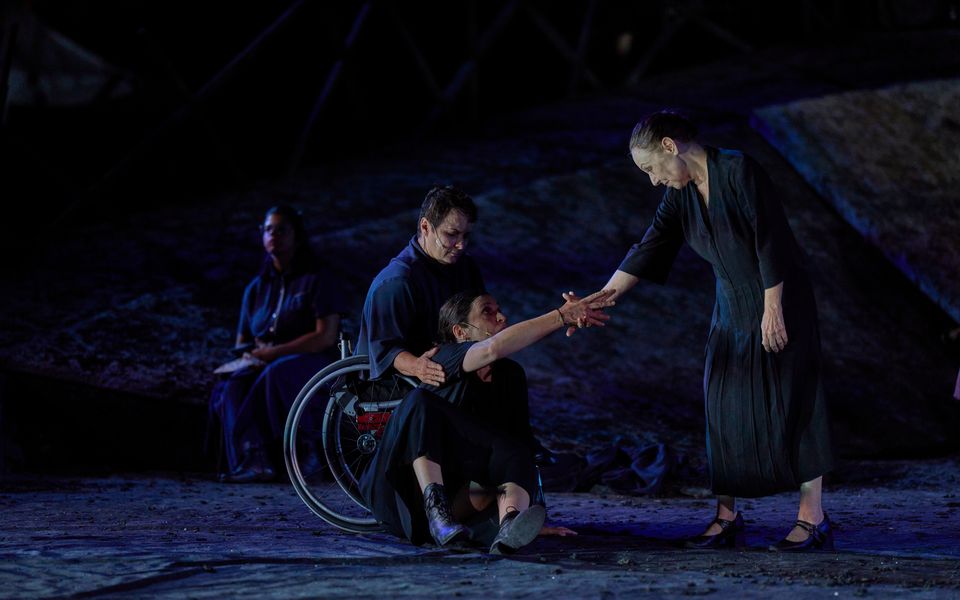
We travel to Epidaurus aboard buses provided by the National Theater of Greece, alongside people with visual and hearing impairments. They are the first audience members with sensory disabilities to attend “The Trojan Women,” a universally accessible production staged at the ancient theater after an unexpected delay. The premiere, originally scheduled for July 31, was canceled because of wildfires in the surrounding area and was eventually held on August 2.
“I am deeply moved that, in a place like this – a place that heals the soul and celebrates Greek civilization – a performance is being presented for the first time in which people with disabilities are on stage, while those of us with visual impairments can experience it on equal terms with everyone else,” says Stergios Sioutis, one of the passengers.