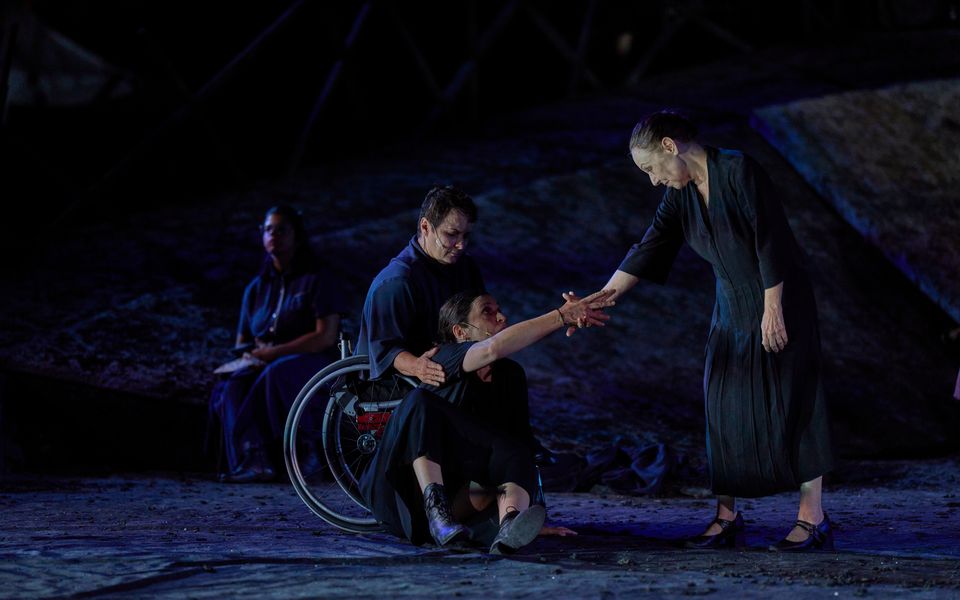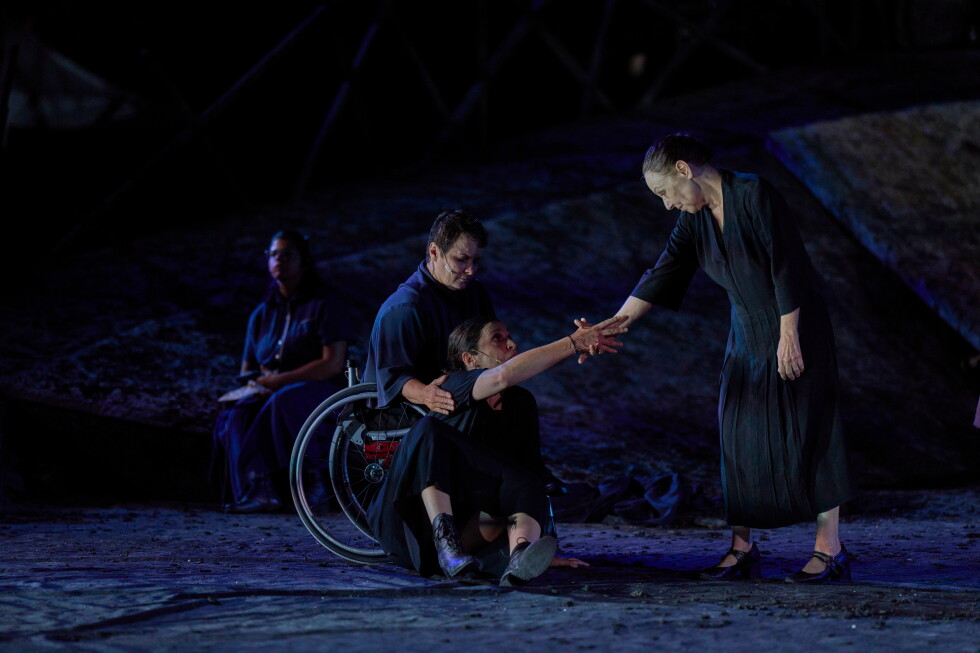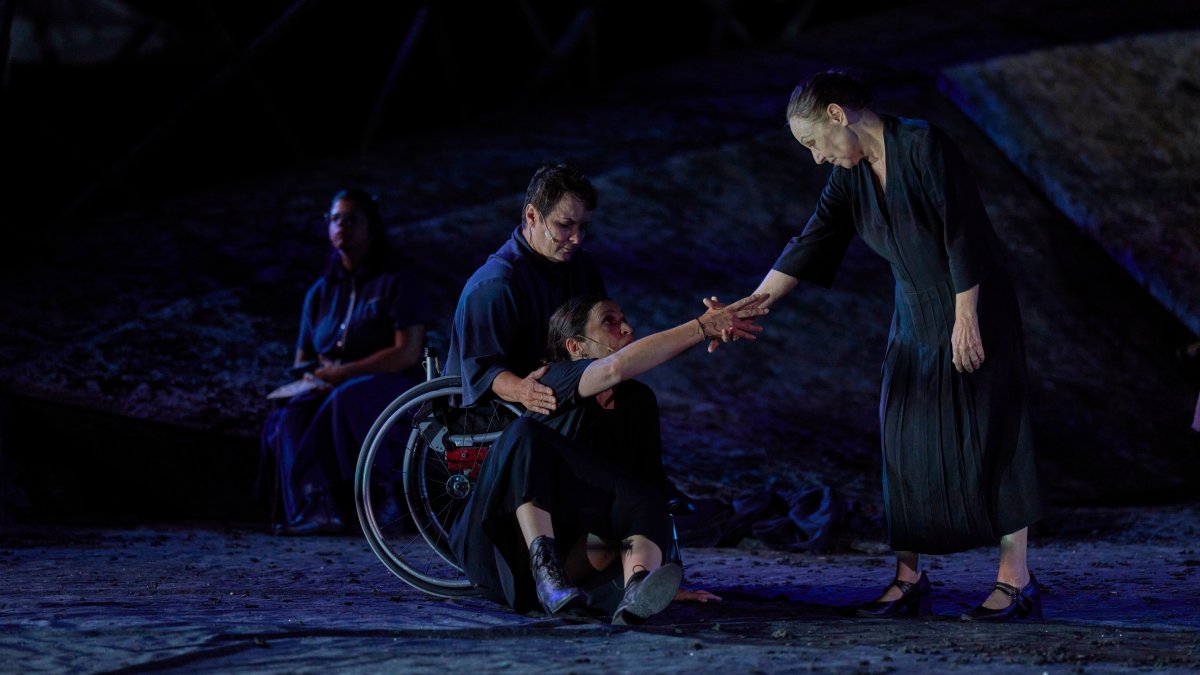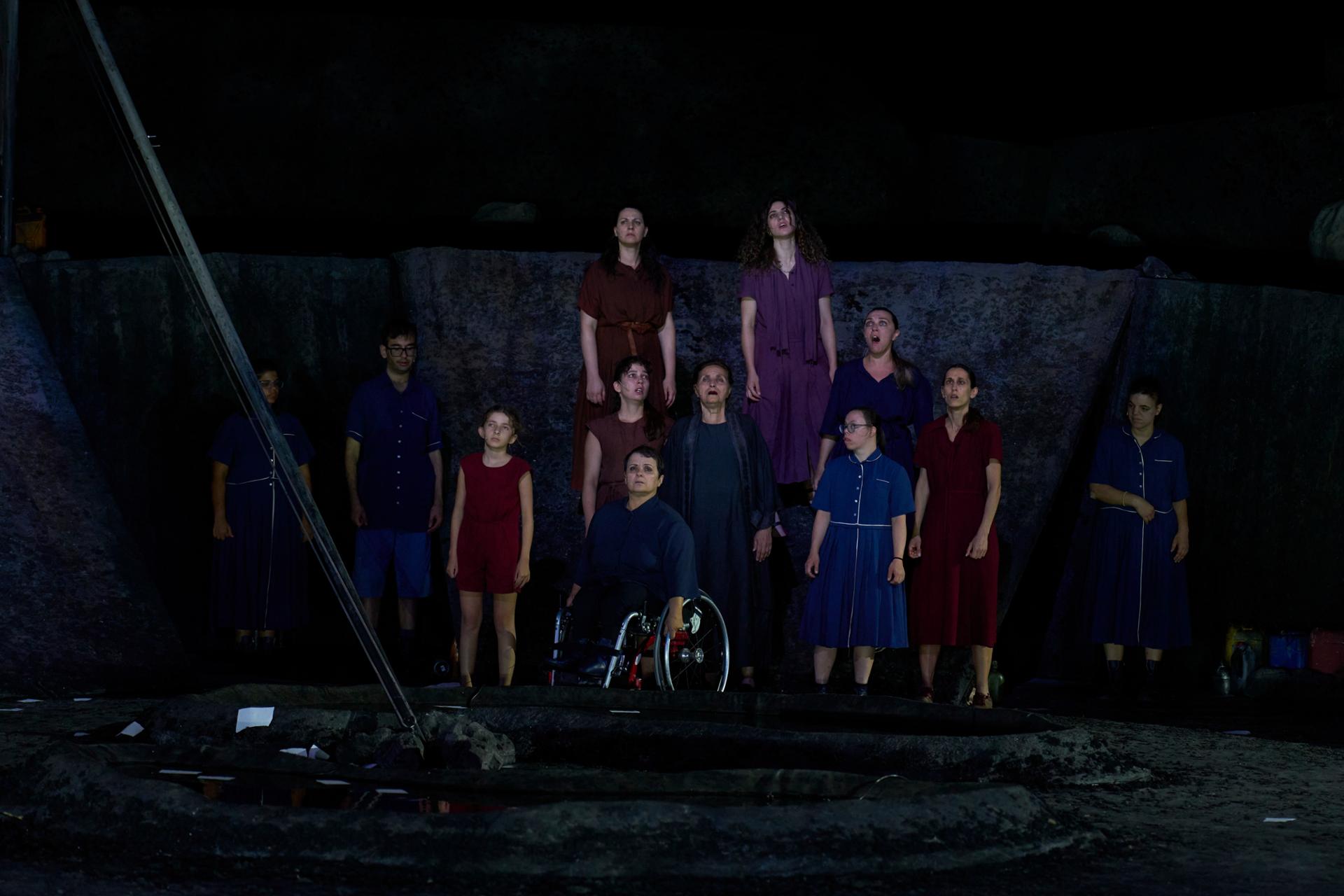
Cast members perform during a dress rehearsal of Euripides' tragedy The Trojan Women, staged by the National Theatre of Greece, and featuring performers with and without disabilities, at the Ancient Theater of Epidaurus, Greece, Thursday, July 30. AP-Yonhap
EPIDAURUS, Greece — As Christopher Nolan’s “The Odyssey” renews global fascination with Homer, a cast of disabled and non-disabled performers in Greece is staging the war’s other story.
It’s not about the triumph of returning heroes, but the suffering they left behind.
“The Trojan Women,” with a cast of 22, was staged at Epidaurus, the ancient open-air stone arena in southern Greece. It marked what organizers called the first fully accessible performance in the ancient theater’s 2,300-year history.
While Homer followed warriors sailing home from Troy, the playwright Euripides — writing some three centuries later — turned to the city’s ruins and its women, forced into exile and enslavement.