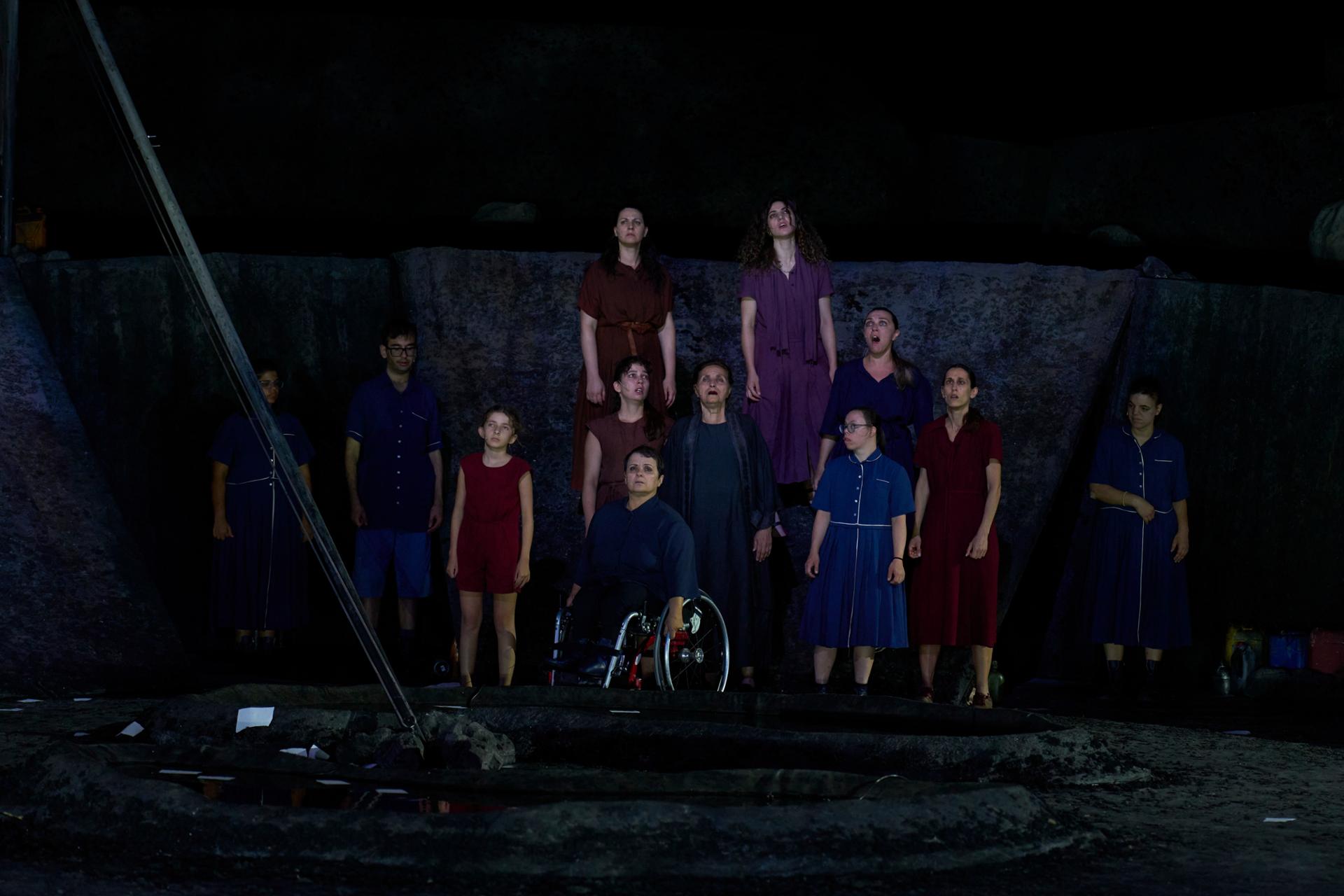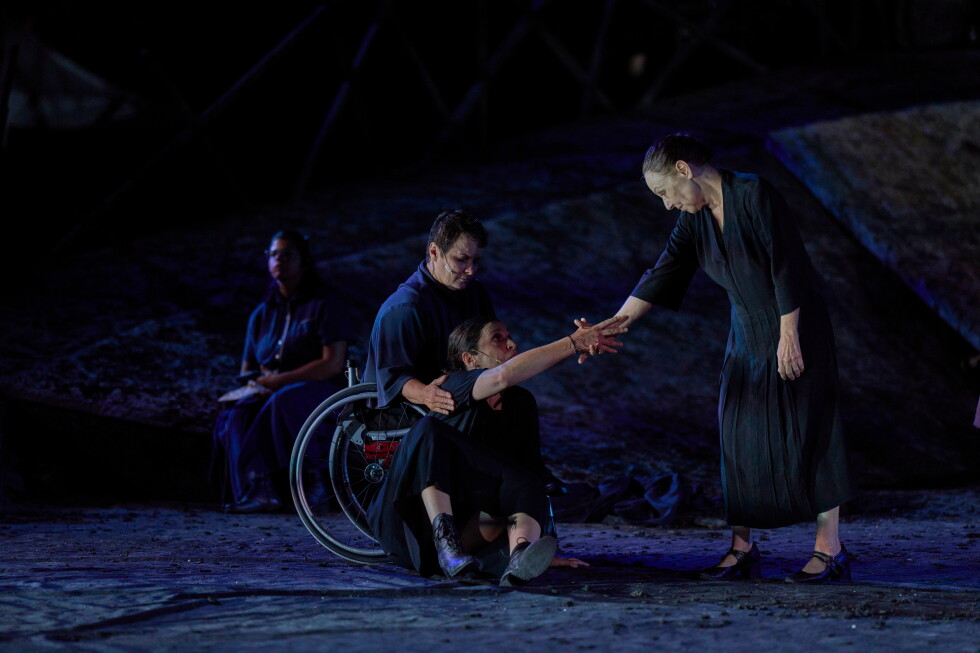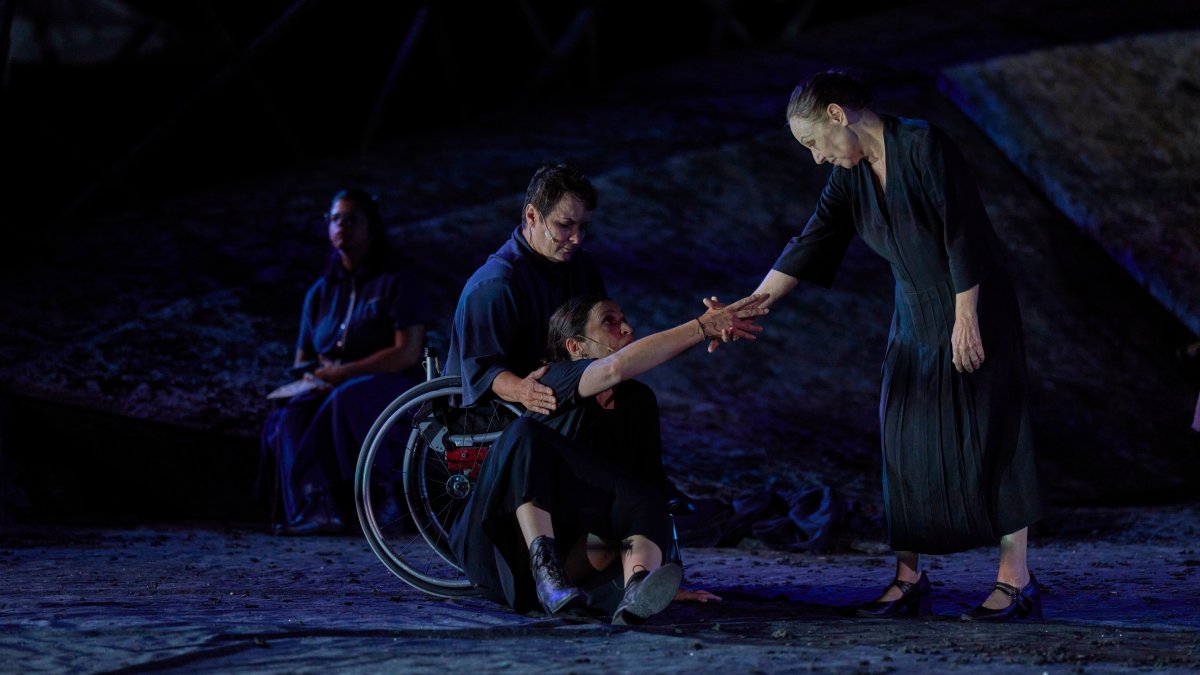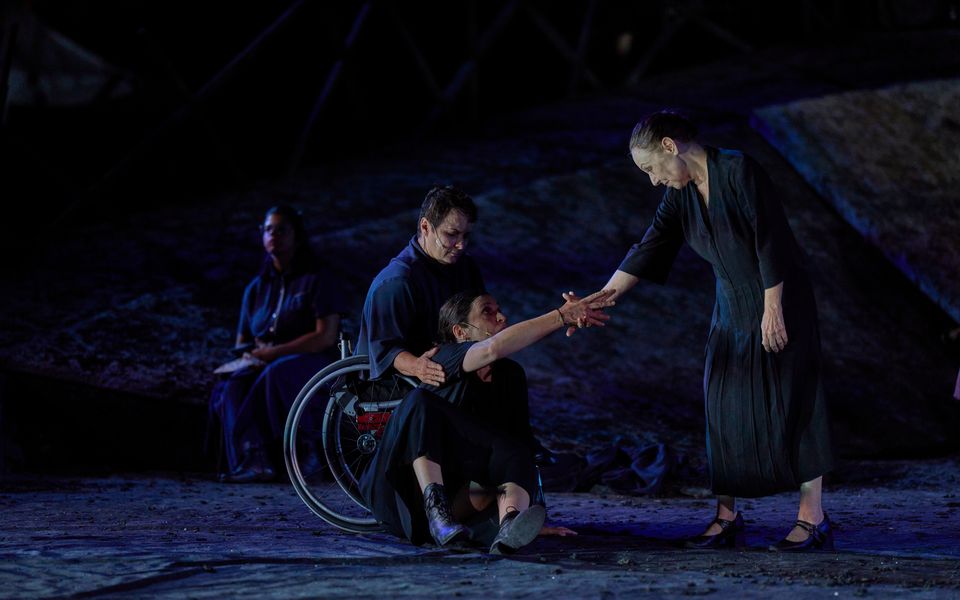
From left to right, Eirini Kourouvani, a wheelchair dancer, Evi Saoulidou and Lydia Fotopoulou perform during a dress rehearsal of Euripides' tragedy The Trojan Women, staged by the National Theatre of Greece, at the Ancient Theater of Epidaurus, on Thursday, July 30, 2026. [Petros Giannakouris/AP]
EPIDAURUS – As Christopher Nolan’s “The Odyssey” renews global fascination with Homer, a cast of disabled and non-disabled performers in Greece is staging the war’s other story.
It’s not about the triumph of returning heroes, but the suffering they left behind.
“The Trojan Women,” with a cast of 22, was staged at Epidaurus, the ancient open-air stone arena in southern Greece. It marked what organizers called the first fully accessible performance in the ancient theater’s 2,300-year history.
While Homer followed warriors sailing home from Troy, the playwright Euripides – writing some three centuries later – turned to the city’s ruins and its women, forced into exile and enslavement.