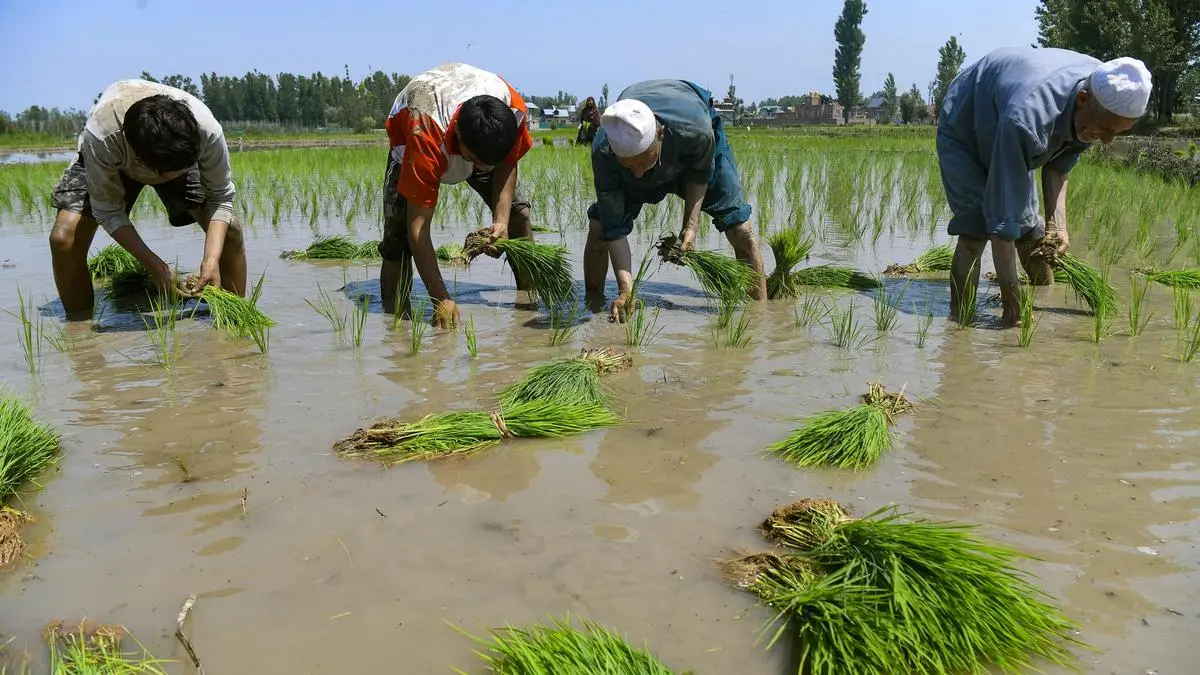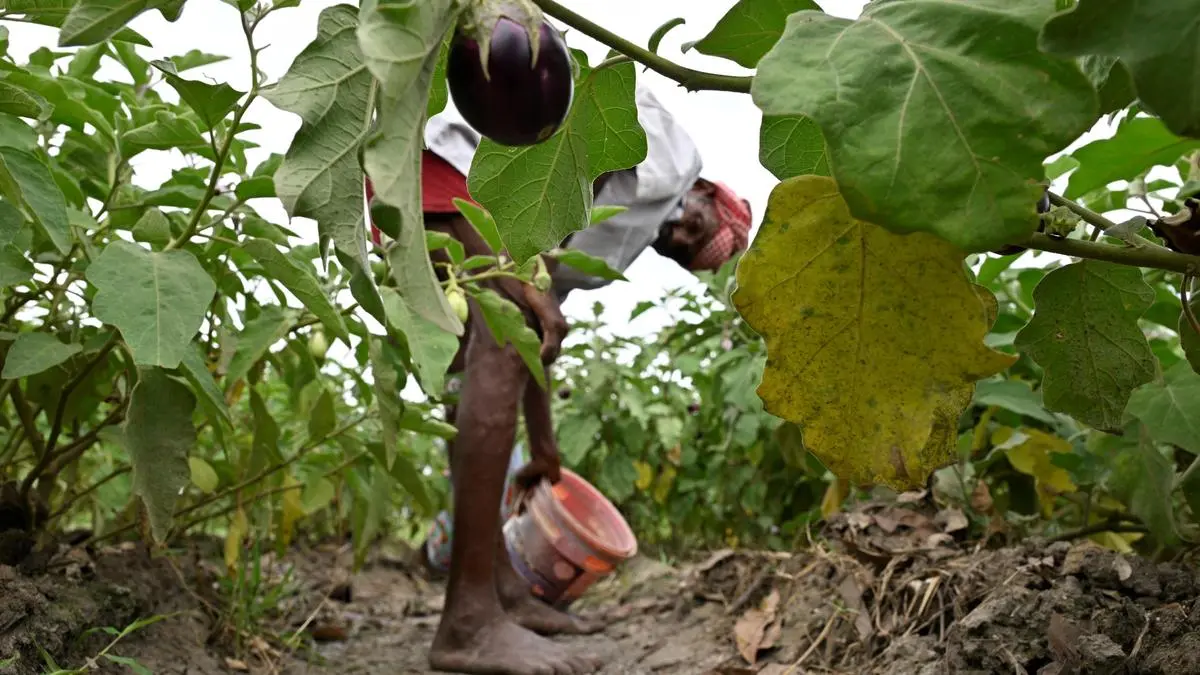
The sowing area under all major Kharif crops except urad, soyabean and groundnut is trailing this year
| Photo Credit:
R Vengadesh
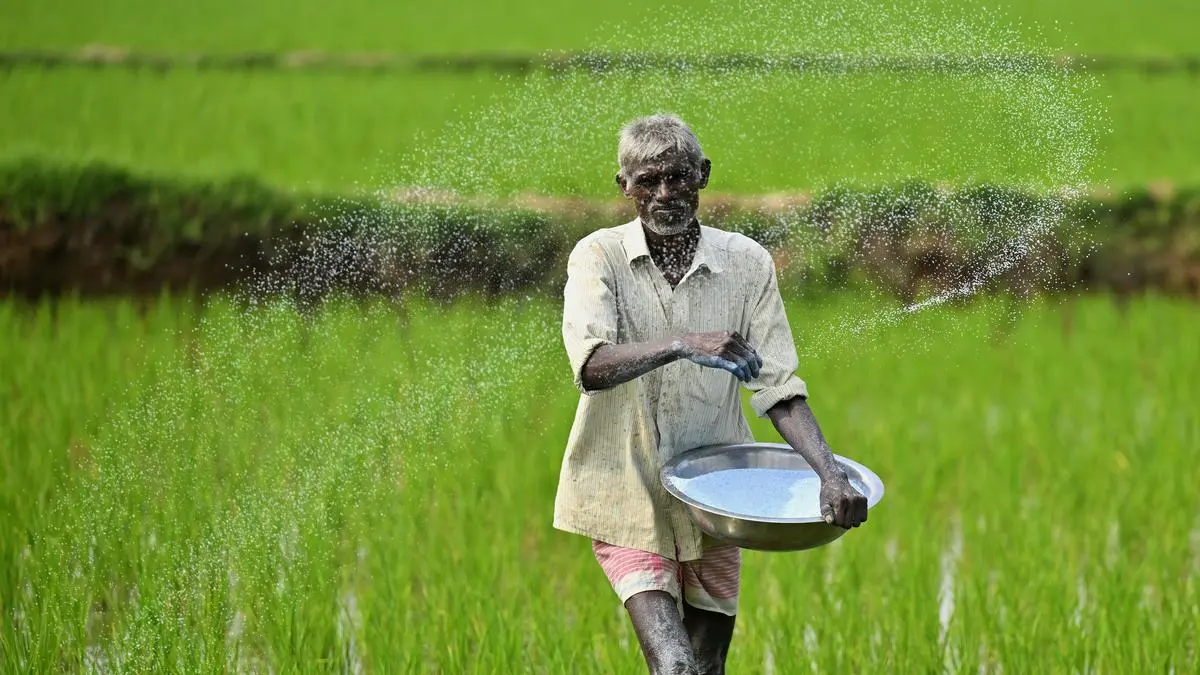
Sales of key fertilizers such as urea, DAP, MOP and complex declined in July, when maximum planting of kharif crops takes place, fuelling apprehensions of a likely drop in production. The total area under kharif crops has been reported lower this year, though the deficit has shrunk to less than 2 per cent currently.Farmers will likely lose the crop yield even if they go for late sowing, while districts which have received less than 60 per cent rain may not be able to avert a drop in production as the weather outlook over next 20 days is not promising to compensate the loss, experts said.According to latest official data, overall there was drop of 13 per cent in fertilizer sales at 77.44 lakh tonnes (lt) in July 2026 from 89.41 lt a year ago. Urea sales dipped 9 per cent to 49.28 lt, DAP by 1.4 per cent to 10.7 lt, MOP by 21 per cent to 1.95 lt and complex by 29 per cent to 15.51 lt.After initial euphoriaSince the Iran war against Iran started on February 28, higher fertilizer sales were witnessed both in March and April. From May onwards, the fall started and as a result, the overall consumption during April-July of the current fiscal has reportedly declined 9 per cent to 191.44 lt from 210.6 lt.Interestingly, while sales of urea, MOP and complex have declined in these four months period, DAP sales have been flat at nearly 27 lt.While some experts attribute the lower sales to less area coverage in the current kharif sowing season, the erratic rainfall is another factor that could have influenced the decision of farmers on fertilizer usage.12% monsoon deficit“Delayed sowing may be made up at end of the season if acreage matches that of last yea, but timely planting is highly critical to get desired production. This year, the sowing window has been missed in many States, depending on the crop that is sown. Overall, there could be 5-7 per cent fall in yield in key crops as several districts have over 40 per cent rainfall deficit,” said a former deputy director-general of ICAR.But S K Chaudhary, director-general of Fertiliser Association of India (FAI), said whatever nutrients has been available for the farmers, they are good enough to expect normal output.According to India Meteorological Department (IMD) data, 338 out of 741 districts have received over 20 per cent deficit rainfall so far, since June 1. India has received 485.5 mm rainfall between June 1 and August 12, which is 12 per cent less than normal. As many as 16 States and Union Territories out of 36 having 35 share in the country’s total land area have reported deficient rainfall.The IMD data also show that 112 districts received only 60 per cent rain or even less, up to 91 per cent. Total number of districts having 30 per cent deficiency or was 191 and this does not include north-eastern States.Most crops acreage trailsThe sowing area under all major Kharif crops except urad, soyabean and groundnut is trailing this year. The sowing area in on-going season has reached 967.92 lakh hectares (lh) as of August 7 compared with 985.89 lh in the year-ago period, down by 1.8 per cent.The government has set a production target of 176.16 million tonnes (mt) of foodgrains including 123.15 mt rice, 8.4 mt pulses, 31.04 mt maize and 13.56 mt nutri cereals in Kharif 2026. Among 28.92 mt oilseeds production target fixed by the government for current season, soyabean has been aimed at 14.85 mt and groundnut at 11.35 mt.Published on August 12, 2026