The sharp recovery in demand coincided with a revival in kharif sowing following improved monsoon rains in July.
| Photo Credit:
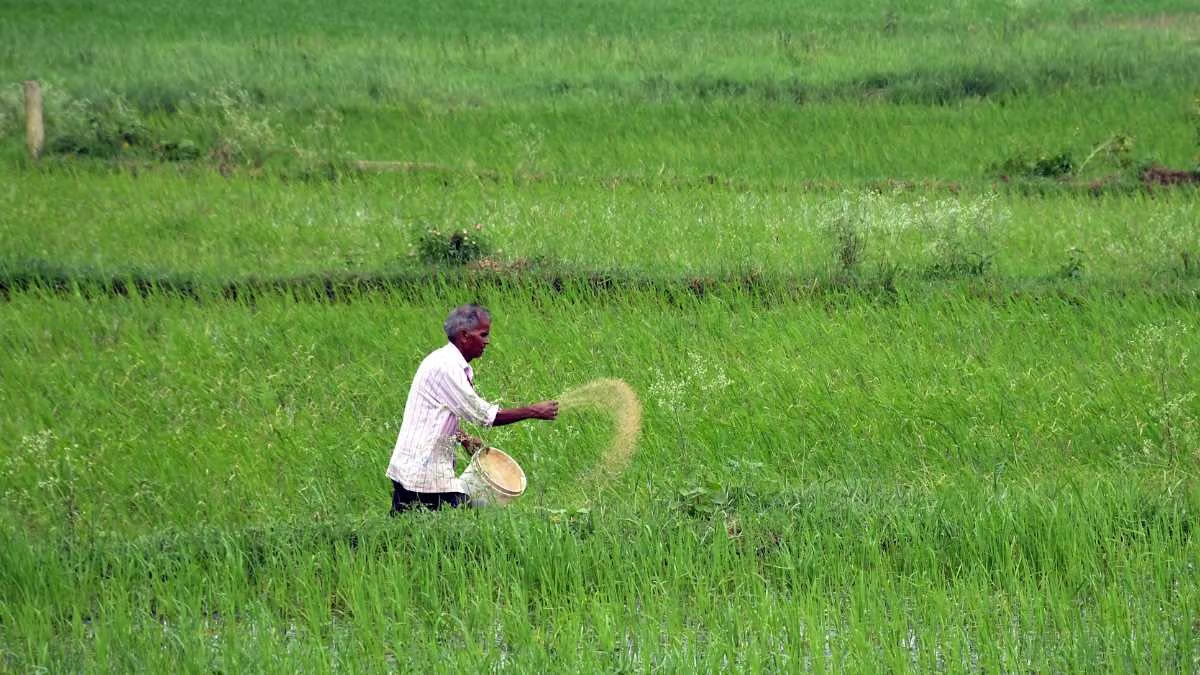
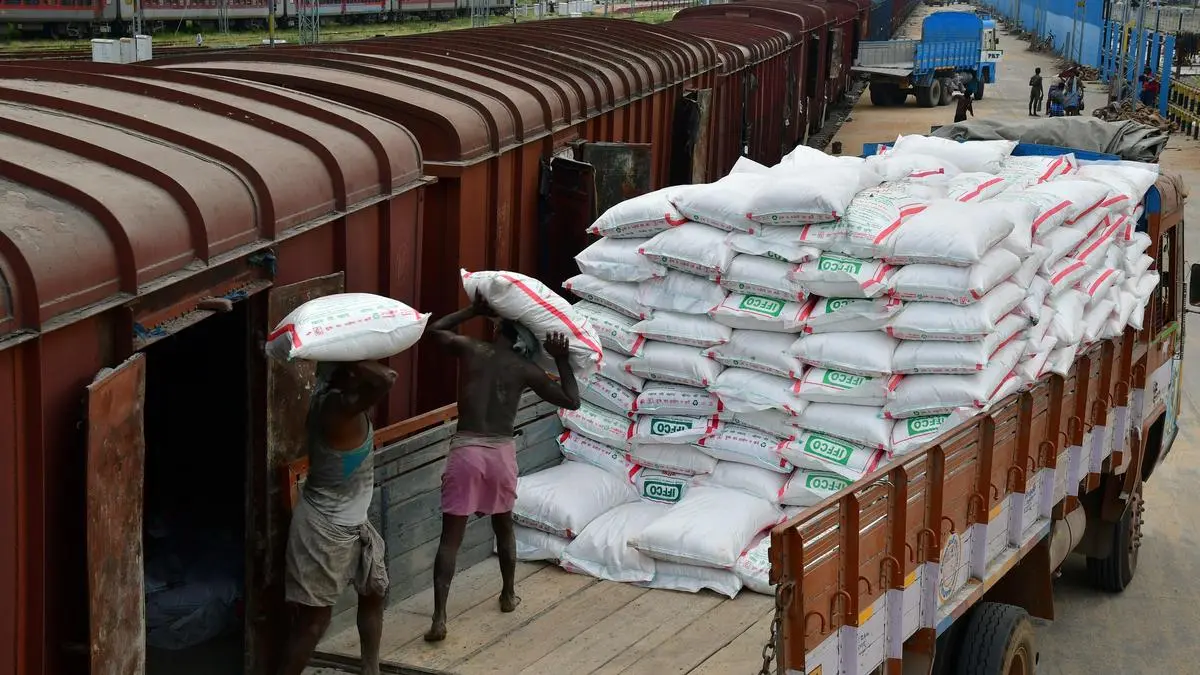
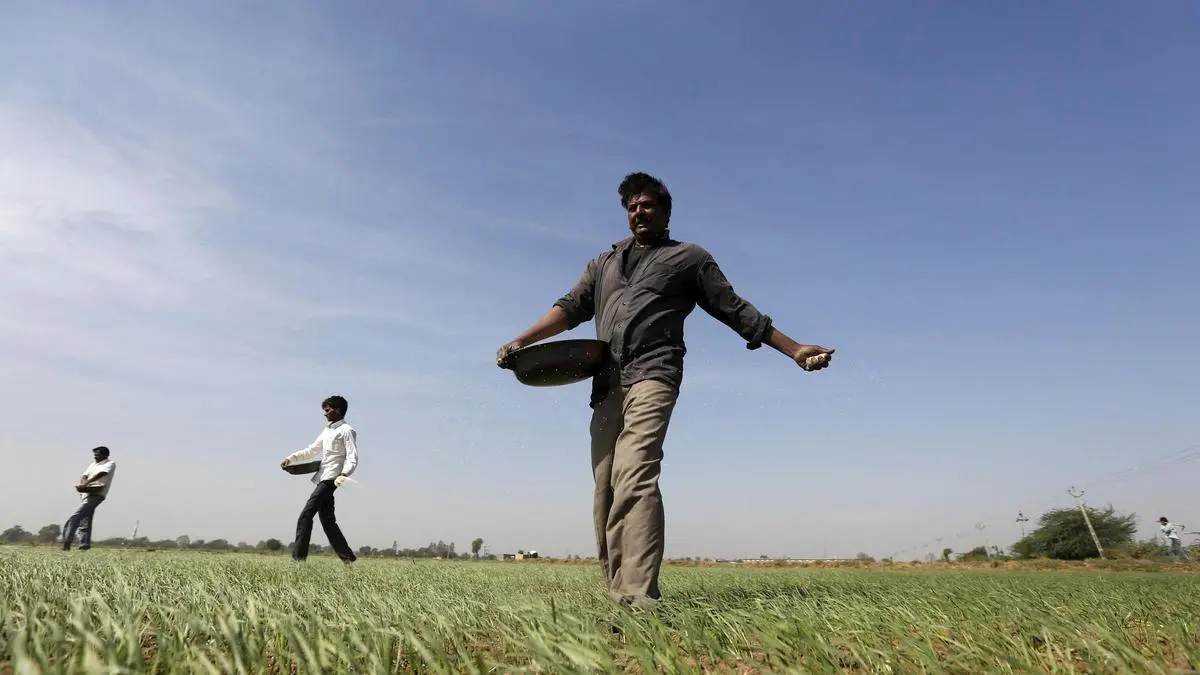
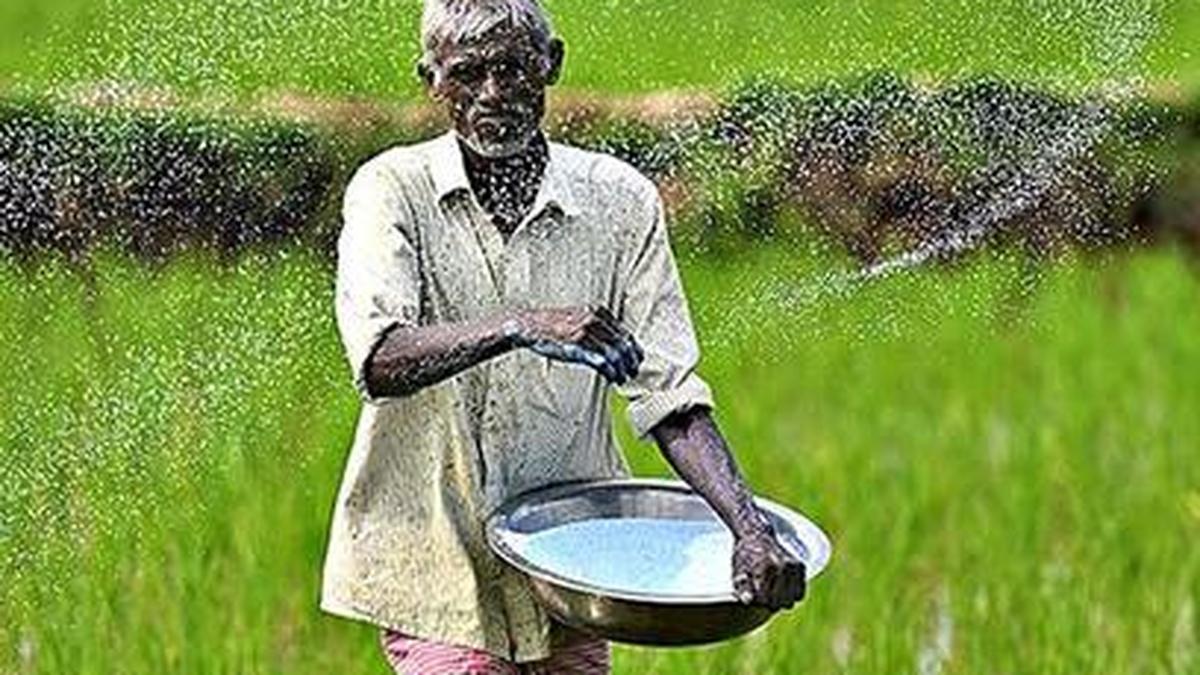
Fertiliser demand recovered in the first half of July as kharif sowing gathered pace after a weather-induced slowdown in May and June. The latest sales data show that farmers continue to overwhelmingly prefer subsidised urea, underscoring the persistent imbalance in nutrient consumption despite the government's push for balanced fertilisation.Against an estimated demand of 74.28 lakh tonnes (lt) for July, the peak sowing month for most kharif crops, fertiliser sales touched 41.09 lt by July 17, indicating that over half the month's projected demand had already been met. Urea accounted for 25.86 lt of the sales, more than 62 per cent of its estimated monthly demand of 41.67 lt and nearly two-thirds of total fertiliser off-take. In comparison, sales of di-ammonium phosphate (DAP) stood at 5.74 lt against a projected demand of 12 lt, Muriate of Potash (MoP) at 1.07 lt against 3.54 lt, and complex fertilisers at 8.42 lt against 17.07 lt.The sharp recovery in demand coincided with a revival in kharif sowing following improved monsoon rains in July. The sowing deficit in paddy narrowed to 2 per cent as of July 31 from 9 per cent on July 10, while the shortfall in cotton reduced to 2 per cent from 15 per cent and in maize to 7 per cent from 20 per cent. Overall kharif sowing was less than 3 per cent below last year's level by July-end, compared with a 4.7 per cent deficit a week earlier."There has been a significant rise in sowing of paddy, maize and cotton in July. Consequently, demand for fertilisers has increased. As the latest forecast also indicates normal to above-normal rainfall in many areas that were severely deficient in June, fertiliser demand is expected to rise further in August depending on the pace of sowing," said S K Singh, an agriculture scientist.Reflecting expectations of sustained field activity, the Agriculture Ministry has projected August demand at 38.01 lt of urea, 9.81 lt of DAP, 3.27 lt of MoP and 15.27 lt of complex fertilisers.Although there is recovery in July, fertiliser sales in the first quarter (April-June) remained lower than a year ago. Total sales of the four major fertilisers declined 5 per cent to 115 lt from 121.19 lt in the corresponding period last year. Urea sales fell to 65.06 lt from 69.99 lt, while MoP and complex fertilisers also recorded lower off-take. DAP was broadly unchanged at 16.25 lt.According to sources, the decline followed an unusually strong April, when fertiliser sales surged 25 per cent to 23.59 lt. The government subsequently introduced measures, including linking fertiliser distribution with Agristack data in select States, to curb excess purchases. Demand was further dampened by a weak monsoon in June, when rainfall ended 35 per cent below normal and kharif sowing lagged by nearly 20 per cent. Improved rainfall in July has since helped revive both sowing activity and fertiliser consumption.Published on August 2, 2026