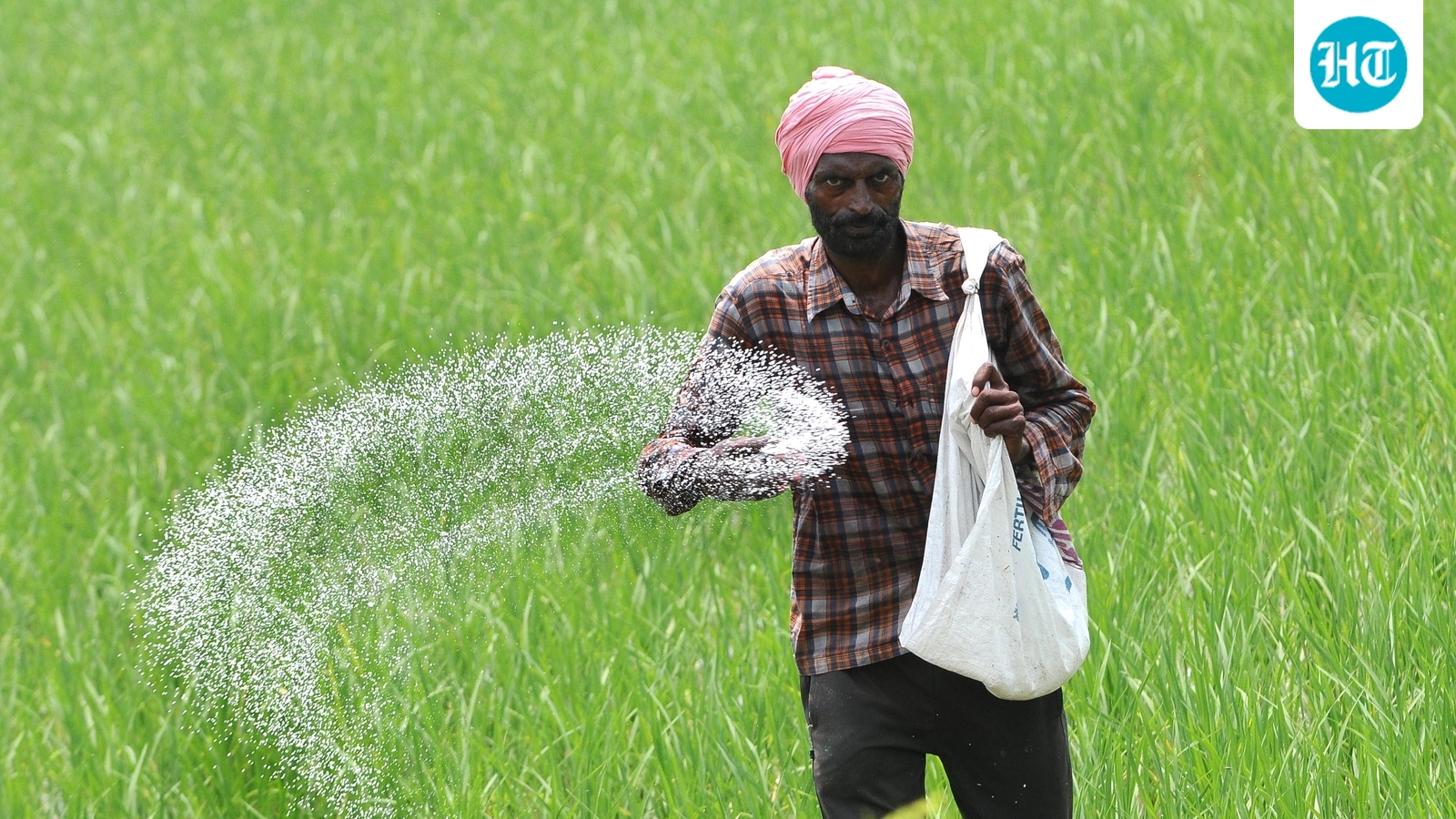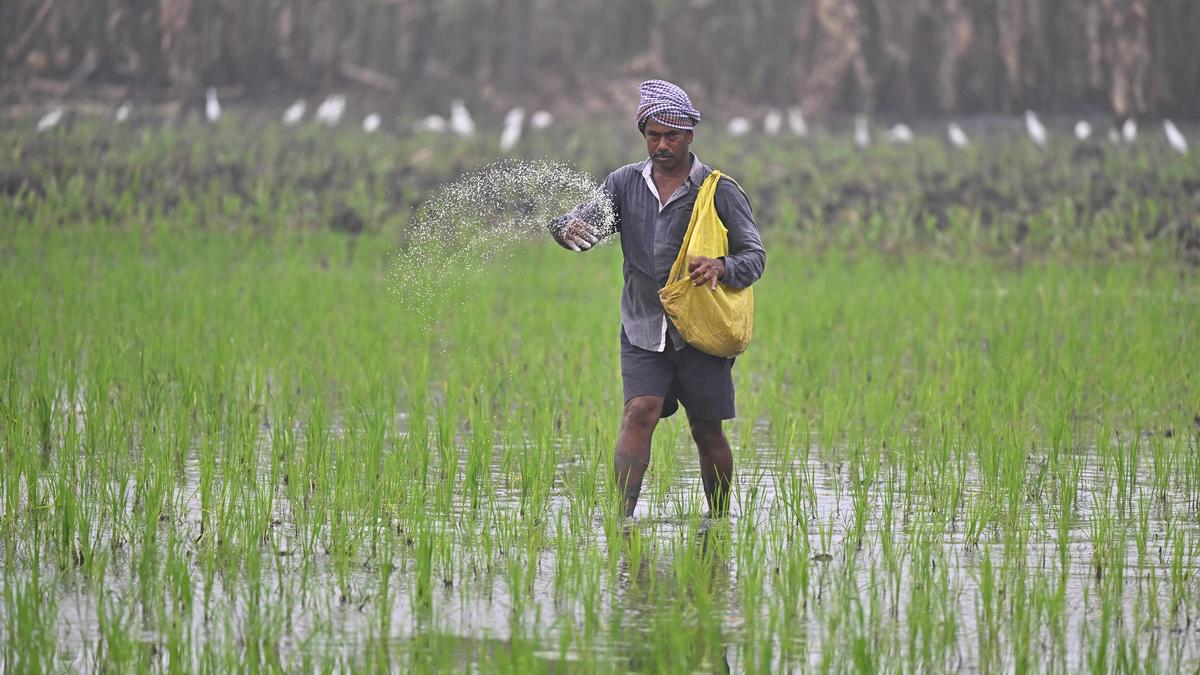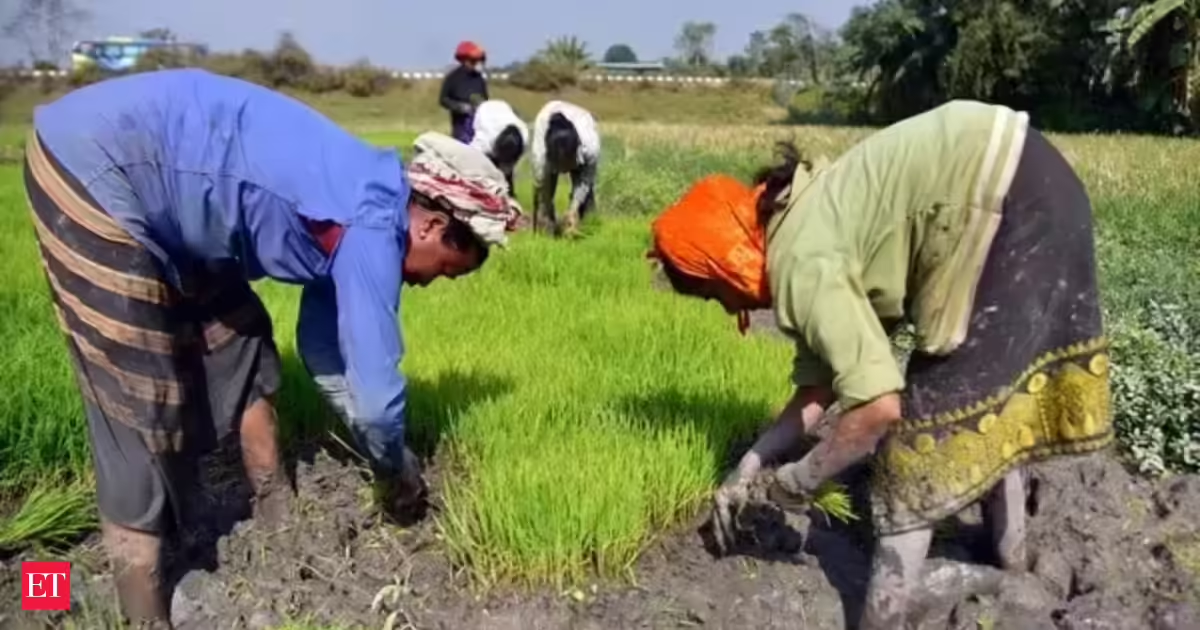
Fertilizer Secretary Rajat Mishra said that 50.6 lakh tonnes (lt) of urea have been sold between March 1 and May 25
| Photo Credit:
While India may navigate the availability of fertilizers during the kharif season, it could face problems during the rabi season. Rajat Kumar Mishra, Secretary, Department of Fertilizer, Ministry of Chemicals and Fertilizers, on Friday said it would be difficult to respond to queries on rabi crop nutrients’ availability now due to the current geopolitical tensions.He asked States to stop excessive use of fertilizers and their diversion for industrial purpose. He said per day urea sales was now 80,000 tonnes, almost double from normal and that it needs to be checked immediately.He said the blockade of Strait of Hormuz has completely disrupted urea imports, DAP, ammonia and sulphur from West Asia to India. As many as 16 ships loaded with fertilizers and inputs are stuck in the Strait of Hormuz since March. But some experts are hopeful of easing of supplies after China lifted its ban on export ban of fertilizers two days ago.10% higher salesSharing data before agriculture ministers of 17 States at the concluding day of the national kharif conference in New Delhi, Mishra said that 50.6 lakh tonnes (lt) of urea have been sold between March 1 and May 25 this year, which is nearly 10 per cent higher than 46.01 lt in the year-ago period. Major contributors to the higher sales include Maharashtra, Haryana, Punjab, Uttar Pradesh, Rajasthan, Jammu and Kashmir, Assam, Chhattisgarh, Jharkhand and West Bengal.While companies have sold 1.4 lt more urea in Maharashtra alone during this period, in Haryana sales were reported to be 94,968 tonnes more, in Punjab 90,830 tonnes higher, while Uttar Pradesh 83,036 tonnes and Rajasthan 70,328 tonnes more.Similarly, sales of di-ammonia phosphate (DAP) have surged by over 39 per cent to 12.49 lt since March 1 from 8.98 lt a year ago, after the West Asia crisis started with the war against Iran by the US and Israel in February. Higher sales of DAP were reported from Maharashtra, Karnataka, Punjab, West Bengal, Haryana, Bihar, Telangana, Rajasthan, Gujarat, Andhra Pradesh and Uttar Pradesh.Sulphur scarcityThe Secretary told the States that the Centre is doing its best to source the fertilizers wherever available, but globally production has been affected. He said Morocco, which has 70 per cent of the world’s phosphorus reserves, is unable to produce adequate DAP/TSP due to scarcity of sulphur.Commenting on some State agriculture ministers’ demand to move fertilizer sales through Agristack data, where verified land records of farmers are maintained, Union Agriculture Secretary Atish Chandra said that the Centre would roll out a pilot scheme in two districts each in all the “willing States” this kharif season. Sales would be regulated as per the land record and the crops grown, he said, adding that States have identified two districts where the pilot could be started.Chandra also appealed to the States to take additional grants under the SASCI scheme by linking and implementing Agristack data in four key areas – fertilizer sales, procurement under MSP, PMFBY and crop production estimate.Strong stocks positionMishra, on the other hand, said that fertilizer sales in nearly 100 districts across the country have exceeded normal requirements by a significant margin and are being closely monitored by the government. However, owing to proactive government measures, India is currently in a much stronger fertilizer stock position than ever before, he added.According to him, gas procured through the open tendering process for fertiliser plants has become 70-80 per cent costlier because of the war, while India has so far imported 25 lt of urea at prices 112 per cent higher than pre-war levels. Additionally, India has imported 13.5 lt of DAP at prices nearly 38 per cent above pre-war rates.India requires around 390 lt of fertilizers during the current kharif season, while existing stocks as on May 25 are around 200 lt, as against 181 lt year-ago.Published on May 29, 2026