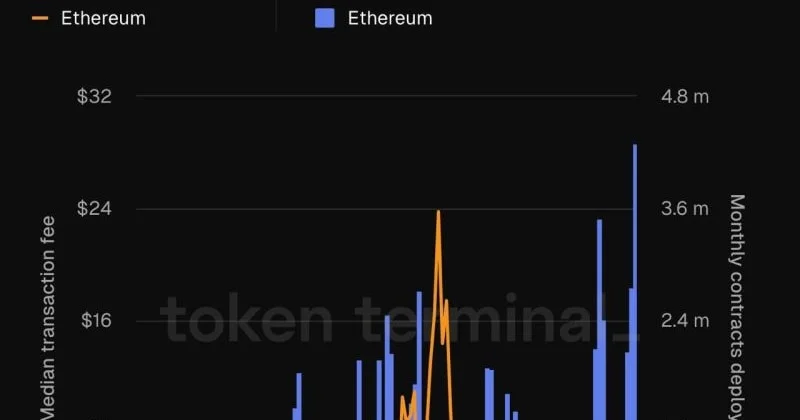
Ethereum is generating more transactions than ever while earning less from each one. Average gas prices have cratered to around 0.5 gwei in early 2026, with some periods dipping as low as 0.15 gwei. For context, a gwei is a billionth of one ETH, meaning the cost of transacting on the world’s largest smart-contract platform has effectively become a rounding error.
The paradox of cheap success
Ethereum’s scaling roadmap is working exactly as designed. The Dencun upgrade, which rolled out in 2024, dramatically reduced the cost of posting data from Layer 2 networks back to mainnet. The upcoming Fusaka upgrade, expected later this year, promises to push that efficiency even further.
Over a recent 30-day stretch, Ethereum pulled in roughly $10.3 million in transaction fees. That figure puts it behind both Tron and Solana. Ethereum’s blocks are filling to only about 62% capacity on average, which means the network isn’t even close to the congestion levels that historically drove fees higher.
The practical consequence: less ETH gets burned. When burn rates fall below new issuance, supply expands rather than contracts.