Ethereum’s Layer 1 network processed more transactions than ever while charging users almost nothing for the privilege.
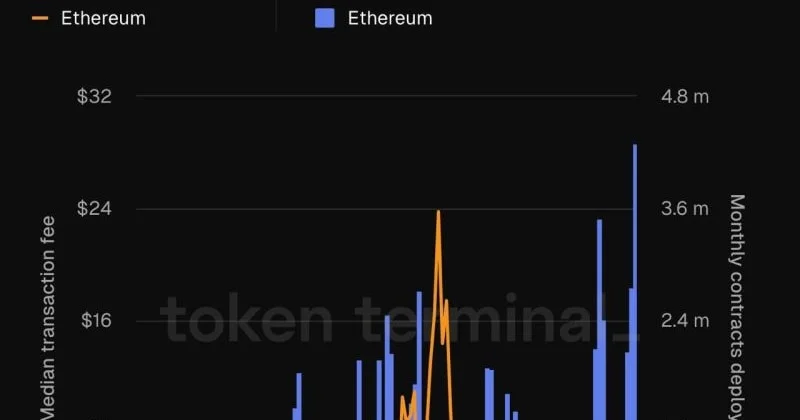
Daily transactions on Ethereum L1 peaked at 1.87 million on December 31, 2025, blowing past the previous record of 1.61 million set during the frenzy of May 2021. Meanwhile, average transaction fees have cratered to around $0.21 in recent readings, with some periods dipping as low as $0.15. That’s a decline of more than 50% year-over-year, and it represents an all-time low for cost-per-transaction on the network.
How Ethereum broke the fee-activity correlation
The key inflection point was the Dencun upgrade, which went live in March 2024. It introduced something called proto-danksharding through EIP-4844, which created a much cheaper way for Layer 2 rollups to post their data back to Ethereum’s main chain. Before Dencun, L2s had to compete with regular users for the same limited blockspace. After Dencun, they got their own dedicated, discounted lane.
The result was a cascading relief effect. Layer 2 networks like Arbitrum, Optimism, and Base could process transactions far more cheaply, which pulled a massive volume of activity off L1. The main chain, freed from congestion, could handle its remaining traffic at a fraction of the old cost.