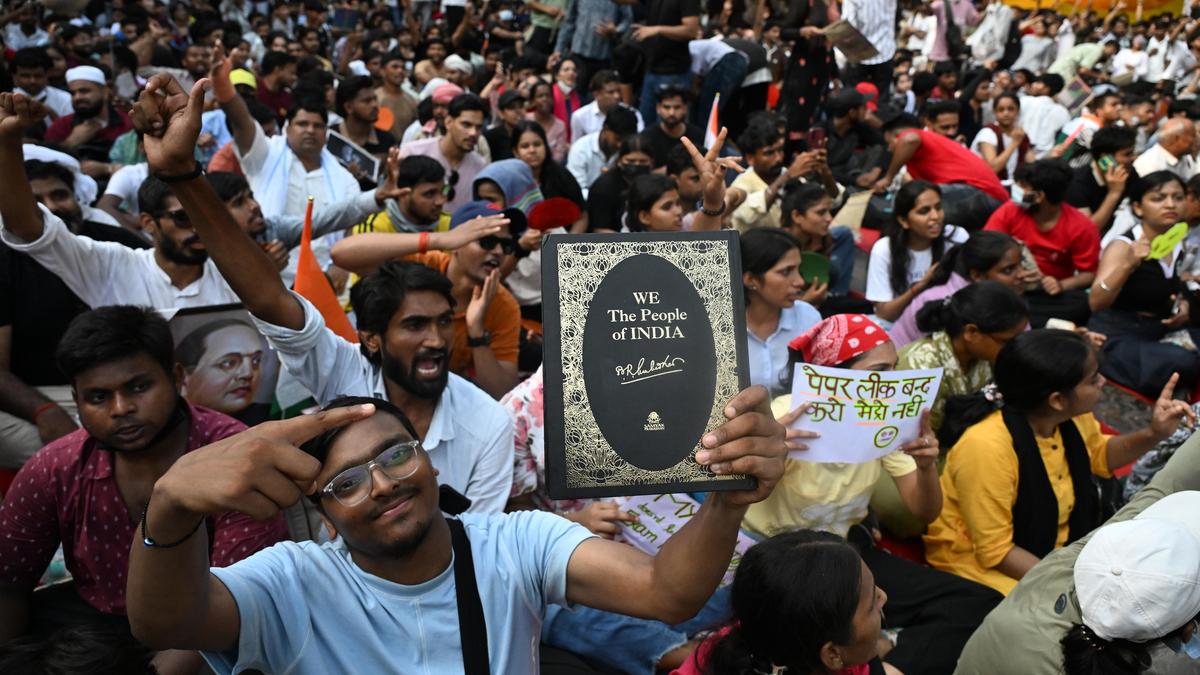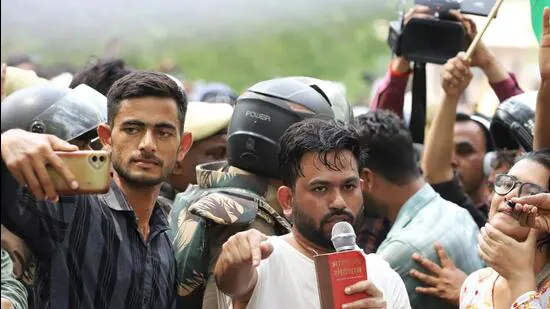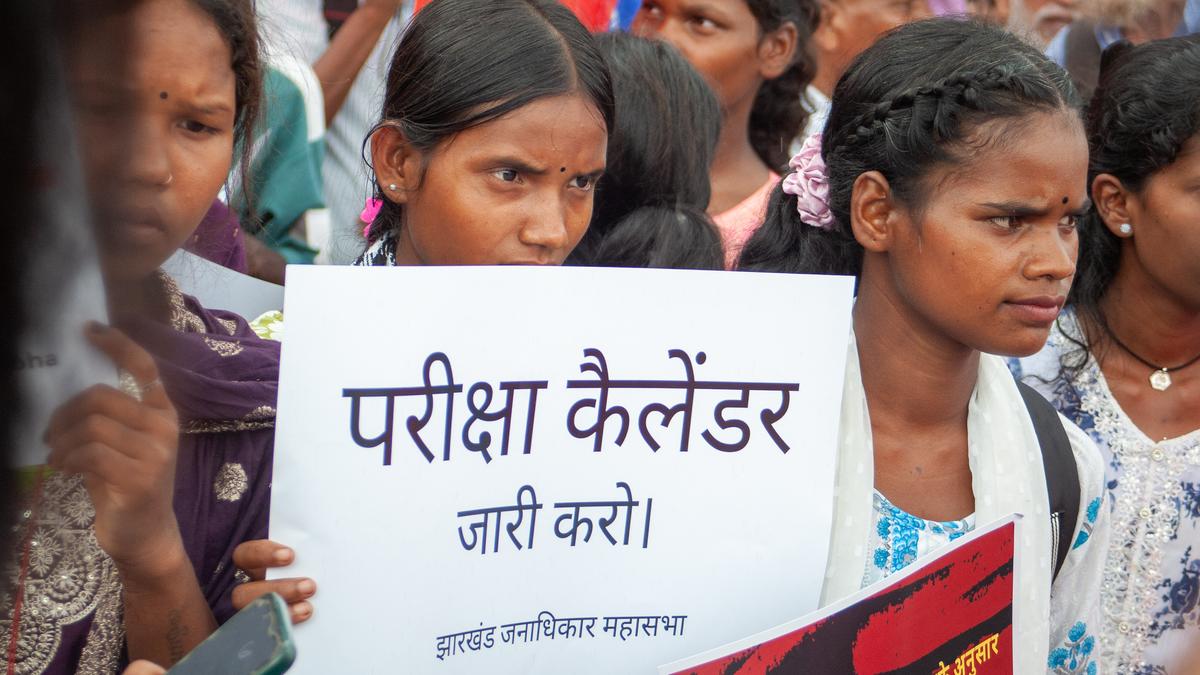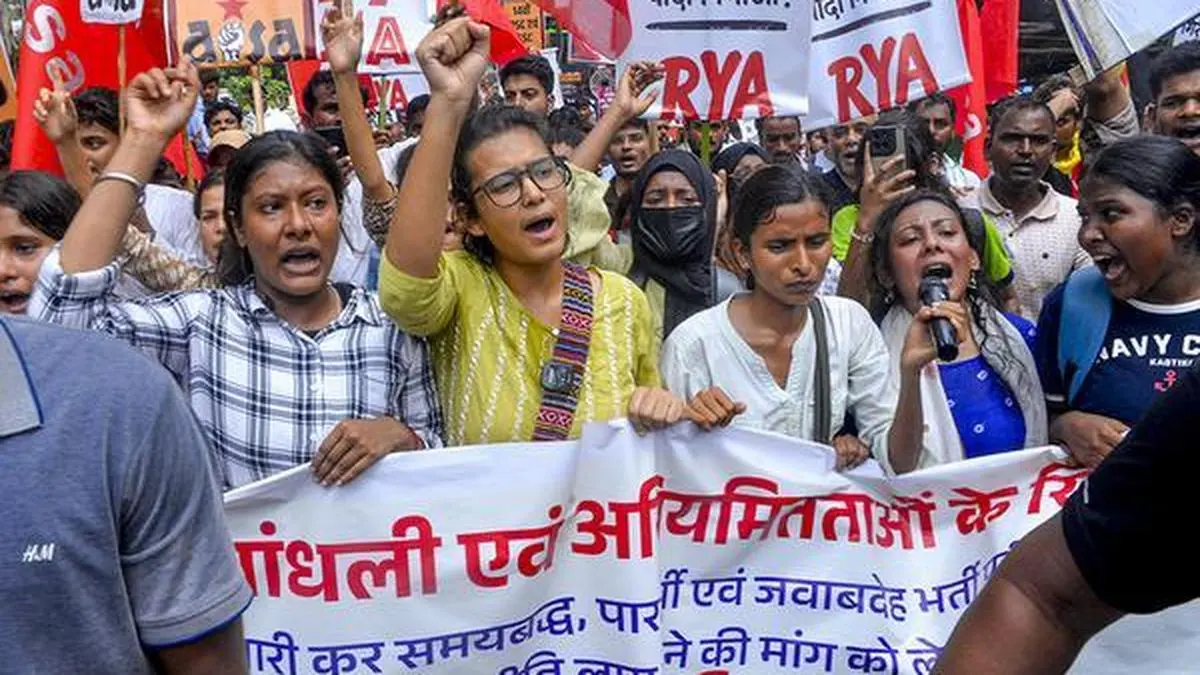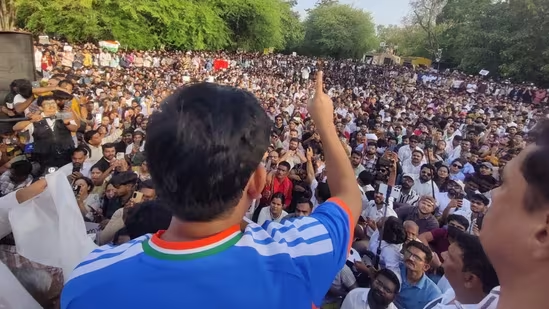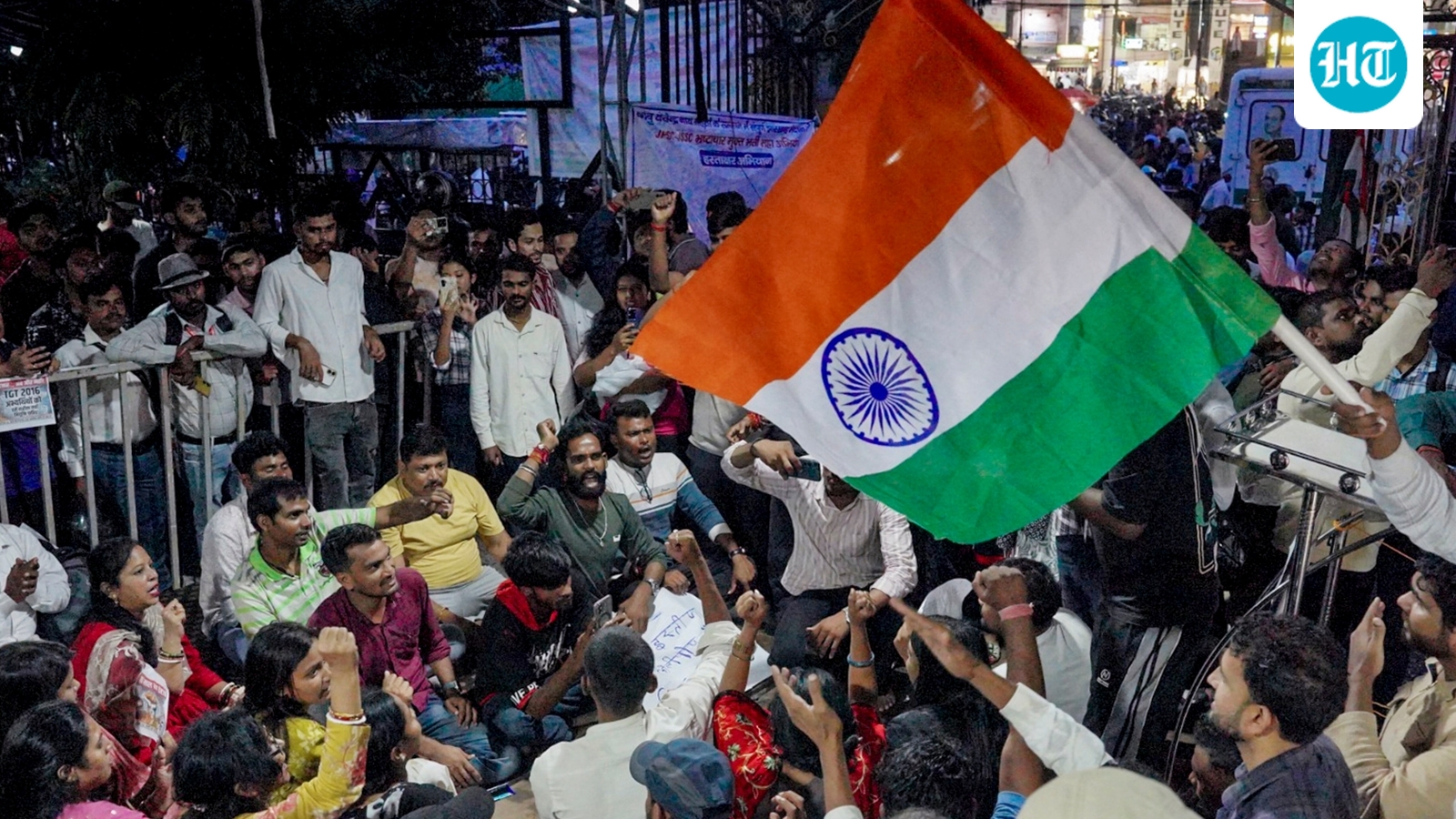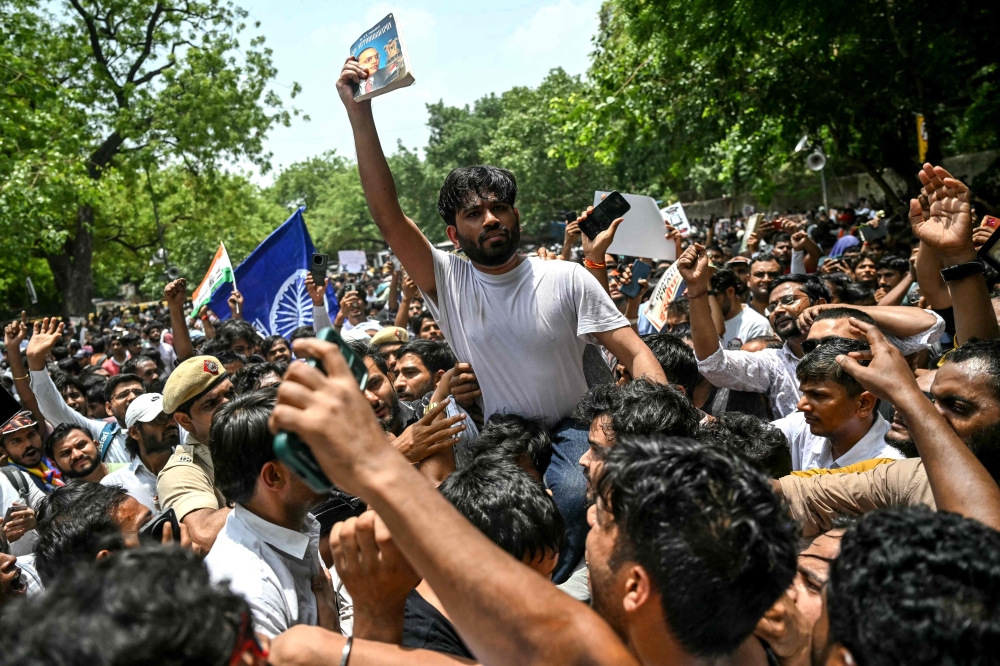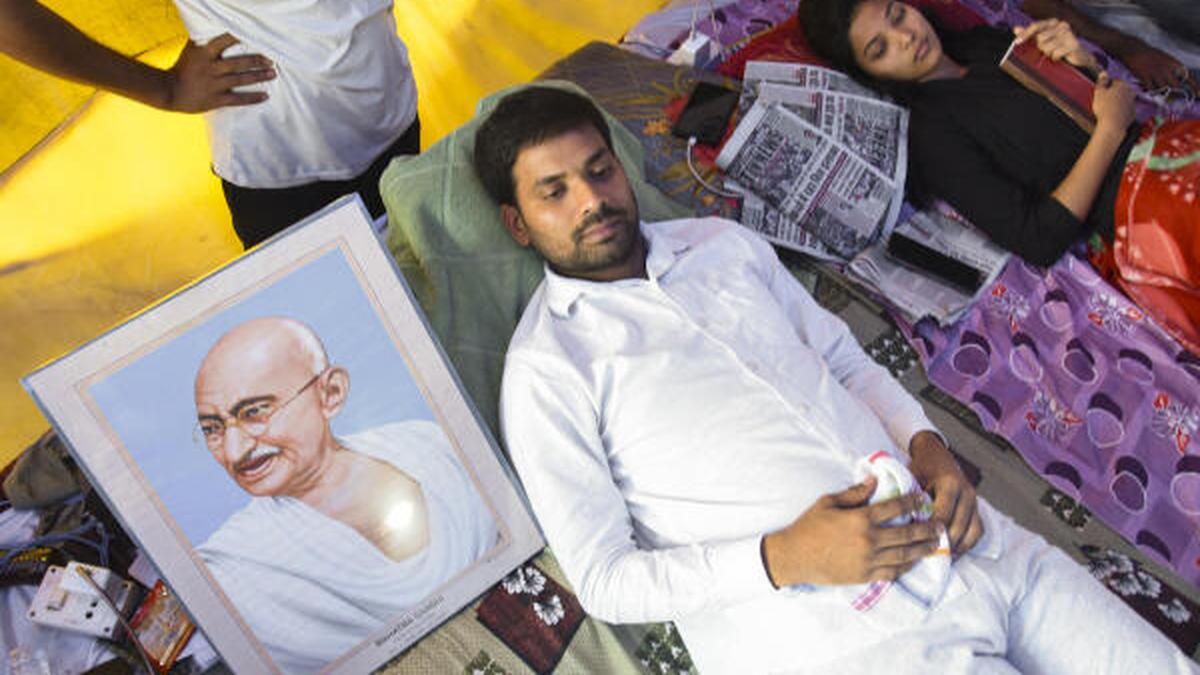
Nearly, 40 days of protests at Jantar Mantar in Delhi — led by the Cockroach Janta Party, All India Students’ Association (AISA), and other student groups over exam paper leaks and irregularities — ended with Union Education Minister Dharmendra Pradhan’s resignation on July 25. Yet, its ripple effect appears to have spilled onto the streets across states. This time, the focus was not on entrance examinations and access to education, but on examinations and employment, which remain major concerns, particularly as the unemployment rate among people aged 15 and above stood at 5.4% as of June 2026.In Jharkhand, for instance, students entered the 19th day of protest on Monday (August 12) over alleged irregularities in the Jharkhand Public Service Commission’s (JPSC) 14th Civil Services Preliminary Examination. This all began when an Optical Mark Recognition (OMR) sheet allegedly belonging to a successful candidate began circulating across WhatsApp groups and Telegram channels. Students claimed the sheet showed that only a fraction of the questions had been answered correctly, yet the candidate had qualified. Soon, allegations of large-scale manipulation snowballed, and student groups announced protests.Not the first timeBut this isn’t the first time a State Public Service Commission (SPSCs) which conducts examinations to recruit candidates for respective state government services, has been caught in the ire over irregularities or paper leaks. They have long been plagued by paper leaks, irregularities, and delayed recruitment.Consider Telangana, a younger state in southern India formed after its 2014 bifurcation from Andhra Pradesh. One of its key statehood movement slogans was Neellu, Nidhulu, Niyamakalu (water, funds and jobs). Yet after the last Group-I exam was conducted in 2011 under combined Andhra Pradesh, the Group-I preliminary exam was held again only in October 2022 — eight years after statehood — for 503 posts, drawing 2.86 lakh candidates. That exam, however, was cancelled following a paper leak. It was conducted a second time eight months later, in June 2023, but the Telangana High Court directed the Telangana State (TGPSC) to cancel that preliminary test as well and re-conduct again.The State government changed in December 2023, with the Indian National Congress (INC) coming to power and ousting the then-ruling Bharat Rashtra Samithi (BRS). Almost a year later, the TGPSC conducted the Group-I examination in June 2024 to fill 563 revised vacancies. The process was then pushed into a legal battle after some aspirants approached the Telangana High Court, alleging discrepancies in the evaluation of answer scripts. In September 2025, a single judge of the High Court ordered the re-evaluation of the answer scripts or a re-conduct of the examination. However, a Division Bench of the High Court set aside the single-judge order in February 2026.The matter then reached the Supreme Court, which, in April 2026, dismissed a batch of petitions challenging the recruitment, almost 12 years after the State’s formation, allowing the TGPSC to proceed with the recruitment of 563 candidates to Group-I posts.Aspirations and distrustMeanwhile, Mr. R.A. Israel Jebasingh, a former IAS officer and Founder and Director of Officers IAS Academy, said government jobs continue to attract the younger generation, and explained why they remain sought after, “though the IT sector has grown compared to the period before the year 2000, government jobs continue to remain attractive to this generation for two reasons: job security and social status. The IT sector has not been able to accommodate a large workforce, and even those who secure placements are not always assured of a job, with growing fears that artificial intelligence could replace jobs and companies could continue to reduce their human workforce. As a result, the immediate focus continues to be on both SPSCs and the UPSC.”While the UPSC’s time-bound examination cycle could serve as a model for SPSCs, it should not be treated as the “holy grail”, Mr. Jebasingh said. He elaborated that, “Both the UPSC and SPSCs have annual calendars. The UPSC collects vacancy data in advance across the States and is able to conduct its examinations accordingly, as per the calendar. When the UPSC can collect this information from across the country, why can’t SPSCs do the same when they are operating within the State and their primary responsibility is to conduct recruitment examinations?” he asked. “This does not mean the UPSC should be treated as the holy grail. It has its own problems, particularly when it comes to transparency in the examination and candidate-selection process, such as the misuse of reservations meant for Persons with Disabilities and Economically Weaker Sections,” he added.Mr. Jebasingh also noted that there is a paradox. “Young people increasingly distrust recruitment commissions because of delays and irregularities, as we are seeing today. Yet, they cannot afford to walk away from government examinations spending years preparing during the prime of their youth.” Therefore, he said, the problem does not lie with the students but with the recruitment commissions, and pitched for reforms, such as reducing the time and number of stages involved in the examinations and conducting them in a time-bound manner with transparency.Independent, yet notThe SPSCs are constitutional bodies established under Articles 315–323 of the Constitution. According to the articles in the constitution, each State has its own commission, which conducts examinations to state services, similar to the role played by the UPSC at the Centre. In terms of its composition, the Governor determines the number of members of the SPSC. At least half of the members of every Public Service Commission should have at least 10 years of experience in government service at the time of their appointment. Members of an SPSC serve for six years or until they turn 62, whichever comes first. The Governor can appoint an acting chairman, however, members of the commission can be removed only by the President of India, in accordance with the constitutional procedure.Though this grants SPSCs constitutional independence, speaking on the issue, former Director General of Police D. Gautam Sawang, who also served as Chairman of the Andhra Pradesh Public Service Commission (APPSC) from 2022 to 2024, said that while the commission is independent in letter, it is definitely not so in practice. Firstly, he argues that appointments to SPSCs are often driven more by political considerations than by the competency or credibility of the incumbents. He says States need to move away from such practices, which lead to vested interests and a lack of competency and commitment to the commissions’ functioning.Secondly, Mr. Sawang said, “most SPSCs remain totally dependent on State governments for funds to conduct examinations. While examination fees could potentially provide commissions with modicum of financial independence, the fees collected are routed to the State government exchequer rather than directly to the SPSCs, leaving the commissions dependent on the government to meet the expenses to conduct the examinations and recruitment process”.Thirdly, Mr. Sawang added that, “SPSCs are again dependent on the Government and its departments to ascertain the vacancies and number of posts that need to be filled up and schedule the recruitment cycles or calendar. Often inter departmental coordination within the Government and lack of clarity of data delays the process. Thereby affecting the predictability of the recruitment cycles.” He added, “Further, even for conducting an examination, the SPSCs need the active support of Government Departments and coordination across several departments and institutions, for instance universities, colleges and school that provide examination centres, invigilators, examiners and staff apart from the Police Department for security.”“Even if everything works out, the problem comes with the State government’s political decision on whether to go ahead with recruitment and fill the vacant posts or otherwise. Very often, the consideration is the burden on the State exchequer should the vacancies be filled. Therefore, even if there are huge vacancies in certain departments, agencies or institutions, the Government may defer recruitment to these posts due to the financial burden involved,” Mr. Sawang shared.He further noted, “In result, these delays and considerations are affecting not only job aspirants but also the broader functioning of public administration, governance and even the quality of educational institutions, as prolonged vacancies continue to burden some of the State’s legacy institutions as well”. He also said that it is high time to constitute a committee to study the functioning of SPSCs and examine what predicates on their functioning and quality of the recruitment processes.(The author is an independent journalist based in Hyderabad covering politics, human rights, and environmental issues, primarily from Andhra Pradesh and Telangana. He is now expanding his work to include education across all States.)
State PSCs under scrutiny as exam irregularities, delays erode trust
State PSCs face growing scrutiny over exam irregularities and delays, fueling protests and eroding public trust in recruitment processes.
1,405 words~6 min read