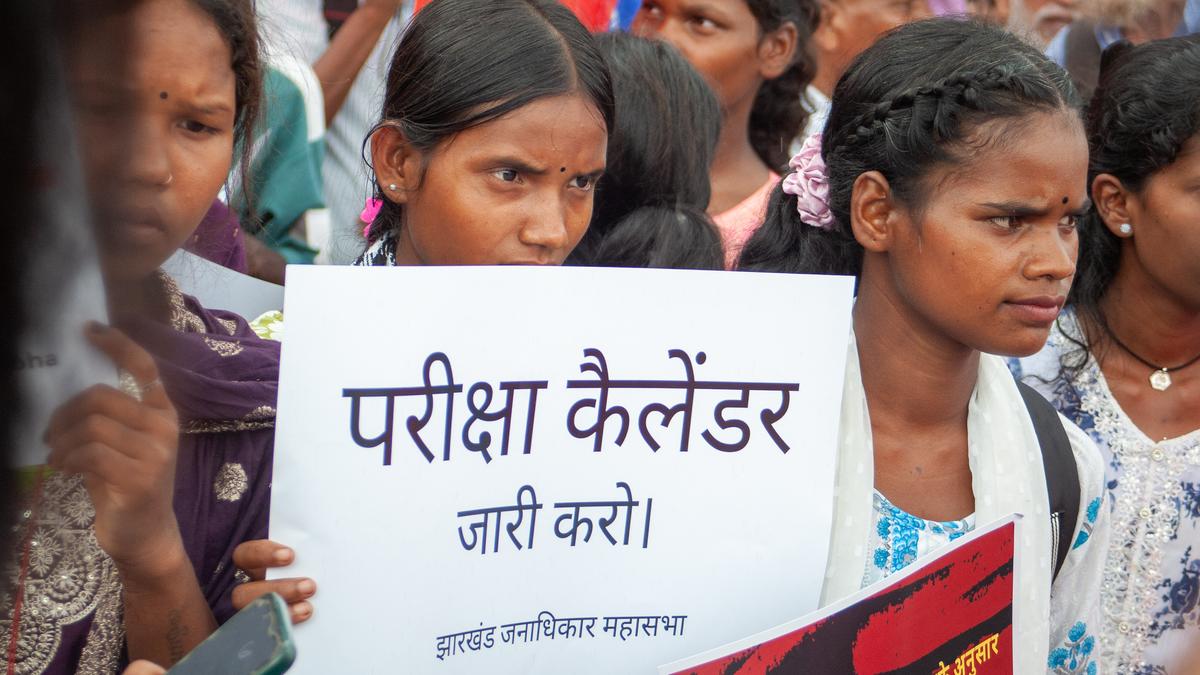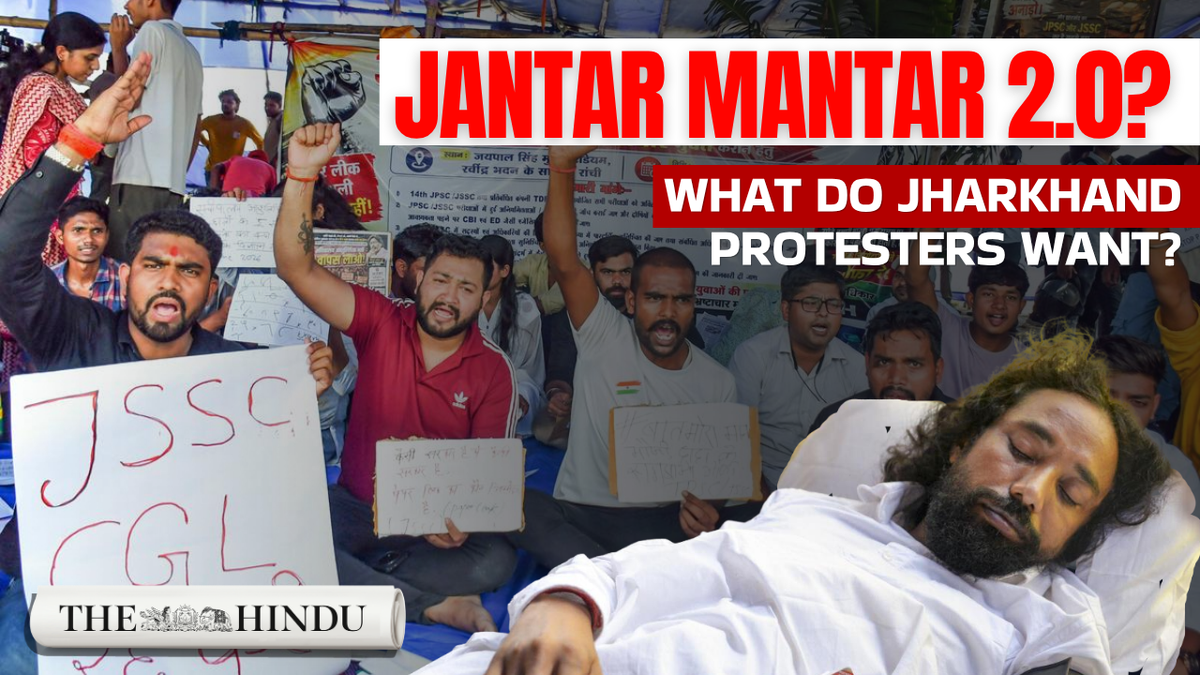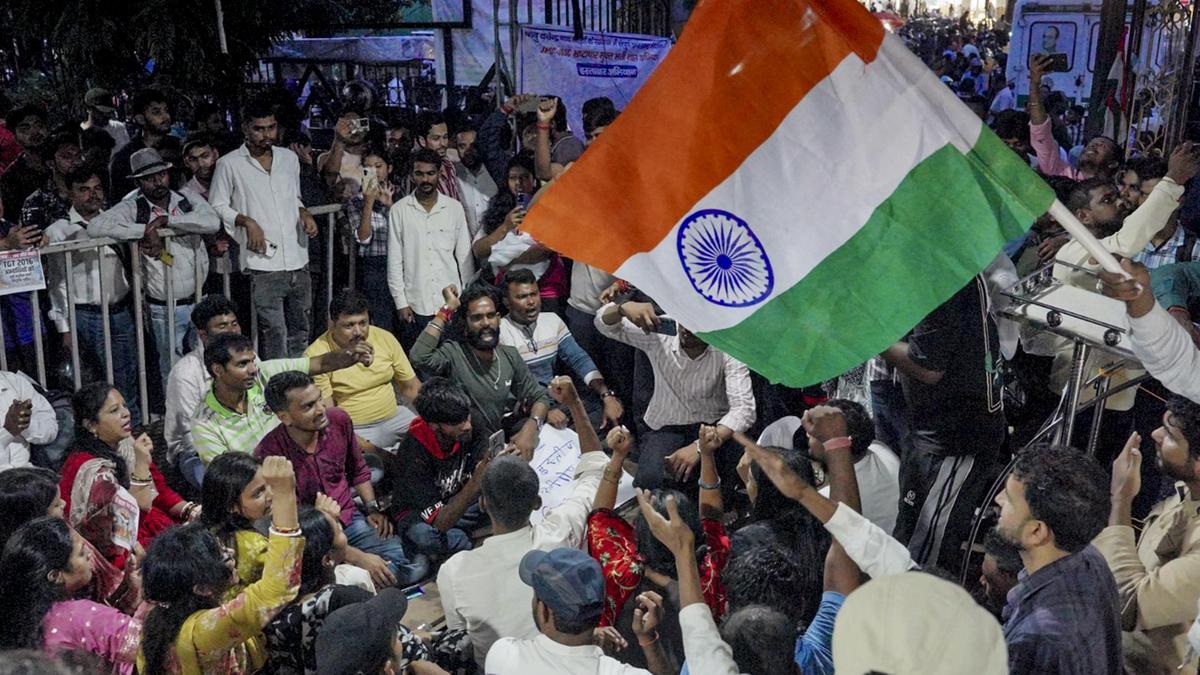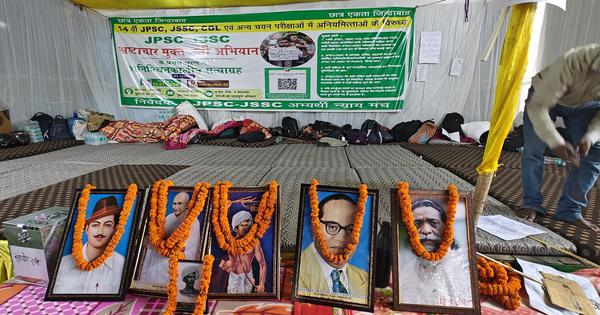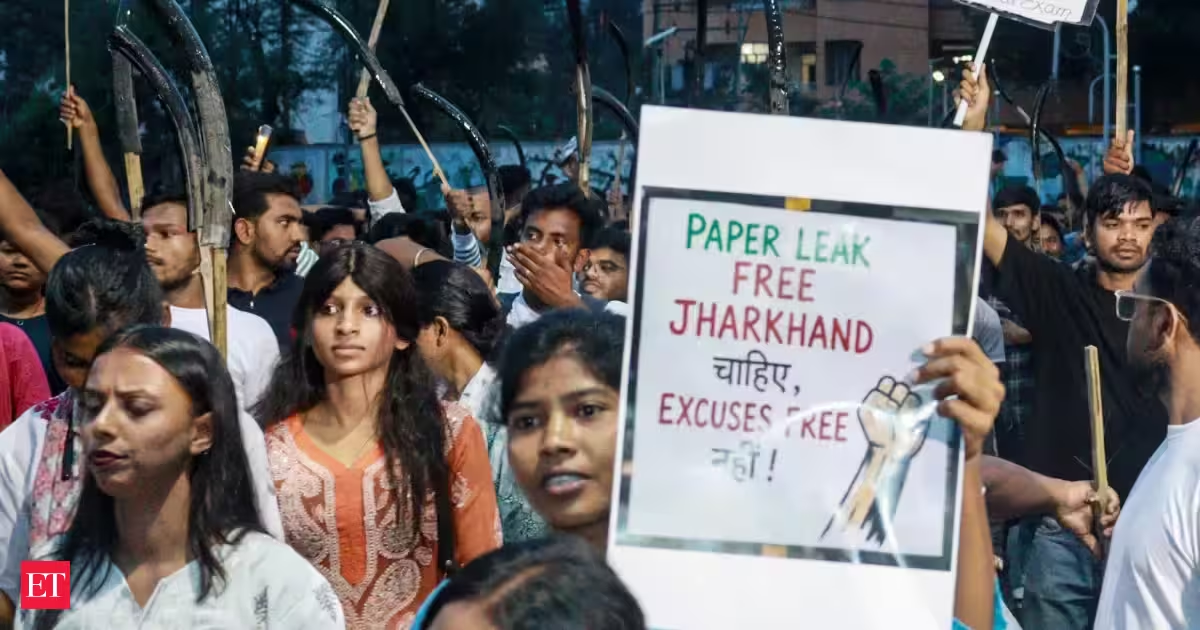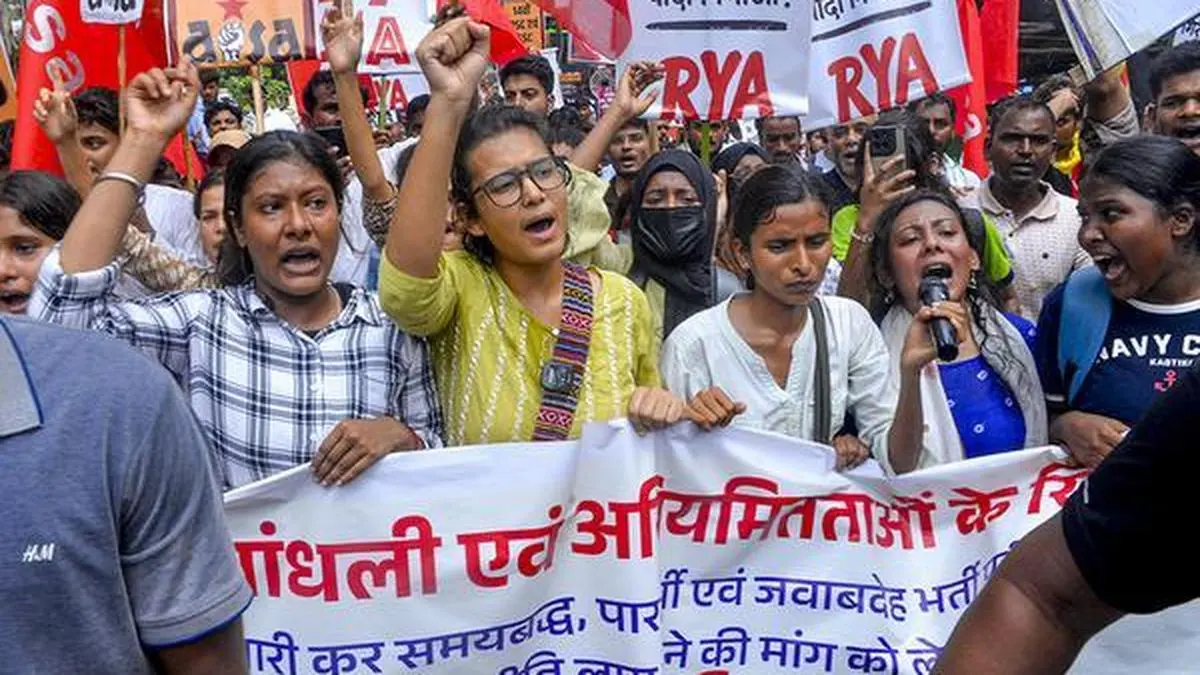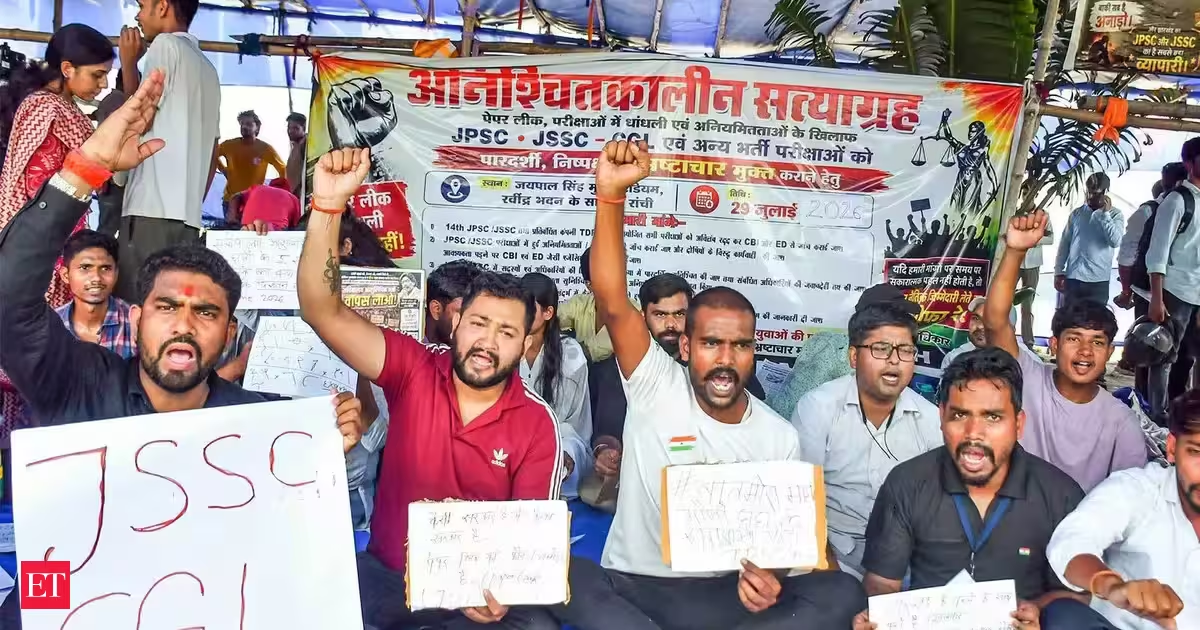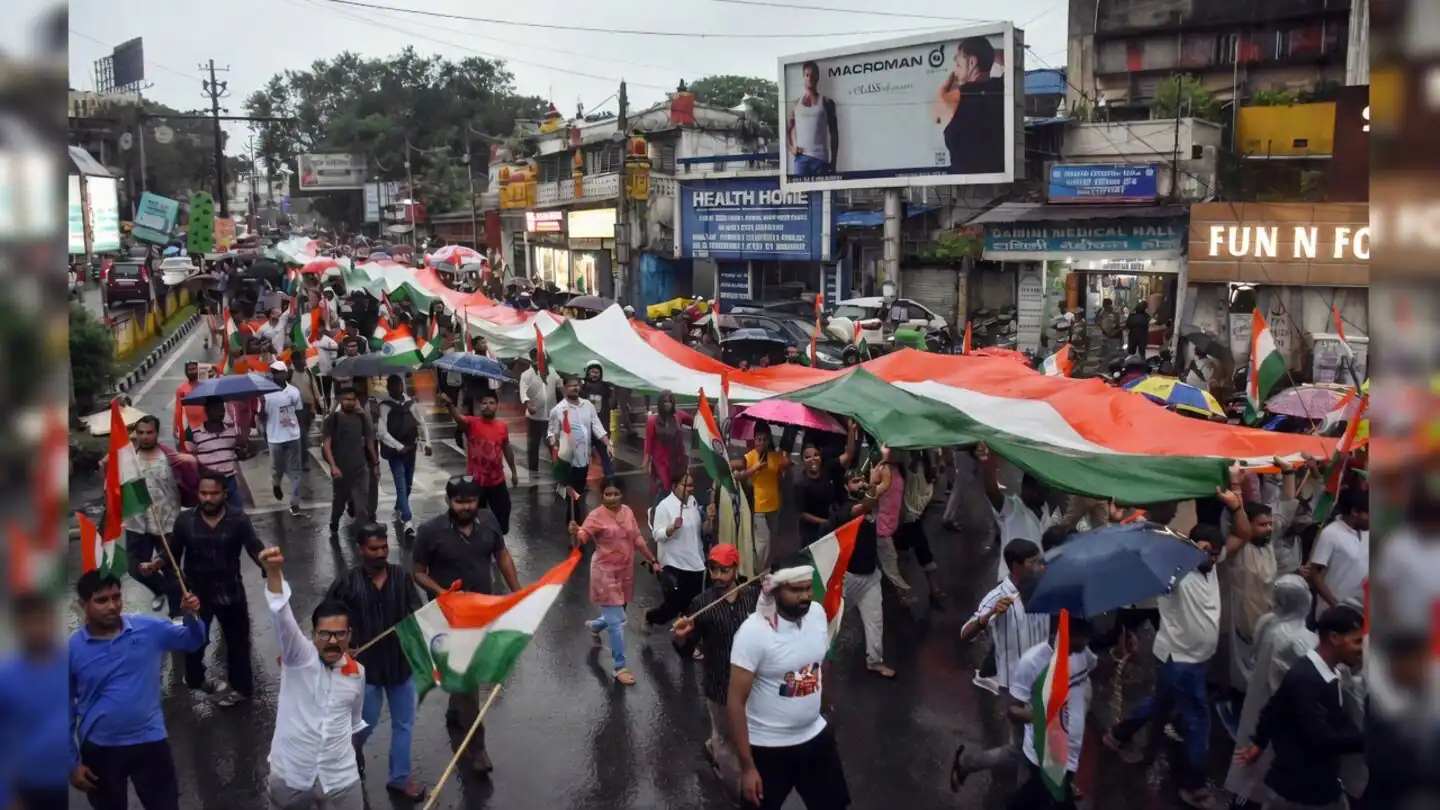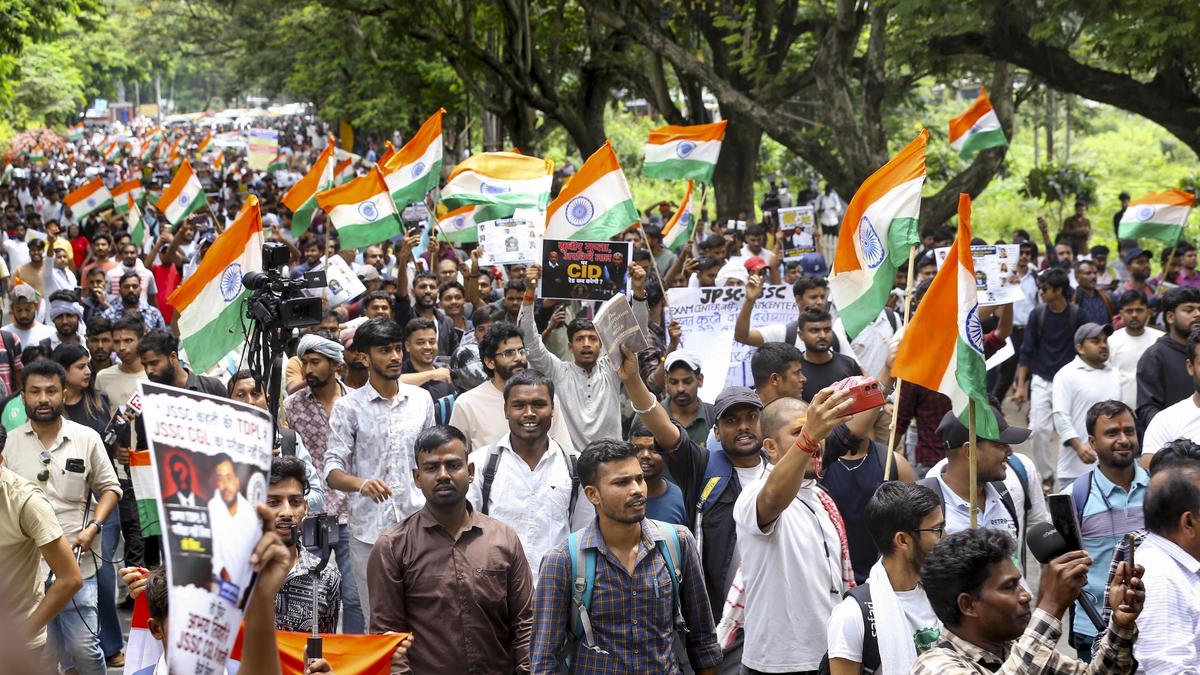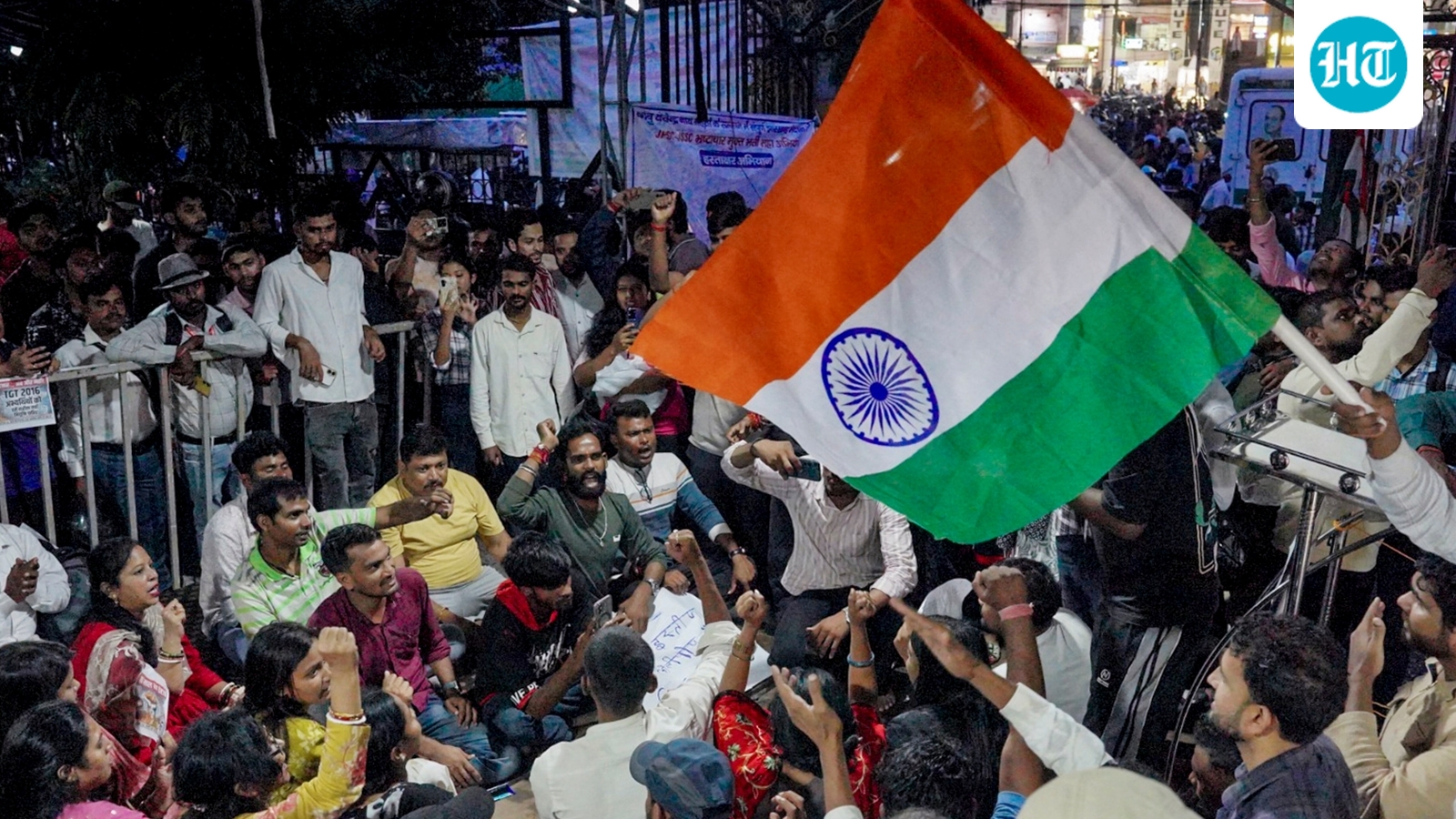
For thousands of young people in Jharkhand, a government recruitment examination is supposed to be a gateway to a secure job. Instead, over the years, exams conducted by the Jharkhand Public Service Commission (JPSC) and Jharkhand Staff Selection Commission (JSSC) have repeatedly been followed by allegations of paper leaks, irregularities, delays, evaluation disputes and court cases.Students and aspirants stage a protest against the Jharkhand Government regarding the irregularities of exams and paper leak of JPSC in Ranchi. (PTI)The latest controversy has now grown into one of the state's biggest student agitations in recent years.On Monday, students protesting alleged irregularities in recruitment examinations were preparing to march towards the Jharkhand Assembly, even after the state government said it had accepted "98 per cent" of their demands. The students have rejected that claim and insisted that their agitation will continue until they get a Central Bureau of Investigation (CBI) probe into the alleged irregularities, particularly in the JSSC Combined Graduate Level (CGL) examination.Tap for Live Updates on Jharkhand Student ProtestsThe standoff comes after the resignation of all three members of the JPSC on Sunday. Ajita Bhattacharya, Anima Hansda and Jamal Ahmed resigned days after the commission's chairperson, L Khiangte, stepped down on July 22. Their resignations were accepted by Governor Santosh Gangwar.The three members have also been summoned by the Jharkhand CID in connection with allegations of irregularities, including paper leaks. Bhattacharya is scheduled to be questioned on Monday, Ahmad on August 12 and Hansda on August 14.What triggered the latest JPSC controversy?The immediate flashpoint was the 14th Combined Civil Services Examination conducted by the JPSC in April.The preliminary examination was held for 103 vacancies, with 2,204 candidates shortlisted for the Main examination. Questions emerged after the preliminary results were announced, including over the absence of category-wise cut-off marks and the manner in which the merit list was published. Candidates also questioned why the merit list did not carry the signatures of the commission's constitutional members.The controversy intensified when alleged OMR answer sheets surfaced on social media.One viral OMR sheet purportedly showed a candidate from another state attempting only around 48 questions in Paper-I but still qualifying for the Main examination. Similar claims subsequently emerged regarding a backlog recruitment examination.The authenticity of the viral OMR sheets has not been independently verified. But the allegations were enough to trigger protests outside the JPSC office and prompt the state government to order a CID probe and constitute a special investigation team.The investigation subsequently widened.The CID arrested several people, including officials and employees linked to the private agency involved in conducting the examination. Among those arrested was Abhay Tiwari, a Block Supply Officer in Godda whom investigators allege played a role in a recruitment racket.According to the Indian Express, investigators found that Tiwari was simultaneously working as the marketing manager of TSR Data Processing Private Limited (TDPL), the private testing agency associated with the examination. The agency had earlier been blacklisted by the Jharkhand government in May 2025 over non-compliance with its agreement, but was subsequently given examination work. The agency had also faced blacklisting in other states.The CID is examining whether there was a link between Tiwari, the agency and recruitment of some of his relatives. Allegations that he acted as a middleman seeking money from candidates are also under investigation. No final conclusion has been reached on those allegations.Why JPSC's credibility has been questioned for yearsThe current controversy is not an isolated episode. Multiple reports have traced allegations surrounding JPSC recruitment examinations back to the early years after Jharkhand was carved out of Bihar in 2000. Almost every major JPSC civil services examination since then has faced some form of controversy, including revised results, additional merit lists, disputes over interview marks, reservation-related litigation, answer-key errors, evaluation issues or court intervention.The first and second JPSC civil services examinations have remained particularly contentious, with a CBI investigation into alleged irregularities continuing.Recruitment has also been marked by long gaps. During the five-year tenure of the Raghubar Das government, no JPSC Civil Services examination was conducted. After Hemant Soren's government came to power in 2019, it sought to clear the backlog by holding multiple examinations together.The 7th to 10th examinations were conducted together, followed by the combined 11th to 13th recruitment. But these examinations too faced protests over delays in results, evaluation-related issues and litigation before the Jharkhand High Court.For aspirants, the problem therefore goes beyond allegations of cheating or paper leaks. Delays themselves can have significant consequences when candidates spend years preparing for a limited number of government vacancies.JSSC CGL became another major flashpointThe JSSC Combined Graduate Level examination has become one of the most prominent examples of the recurring turmoil.The CGL examination was first held in January 2024 but was cancelled after allegations that its question paper had leaked hours before the examination. The Jharkhand Staff Selection Commission subsequently conducted the examination again in September 2024.The re-examination was held across 823 centres, with the government imposing a six-hour internet shutdown as part of measures to prevent cheating. Yet candidates again alleged irregularities, including an alleged leak and unusual differences in the number of candidates qualifying from different shifts.The matter reached the Jharkhand High Court, which stayed publication of the final results in December 2024 while the allegations were examined.The CID later arrested several people in connection with the alleged racket, including security personnel, while investigators also arrested alleged mastermind Vinay Shah, who was accused of taking candidates to Nepal to memorise leaked questions and answers.In December 2025, however, the High Court allowed the JSSC to publish the results while directing the Special Investigation Team to complete its probe within six months. The court said that if any successful candidate was subsequently found to have been involved in malpractice, the selection could be cancelled. The Supreme Court later dismissed challenges to that order.That legal history is central to the government's current refusal to cancel the CGL examination or hand the investigation to the CBI.The state has argued that the examination was conducted under the oversight of the High Court and Supreme Court. Students, however, continue to demand a central probe, saying an independent investigation is necessary to establish accountability.Paper leaks are not the only concernJharkhand's recruitment troubles have also included allegations about how examinations are organised.In July, nearly 75% of candidates who registered for the JSSC Field Worker Recruitment Examination failed to appear. Of the 3,22,867 registered candidates, only 86,444 appeared for the examination for 510 posts.Candidates complained about examination centres being located far from their homes and alleged that email notifications regarding admit cards were delayed. The examination itself was held nearly two years after the recruitment notification was issued.The Field Worker examination also generated a separate controversy over its Santhali-language paper. Candidates and representatives of the Santhal community alleged that nearly 40% of the questions were outside the prescribed syllabus and were of a standard closer to examinations such as UPSC Civil Services and UGC-NET, rather than the notified matriculation level.These complaints have added another dimension to the debate: even when there is no proven paper leak, candidates question whether the recruitment process is predictable, accessible and fair.There have also been earlier cases in which examinations were actually cancelled because of confirmed evidence of a leak. In 2022, JSSC cancelled its diploma-level combined examination for junior engineer recruitment after police said questions and answers circulated on WhatsApp before the test matched the actual examination paper.Why are students protesting now?The current agitation began against allegations surrounding the JPSC and JSSC examinations but has since broadened into a demand for systemic reform.The protesters have sought cancellation of multiple examinations, including JSSC CGL, JSSC Junior Engineer and PGT examinations conducted after 2019. They have also demanded the disclosure of category-wise cut-offs, OMR copies and response sheets, along with strict action against those found responsible for irregularities. Their principal demand remains a CBI investigation.Six protesters are currently on an indefinite hunger strike. The health of one of them, Devendra Nath Mahto, deteriorated on Sunday after his blood glucose level dropped. Ministers spoke to him through a video call and urged him to end his fast.The agitation has also drawn political support. Opposition parties, including the BJP, have demanded a CBI probe and staged demonstrations outside the JPSC office. Other political and student organisations have also backed the movement.Student leaders, however, have said they do not want the movement to be given a political colour.Government says 98% demands accepted, students disagreeAfter the sixth round of talks on Sunday, the state government said it had accepted 98% of the students' demands.Among the measures announced are cancellation of the 14th JPSC preliminary examination and the 2023 and 2025 JPSC backlog examinations. The government has also proposed an Enforcement Directorate probe into suspected financial irregularities, fast-track courts and a 90-day deadline for filing charge sheets in cases arising from the investigation.The government has further proposed an expert panel involving institutions including IIT-ISM Dhanbad, IIM Ranchi and XLRI Jamshedpur to recommend examination reforms. It has also proposed a committee headed by a retired High Court judge to examine the JSSC-CGL issue, while seeking suggestions from students through a dedicated portal.But the protesters say the government's claim of accepting 98% of their demands is misleading. According to student leaders, the government has agreed to cancel only three of the 13 examinations they want scrapped."We will not compromise till our demand for a CBI probe is fulfilled," JPSC-JSSC Reforms Manch leader Ravindra Paswan said after Sunday's talks.The government, meanwhile, has urged the students to return to dialogue.Chief minister Hemant Soren has assured protesting youths that those responsible for examination irregularities will face strict action and said justice would be delivered transparently. Governor Santosh Gangwar has also appealed to the students to resolve the issue through dialogue.Assembly march puts Ranchi on alertWith the students refusing to call off their agitation, Monday's planned march towards the Assembly has become the immediate flashpoint.Authorities have imposed prohibitory orders within a 750-metre radius of the Assembly until August 12 and deployed security personnel along routes leading to the complex. Most schools in Ranchi remained closed on Monday amid concerns over the mobilisation of students.Ranchi Police said it was prepared for the march but would not interfere with a peaceful demonstration. Police have warned that legal action would follow if protesters resort to violence.(With inputs from Vishal Kant and Raj Sharma)
Why Jharkhand recruitment exams have faced scrutiny, and what is driving the latest student protests
Jharkhand’s JPSC recruitment exams have faced allegations of irregularities and controversies since the state was carved out of Bihar. | India News
1,720 words~8 min read