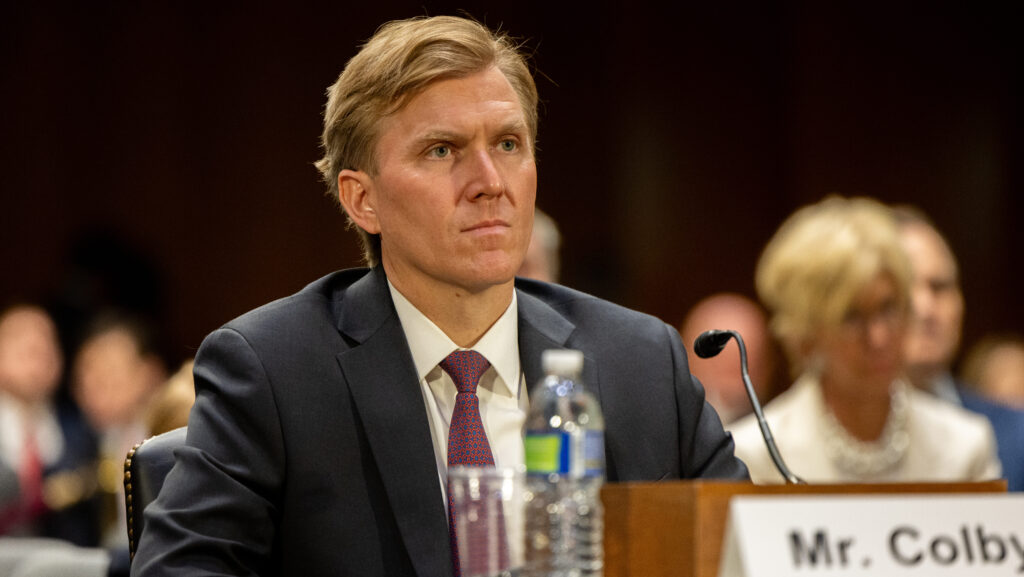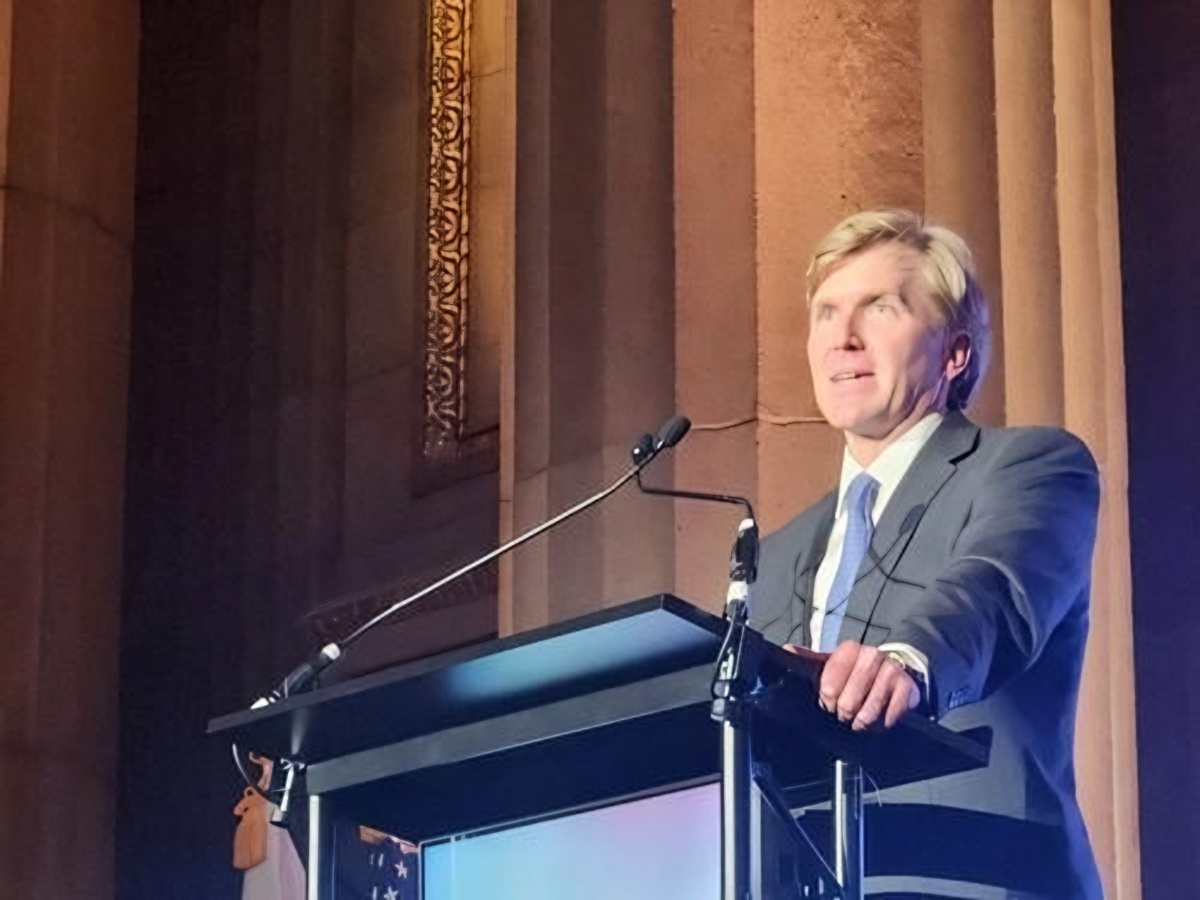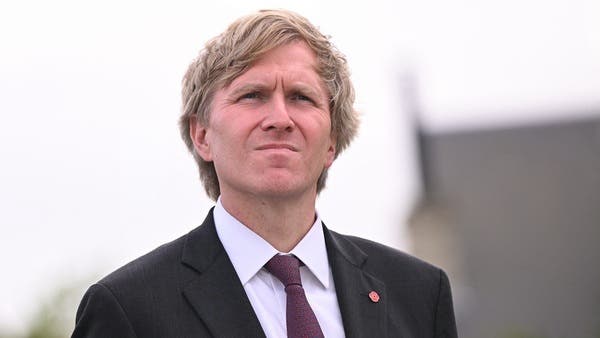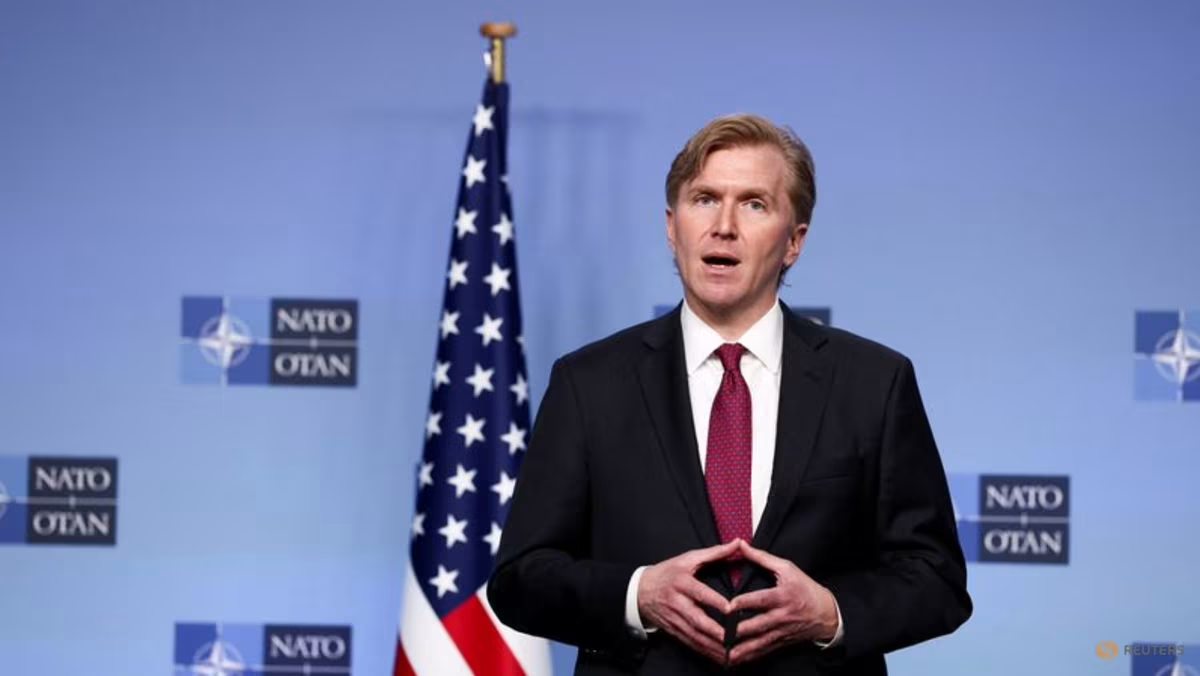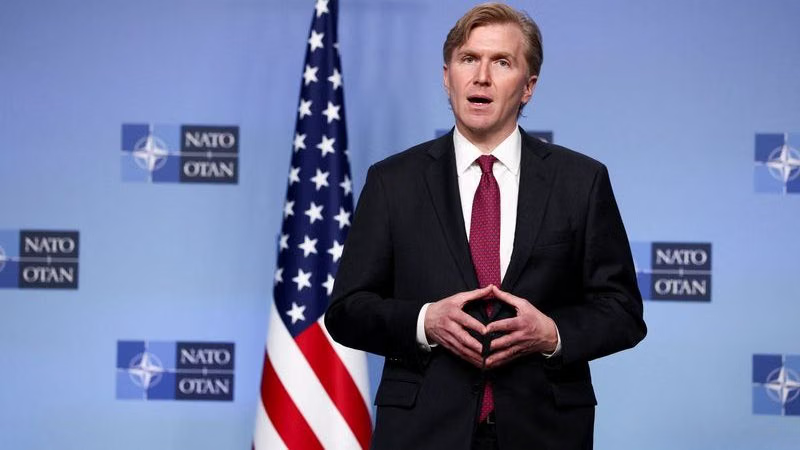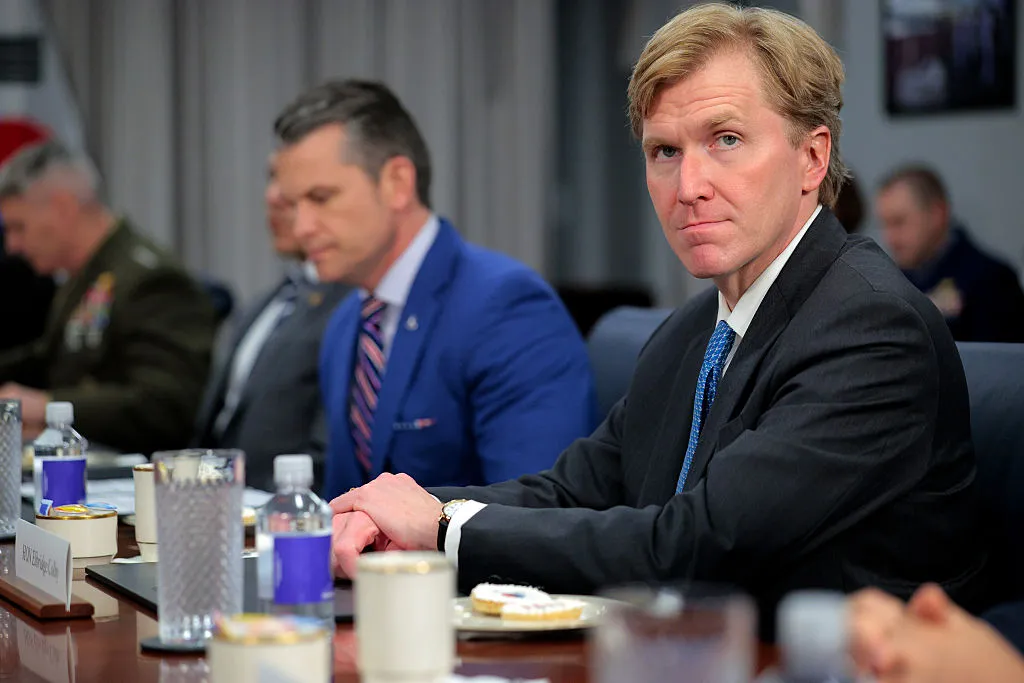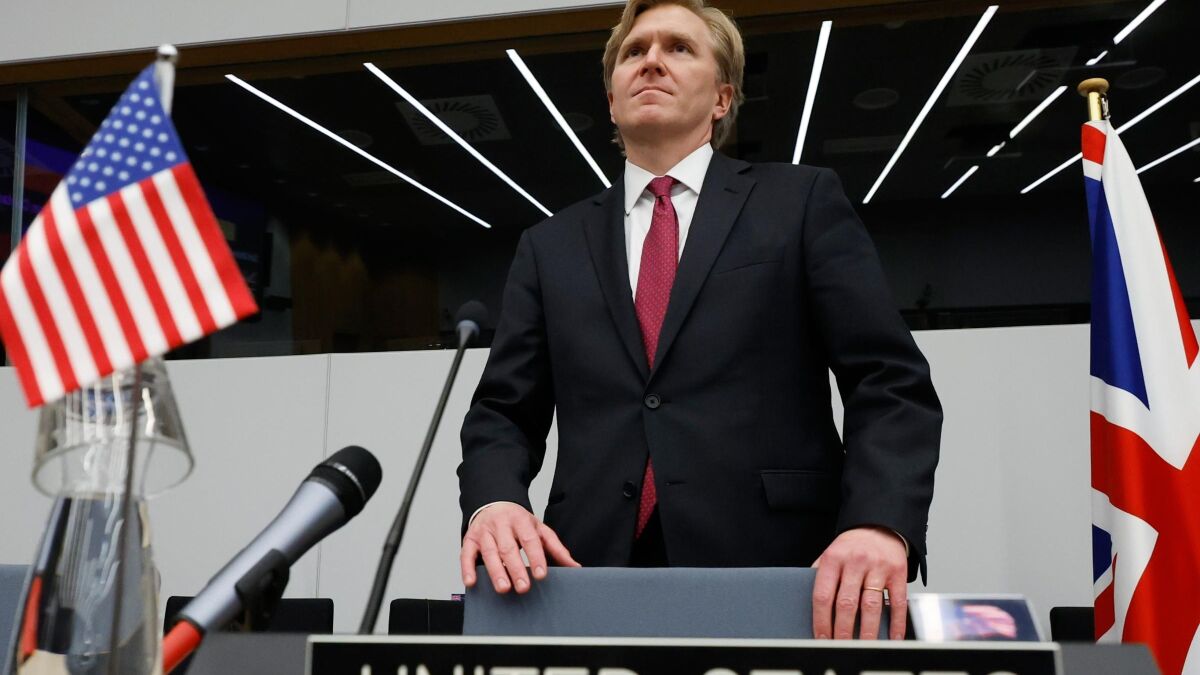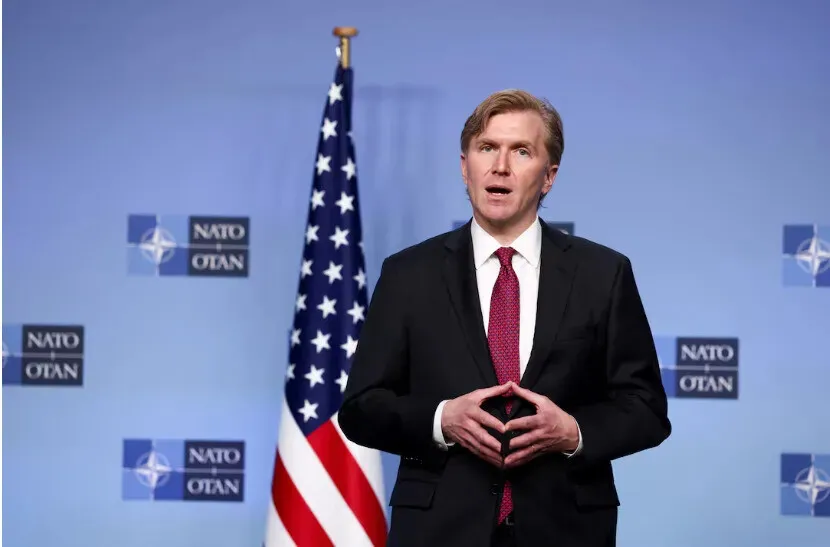
Elbridge Colby, the US undersecretary of defense for policy. (Reuters/Yonhap)
A senior US official overseeing defense policy in the Trump administration harshly criticized the idea of a “middle power alliance” excluding the US and called on Asian allies to play a larger role in relations with Washington.The remarks by Elbridge Colby, the US undersecretary of defense for policy, came during a speech on Monday at the Stratbase Institute for Strategic and International Studies in the Metro Manila city of Makati in the Philippines, the first stop in his tour of Southeast Asian countries.Addressing recent discussions by the international elite and media of an alliance of middle-power countries without the US, Colby described the idea as a “delusion” and “superficial.”He characterized the idea of an alliance among middle powers to exclude or replace the US as coming from the “realm of words [and] symbols,” amounting to something along the lines of a “signed piece of paper or a newly formed working group.” Instead, he stressed that true deterrence came from “fielded hard power and the demonstrated political will to use it.”In a speech at the Davos World Economic Forum in January, Canadian Prime Minister Mark Carney stressed that middle power nations such as Canada, Australia, and the countries of Europe should establish an alliance of strategic autonomy against the unilateral pressures and trade protectionism of superpowers like the US. His “middle power alliance” concept drew major attention from US allies skeptical of the Trump administration.As the leading advocate of US foreign policy prioritizing responding to China, Colby has been in charge of practice duties relating to the Trump administration’s national defense and foreign policy.He has dismissed claims of the US’ withdrawal from Asia into isolationism as cheap wordplay and stressed that the US’ engagement with the Indo-Pacific region constituted a rigorous strategic recalibration based on priorities.In his speech, Colby asserted, “America is decidedly not in decline.”“America is definitely not disengaging from Asia — to the contrary,” he added. Arguing that Washington was actually prioritizing Asia, he stressed that its “driving and abiding purpose is to maintain a favorable balance of power in the Indo-Pacific.”He went on to say that this “requires us to maintain a posture of deterrence by denial along the first island chain,” a reference to a coastal defense line connecting from Japan to Taiwan, the Philippines, Malaysia and Indonesia.Colby’s speech comes at a time when factors such as the exhaustion of US weapons in its war with Iran have fueled growing concerns about the US’ weakened military posture in Asia.Characterizing the Trump administration’s foreign policy and national security approach as “flexible realism” and “one of common sense,” he issued strong calls for a division of labor with allies and a substantive increase in their defense spending.In his calls for a larger role from Asian allies, he stressed that the era of reliance on US production was over. Emphasizing that the US wanted relationships of practical cooperation rather than one-sided dependency, he said that sustainable alliances needed to be based on “shared responsibility” and “underwritten by real capability on both sides.”“We are looking for partners, not protectorates,” he stressed.Colby also referenced new defense spending standards presented by NATO at its 2025 summit in The Hague, where it raised the target for national defense security expenditures from 2% of gross domestic product (GDP) to 5%. He called on Asian allies and partners to increase their defense budgets and establish a stronger military industry base.He further explained that the Trump administration’s future metric for Indo-Pacific strategy success would consist of practical indicators rather than signed agreements or joint statements. As an example, he named a strong military defense posture, including ammunition for the first island chain.By Jung E-gil, senior staff writerPlease direct questions or comments to [english@hani.co.kr]