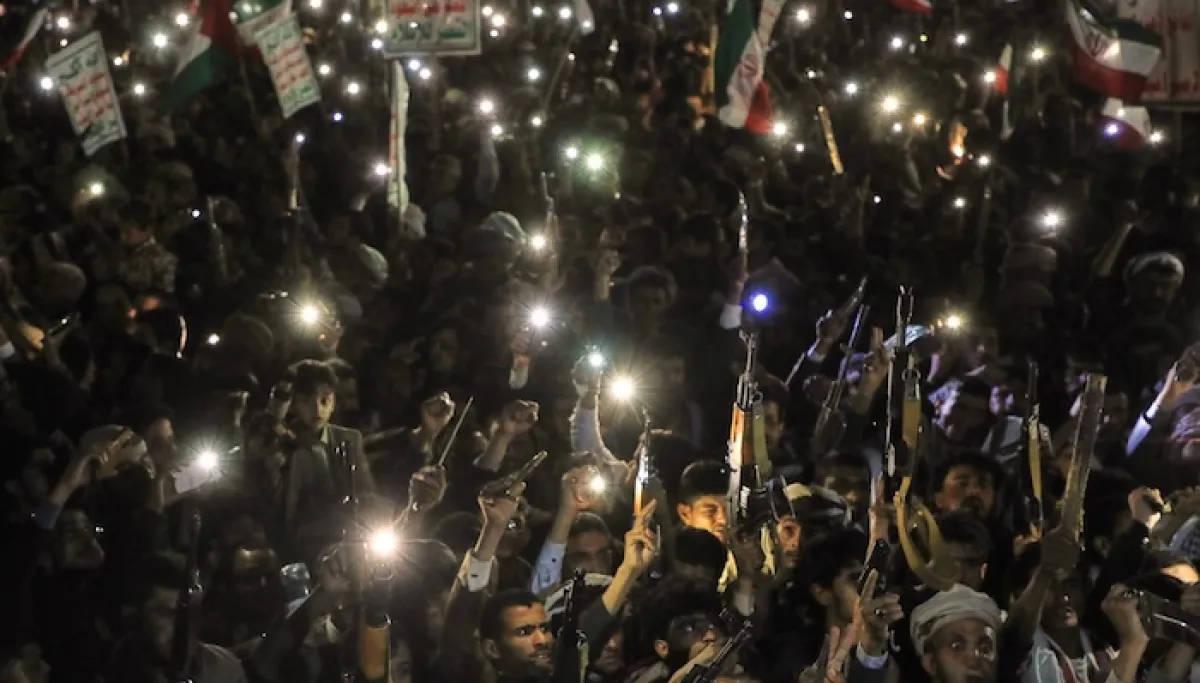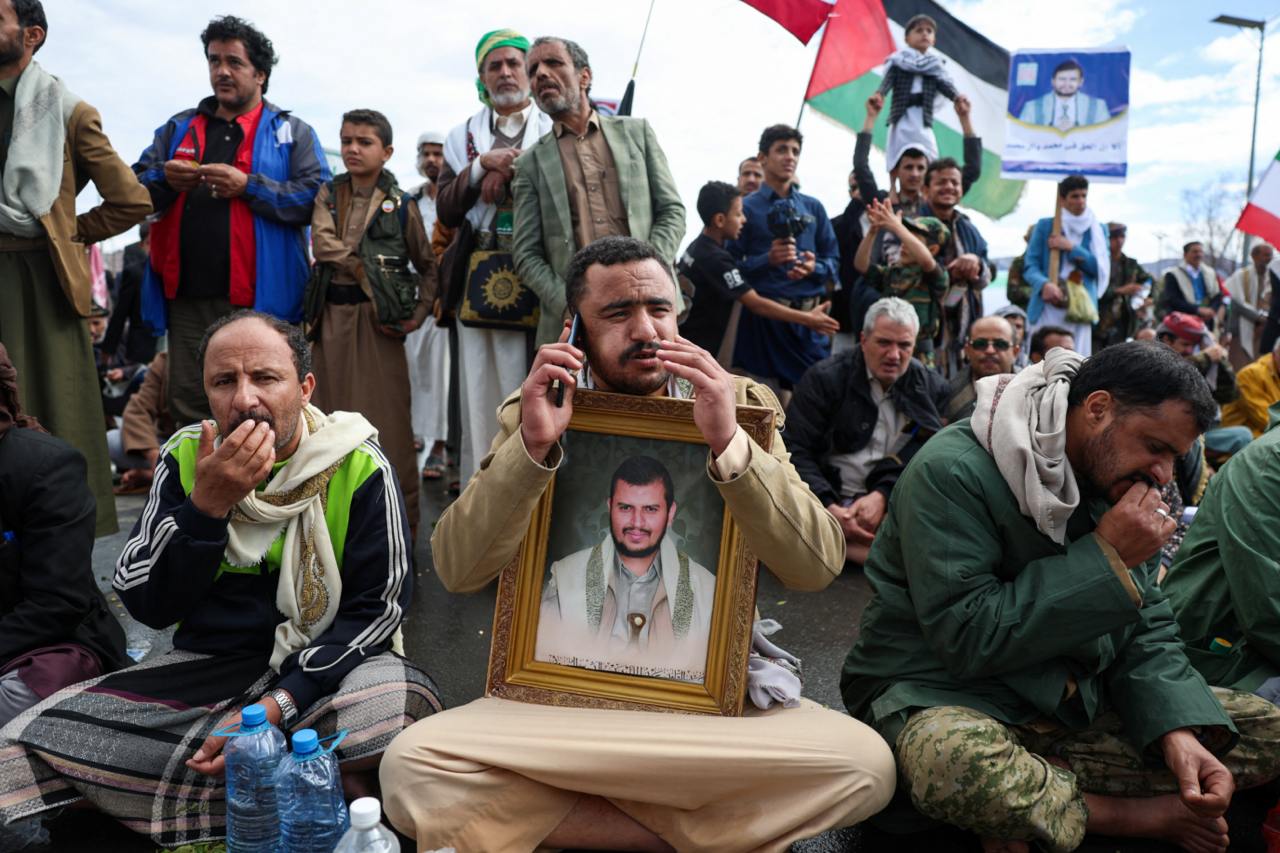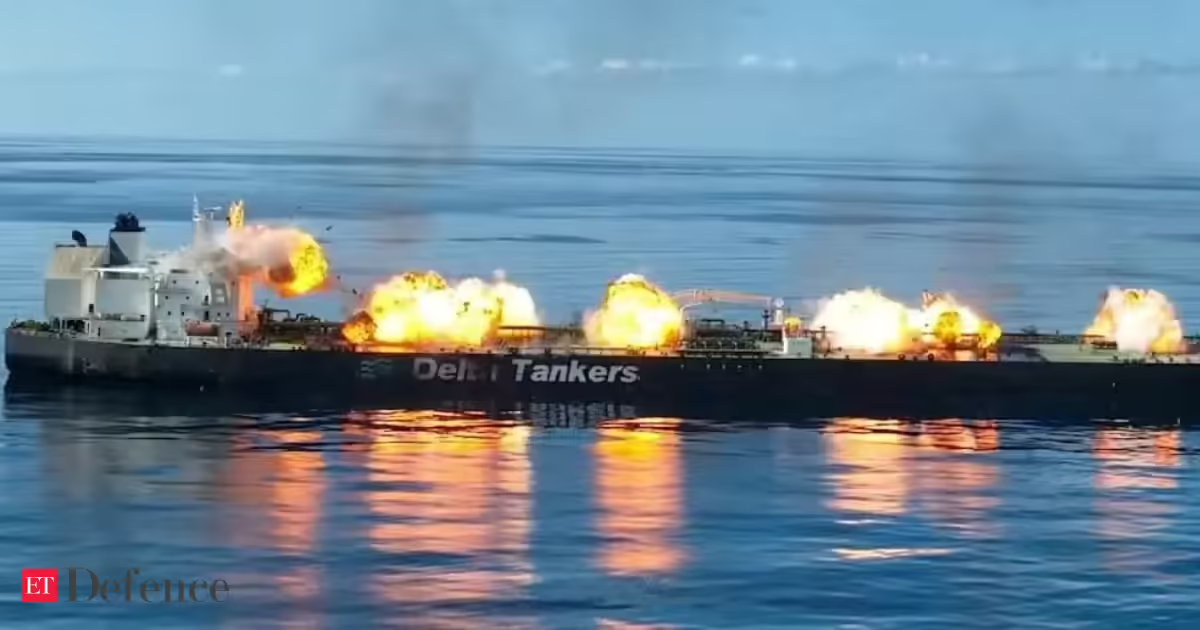
Early in the Iran war, the Houthis declared that if Iran came under attack, the Red Sea would run “red with the blood of its enemies.” That warning hung in the air for months as the Houthis continued to issue threats of closure without any action. But Tehran picked the moment carefully. As the White House insisted that the Strait of Hormuz remained open—a claim that Tehran denied—Tehran activated the Houthis at Bab el-Mandeb to demonstrate at the second chokepoint what Iran could not settle at the first.
Kicking off events, Tehran flew a sanctioned Iranian aircraft into Yemen’s Sanaa airport in defiance of Saudi inspection mechanisms. Yemen’s internationally recognized government, operating with Saudi coalition air support, cratered the runway to stop the plane. The Houthis, who have complied with the Saudi restrictions for years, found a pretext to retaliate. The series of escalations that followed, from striking Saudi Arabia’s Abha airport to attacking Saudi Aramco facilities, were sufficient to induce global economic panic, as the price of Brent crude closed above $100 a barrel for the first time since the war started.
Early in the Iran war, the Houthis declared that if Iran came under attack, the Red Sea would run “red with the blood of its enemies.” That warning hung in the air for months as the Houthis continued to issue threats of closure without any action. But Tehran picked the moment carefully. As the White House insisted that the Strait of Hormuz remained open—a claim that Tehran denied—Tehran activated the Houthis at Bab el-Mandeb to demonstrate at the second chokepoint what Iran could not settle at the first.