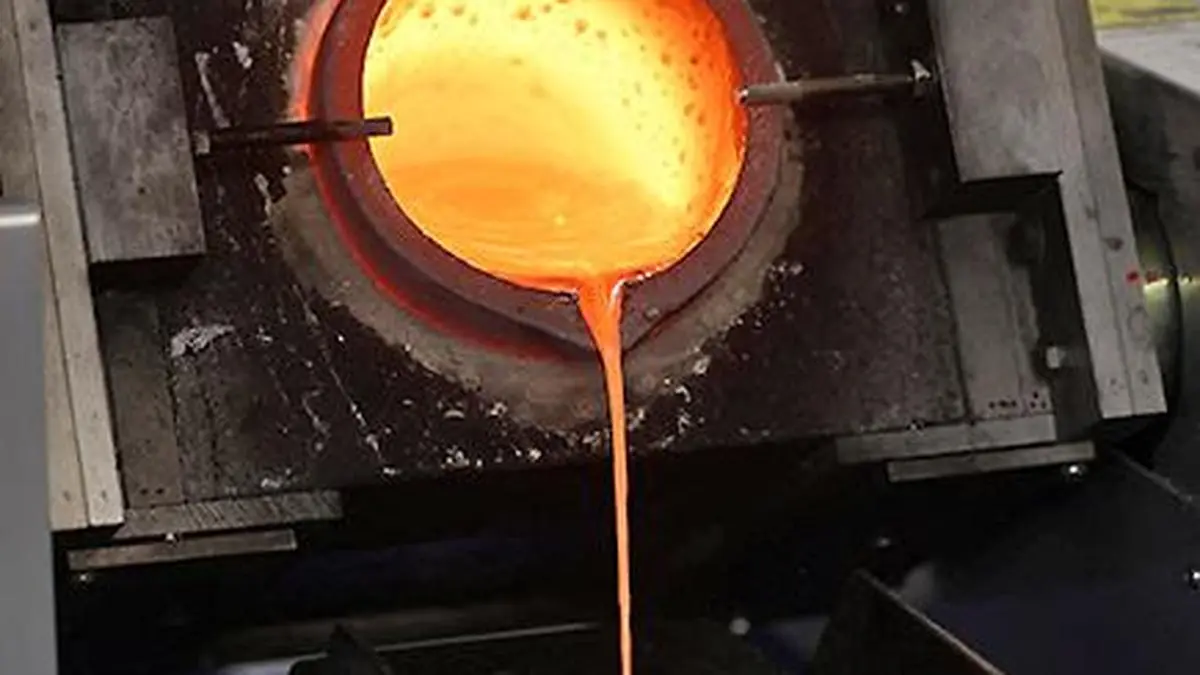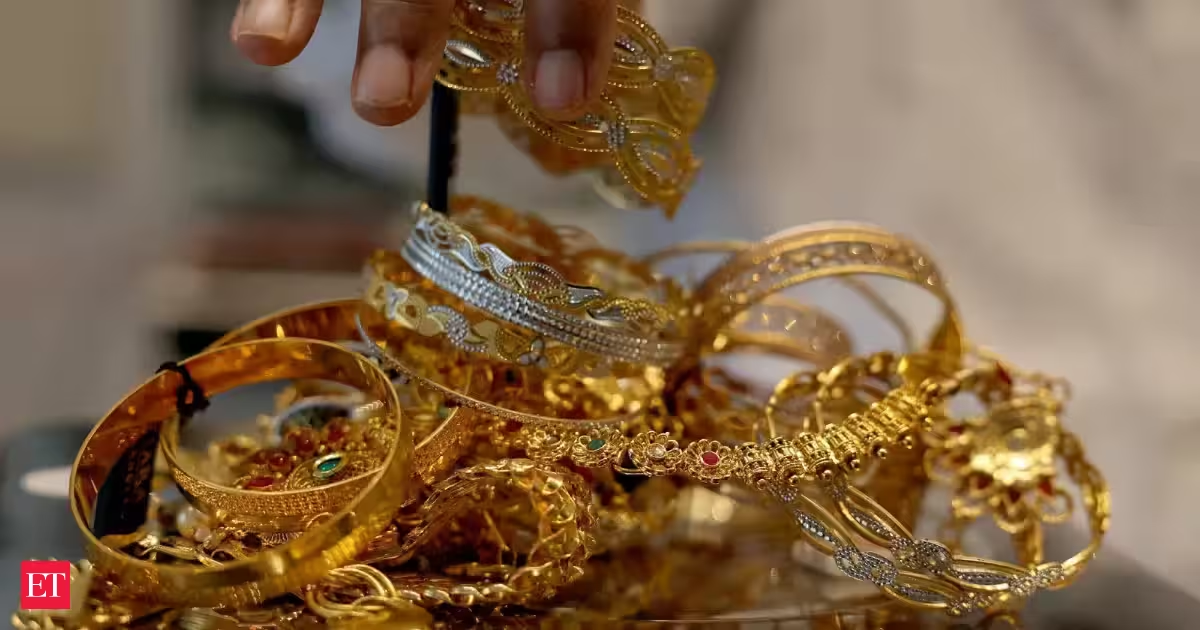
Tucked away in temples, velvet pouches, and secret wooden drawers across India lies a staggering $5 trillion fortune doing absolutely nothing. It’s not stocks, cash, or even cryptos; it’s the nation’s favourite, age-old shiny obsession: gold (and jewellery).However, the situation may soon change. The government is reportedly planning to revamp its flagship Gold Monetisation Scheme (GMS) to turn this massive hoard of idle metal into an active economic asset. It may not be easy, given Indian households’ fixation with gold, but the government this time, as per the proposal, is delegating the responsibility for this scheme to jewellers, one group that people trust with their treasure.This will be the first time that the participation of jewellers is being sought to boost the appeal of the scheme, which is expected to be rolled out later this month. “We are awaiting just one or two final approvals, and most of the approvals have been sought,” Rajesh Rokde, Chairman, Gems & Jewellery Council, told ET Online.ALSO READ | Indian jewellers may earn up to 1% incentive under revamped Gold Monetisation Scheme, says IBJAHe said the scheme would help mobilise idle household jewellery into the formal financial system. “Utilising this mobilised gold as raw material for the jewellery industry will directly reduce India’s gold imports.”ET OnlineThe volume of India’s private gold holdings is staggering. Estimates differ depending on methodology, but all point to the same conclusion that Indian households collectively hold one of the world’s largest reserves of private wealth in gold. According to the estimate by the World Gold Council, Indian households and temples currently hold around 25,000 tonnes of gold. Other industry estimates place the figure closer to 30,000 tonnes, while some studies indicate that Indian household and temple holdings could reach up to 50,000 tonnes.ALSO READ | Jewellers may be looped in for idle gold mobilisationGiven the vast amount of untapped gold, jewellers are expected to play a crucial role in the success of this schemeA 1% perk for jewellersThe revamped GMS scheme, still awaiting final approval, is likely to earn Indian jewellers an extra 1% profit on every piece of old gold they collect. Under the proposal, submitted to the government by the India Bullion and Jewellers Association (IBJA), jewellers will hand over customer gold to refiners and receive approximately a 1% direct incentive from the refiners.In an exclusive interview with ET Online last week, IBJA President Prithviraj Kothari said that jewellers are likely to earn a commission of nearly 1% on the value of the gold they handle. “In our proposal, we have recommended a 0.75% to 1% incentive, though the final figure will be decided by the government.”"In our proposal, we have recommended a 0.75% to 1% incentive, though the final figure will be decided by the government."— IBJA President Prithviraj KothariIndustry experts view this margin as a potential “game changer”. In retail, an incentive of 0.75% to 1% can be significant, especially for high-volume players. Sunil Katke, Head of Commodities Retail Business at Kotak Securities, said that passing on a 100-basis-point benefit on turnover directly to jewellers could be a powerful reason for them to actively promote the scheme.Then there is an even bigger motivation: cheaper financing costs. Katke said this could be the biggest benefit for jewellers. “The biggest advantage... is the lower financing cost. If you take a gold metal loan on imported gold, interest rates are around 5%. If we make gold available domestically, those rates could drop by 50 to 100 basis points,” he explained.Sourcing gold locally, instead of importing, makes borrowing significantly cheaper for jewellers, directly trimming their operational expenses. “Three major points that would benefit the jewellers: one, your gold metal loan financing cost can go down; two, you can keep a smaller inventory, blocking fewer funds to improve working capital; and third, you can cross-sell a lot of products as more leads come to you,” he said.Echoing a similar opinion, Mangesh Chauhan, Managing Director, Sky Gold & Diamonds, said the major benefit for jewellers would come from substantial savings in interest costs. In a conversation with ET Online, he said working capital loans currently cost anywhere between 8.5% and 10.5%, while gold under metal loan structures costs around 2% to 4%. This translates to roughly a 6% per annum saving on interest costs for a jeweller.“Moreover, because the gold itself acts as inventory, jewellers save around 4% to 4.5% in hedging costs since they don’t need to hedge their gold position separately,” he said.In simpler terms, ditching standard cash loans for gold-denominated borrowing is likely to significantly lower a jeweller’s inventory funding costs.Lower import billIndia, the second-largest consumer of gold after China, roughly imports close to 700 to 900 tonnes of gold annually. According to government data, gold imports in FY26 surged 24% to a record $71.9 billion, even as import volumes fell to 721 tonnes. Although the increase was largely driven by soaring gold prices, a higher import bill may put pressure on the economy. With the ongoing geopolitical tensions pushing up commodity prices and weighing on the rupee, policymakers are increasingly concerned about the impact of a higher gold import bill on the country’s balance of payments. Against this backdrop, Katke said that access to monetised domestic gold could potentially reduce dependence on imported gold.That alignment between state policy and corporate incentive has retail giants eager to execute. Suvankar Sen, Managing Director and CEO of Senco Gold & Diamonds, expressed strong confidence that the updated framework will finally unlock India’s dormant gold reserves.“It will work for the nation, for sure,” Sen told ET Online, noting that the scheme gives jewellers a compelling new service to offer walk-in clients. “It helps us mobilise gold, get gold from the customer, and use that gold. Footfalls will increase, our connection with customers will go up, and the possibility of the scheme being successful will go up,” he said.Why were jewellers roped in?The GMS was launched in 2015 with a simple objective to encourage households to deposit idle gold with the banking system and earn returns on it. The deposited gold could then be refined, recycled, and put back into productive use. In practice, the scheme never gained significant traction. By November 2024, only about 31 tonnes of gold had been mobilised under the programme through roughly 5,700 depositors. Compared with the total gold held by households, the achievement was negligible.The main reason was a lack of trust, as Indian families were reluctant to part with their inherited gold and jewellery and give it to banks. With jewellers, however, that trust already exists, as most Indians naturally buy their gold from their local jewellers.“Every customer buys gold through jewellers. If the commission is passed on to jewellers, they will promote the scheme; in a way, jewellers become brand ambassadors. They will now reach every home, passing it down from large jewellers to smaller ones and distributors,” said IBJA President Kothari.For independent jewellers, who have long wrestled with high gold sourcing costs and tight working capital constraints, the new structural change could be a lifeline. “Small jewellers mainly face two massive hurdles: soaring gold costs and intense working capital pressure,” as per Nitin Gupta, founder of Delhi-based Swastik Jewells. “If GMS grants us access to lower-cost gold alongside a workable margin, it will help us compete with the big chains. For us, this is ultimately about liquidity and leveraging our traditional trust with customers.”This could be a “game-changer” for small- and mid-sized jewellers if executed right, he said, adding that it will help jewellers with cheaper metal and let customers earn on idle gold.“The industry needs it, especially now, with 15% duty and high prices.”What held back GMS in the pastIndustry executives that The Economic Times spoke to have argued that previous schemes struggled because jewellers were largely excluded from the process and Indians just could not trust banks with melting their gold.Lenders could not make this scheme work because they lacked the manpower, as per Kothari. No one even knew which bank branches accepted gold deposits, he said, adding that in the new proposal, bank involvement is minimal—deposits stay with banks, but their operational role is nil.In addition to this, the returns offered were modest, and the process was often viewed as cumbersome. The government eventually discontinued parts of the scheme in 2025 amid changing market conditions.Senco MD said the urgency is also different this time, with pressure on the external sector making gold imports a bigger concern. “In 2023, the crisis wasn’t there. India was in a much more comfortable situation. Now there’s a crisis, so we need to do it now.”Three years ago, the government last attempted to revive the GMS framework—a time when moderate import costs meant neither retailers nor consumers felt an urgent need to act.Sen said the recent surge in old gold exchange suggests that consumers are now open to parting with their gold when jewellers are involved in the process. “Because of the crisis, all the jewellers promoted old gold exchange in the last two months, and 40-50% of our business happened through that. So, business continued to happen, and the nation also got protected by lowering the imports.”He expects greater coordination between banks and jewellers under the proposed framework to improve its chances of success.Yet seamless coordination is only half the battle, as operational trust remains a major hurdle. According to Katke, the scheme’s ultimate success hinges on ironclad transparency surrounding purity checks and logistics. “The biggest challenge that I feel is trust... Transparency is something which will be the key. The melting process and purity assessment process need to have transparency.”“Whether the deposited gold has a digital tracking mechanism, a secured logistics chain, and seamless coordination between jewellers, banks, refiners, and assaying centres, these operational details will require immense focus,” Katke said.
India may have found the key to unlock its $5 trillion sleeping fortune
India plans to revamp its Gold Monetisation Scheme by involving jewellers, aiming to unlock household gold holdings estimated at 25,000-50,000 tonnes. Jewellers may get 0.75%-1% incentives, while cheaper domestic gold could lower financing costs. The scheme could reduce imports, which hit $71.9 billion in FY26. Trust, transparency and efficient gold tracking remain key challenges.
1,628 words~7 min read