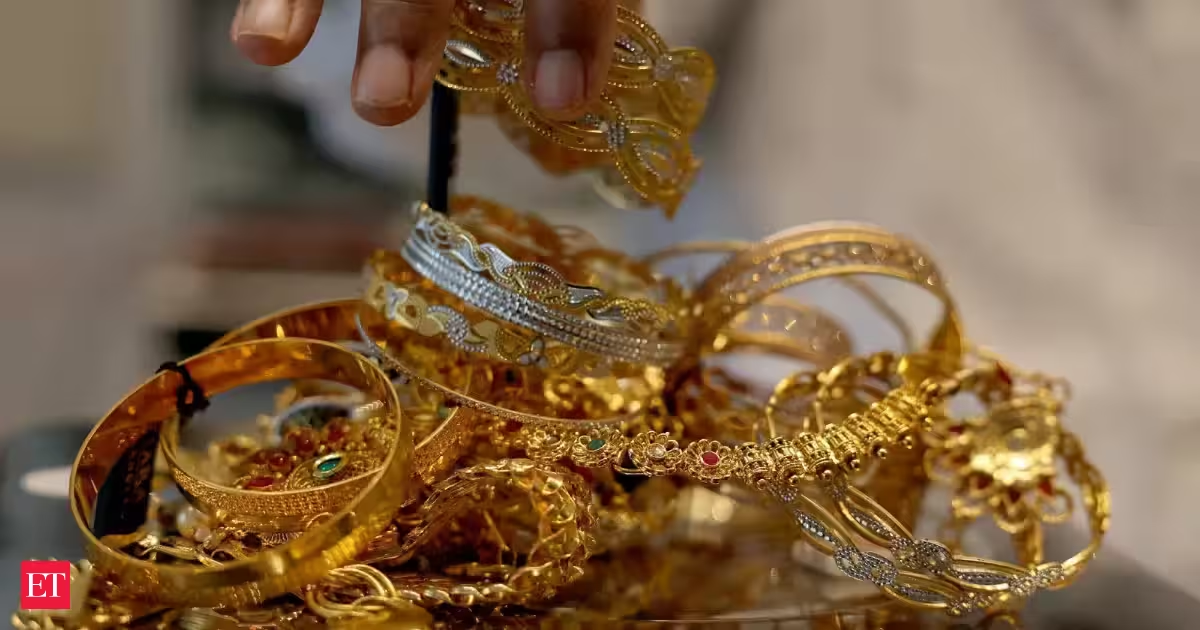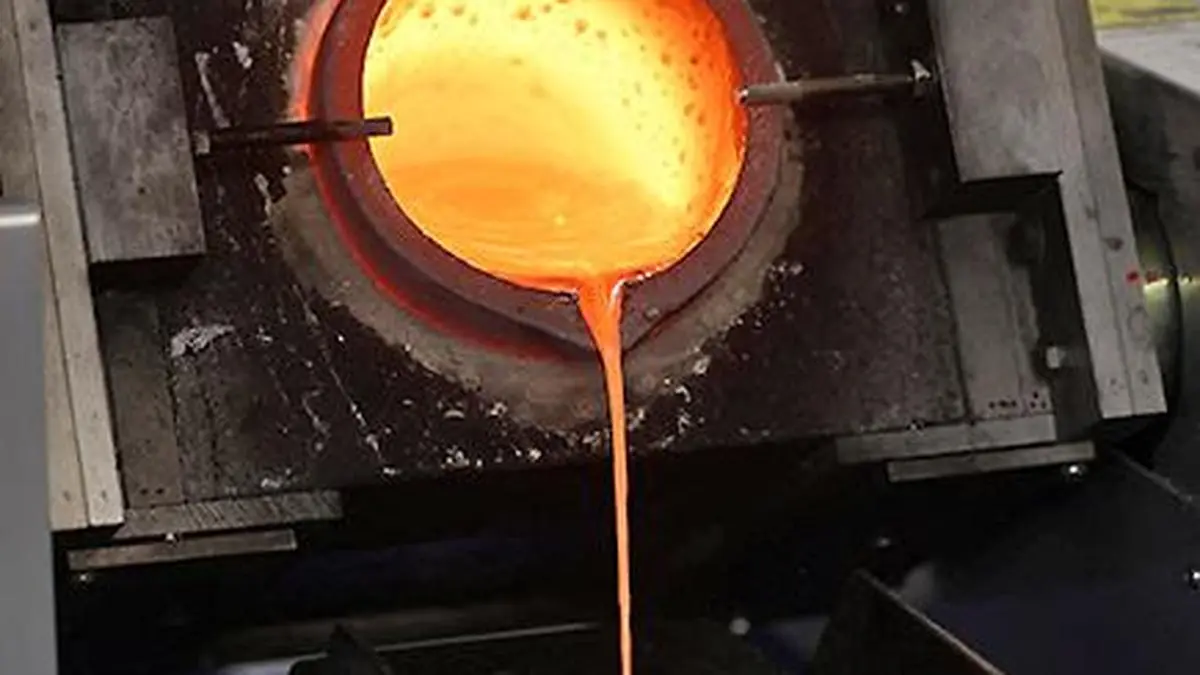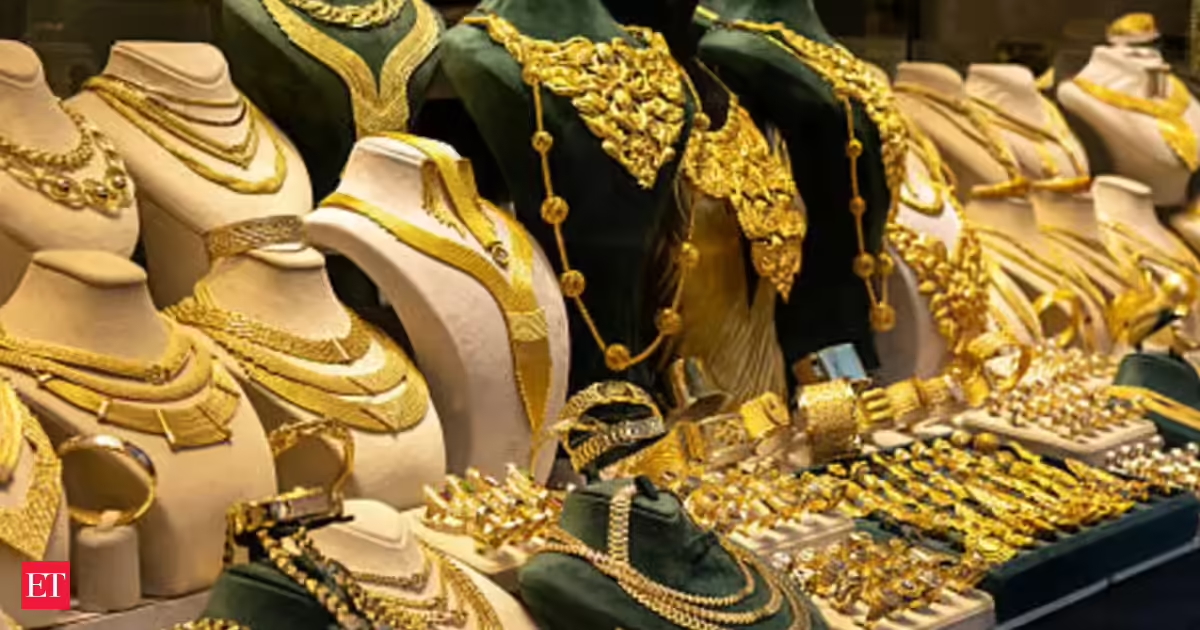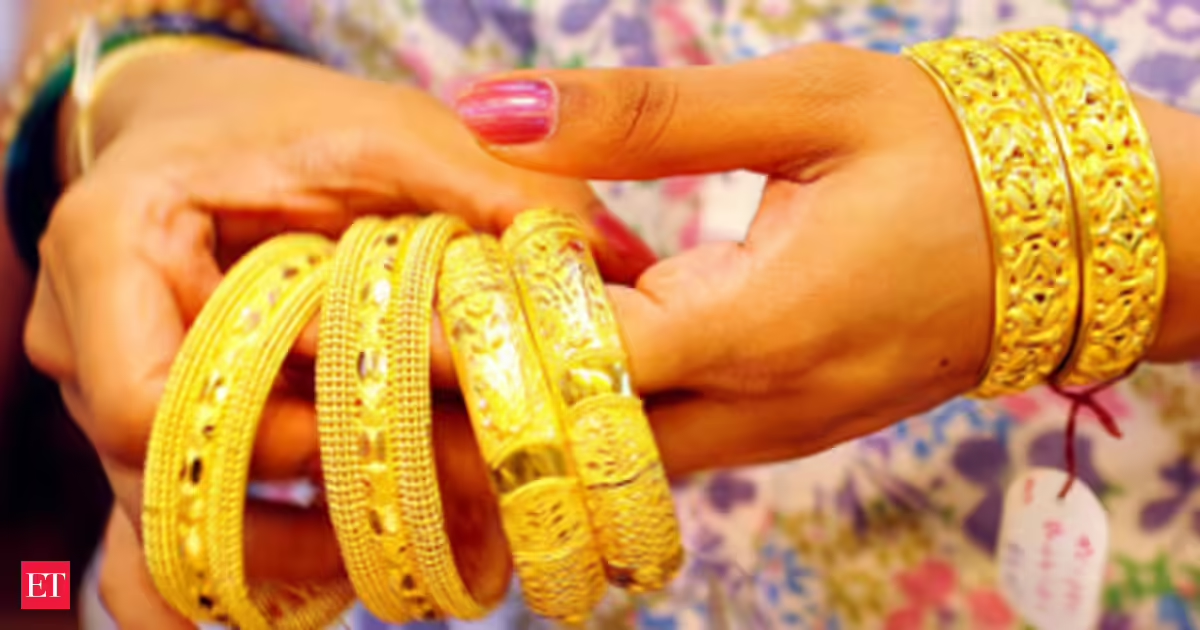
India's obsession with gold has always been viewed through two very different lenses. For households, it is a store of wealth and a hedge against uncertainty and also a symbolic asset passed down generations. For policymakers, it is also a recurring macroeconomic headache because almost all the gold Indians buy has to be imported. India imports with precious dollars most of the gold Indians buy so enthusiastically every year, and that gold vanishes into family holdings. Next year, again India has to import with dollars most of the gold Indians again buy in large amounts, and yet again that gold too vanishes in household savings. This goes on and on. India gets to own a mountain of gold which sits idle in family holdings while India keeps on spending dollars to import more gold.Also Read: Jewellers may be louped in for idle gold mobilisationThe contradiction has become sharper in recent months as gold imports have surged, which means India spending more dollars, pressuring the rupee. The country's external accounts have come under pressure and the value of privately held gold has climbed to unprecedented levels. That is why the government is now trying to revive gold monetisation by bringing jewellers into the process.ET has reported based on sources that the government is considering a plan to allow jewellers to participate in a revamped version of the Gold Monetisation Scheme (GMS) to mobilise some of the precious metal lying idle with Indian households. It will be the first time that the participation of jewellers is being sought to boost the appeal of the flagging scheme since jewellers have customers' trust and ready infrastructure too.Though the revised scheme would look more workable, it will face the same big question: Can India unlock even a small portion of the vast quantity of gold lying idle in homes and temples and channel it into the formal economy, instead of importing fresh bullion every year and paying for it in foreign currency?A mountain of gold outside the financial systemThe scale of India's private gold stock is staggering. Estimates vary depending on methodology, but all point to the same conclusion that Indian households collectively hold one of the world's largest stores of private wealth in gold. According to World Gold Council estimates cited in recent industry studies, Indian households and temples hold around 25,000 tonnes of gold. Other industry estimates place the figure closer to 30,000 tonnes, while some studies suggest household and temple holdings could approach 50,000 tonnes.The value of this stockpile has risen dramatically after the sharp rally in gold prices over the past two years. Kotak Institutional Equities estimates that household gold holdings were worth more than $5 trillion as of January 2026, equivalent to about 125% of India's GDP. Morgan Stanley has estimated gold wealth at $3.8 trillion, while UBS has pegged it at around $4.5 trillion. Even the most conservative estimates place the value in the multi-trillion-dollar range.The sheer size of this stock means that India's private gold holdings exceed the combined gold reserves of the world's top central banks. Yet most of this wealth remains outside the formal financial system, generating no meaningful economic return.Also Read: Gold sitting idle at home? Here's how it could earn you an incomeWhy policymakers are worriedThe renewed focus on gold monetisation is not happening in isolation. It is being driven by concerns about India's external sector. Gold imports surged 24% in FY26 to a record $71.9 billion even though import volumes fell to 721 tonnes. The increase was largely driven by soaring prices. At a time when geopolitical tensions have pushed up commodity prices and put pressure on the rupee, policymakers have become increasingly concerned about the impact of gold imports on the balance of payments.The Reserve Bank of India (RBI) recently noted that petroleum and gold together account for more than half of India's trade deficit. This makes the country's external position vulnerable to global shocks and commodity price swings.Prime Minister Narendra Modi's public appeals in May urging citizens to reduce gold consumption reflected these concerns. While gold import growth slowed in subsequent months, the underlying challenge remains unchanged. India continues to import large quantities of a commodity that already exists in abundance within the country. This is the paradox policymakers are trying to address.The return of gold monetisationThe Gold Monetisation Scheme was launched in 2015 with a simple objective to encourage households to deposit idle gold with the banking system and earn returns on it. The deposited gold could then be refined, recycled and put back into productive use. In practice, the scheme never gained significant traction. By November 2024, only about 31 tonnes of gold had been mobilised under the programme through roughly 5,700 depositors. Compared with the total gold held by households, the achievement was negligible.The reasons were not difficult to identify. Many families were unwilling to part with inherited jewellery. Others were uncomfortable with melting ornaments for purity testing. The returns offered were modest and the process was often viewed as cumbersome. The government eventually discontinued parts of the scheme in 2025 amid changing market conditions.Now the idea is returning in a different form. According to discussions between government officials, RBI representatives, banks and industry participants, a revamped version of the scheme may be announced ahead of the festive season. The most significant change under consideration is the inclusion of jewellers.Industry executives have argued that previous schemes struggled because jewellers were largely excluded from the process. Since consumers already trust jewellers for valuation, testing and transactions, their participation could improve acceptance and accessibility.Banks have failed to garner significant quantities of gold under the scheme largely because it struggled to overcome both consumer hesitation and operational challenges. Jewellers would act as collection and aggregation points, forwarding the gold to authorised refiners and banks while ensuring transparency and traceability. In return, jewellers are expected to earn a service or handling fee. Also, access to monetised domestic gold would provide jewellers with a reliable and lower-cost source of raw material, reduce dependence on imported bullion, improve inventory management and lower financing costs.Turning gold into working capitalThe broader industry proposal goes beyond simply collecting deposits. Bullion industry groups have suggested creating a system where household gold can be recycled and converted into a source of financing for the jewellery sector. Under the proposed framework, deposited gold could be refined, converted into electronic gold receipts and eventually supplied to jewellers through gold metal loans. The objective is to create a circular ecosystem in which domestic gold increasingly meets domestic demand.Today, banks often source gold from international bullion banks and lend it to jewellers through gold metal loans. Industry participants argue that locally mobilised and refined gold could serve the same purpose. If such a mechanism works efficiently, it could reduce dependence on imported bullion without disrupting jewellery manufacturing or retail demand.Some industry representatives have also proposed tax changes, including relief on interest earned from gold deposits and easier treatment of electronic gold receipts, to improve participation. The underlying logic is that idle gold should function more like a financial asset and less like a dormant store of wealth.Households are now willing to monetise goldEven without a successful monetisation programme, gold is gradually becoming more integrated with India's financial architecture. The most visible example is the rapid growth of gold-backed lending. Loans against gold have expanded sharply in recent years and are increasingly being used by a wider range of borrowers. Gold loan companies have accumulated record holdings of pledged gold. At the end of FY26, the combined gold holdings of Muthoot Finance, Manappuram Finance and IIFL Finance reached 334 tonnes, exceeding the official reserves of several countries.This trend has become so significant that the RBI has tightened loan-to-value norms and increased its scrutiny of the sector. Recent declines in gold prices have even triggered margin calls on some bullet repayment loans, demonstrating how deeply gold is now linked to credit markets.Industry groups view this as evidence that households are willing to monetise gold when the process is convenient and financially attractive.Yet every attempt to mobilise gold eventually runs into the same challenge -- culture. For millions of Indian families, gold is not just an investment. It is security, status, inheritance and emotional wealth rolled into one. This explains why gold loans have expanded far more successfully than gold deposits. Borrowers are willing to pledge jewellery temporarily while retaining ownership.Depositing gold into a monetisation programme requires a much higher level of trust. Any future scheme will therefore need to solve not only financial problems but also behavioural ones.What even partial success can achieveEven a modest shift could have large economic consequences. Assocham estimates that if just 2% of household gold holdings are channelled into financial assets every year, the cumulative effect could add roughly $7.5 trillion to India's GDP by 2047 through multiplier effects. The argument is not that households should stop owning gold. Rather, it is that a portion of existing holdings could be transformed into productive capital without forcing people to liquidate their wealth.Economists also point to another concern. Kotak Institutional Equities has warned that continued household purchases of imported gold effectively represent a conversion of financial savings into physical assets. In macroeconomic terms, that means less capital is available for banks, companies and financial markets. Viewed from this perspective, gold imports are not merely a trade issue. They are also a question of how household savings are allocated across the economy.The government's latest effort reflects a growing recognition that India's gold problem cannot be addressed through import restrictions alone. The country's annual appetite for gold is unlikely to disappear. The more realistic goal is to reduce dependence on fresh imports by making better use of the enormous stock already present within its borders. Whether involving jewellers succeeds (as the reported plan is) where earlier schemes failed remains uncertain. But the economic rationale is becoming increasingly difficult to ignore. India is simultaneously one of the world's largest gold owners and one of its largest gold importers. Bridging that contradiction has become an important policy objective.If even a fraction of the country's privately held gold can be transformed from dormant wealth into productive capital, it could reduce pressure on the trade deficit, support domestic credit creation and strengthen economic resilience.
India has got a $5 trillion sleeping giant: Can govt wake it up?
India holds an estimated $5 trillion worth of gold in households and temples, yet continues to spend billions importing more every year. As pressure on the rupee and trade deficit mounts, the government is considering reviving the Gold Monetisation Scheme by involving jewellers to unlock idle gold and turn dormant household wealth into productive economic capital.
1,706 words~8 min read