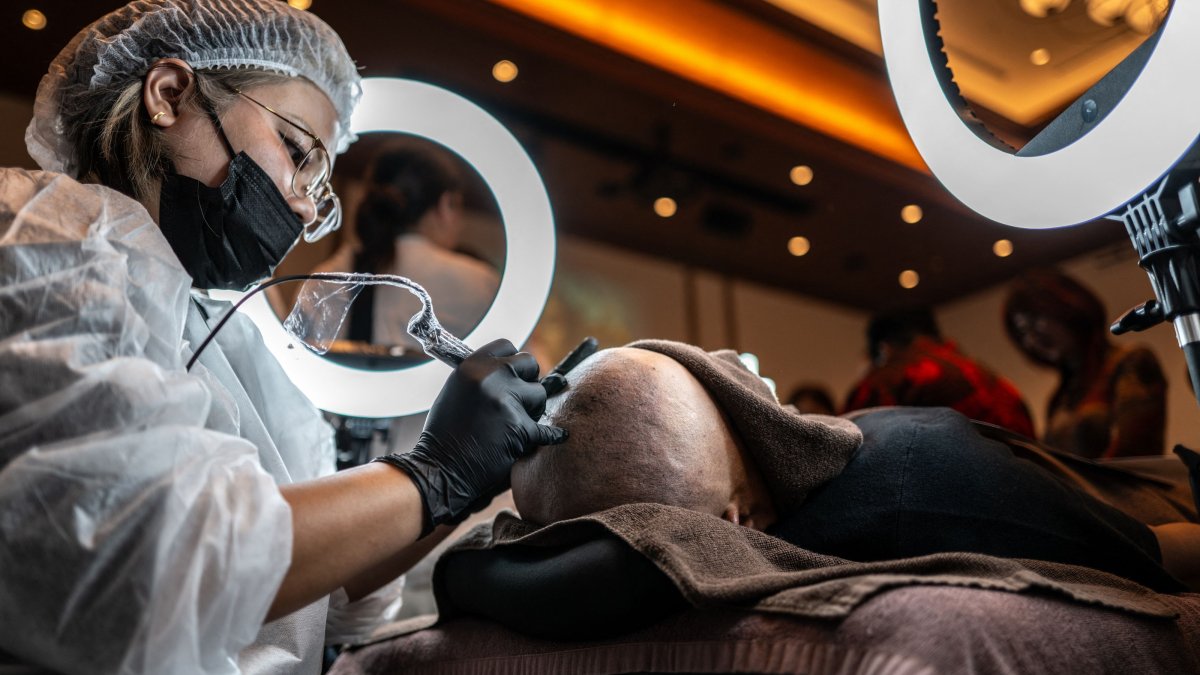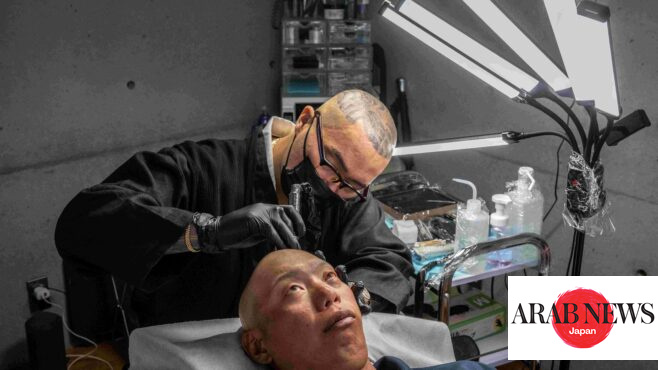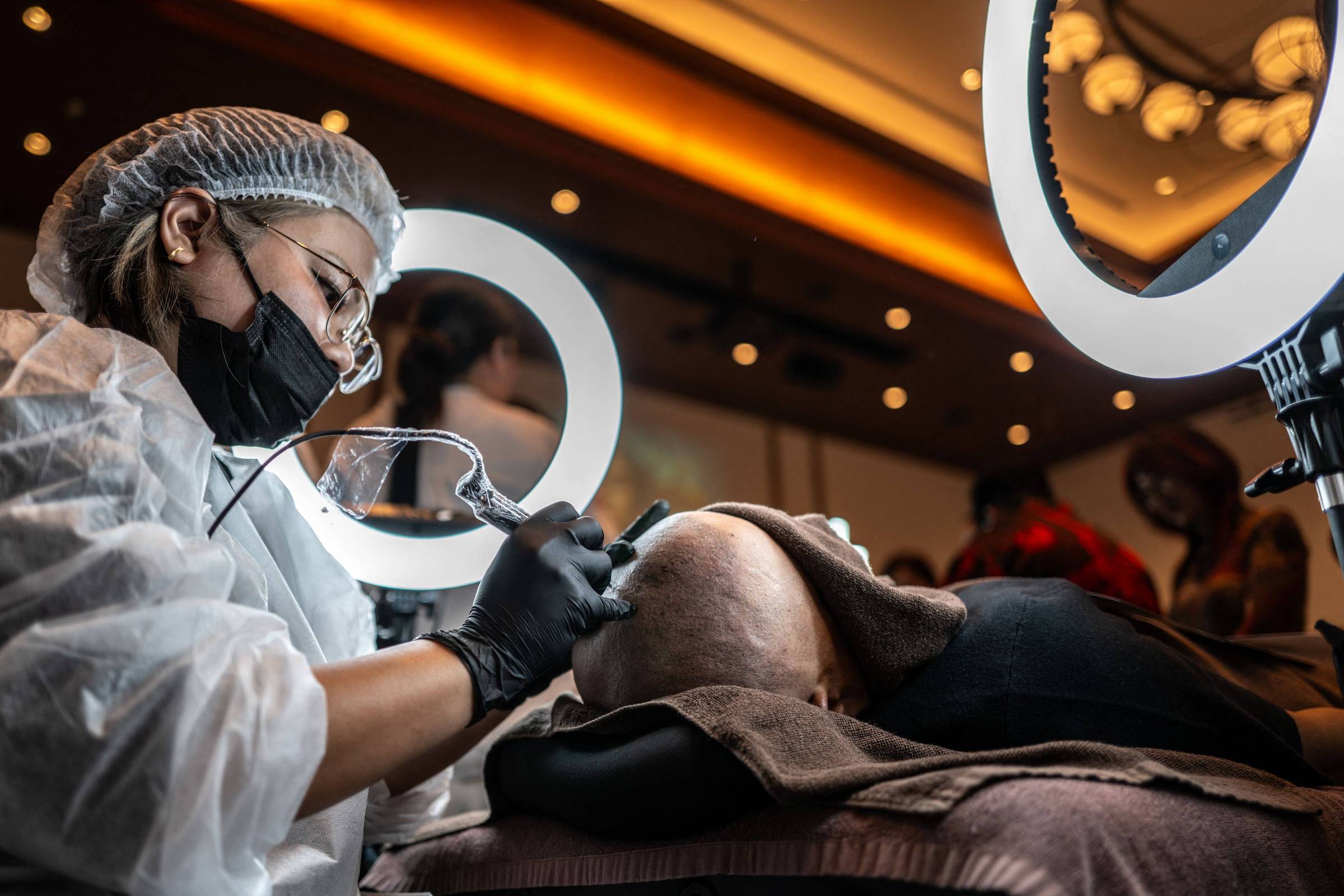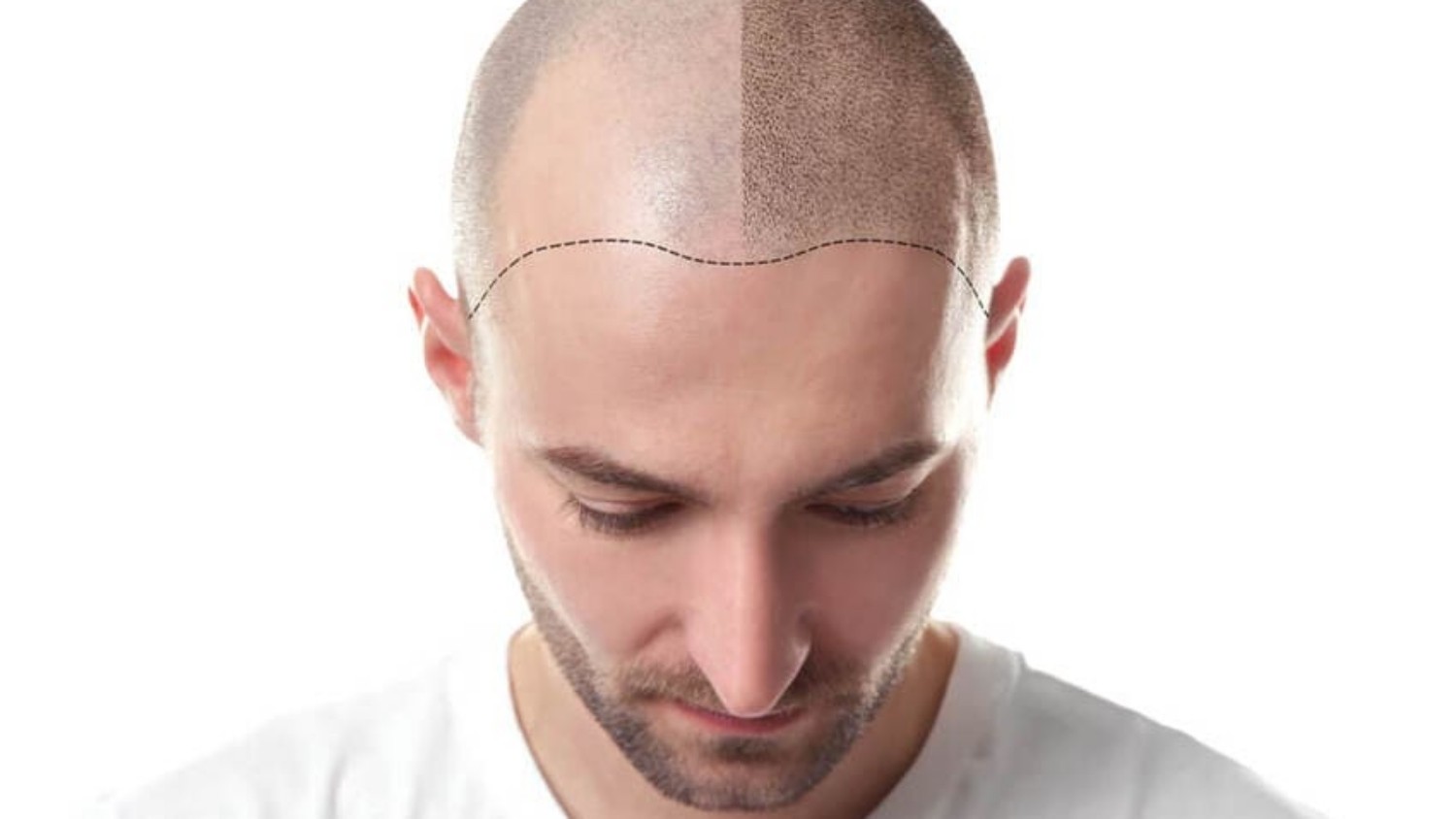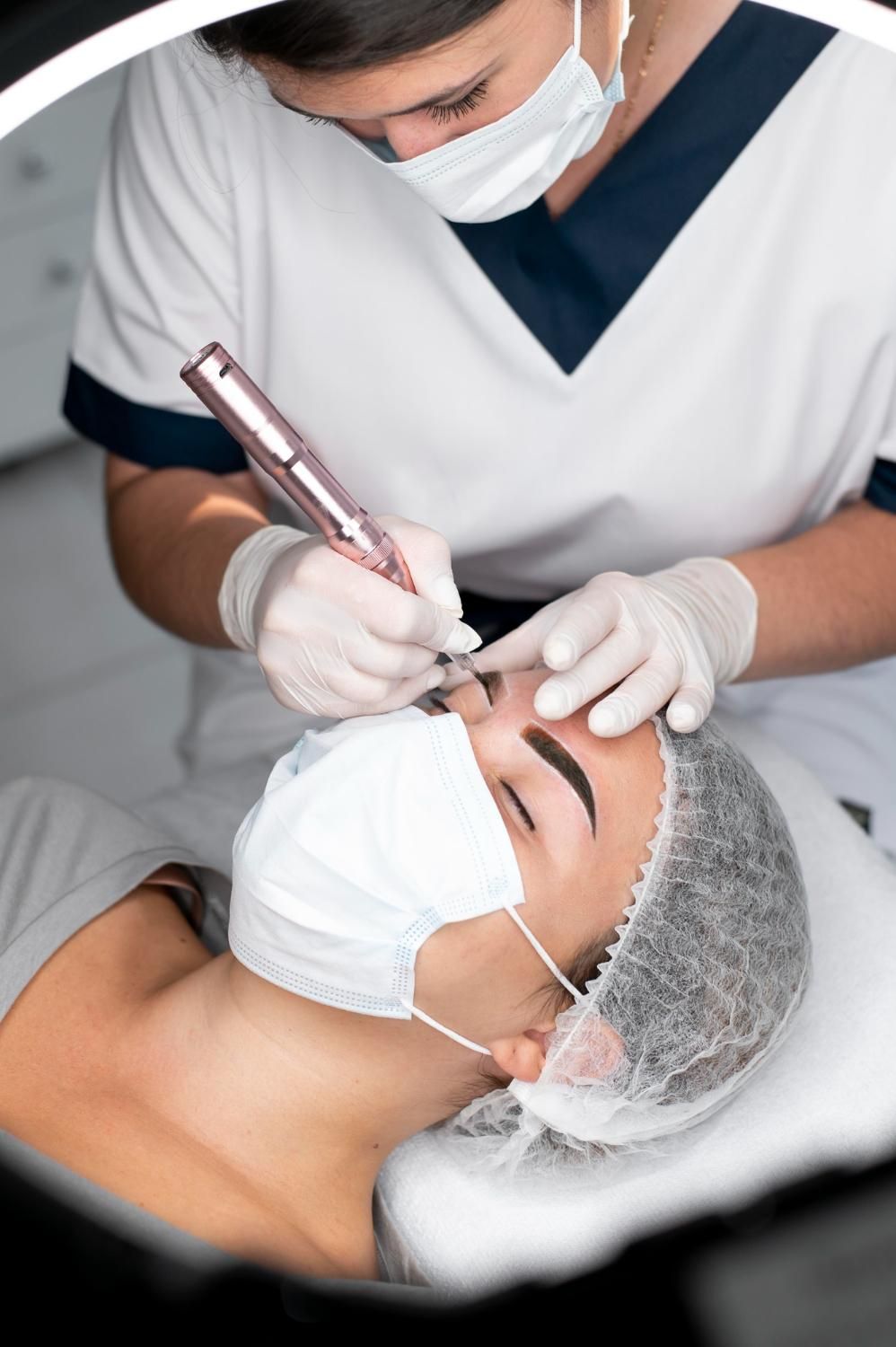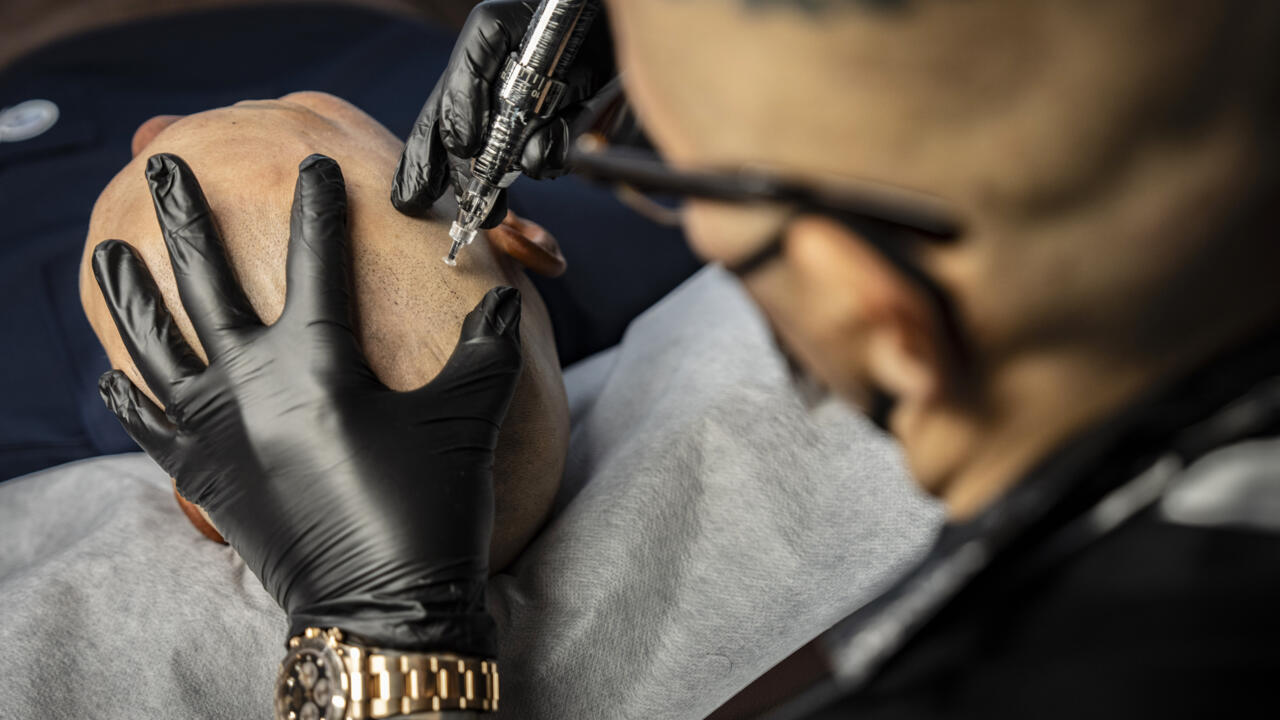
Japan bucks a global trend by viewing permanent make-up as the domain of medical professionals, and has ramped up threats of criminal prosecution against anyone else who practises it -- like the 44-year-old Okinawan.But in a country where body art has long symbolised yakuza gangsters, these cosmetic tattooists' safety and sanitary protocols are not enough to dispel scepticism."It's a complete mystery to me why they keep saying this constitutes a medical practice," Remy -- his professional name -- told AFP as he used a fine needle to ink 28-year-old Hatanaka.The procedure known as scalp micropigmentation (SMP) is "hardly invasive" and "so painless that clients sometimes even fall asleep", while requiring sophisticated aesthetic talent, Remy argues.And it is an important job: a sudden onslaught of alopecia -- the medical term for hair loss -- once plunged Hatanaka into despair.
A scalp tattoo artist conducting a demonstration during a contest in Naha, Okinawa Prefecture © Philip FONG / AFP
"I didn't even want to go outside," the marine sports instructor, whose style now passes for a buzz cut, told AFP."If I hadn't done this, I wouldn't have become brave enough to strike up conversations with strangers," he said."I'm more confident in myself now."Risky needlesA landmark Supreme Court ruling in 2020 declared traditional decorative tattooing a non-medical act, welcome news for an industry long run by artists with no clinical training.But the same did not apply to SMP, which has "an established history of doctors' involvement", a health ministry official told AFP.The use of needles makes it a "risky enough practice that it can hurt human bodies if done without medical expertise", she said.The ministry has repeatedly warned, most recently in December, that criminal complaints can be filed against unlicensed practitioners, "essentially signalling arrest", healthcare law expert Akihiro Saotome told AFP.