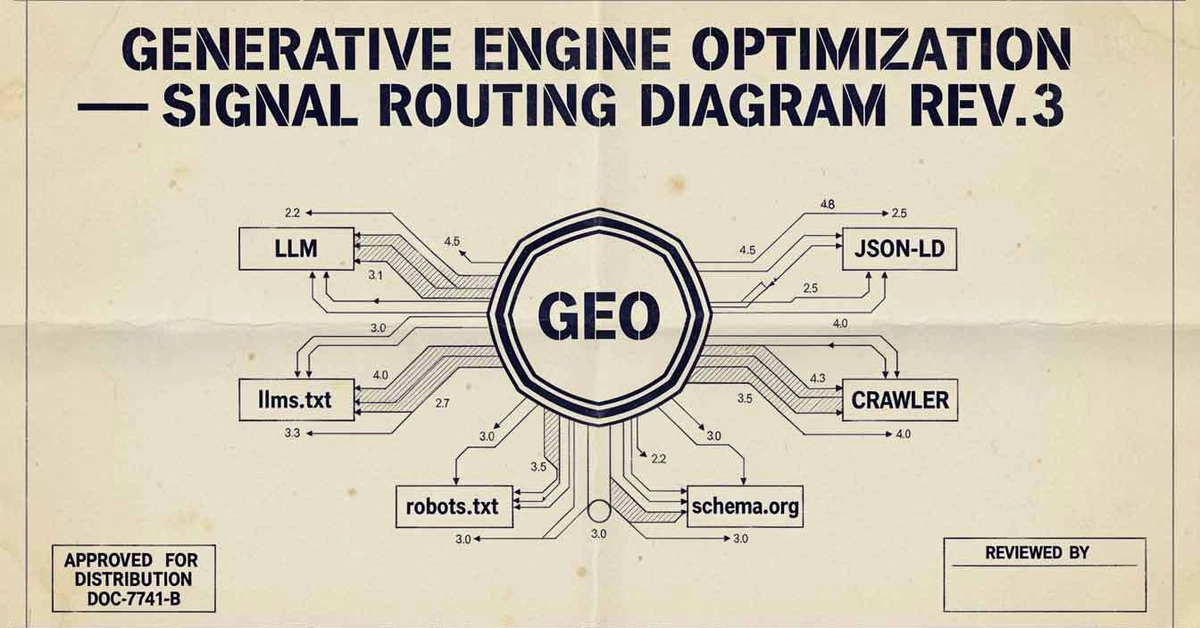
Generative Engine Optimization, or GEO, is becoming a more defined approach to improving how brands and publishers appear in AI-generated answers. Its practical focus is not a documented return of Google Panda-era ranking behavior. It is the need to make information easier for AI systems to identify, interpret and potentially cite, while maintaining credible sourcing and measurable governance.
A current discussion has drawn a parallel between scaled page variations that predated Google Panda and patterns emerging in AI search. That comparison is useful as a warning about repeating low-value content practices, but it should not be treated as evidence that Panda-like heuristics or tactics are now a proven driver of AI visibility. The better-supported development is Generative Engine Optimization's growing adoption as an evolution of SEO for generative search experiences.
Search Engine Land's guide to Generative Engine Optimization describes GEO as a framework for improving visibility in AI-generated results. Public commentary from SEO specialist Aleyda Solís similarly frames the discipline around content structure, credibility and sourcing. For teams planning AI search programs, that distinction matters: a historical analogy is not a reliable operating model.