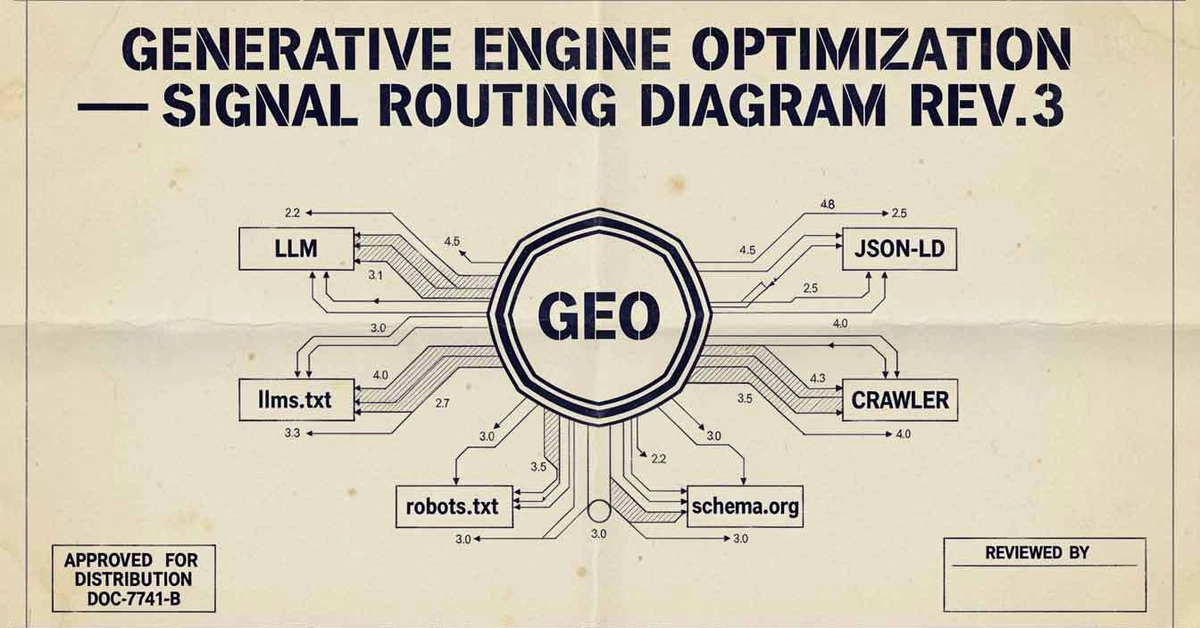
Generative Engine Optimization has arrived with the usual entourage of consultants, frameworks, and six-figure audits. Before the mythology solidifies, here is what it actually is: a small set of technical conventions that tell AI systems what your site contains and how to talk about it. The same thing SEO was in 1998, before someone decided it needed to be a profession.
This article covers what changed, what you need to do about it, and why most of what you will read about GEO elsewhere is padding around a two-hour implementation job.
What actually changed
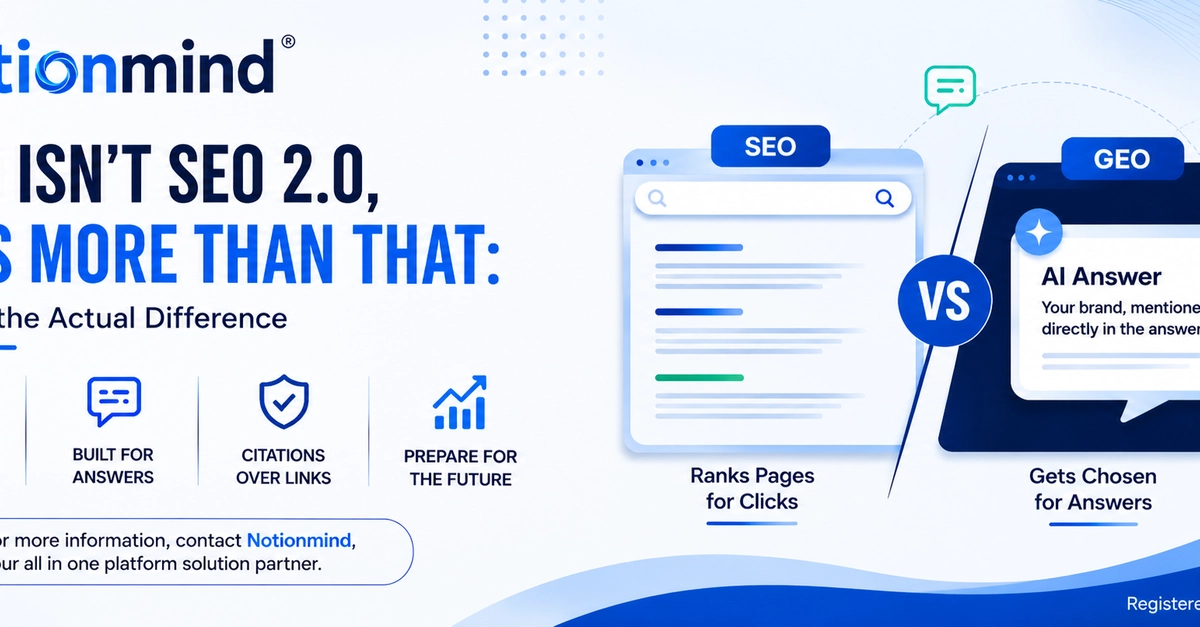
Google's model was built on a simple loop: user types query, search engine returns ranked list of URLs, user clicks, user reads. Your job as a site owner was to appear in that list as high as possible. Traffic came from clicks.
The new loop is different. User types query into ChatGPT, Perplexity, or Claude. The model either retrieves content from its training data or -- increasingly -- fetches it live. The model synthesizes an answer and presents it directly. There is no list of URLs to rank in. There may be a citation, or there may not be. The user may never visit your site at all.