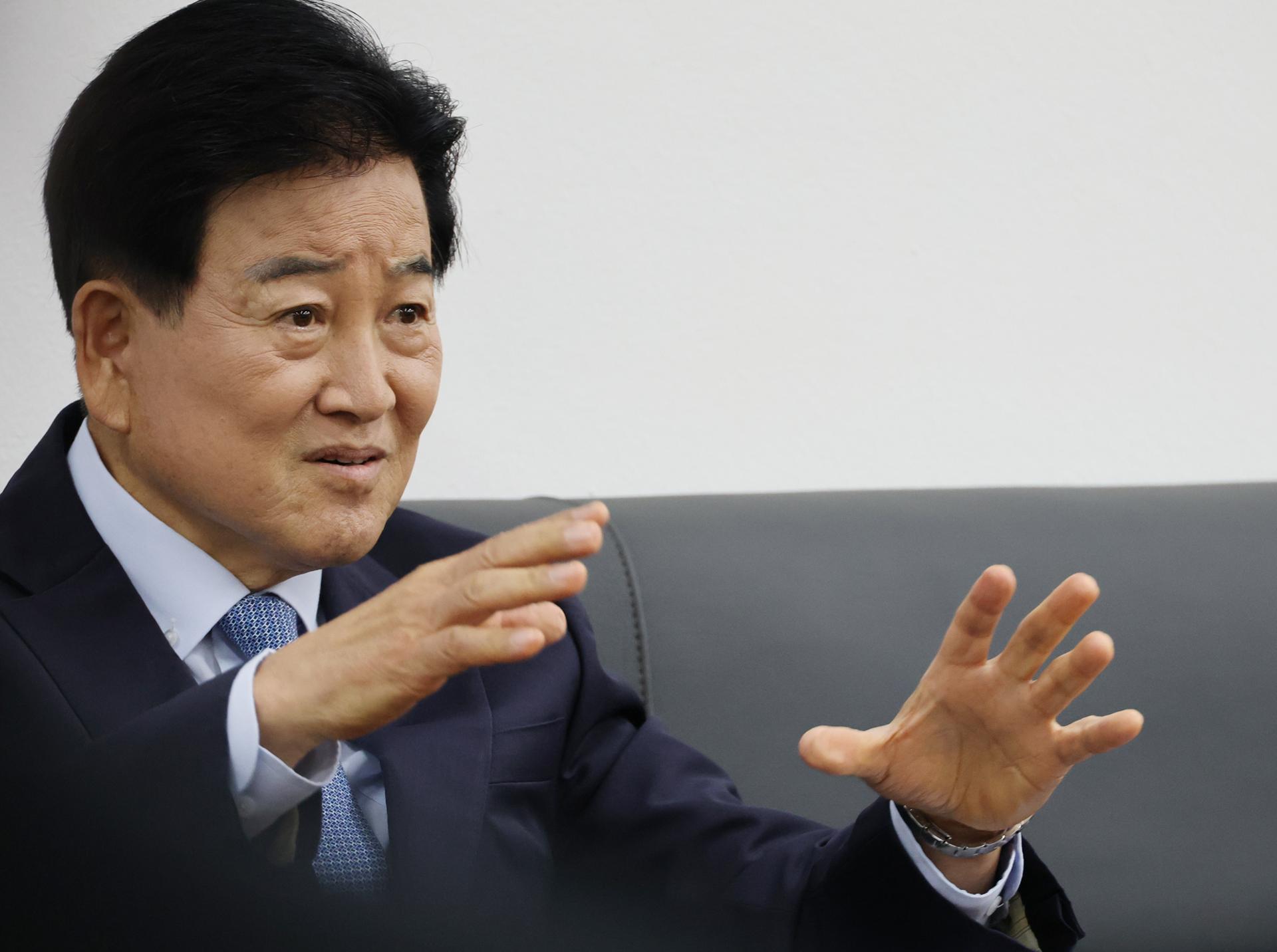
On the 73rd anniversary of the Korean Armistice Agreement late last month, South Korea’s Minister of Unification Chung Dong-young declared, “We must end the Armistice regime and move to a peace regime.” His statement echoed a promise from South Korean President Lee Jae-myung, who earlier in July promised South Korea’s Peace Unification Advisory Council that his administration would work to transition the Korean Peninsula away from the Armistice Agreement toward a “peace regime” paradigm.
But what does this actually mean? What is a “peace regime” and is it attainable with North Korea?
These questions matter because they inform the trajectory of South Korea’s policy toward the North and, more fundamentally, how policymakers in Seoul approach peacebuilding on the peninsula.
In short, the “peace regime” is a long-standing South Korean policy design aimed at establishing a new framework for inter-Korean relations. The operative notion is to transition from the Armistice Agreement to an inter-Korean peace arrangement, to reduce foreign interference in the Korean peace process, and to establish interdependencies that would advance the two countries toward eventual reunification.
While at times showing early promise during brief periods of rapprochement, this approach has ultimately been unable to achieve these objectives. This is principally owing to the fundamental mismatch with North Korea’s policy preferences and domestic politics in South Korea. But the treatment of the peace process as discrete phases also runs contrary to the basic principles of peacebuilding, installing arbitrary friction points and creating missed opportunities for shared cooperation.