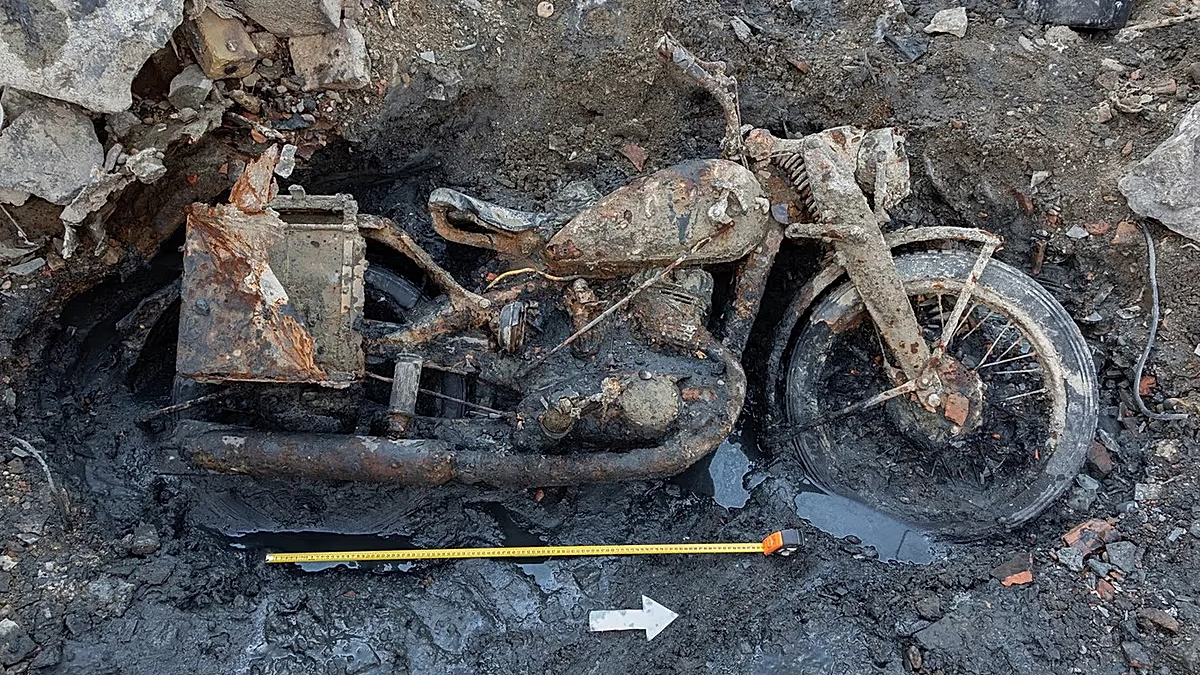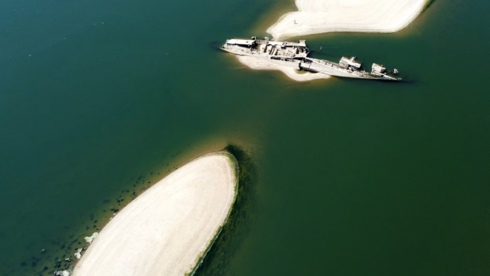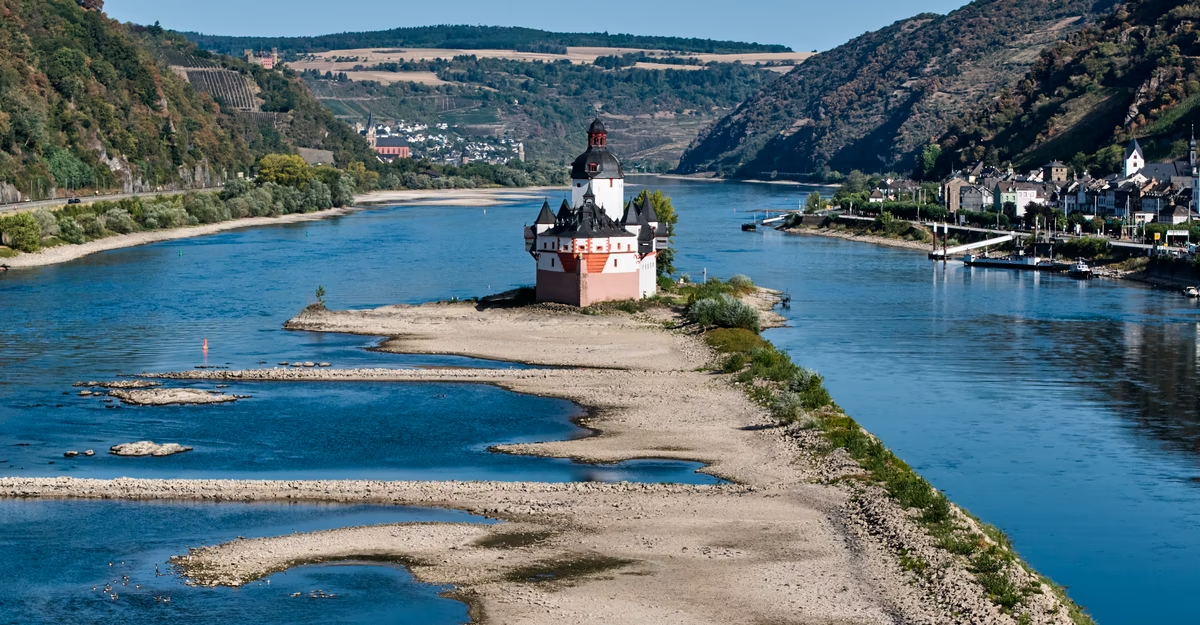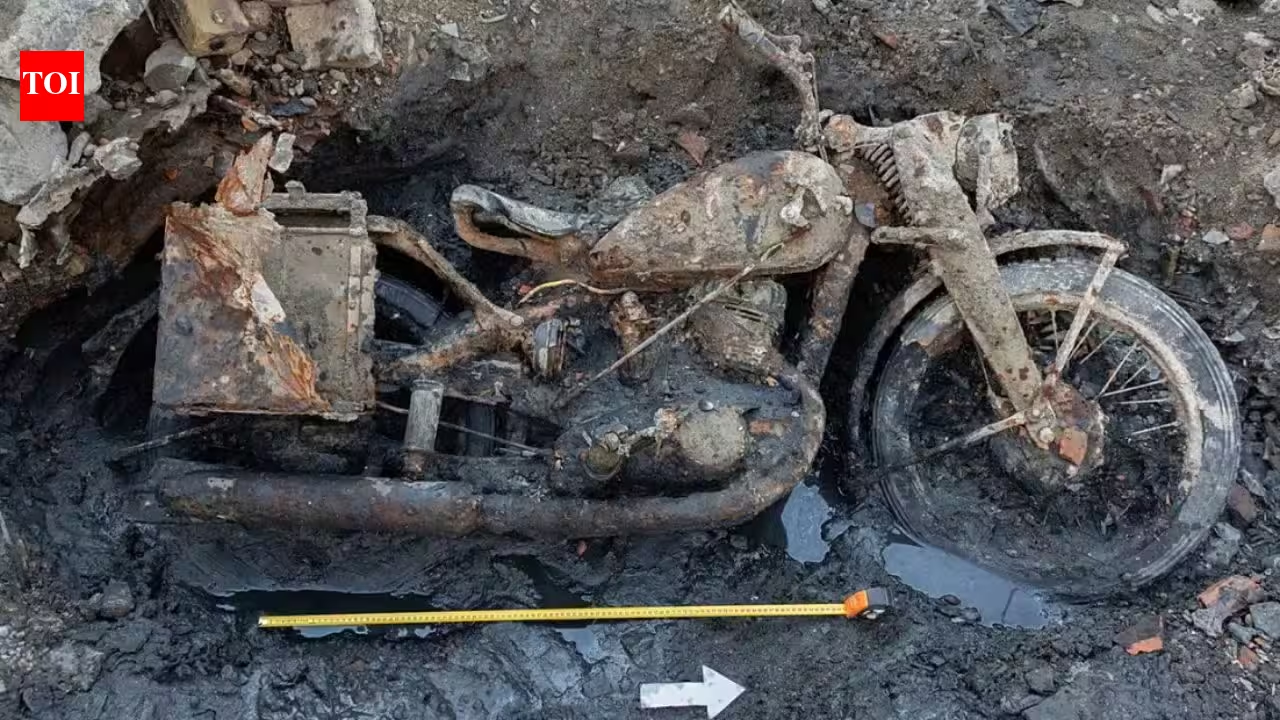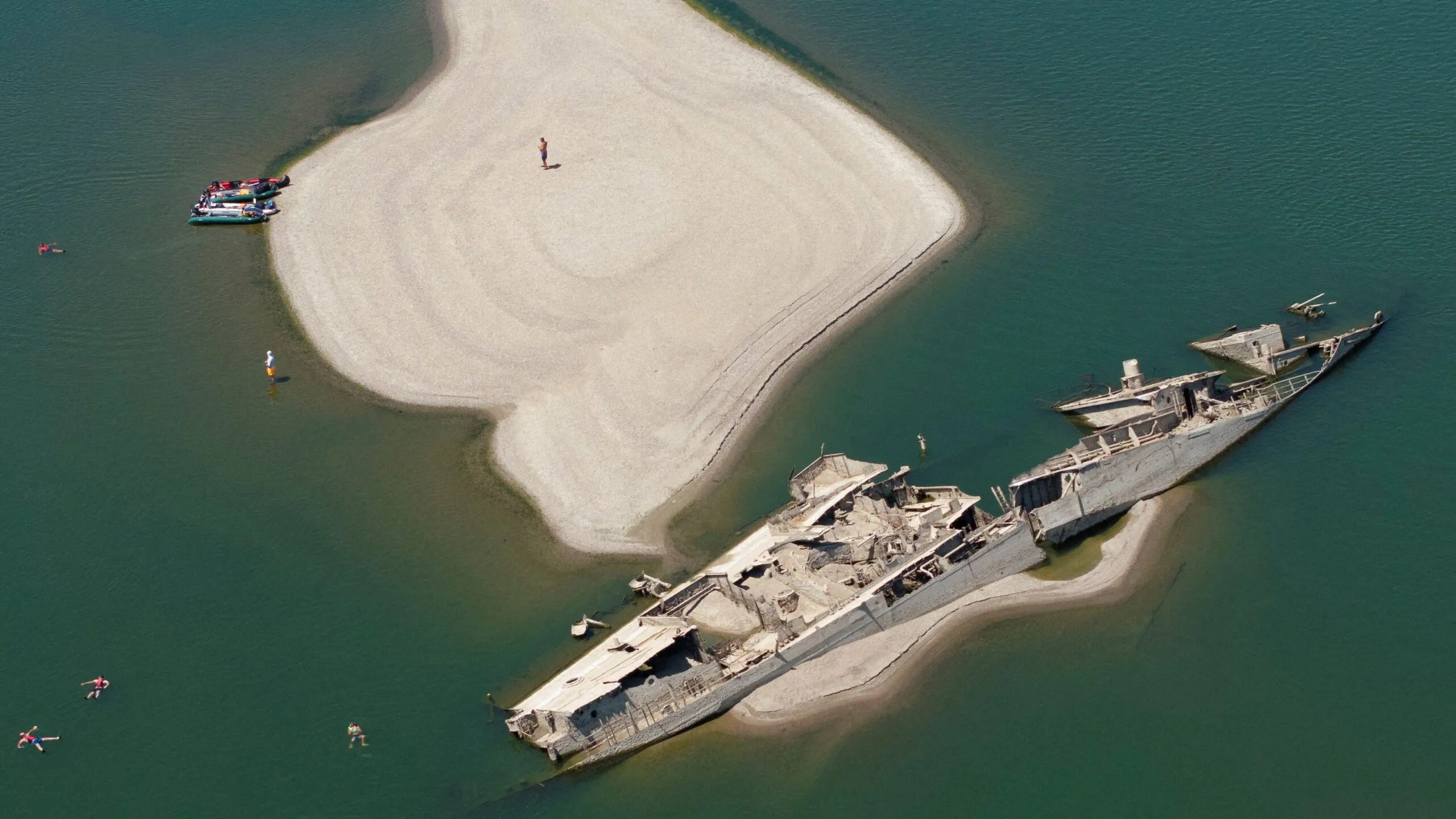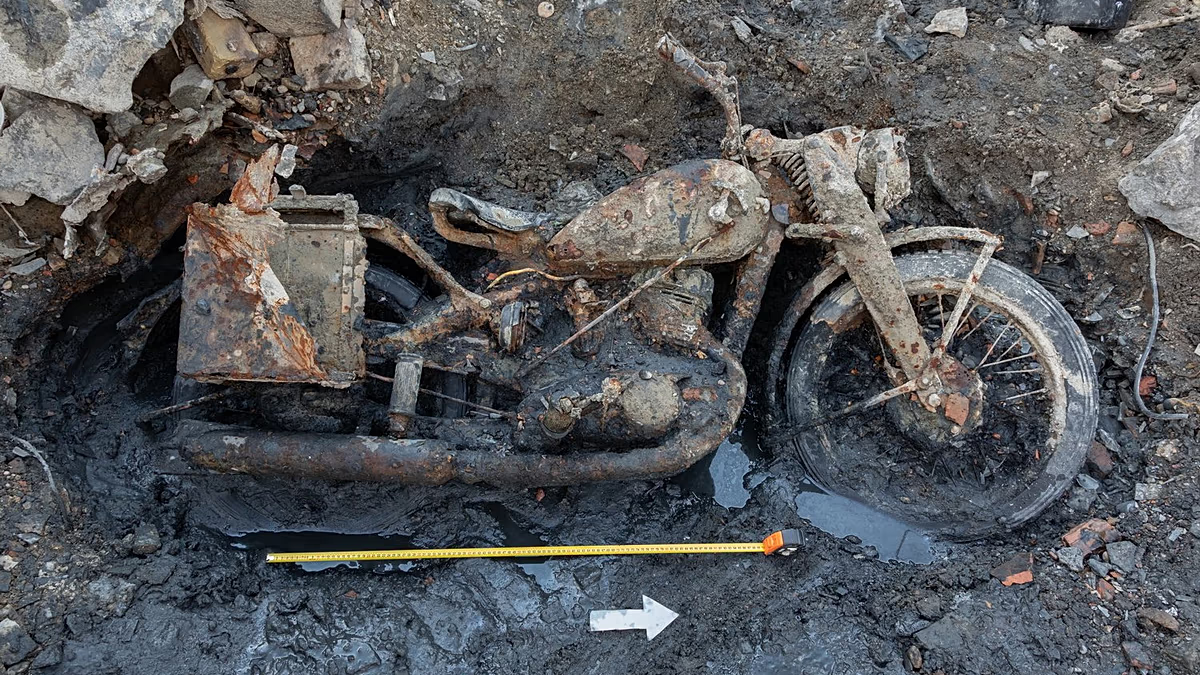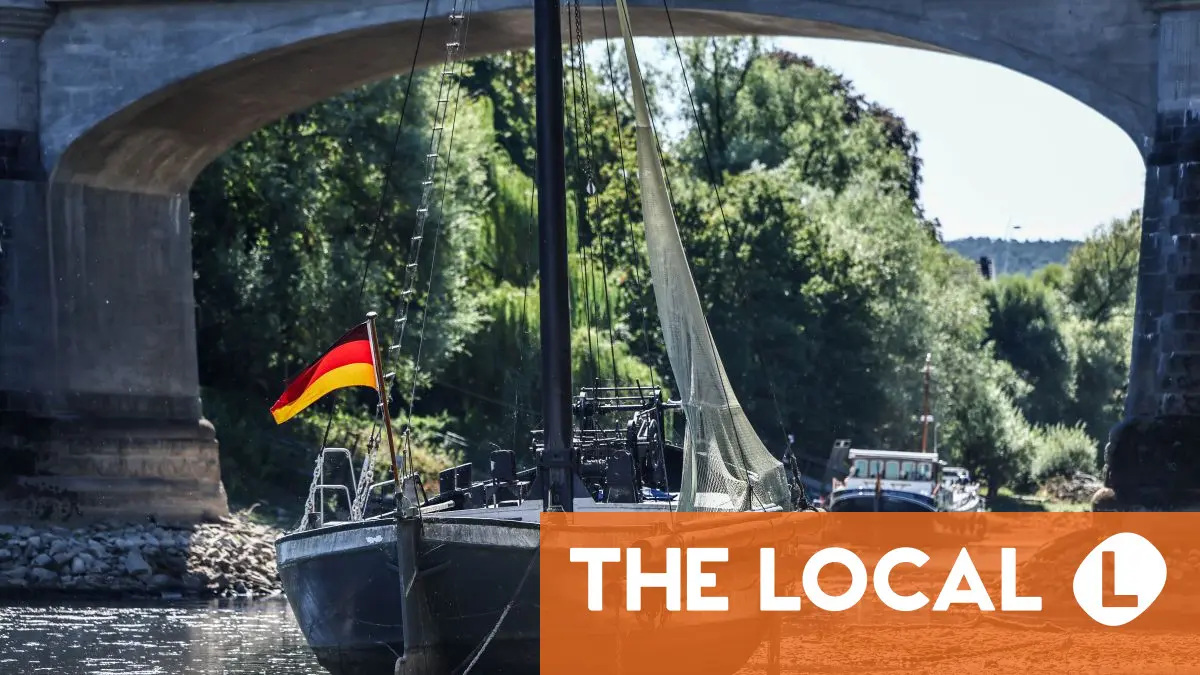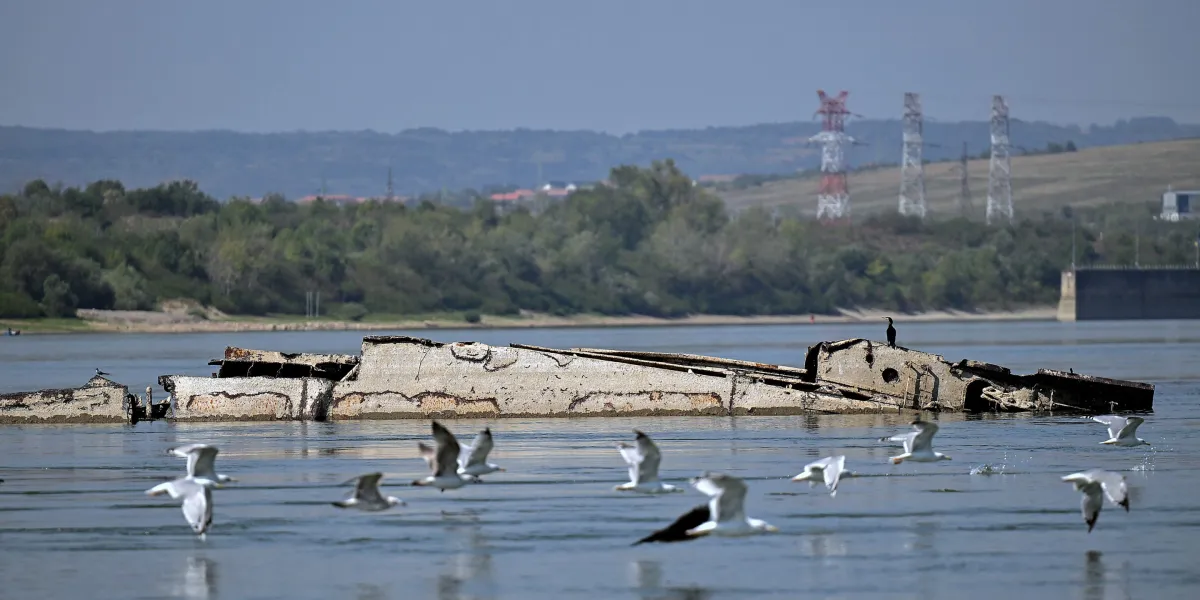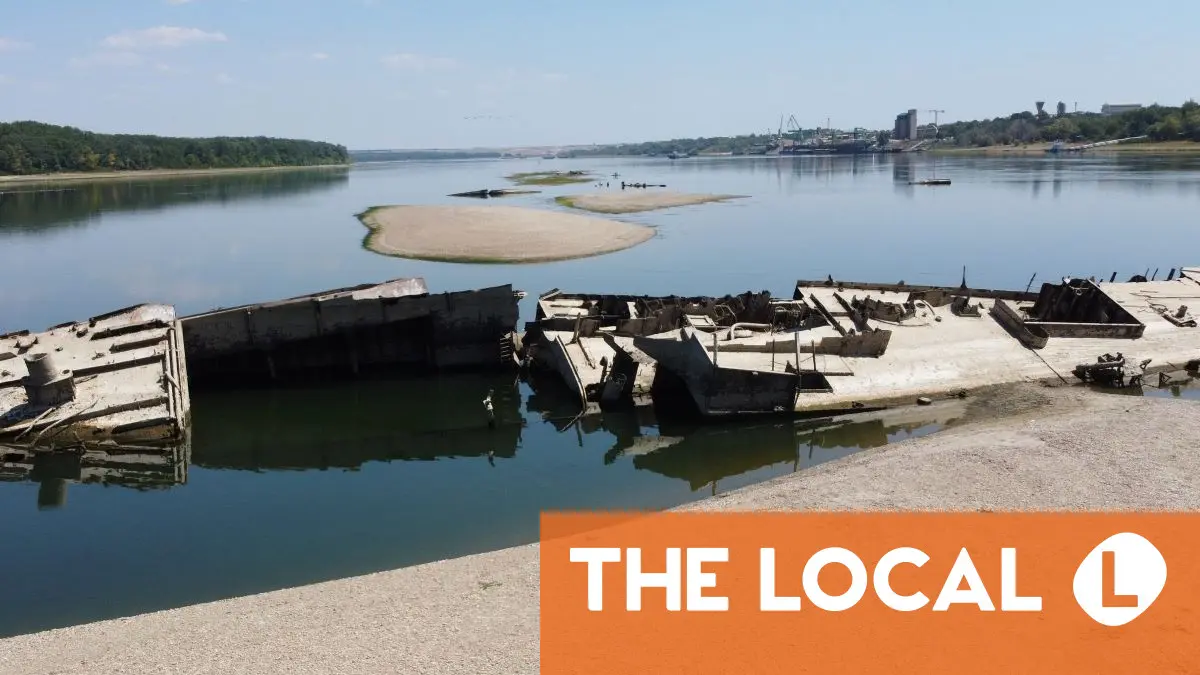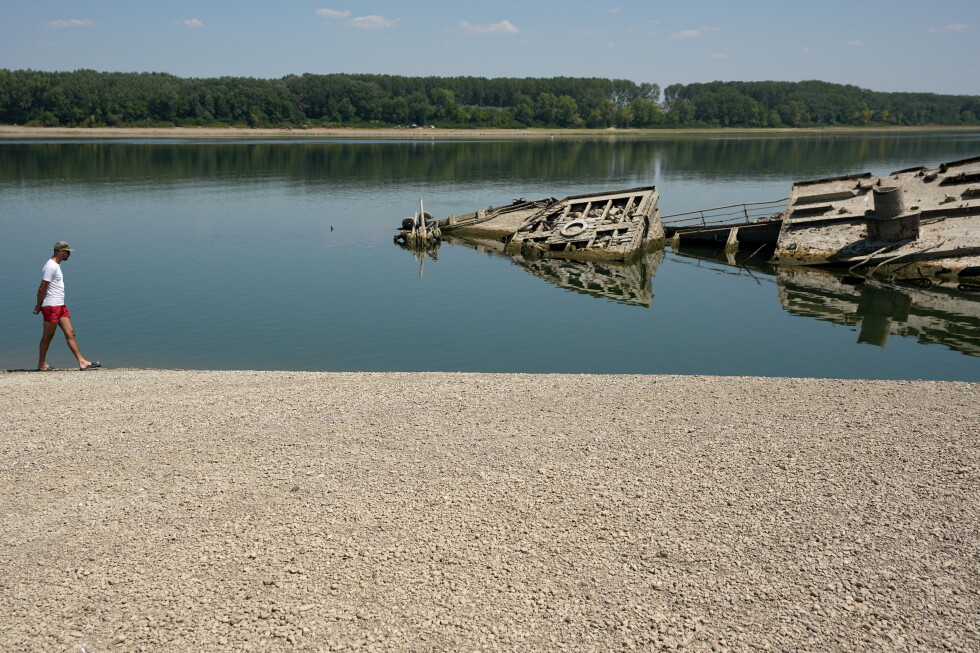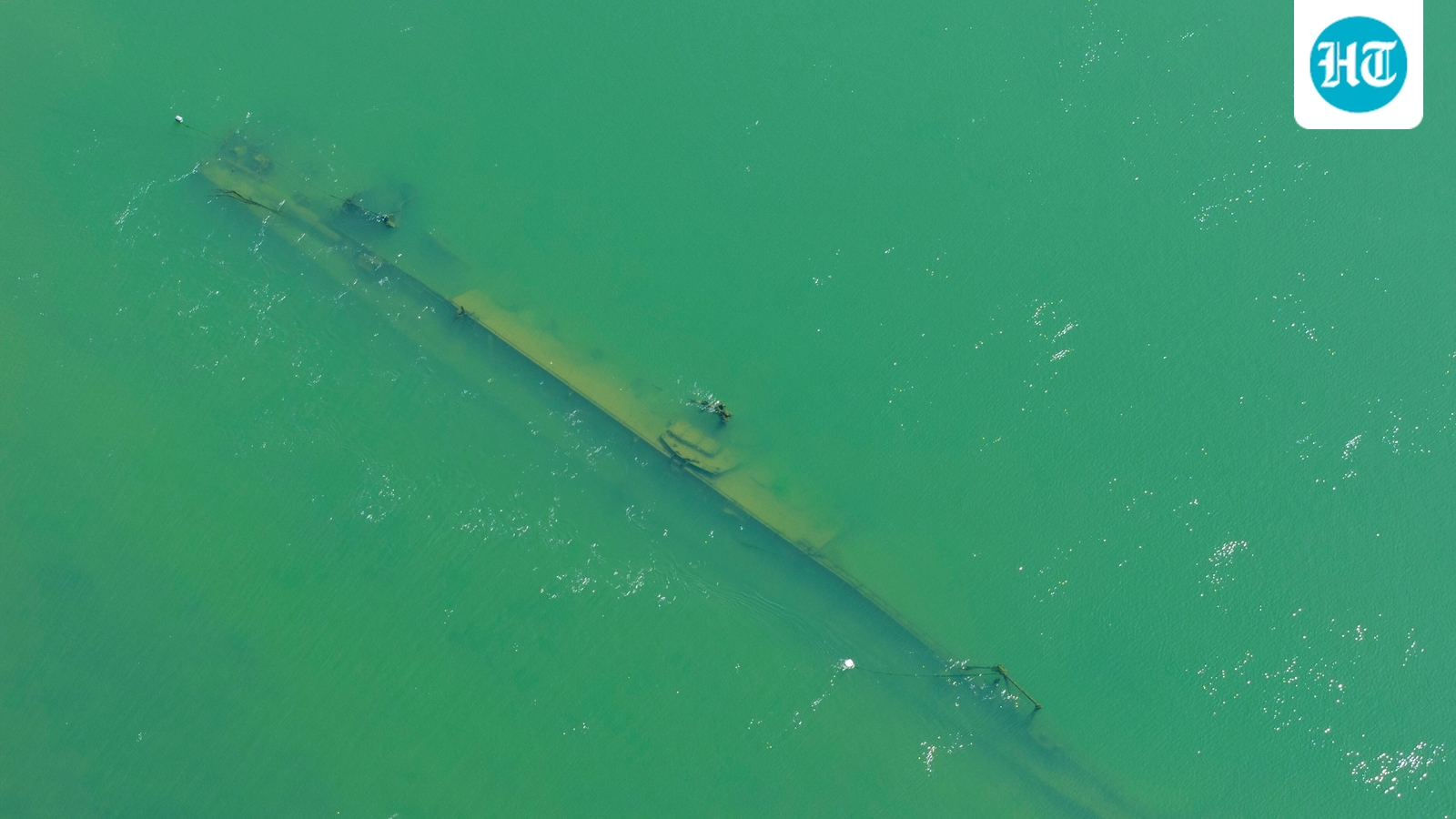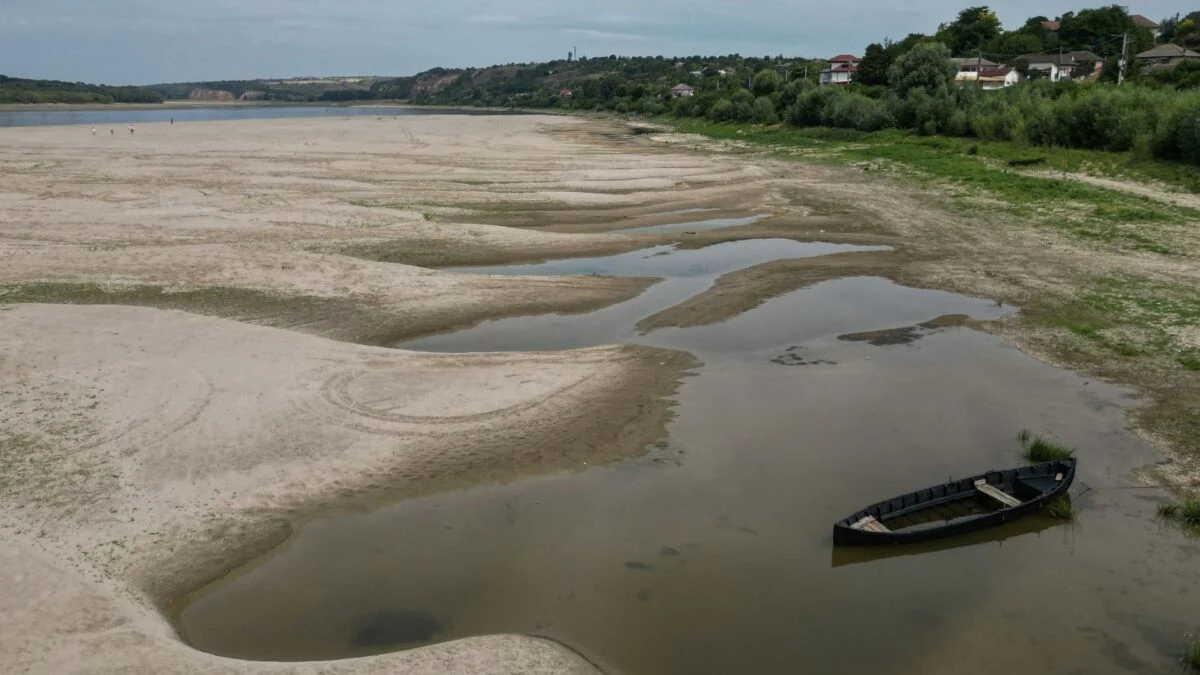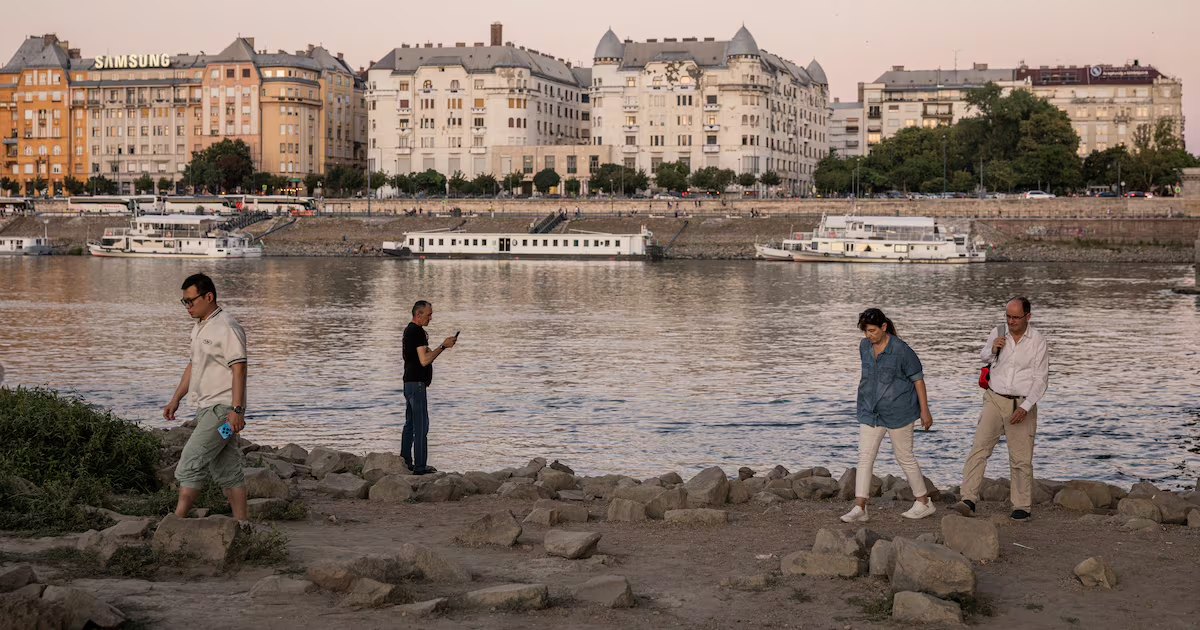
Water levels in Europe’s major waterways have reached historic lows, sparking economic fears for the future and revealing unhappy echoes of the past.In Budapest, adjacent to the national parliament, the retreating waters of the Danube river have revealed a once-in-a-century discovery: the remains of two presumed German soldiers and a Wehrmacht DKW model military motorcycle.The city’s Institute and Museum of Military History said the vehicle was almost completely intact, preserved by Danube riverbed mud and engine diesel.Local historians say the dead men were probably killed during the Nazi occupation of the city from March 1944, possibly during the four-month Battle of Budapest which ended in February 1945.Germany’s Volksbund Deutsche Kriegsgraberfursorge, the national war graves commission, has taken charge of the discovery and will bring the two soldiers’ remains to a local graveyard where 16,000 German soldiers are buried. Commission head Arne Schrader said tags found on the soldiers suggest they were members of the Waffen-SS, the combat branch of the Nazi paramilitary organisation and may have been fleeing the city by motorbike.“The location suggests the two left the riverfront and it’s possible that they were hit by machine-gun fire from a low-flying aircraft or artillery,” Schrader said.“The investigation of the remains will show if there are injuries from external causes beyond a simple fall.”Record temperatures of 40 degrees have seen water levels of just 9cm at the Budapest stretch of the Danube, which connects 10 countries and runs from the Black Forest to the Black Sea. As well as exposing at least 30 wartime mines, the low water levels have brought trade and tourism boats on the river to a halt.A man sits at the partially dried-up river bed of the Rhine in Godorf near Cologne, Germany, on August 7th. Photograph: Ina Fassbender/AFP via Getty Images Things are as critical, too, in Europe’s other legendary river, the Rhine, where low water level records from 2018 are being cracked on a daily basis. Water levels have reached 54cm through the centre of Cologne, with a lower level of 47cm forecast for Friday evening, while nearby Düsseldorf has recorded 10cm.As treasure-hunters prowl the extended Rhine river banks with metal-detectors, shipping companies have warned of surging petrol prices if drought conditions continue.“It’s impossible to fathom what we are seeing here and there is no sign of relief,” said Moritz Axt, spokesman of the Rhine shipping authority, saying the water has been dropping since June.Record low water levels are limiting the loading capacity of the few cargo vessels still traversing the Rhine, with shipping companies imposing surcharges to compensate for reduced capacity. Rail transport on the adjacent line is not possible until December due to large building works.As a result, wholesalers are reducing orders to avoid additional expense, triggering growing supply problems for critical raw materials transported by river: grain, minerals, ores, coal and petroleum products.German economists have warned that a prolonged drought could reduce gross domestic product by up to 0.2 per cent in the third quarter.“The logistics costs for transporting fuels and certain intermediate products are rising significantly in some cases,” said Christian Laberer, fuel market expert for the ADAC German motor club.History is in the making, too, at a legendary spot on the river Rhine: the Loreley cliff where, since the 10th century, sirens have reportedly lured sailors on to the rocks and a watery death.The sirens would have no luck these days, no mater how loud they sing: the water is so low that not even the Loreley Star tourist ship can get anywhere near the fabled rock face.
History revealed as Rhine and Danube water levels hit historic lows
As treasure-hunters prowl extended river banks with metal-detectors, shipping companies warn of surging prices
589 words~3 min read