A pooled analysis of cohort studies indicated that it was common for people with normal BMI to have high waist circumference or waist-to-hip ratio, both indicative of a higher risk of cardiovascular disease.Of note, people with obesity and a small waist circumference had largely similar clinical outcomes to their normal-weight counterparts.Researchers concluded that BMI alone does not sufficiently evaluate CVD risk, and central adiposity measures could refine risk estimation.
There were plenty of people whose normal weight belied the higher cardiovascular risk evident in their waist size, according to a pooled analysis of over a dozen cohort studies.
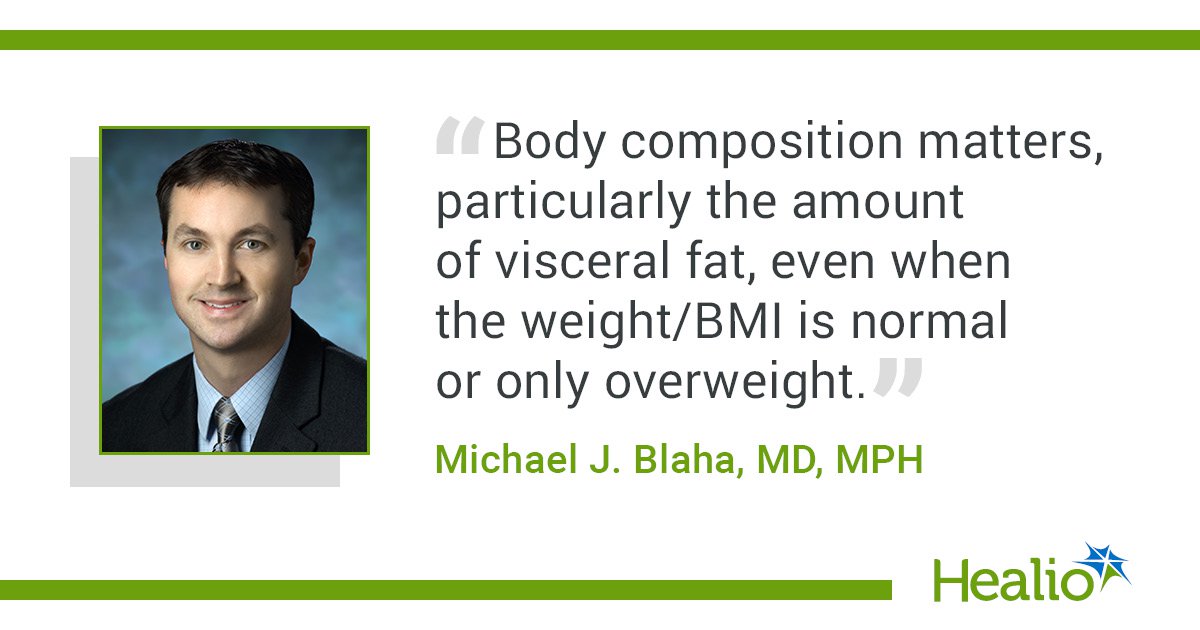
Among those with normal weight or overweight measured by body mass index (BMI), a large waist circumference (WC) and a high waist-to-hip ratio (WHR) were associated with a 15% to 50% excess risk for most heart disease outcomes over 20 years, reported Michael Blaha, MD, MPH, of the Johns Hopkins Ciccarone Center for the Prevention of Cardiovascular Disease in Baltimore, and colleagues.
Notably, people with obesity and a small waist circumference had largely similar clinical outcomes to their normal-weight counterparts; the risk of all-cause mortality even favored some individuals with obesity and smaller waists.