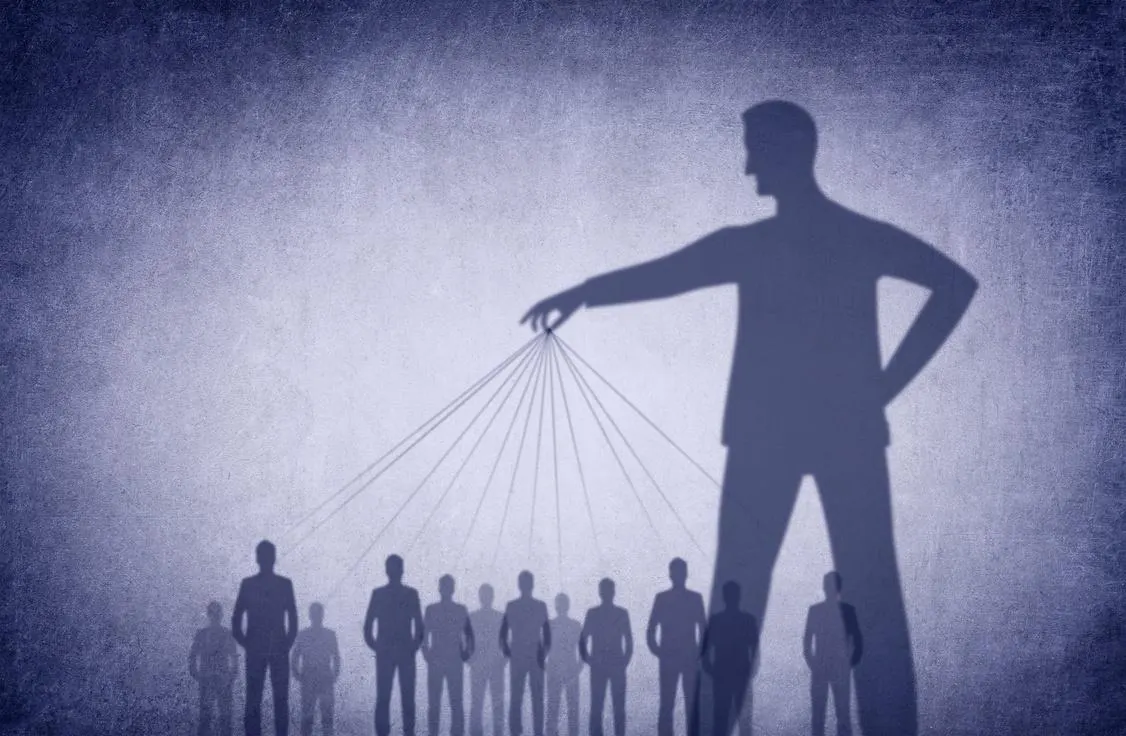
Letting go of the illusion of control frees up energy to allocate your effort deliberately instead of defensively.gettyThere’s a particular kind of exhaustion showing up in leadership right now that has nothing to do with workload. A news cycle that won’t quiet down. An inbox that grows faster than anyone can empty it. Budgets tighter, clients angrier, leaders louder… or sometimes quieter in the way that’s actually worse.The reality is that most of those drivers of exhaustion cannot be subtracted. You can't delete the economy. You can't unsubscribe from geopolitics. You can't always fire the difficult client or redesign the org chart, however much you'd like to.So if subtraction is going to help right now, it has to start somewhere else. What if we subtracted the illusion of control?To be clear, this isn't an argument for shirking responsibility or caring less. It's an invitation to let go of a specific, exhausting belief: that if you just try harder, watch closer, and stay one step ahead of every outcome, you might finally feel safe.Certainty as performanceI put this to Caroline Stokes, a leadership consultant who advises Fortune 500 C-suites on navigating disruption and author of Aftershock 2030, during a recent conversation. I mentioned something she’d said that stuck with me: that believing we have certainty right now is a form of gaslighting, even self-abuse. Her response was immediate. “Anyone smart doesn’t think they’re actually certain,” she told me. The performance of certainty, she argued, is exactly that: a performance, one leaders keep staging for their boards, their teams, and themselves, long after everyone in the room knows better. “Once you give up that self-abuse,” she said, “you don’t have to be in this mental trap of telling yourself and everyone around you that you’re certain, when you (and probably they) know there’s no chance you can be.”MORE FOR YOUThat reframe matters, because the exhaustion many leaders feel right now isn’t only coming from the volume of what they’re carrying. It’s coming from maintaining a posture of certainty their own wisdom doesn't believe.Where I learned this the hard wayI've felt a smaller version of this in my own work. As an advisor, I used to confuse caring with control: if I just explained an idea more clearly, or followed up at the right moment, surely it would land the way I intended. Eventually I had to let go of the fantasy that I could manage someone else's learning arc. I didn't stop sharing ideas. I stopped attaching to what happened after I did. The energy that came back from that one subtraction was, unexpectedly, a relief.I wouldn't have noticed the boundary between offering help and gripping its outcome without stopping long enough to actually look at what I was doing and why.Stop, before you can rollIn the Stop-Drop-Roll method I use with leaders, Stop isn't a productivity trick or a break from the noise. It's a practice of observation: noticing what's real versus what's rumor, what's urgent versus what's actually important, and what your body already knows before your calendar admits it.What that pause tends to reveal is quietly consequential: not everything you’re carrying is actually a must. Some of it is an outdated habit. Some of it belongs to an older version of you – how you learned to survive, to stay ahead, to be seen as valuable – that isn't serving the moment you're actually in.Letting go of the illusion of control doesn’t erase your real constraints. It does something more useful: it frees enough energy to Roll – to make meaning of what remains, and choose your effort deliberately instead of defensively. Viktor Frankl’s observation that people can endure almost any "how" when they have a compelling "why" isn’t just true for extremity. It’s true for a hard quarter, too. When the bigger picture disappears, difficulty stops feeling hard and starts feeling pointless – and that's a much heavier thing to carry.A smaller question to close withYou don't need a full audit to start. Just two questions, asked honestly, without trying to fix anything yet:What am I trying to control here that I don't actually control?And underneath that: what do I actually control in this situation that I've been avoiding, because it's harder, or smaller, or less comfortable than the illusion?That second question is usually where the real work – and the real relief – begins.
Certainty Is A Form Of Self-Abuse. Here's What To Subtract Instead.
Leaders keep performing certainty they don't feel — and it's exhausting everyone, including themselves. On subtracting the illusion of control to reclaim energy.
727 words~3 min read