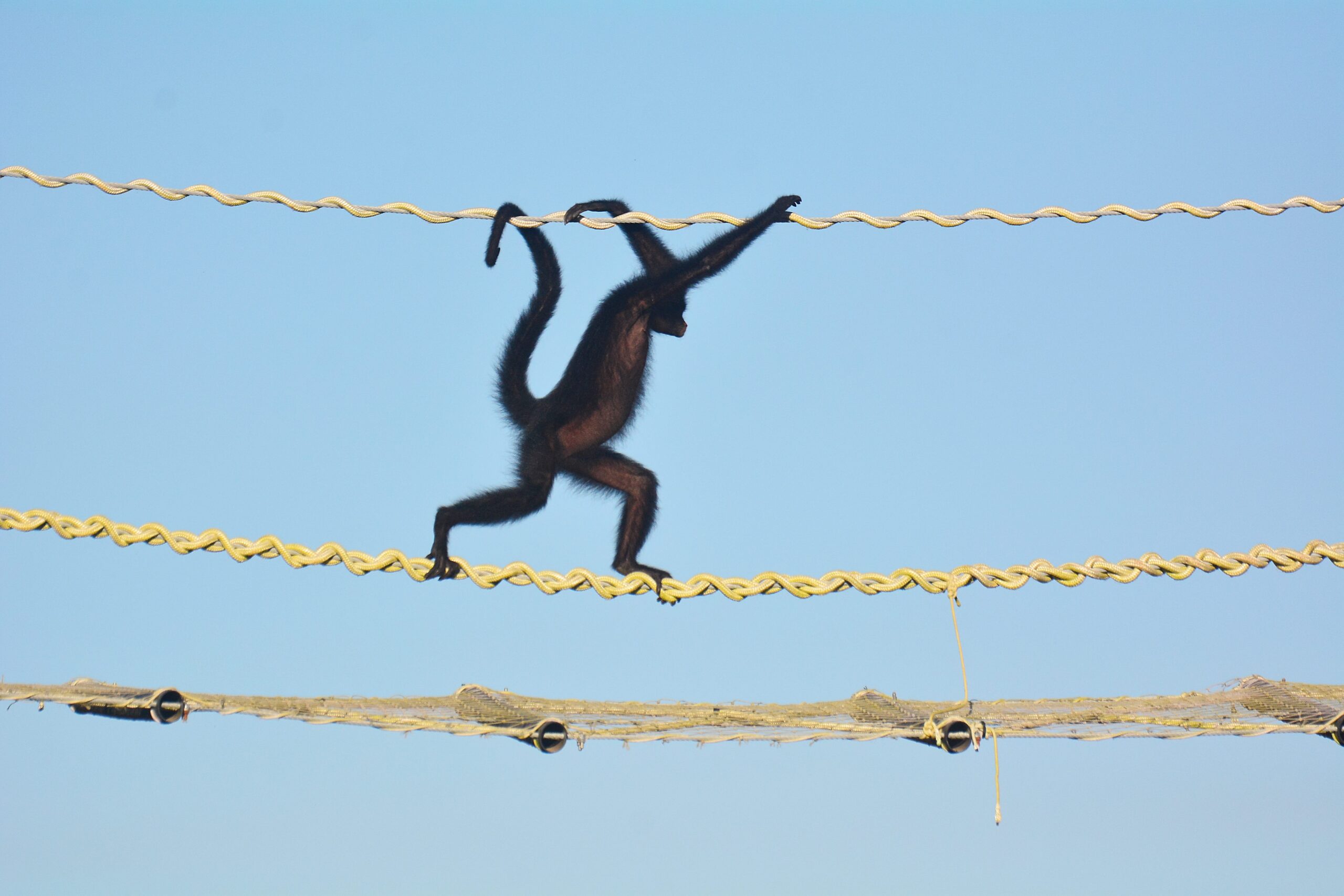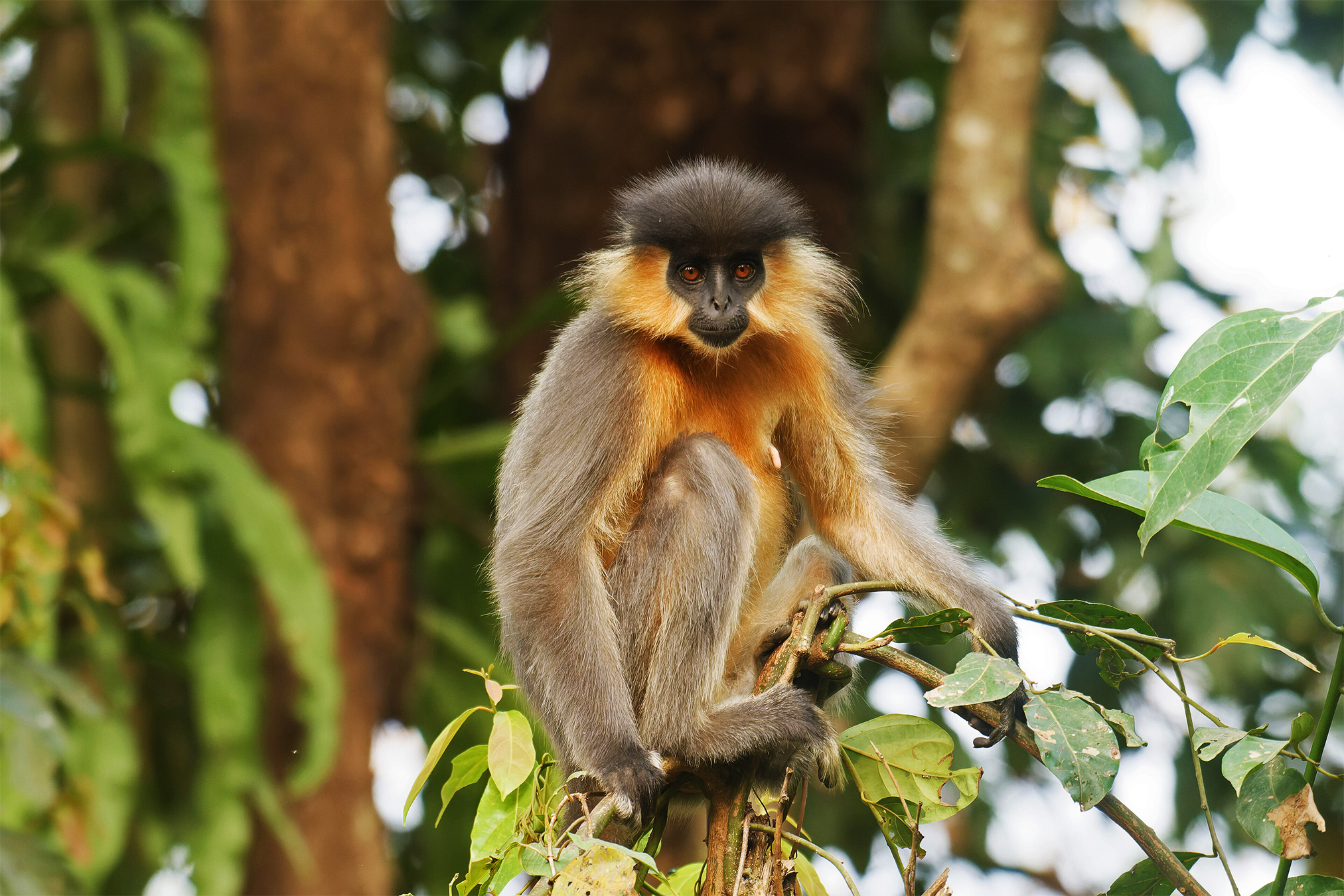
The Forest Department of Bangladesh has recently installed five ropeway bridges at a fragmented national park, with plans to replicate the idea in other vulnerable reserved forests.Pioneering conservationists have seen both successes and failures in previous ropeway-based projects.Researchers appreciate the Forest Department’s move but recommend well-assessed site selection, incorporation of modern equipment for sharper surveillance and community engagement.
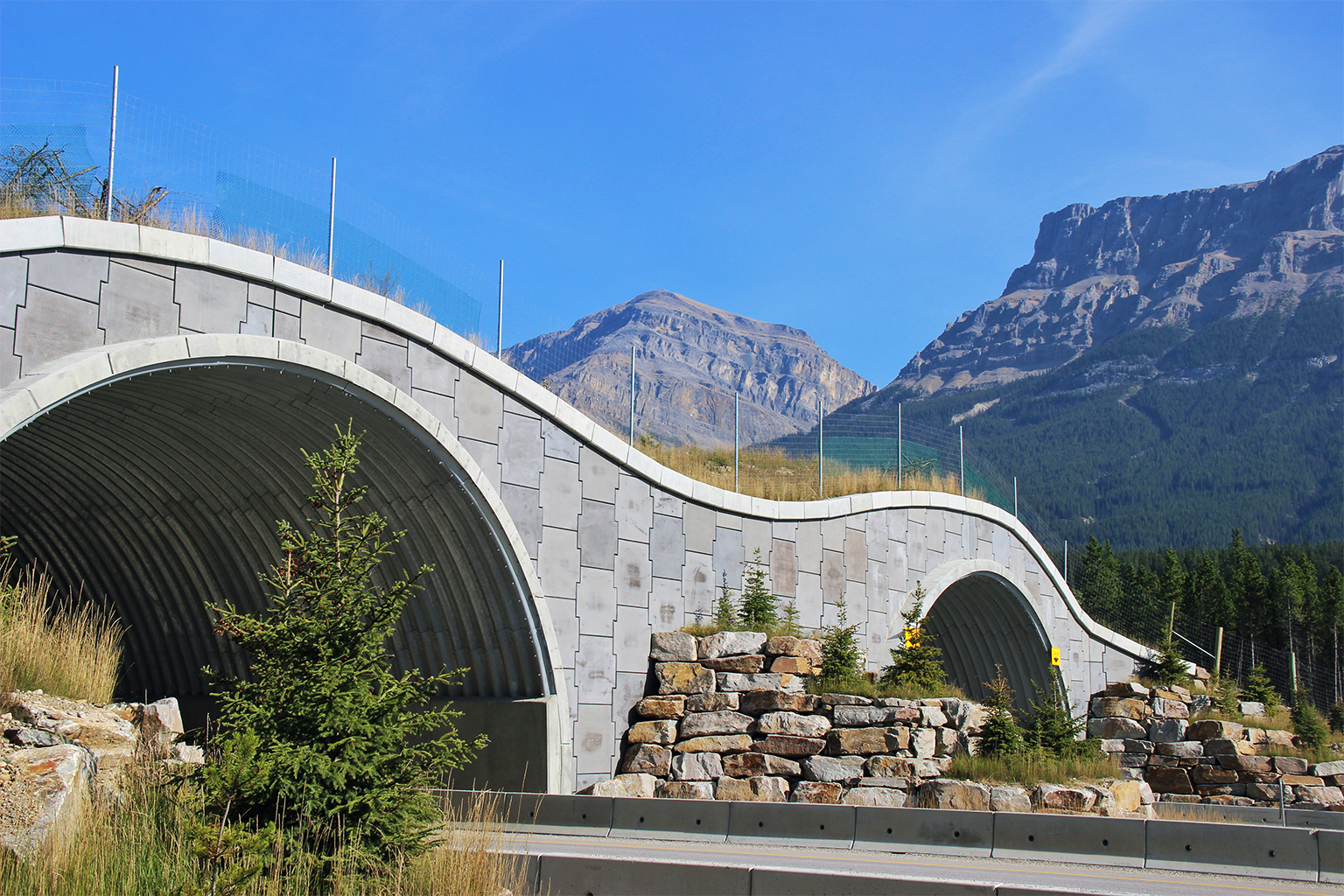
As Bangladesh is rapidly being urbanized, more and more forests are getting fragmented, resulting in the construction of more roads, which means more wildlife are being killed in collisions with vehicles. To address these wildlife deaths, the Forest Department’s Tangail Divisional Office has recently facilitated a low-cost solution.
At a total cost of 625,000 takas (around $5,000), ropeway bridges have been installed in northern Bangladesh at five locations along an 8-kilometer (5-mile) stretch of the Mymensingh-Tangail Highway N401, which slices through the reserved forest of Madhupur National Park, where heavy-duty vehicles regularly collide with wildlife, especially primates.
“These ropeways are expected to protect rhesus macaques, capped langurs, Indian civets and small carnivores like fishing cats from roadkill,” Tangail divisional forest officer Abu Naser Mohsin Hossain told Mongabay.