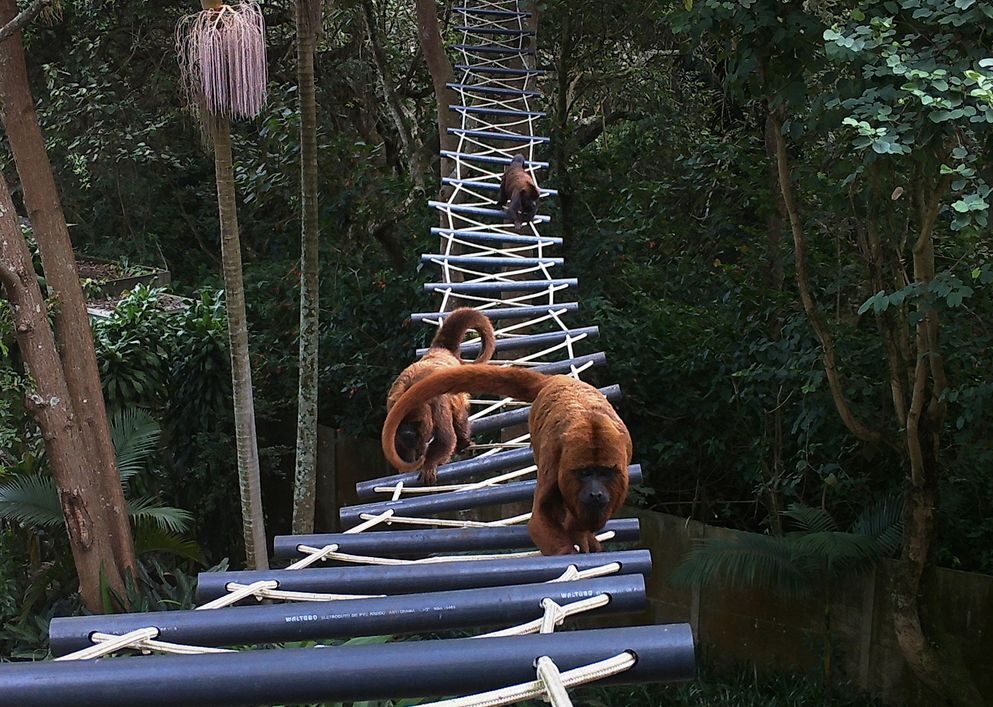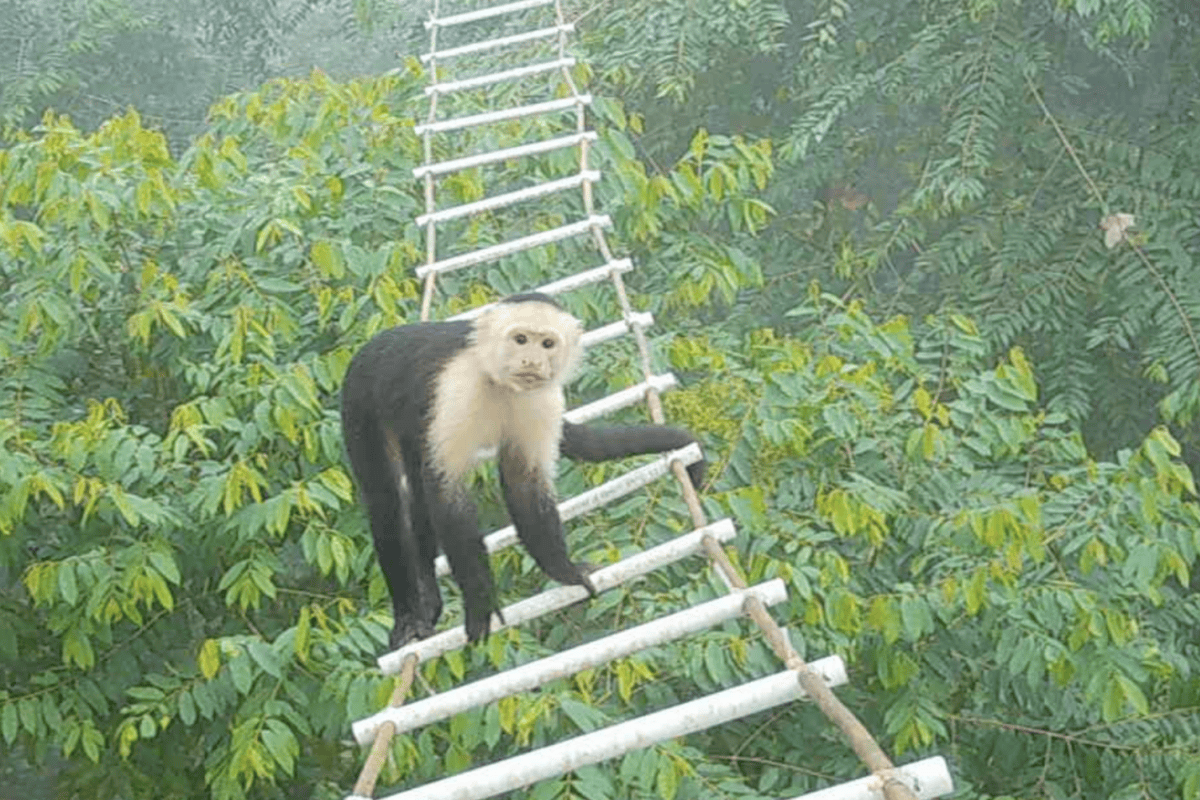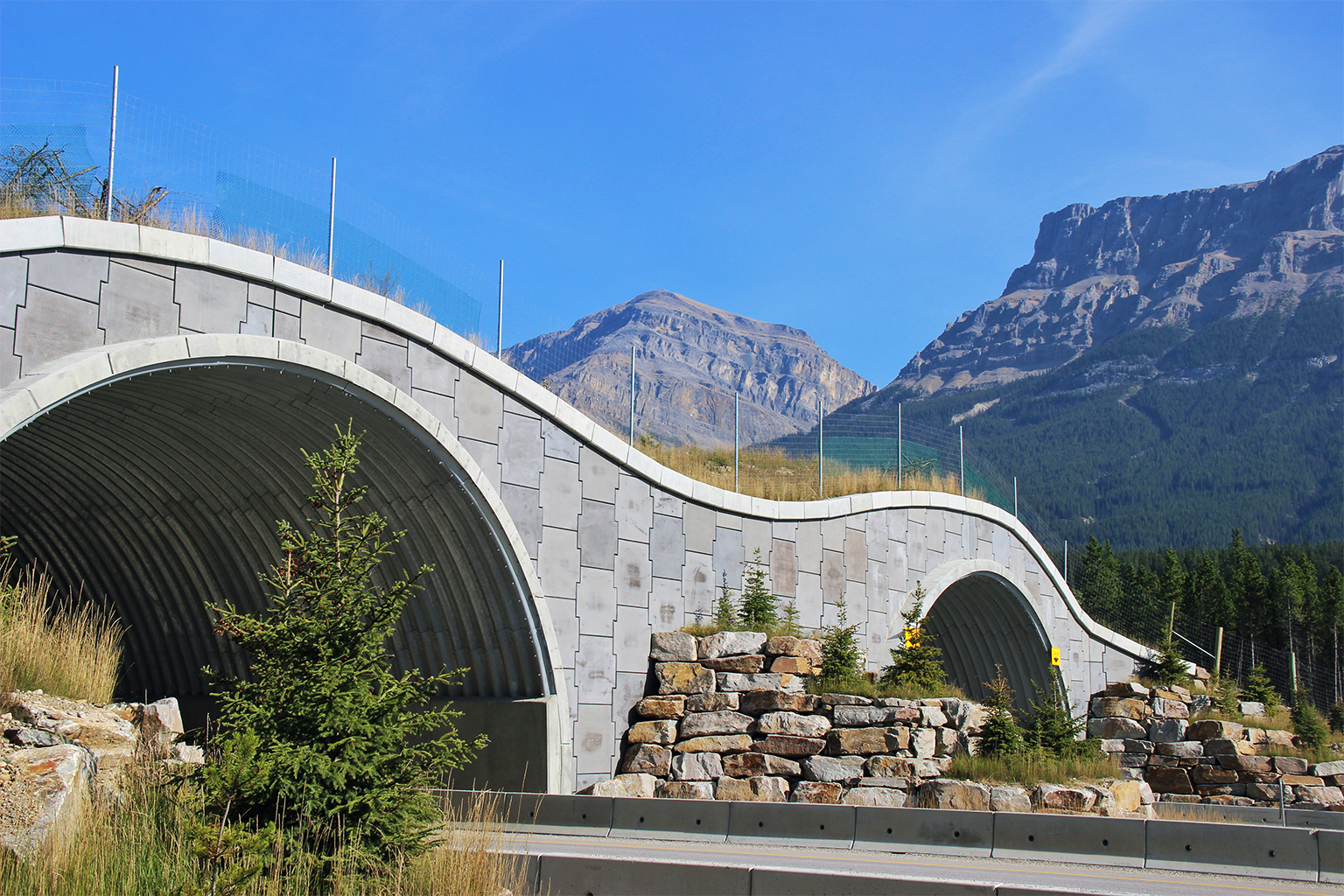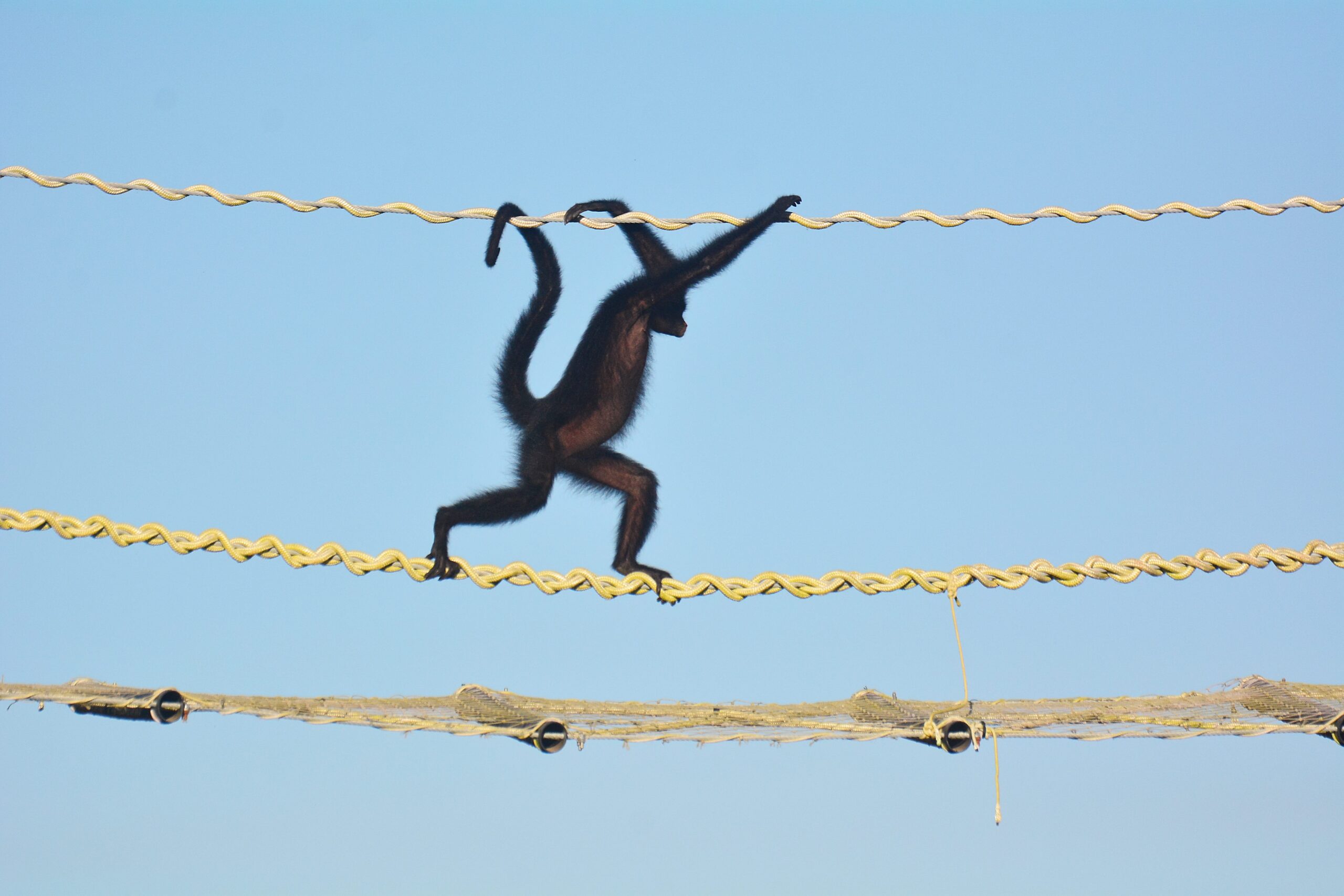
Project Reconecta installed eight rope bridges in a municipality in Brazil, and a 15-month study used camera traps to document thousands of arboreal wildlife adapting to new aerial crossings.Safe road passages enable seed dispersal and gene diversity, reversing the “domino effect” of biodiversity loss that begins when highways split habitats.Reconecta’s creator, biologist Fernanda Abra, a National Geographic Explorer and winner of the Whitley Award, is now expanding these low-cost conservation tools to other Brazilian biomes and neighboring Suriname.Brazil’s federal transport department has officially designated the rope bridge design as the recommended national standard for highways to curb the millions of wildlife deaths recorded on roads annually.
Around 7 a.m., with dense fog blanketing the landscape, biologist Gabriel Falquetto had already come across several road-killed animals along ES-164 highway in Brazil’s Espírito Santo state. He was on his way to Kaetés Private Natural Heritage Reserve (RPPN), in the Atlantic Forest, where he monitors wildlife and roadkill in the region.
Suddenly, he spotted the lifeless body of a primate on the pavement. It was a buffy-headed marmoset (Callithrix flaviceps), a species listed as critically endangered on the International Union for Conservation of Nature (IUCN) Red List. An estimated 2,500 individuals remain in the wild, making it one of the world’s most threatened primates.