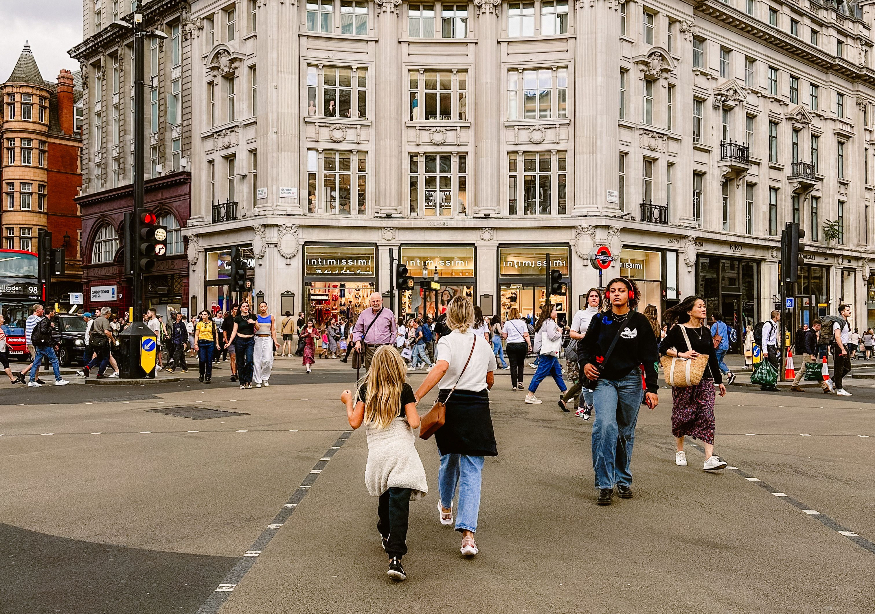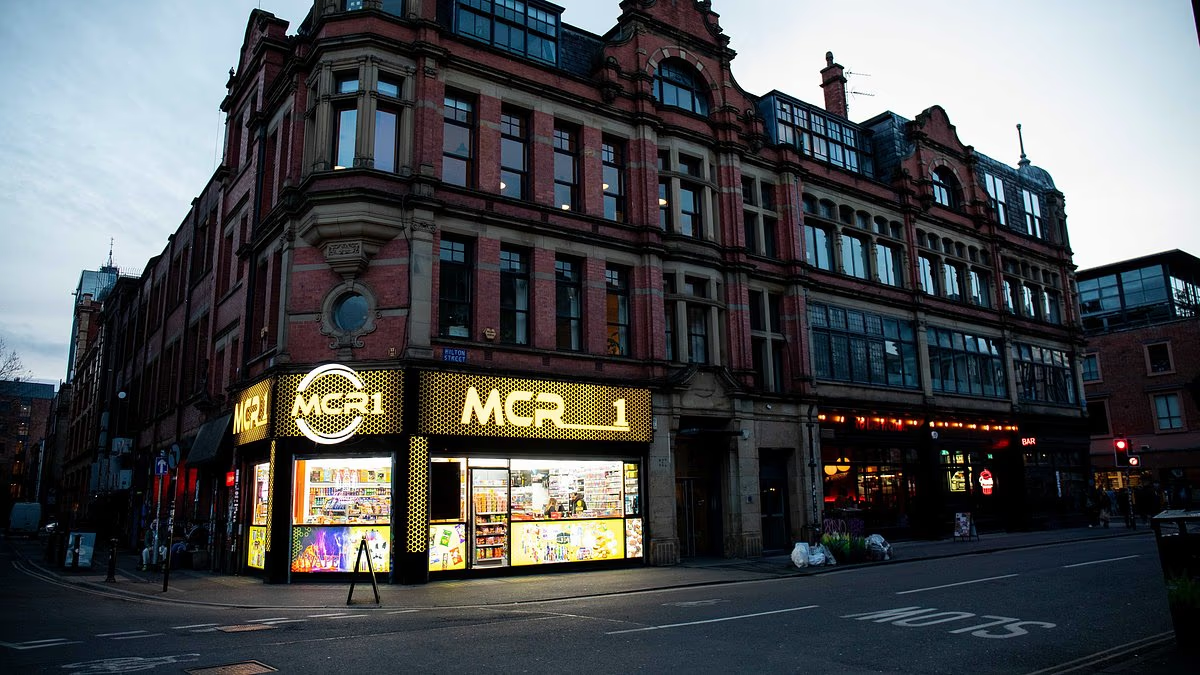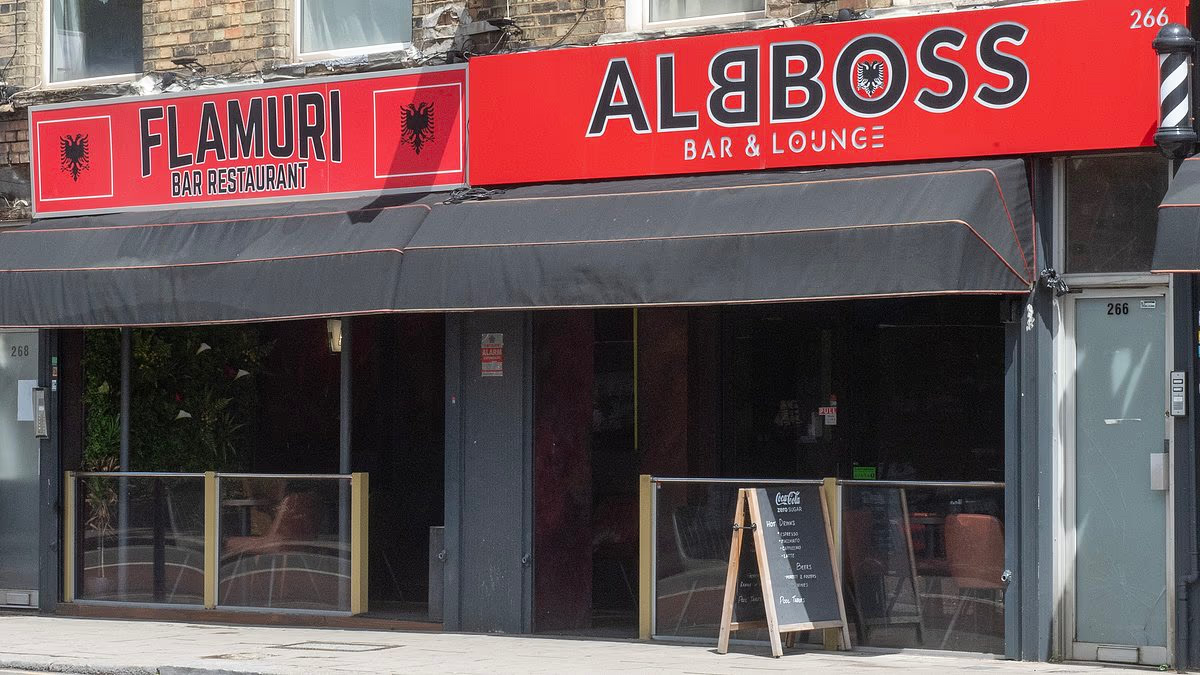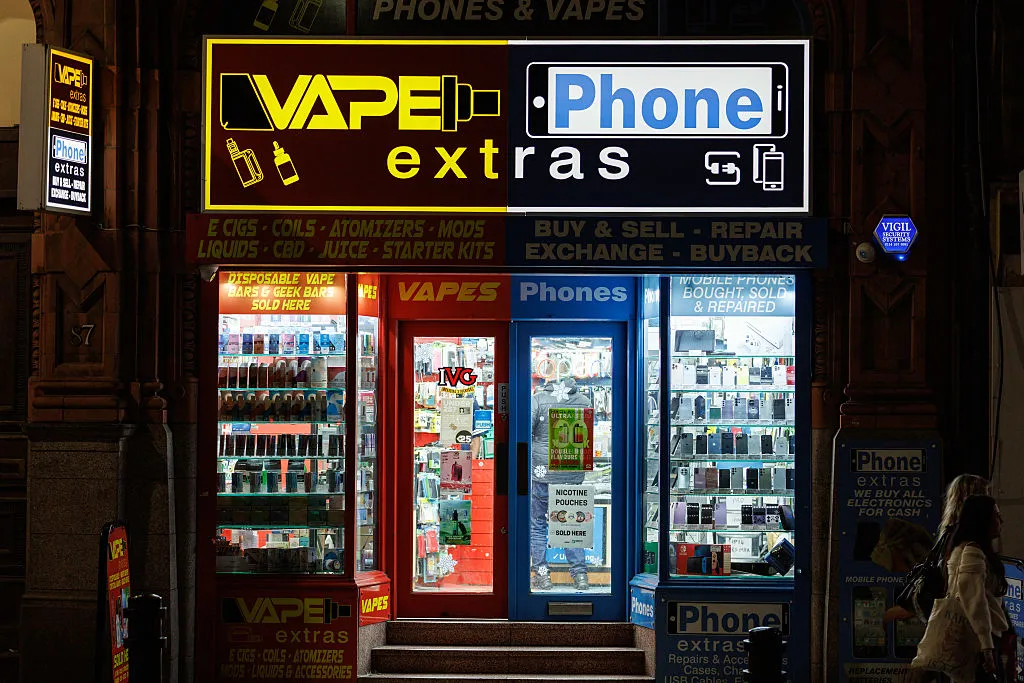
One of the things that all visitors to London notice is the contrast between Oxford Street and Regent Street. Oxford Street is riddled with tacky little shops selling vapes, tat and ‘American candy’. It has the usual plasticky mess of signage and the architecture is noisy and chaotic. By contrast, Regent Street has an unbroken sequence of prestige brands, tasteful and subdued shop signage, and coherent, stately architecture.
The government is giving councils powers to block new vape shops, betting shops and 24-hour slot machine shops – three classic blights on high streets
There is one simple reason for this: the whole of Regent Street is owned by one organisation, the Crown Estate. The Crown Estate will never let floorspace to businesses that would undermine the tone of the street, even if a business is willing to pay more for the floorspace. This is not altruism, but enlightened self-interest: the Crown Estate knows that it can attract more and better shoppers by maintaining the profile of Regent Street as a whole. By contrast Oxford Street has fragmented ownership, and its many owners have pitched the street into a race to the bottom.
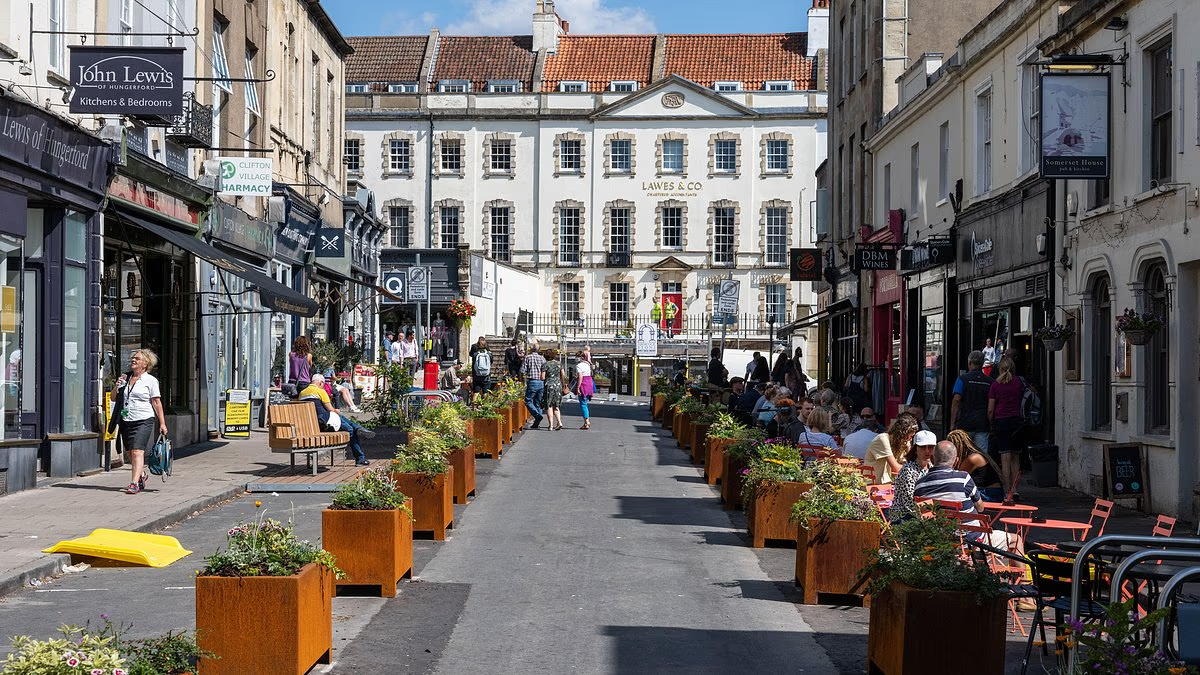
This pattern is repeated across the country. One of the main reasons that out-of-town shopping centres tend to be so much more successful than high streets is that they have unified management. Specialised companies work carefully to make them convenient and secure places, albeit bland ones. High streets struggle partly because there is generally no one landowner to coordinate them in the same way.