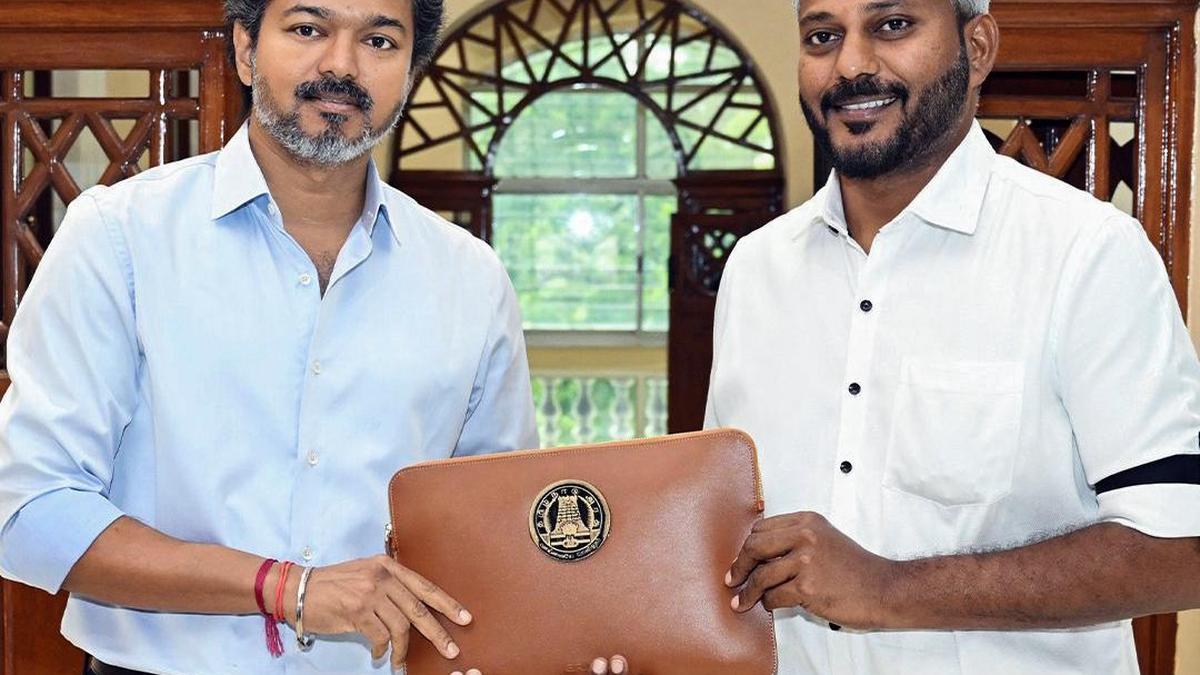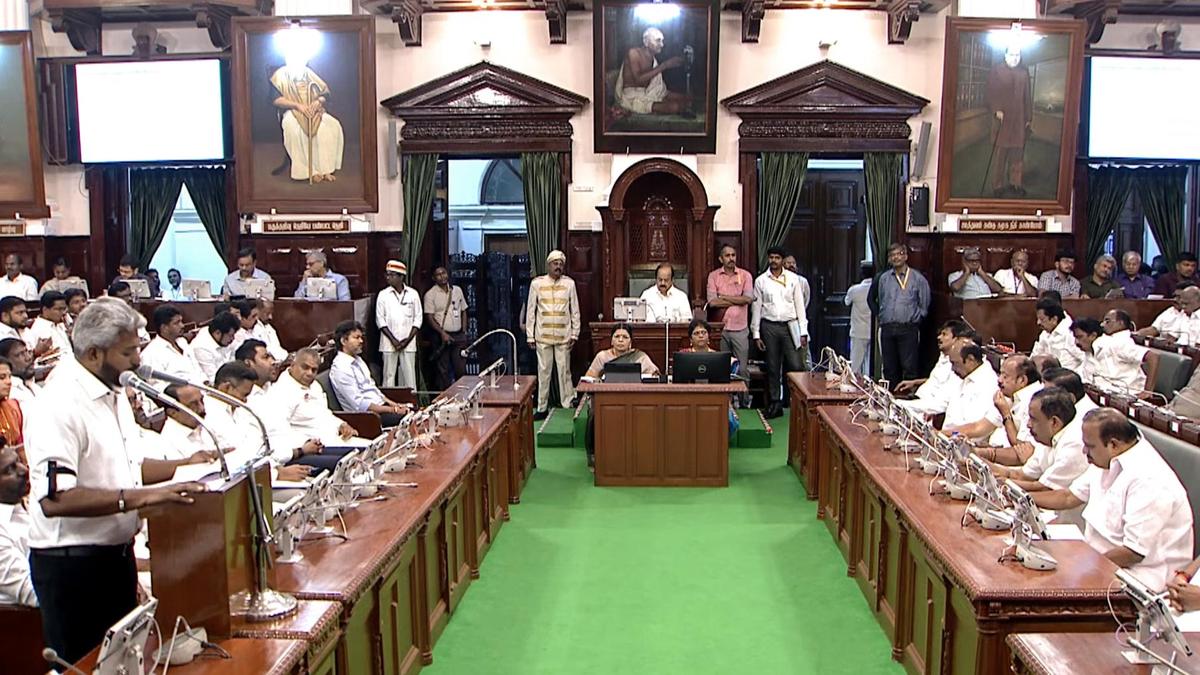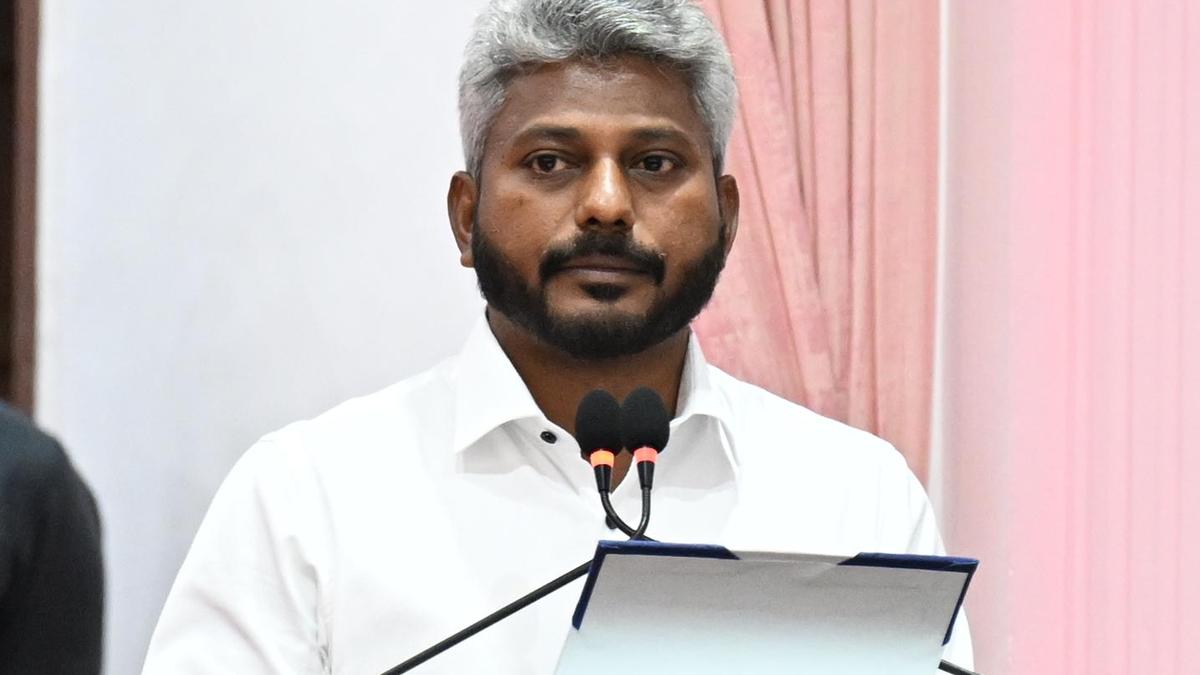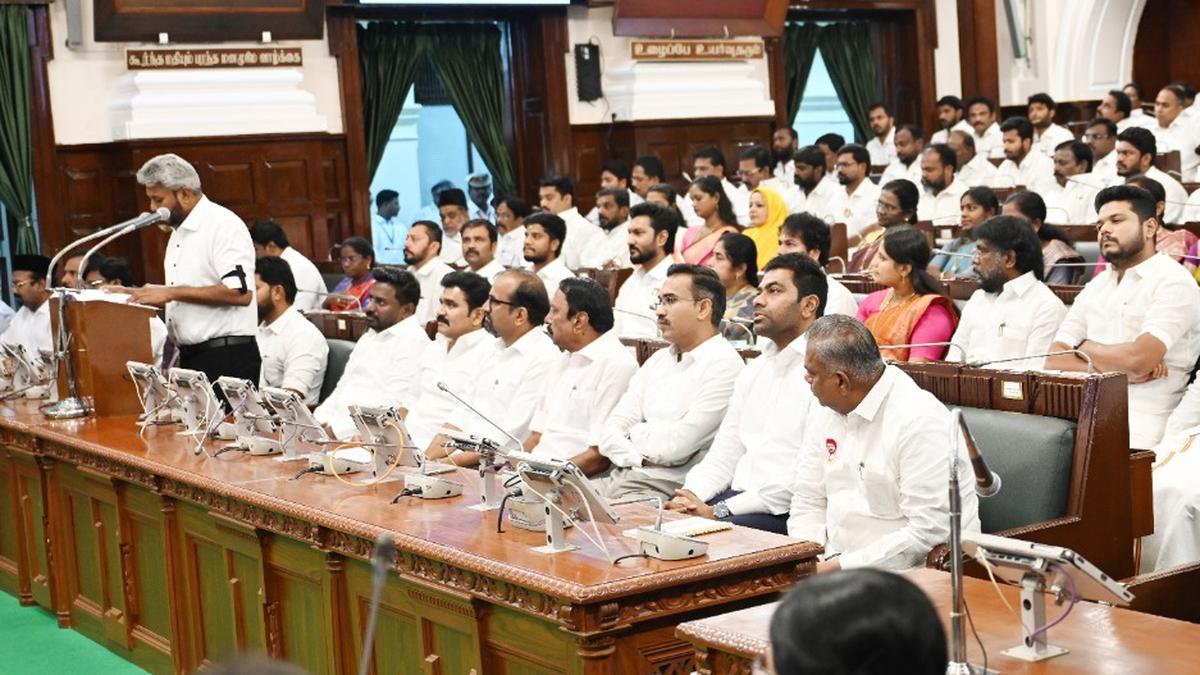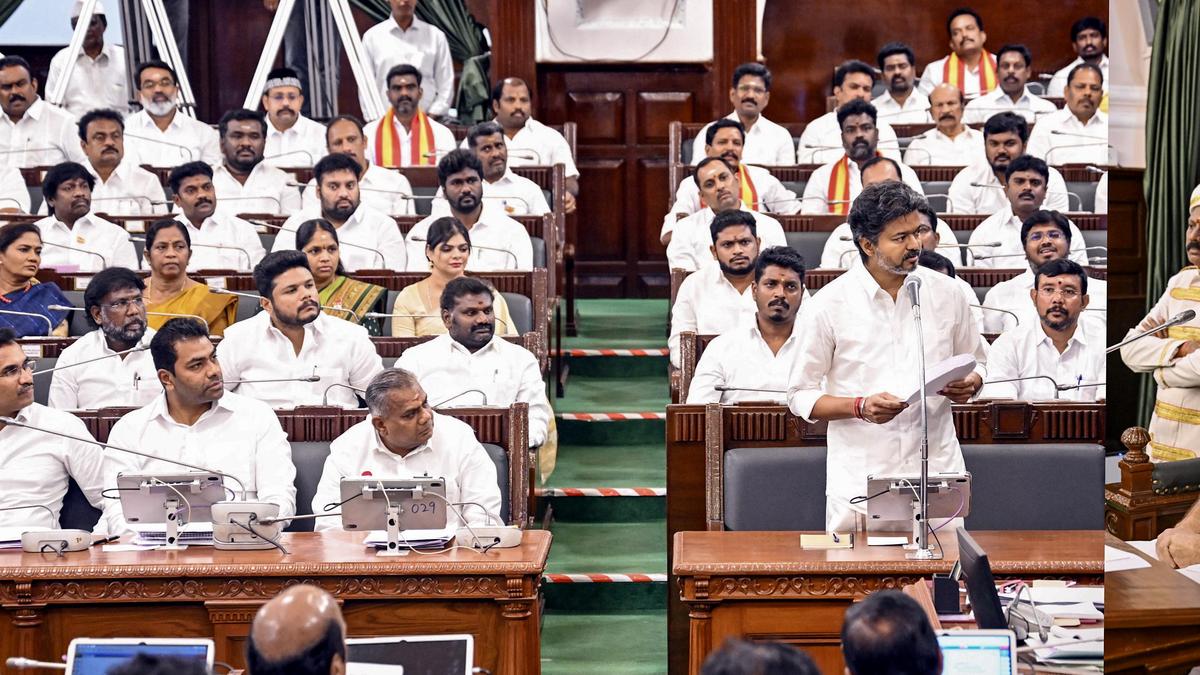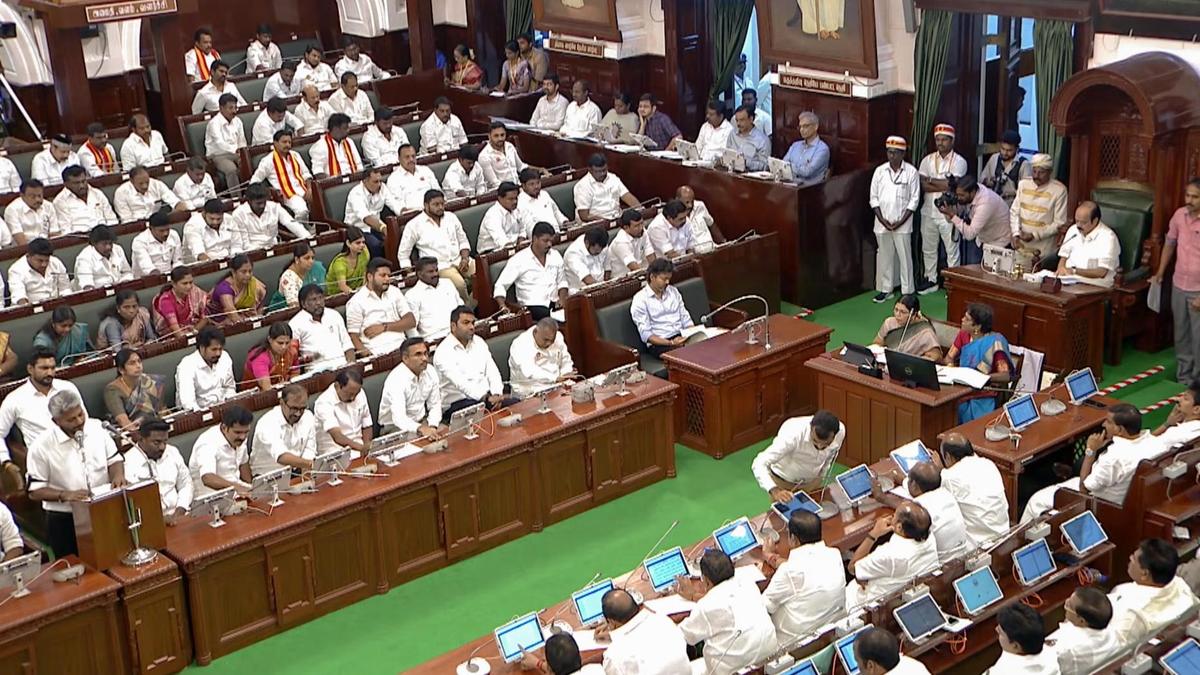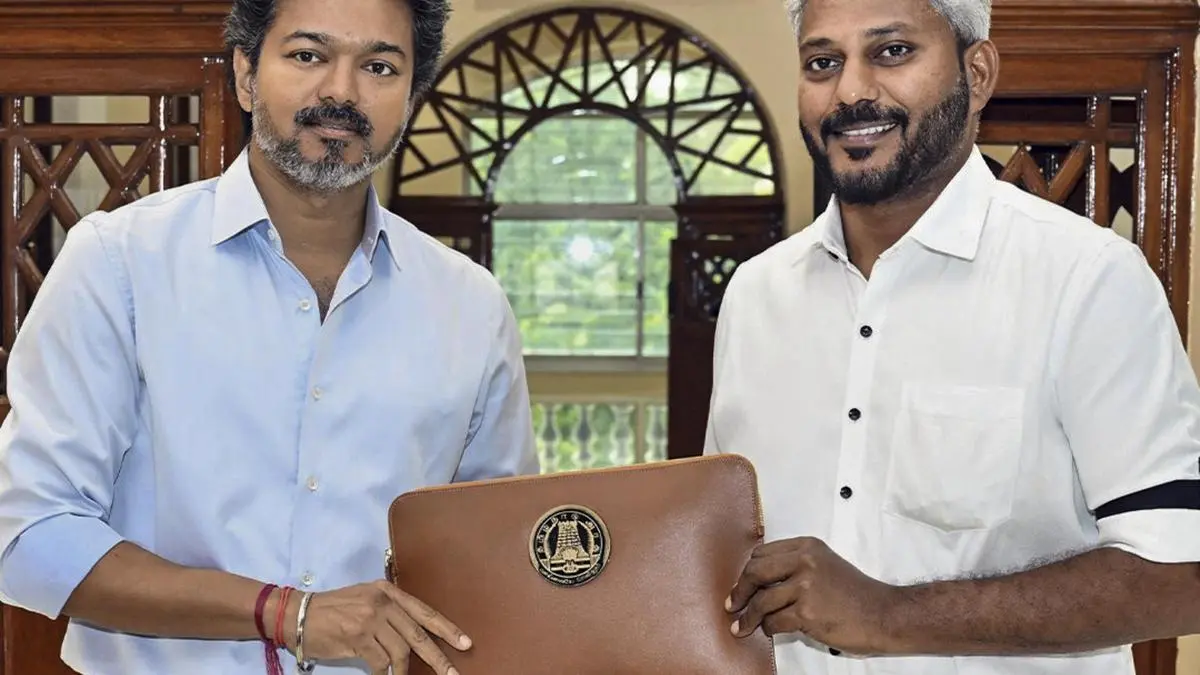
Tamil Nadu Chief Minister Joseph Vijay with state Finance, Planning, and Development N Marie Wilson after presenting the Revised Budget Estimates for 2026-27 at the state Legislative Assembly, in Chennai. (file photo)
| Photo Credit:
On August 5, Tamil Nadu Finance Minister N. Marie Wilson presented the maiden budget of the Tamizhaga Vettri Kazhagam (TVK) led government to the Tamil Nadu Legislative Assembly, in a marathon speech running over two-and-a-half hours.The exercise followed the government’s White Paper on Financial Management, released on June 16, which had already sounded an alarming note on the doubling of the State’s outstanding debt over five years to close to ₹10 lakh crore rupees.The budget therefore had two audiences to satisfy at once. Voters were waiting for election promises to show up as line items, while investors and rating agencies were watching whether talk of fiscal discipline would be matched by numbers. What emerged was a document that leans heavily on welfare spending even as it insists, repeatedly, that the State’s finances are under stress.Key highlightsThe budget points to a government keen to be seen delivering on its campaign commitments while still claiming credit for restraint. School education received an allocation of about ₹48,500 crore, and a new AI Economy Mission was announced to build artificial intelligence skills among students and professionals, backed by a planned AI and innovation city named Arivagam, for which the budget has sanctioned a ₹5-crore feasibility study. Its final location has not yet been announced. Separately, Thoothukudi and Tirunelveli were declared as a Space Industrial Investment Zone.Welfare announcements carried the loudest political messaging. The Vetri Laptop Scheme for college students was allocated around ₹2,000 crore, the Thai Maaman Thanga Mothiram Thittam will give every child born in a government hospital a one gram gold ring at a cost of ₹560 crore, and the Annan’s Seer scheme will provide an eight gram gold coin and a silk saree to women on their wedding day at a cost of ₹812 crore. Under the Vetri Veedu Thittam, 70,000 permanent houses are to be built at a cost of ₹3,500 crore, and financial assistance for upgrading temporary houses was raised from ₹3.1 lakh to ₹5 lakh.Agriculture received close to ₹15,000 crore along with electricity subsidies for farmers worth over ₹7,000 crore, and lean period assistance for fishing families was raised from ₹6,000 to ₹7,000 per family.On the fiscal side, the government projects a revenue deficit of about ₹55,775 crore and a fiscal deficit of about ₹1,21,819 crore, which works out to three per cent of gross state domestic product, precisely at the ceiling permitted under the Fiscal Responsibility Act.Gaps in the budget’s fiscal narrativeThe gaps become visible once the welfare announcements are set against the underlying arithmetic. Outstanding liabilities are projected to reach almost ₹11 lakh crore by the close of the year, equal to about 27 per cent of gross state domestic product, even as the government plans fresh borrowing of over ₹1,73,000 crore. This sits uneasily with the Minister’s own language about consolidation, since a State cannot credibly claim to be tightening its belt while still borrowing at levels close to a record high. Interest payments alone are expected to touch about ₹78,683 crore, a sum that eats into revenue receipts and leaves little room for fresh capital spending once salaries, pensions and existing scheme costs are accounted for.Own tax revenue as a share of gross State domestic product continues to trail several peer States, suggesting that consolidation is being pursued more through hopes that economic growth will outpace debt than through any meaningful widening of the revenue base.Political criticism has been sharp as well.Leaders from the DMK and the AIADMK have argued that several flagship schemes are existing programmes renamed for political effect and have also pointed to what they describe as a reduction in education spending in real terms once inflation and enrolment growth are considered. Whether or not every criticism is fair, the pattern of relying on future growth, central transfers and administrative reform to close a wide fiscal gap without a clear near- term plan to raise the State’s own resources remains the budget’s most exposed flank.The way forwardThe government’s own medium-term fiscal plan, covering the period through the 2028 to 2029 fiscal year, sets out the way forward. It involves narrowing the fiscal deficit in stages toward roughly 2.8 per cent of gross state domestic product and easing the liability ratio toward about 26 per cent, largely through better collection efficiency, tighter expenditure discipline and reduced leakages in revenue departments. For this plan to be credible rather than aspirational, three things matter.First, the State needs to widen its own tax base, through better compliance in commercial taxes, stamp duty and State excise, rather than depending on Central transfers that are only partly within its control.Second, capital expenditure needs to be protected and made more productive even as welfare commitments are honoured, since infrastructure spending is what ultimately expands the tax base that funds welfare in future years.Third, greater transparency in how debt is classified, including the liabilities of public sector undertakings that the government itself flagged in its White Paper, would help restore confidence among investors and citizens alike. Tamil Nadu remains India’s second largest State economy, with real strengths in manufacturing and services, and with human development indicators ahead of the national average. The test for this budget, and the ones that follow it, is whether ambitions for welfare and for a much larger economy over the coming decade can be reconciled with the discipline needed to bring down a debt burden that has already doubled once this decade.The writer is the Head of India at Sernova Financial. Views expressed are personalPublished on August 11, 2026