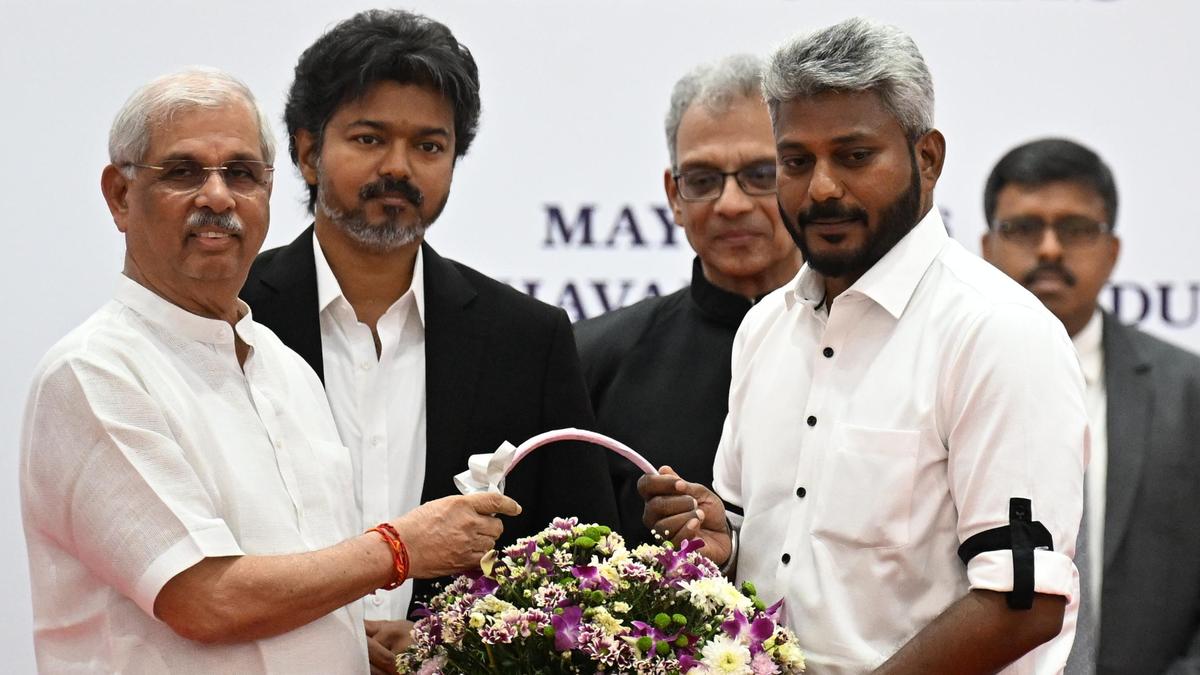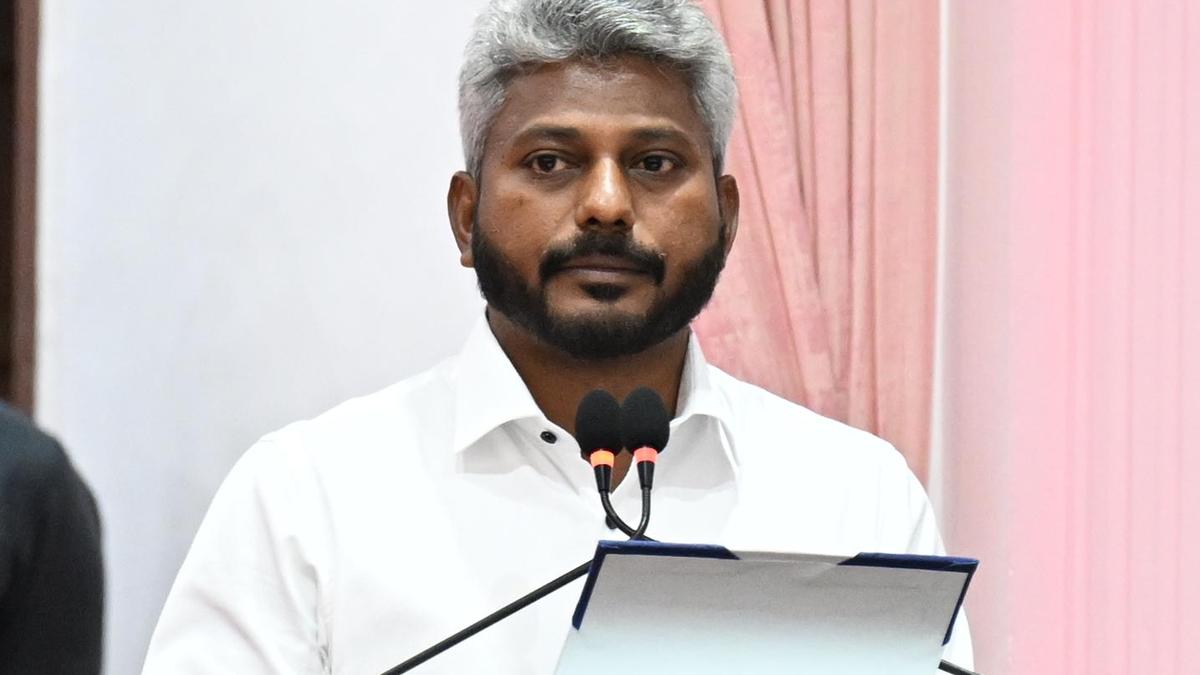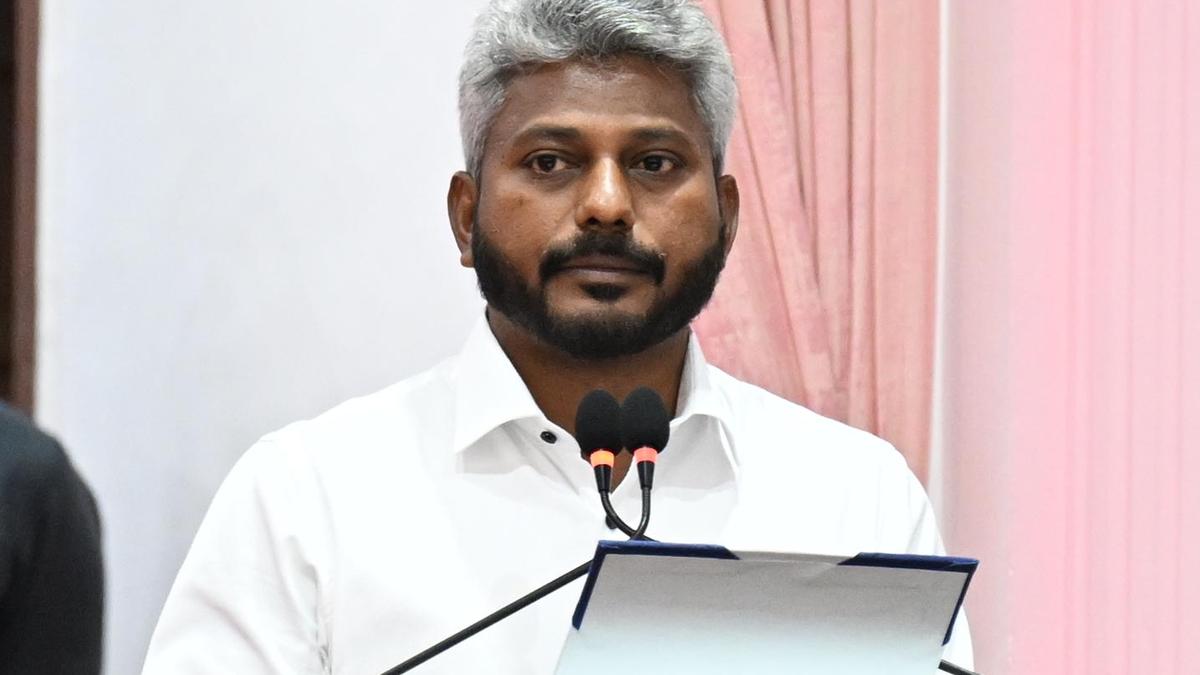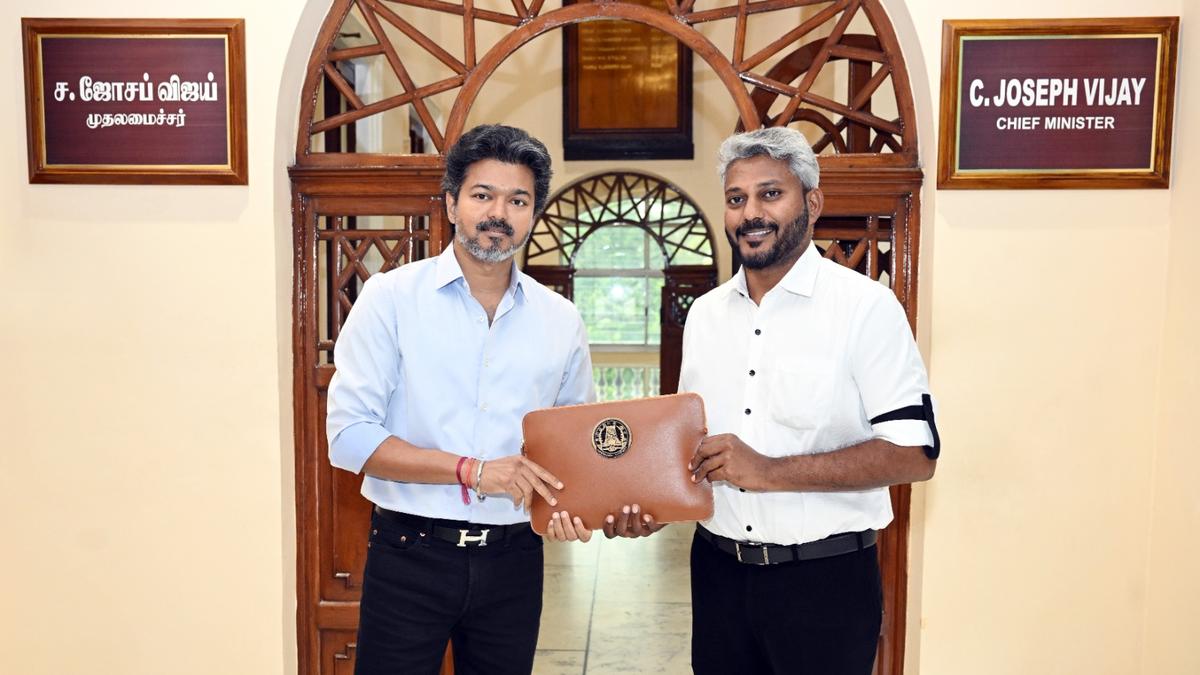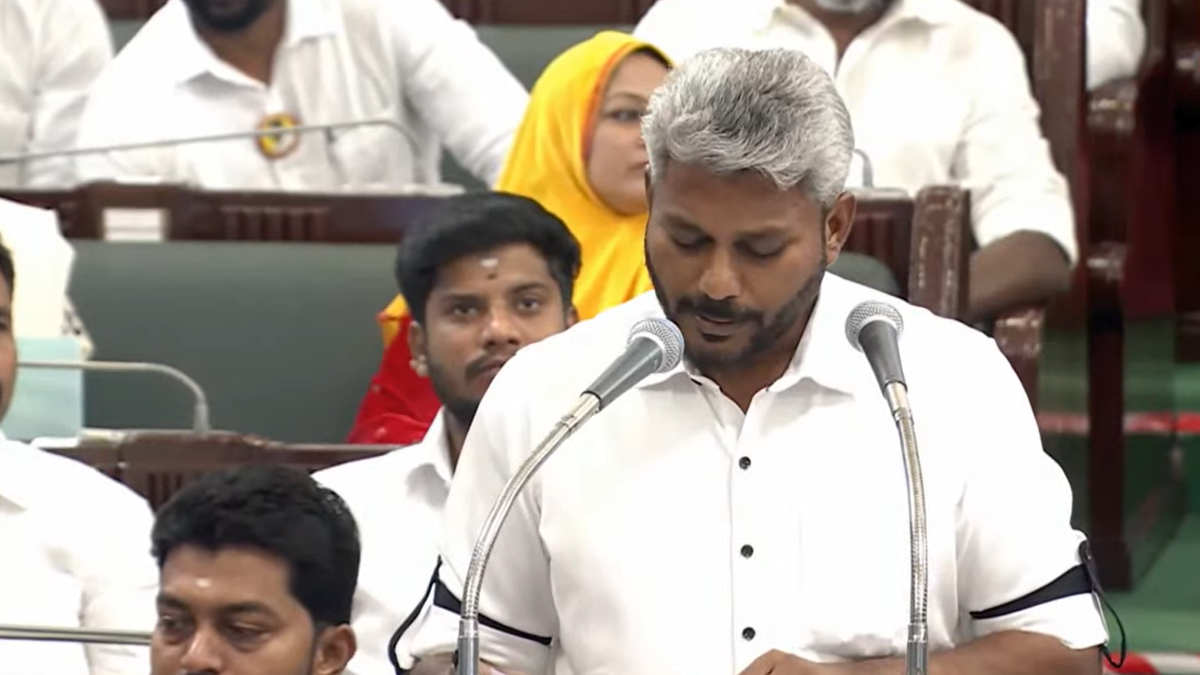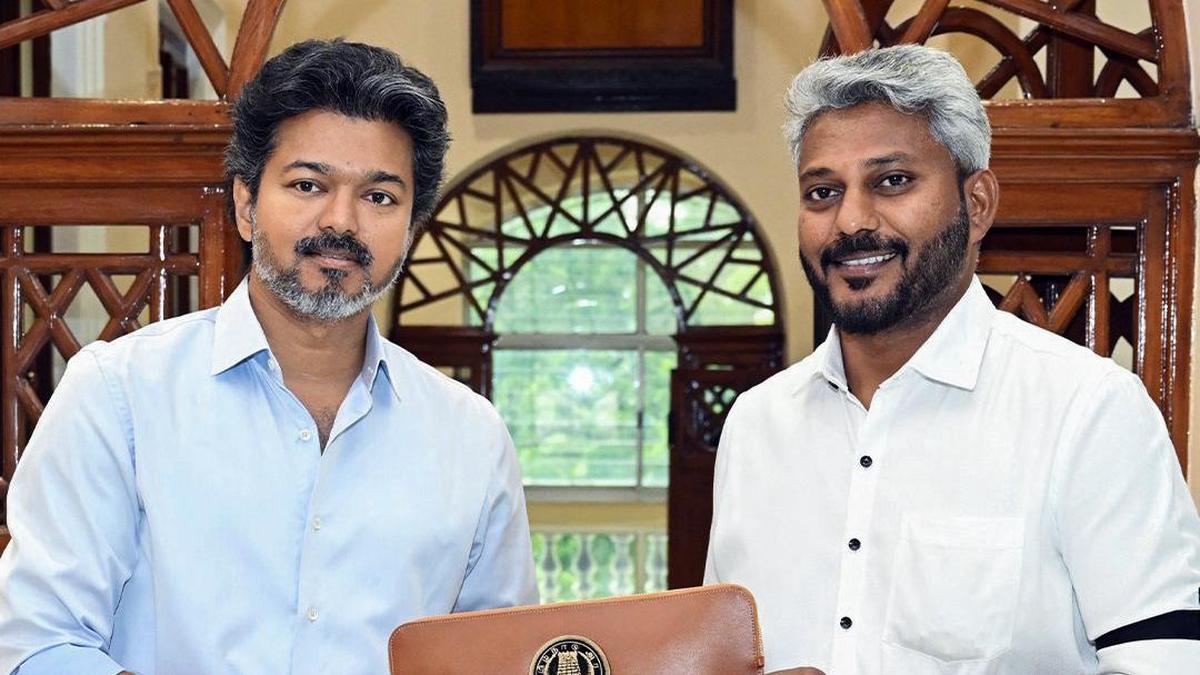
Tamil Nadu Chief Minister C Joseph Vijay and State Finance Minister N Marie Wilson pose for a photo ahead of the presentation of the maiden budget of the TVK-led government in the Legislative Assembly
| Photo Credit:
Expectations are high that the TVK government, in its maiden Budget, would break the mould and bring radical changes in managing the State’s finances. But has it done so?We compared the interim budget for FY27 presented by the DMK government with the full budget of TVK. The numbers are not vastly different. Revenue expenses are high while capex gets hit. Debt overhang continues.Fiscal StrainThe budget projects revenue expenditure of ₹4,05,802 crore. This is 3.2 per cent higher than the ₹3,93,272 crore projected in the interim budget of the DMK, indicating that the new government is unlikely to rein in wasteful expenditure. Revenue receipts are up 1.6 per cent to ₹3,50,027 crore, resulting in the revenue deficit widening from ₹48,696 crore to ₹55,775 crore.At the same time, capital expenditure is budgeted 4.3 per cent lower at ₹56,985 crore, while net loans and advances are projected to be 33.8 per cent lower at ₹9,075 crore. Despite these changes, the fiscal deficit has been retained at 3 per cent of GSDP, while the outstanding debt ratio is largely unchanged at 27.01 per cent.The deterioration in the revenue balance is primarily driven by higher day-to-day expenditure rather than investment. Newly announced welfare schemes, including Annan Seer for brides and Thai Maaman Thanga Mothiram Thittam, have substantially increased the subsidies and grants component of revenue expenditure.Revenue Pushbusinessline analysis indicates that the subsidies and grants component of revenue expenditure is nearly ₹18,000 crore, or about 12 per cent, higher than the interim Budget estimates for FY2026-27.The increase is notable because the second-largest revenue expenditure head, that is salaries, is projected to decline by around ₹3,000 crore, or 3.55 per cent, suggesting that the higher spending is largely welfare-driven rather than arising from employee costs.The new government expects a fall in its own tax revenue by almost ₹3,000 crore, driven mostly by the slowdown in commercial tax collections. However, this government expects an increased inflow of about ₹8,000 crore under grants-in-aid from the Union government, compared to its predecessors.The sectoral allocation pattern also marks a shift from the interim budget. Rural Development records the largest increase among major departments; food spending grows 25.3 per cent, while Social Welfare receives 12.1 per cent more.Urban Development increases 7.6 per cent to ₹38,715 crore, Health rises 5.4 per cent to ₹23,357 crore, and Police, Transport and Highways also receive modest increases.Published on August 5, 2026