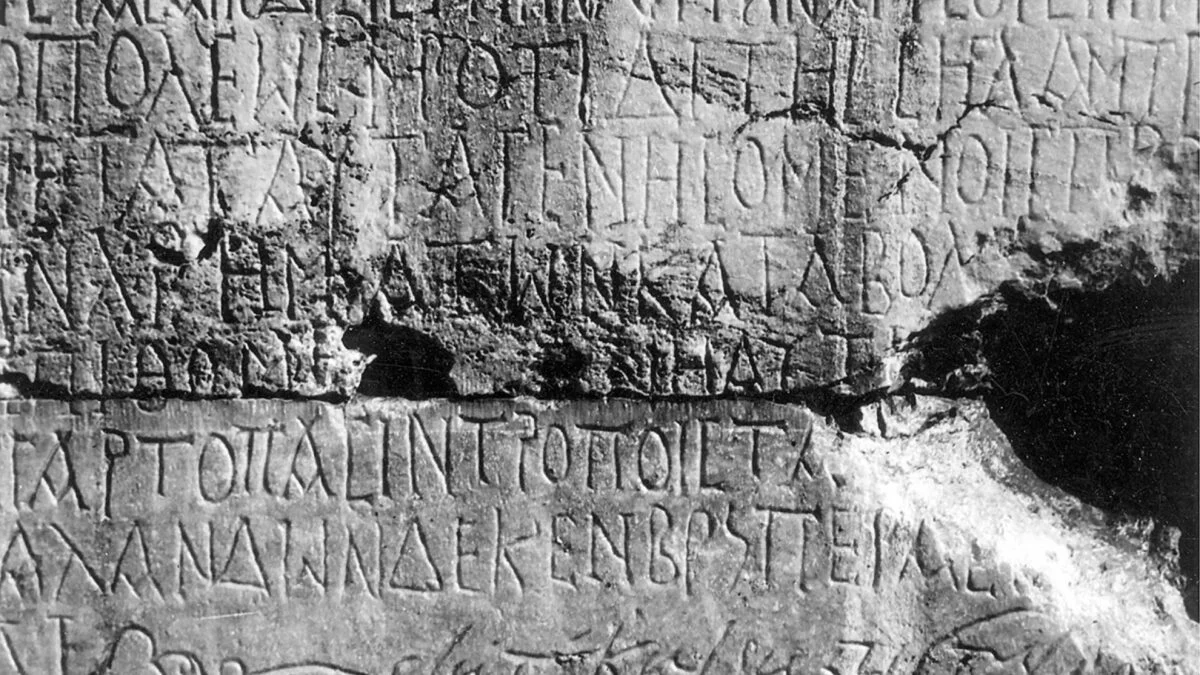
Befitting of its legacy and influence, the Roman Empire didn’t play around with its laws, even by modern standards. For one, serious tax fraud was a crime punishable by death. That appears to have been the fate of a certain official or local dignitary around 480 CE, according to new findings from the European Research Council’s STONE-MASTERS project. The discovery was announced in a statement from the University of Warsaw in Poland. The team found stone fragments with inscriptions in 2024, which at the time was attributed to a funeral verse commemorating a person of status. Closer inspections, however, revealed that the fragments were the missing parts of previous texts detailing a legal decision, namely a threat of execution, issued in 480 CE due to decades-long tax evasion in Anatolia, or modern-day Turkey. Stratoniceia in Caria. Credit: Paweł Nowakowski “As it turned out, the officials appointed to collect taxes there engaged in very bad practice,” Paweł Nowakowski, an archaeologist at the University of Warsaw involved in the latest work, explained in the statement (translated via Google Translate). “In practice, they most likely reported different, lower amounts in documents submitted to Constantinople, while collecting much more money from the local population. The difference went into their pockets.” The text doesn’t explicitly say that the execution was carried out. Contextually, however, it seems most likely that the envoy carrying the decree “arrived at the location and carried out his assigned task—otherwise we would not have an inscription publishing the prefect’s decision,” Nowakowski added.
Turns Out Ancient Rome Took Tax Fraud Very Seriously
New stone fragments discovered in Turkey turned out to be the missing parts of a decree detailing a famous case of tax fraud in the Roman Empire.
701 words~3 min read