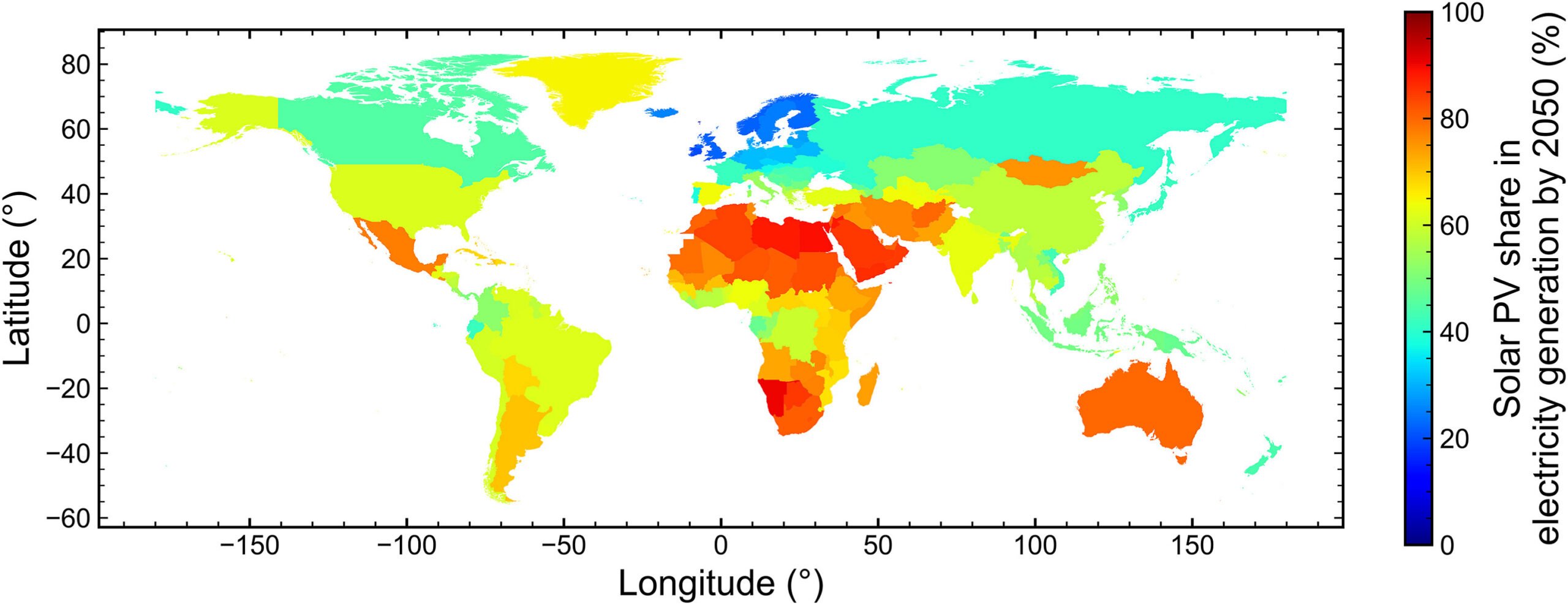
A systematic review finds that solar PV emerges consistently to the backbone of future energy systems, yet many models still underestimate its role. Across the globe, solar PV is projected to supply about 61% of the world’s electricity by 2050. Major milestones within 100% renewable energy systems research over five decades created the modern understanding of solar PV’s pivotal role for global energy supply. Milestones cover various categories such as visionary scoping, advances in PV system applications, expanding economic insights, and methodological improvements.
As the world aims to limit global warming well below 2 C, the defossilization of energy systems hinges on two technologies above all others: solar PV and wind power. Solar PV has found its way into the energy system faster than any electricity source in the history of humankind, propelled by plummeting costs, near-universal availability, and diversified system applications. Yet one question runs persistently through the modeling literature: just how dominant will solar PV become and why do studies disagree so sharply on the answer?
A new study by researchers from Leibniz University Hannover and LUT University, Prospects for solar photovoltaics in highly renewable energy transition scenarios towards a dominant future energy source, sets out to resolve that question. The systematic review covers 60 peer-reviewed energy transition studies, each covering at least the power, heat, and transport sectors while reaching at least 95% renewable energy supply by 2050. Beyond the conclusions drawn by the reviewed studies, an emphasis lies on the assumptions driving their results.