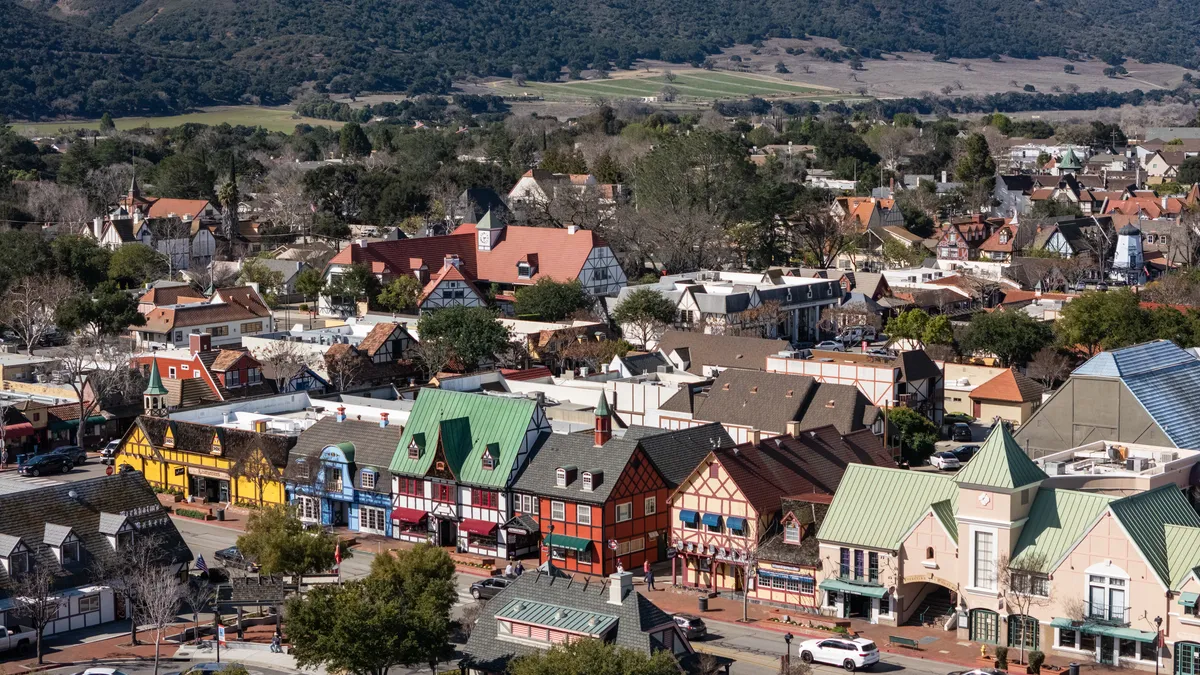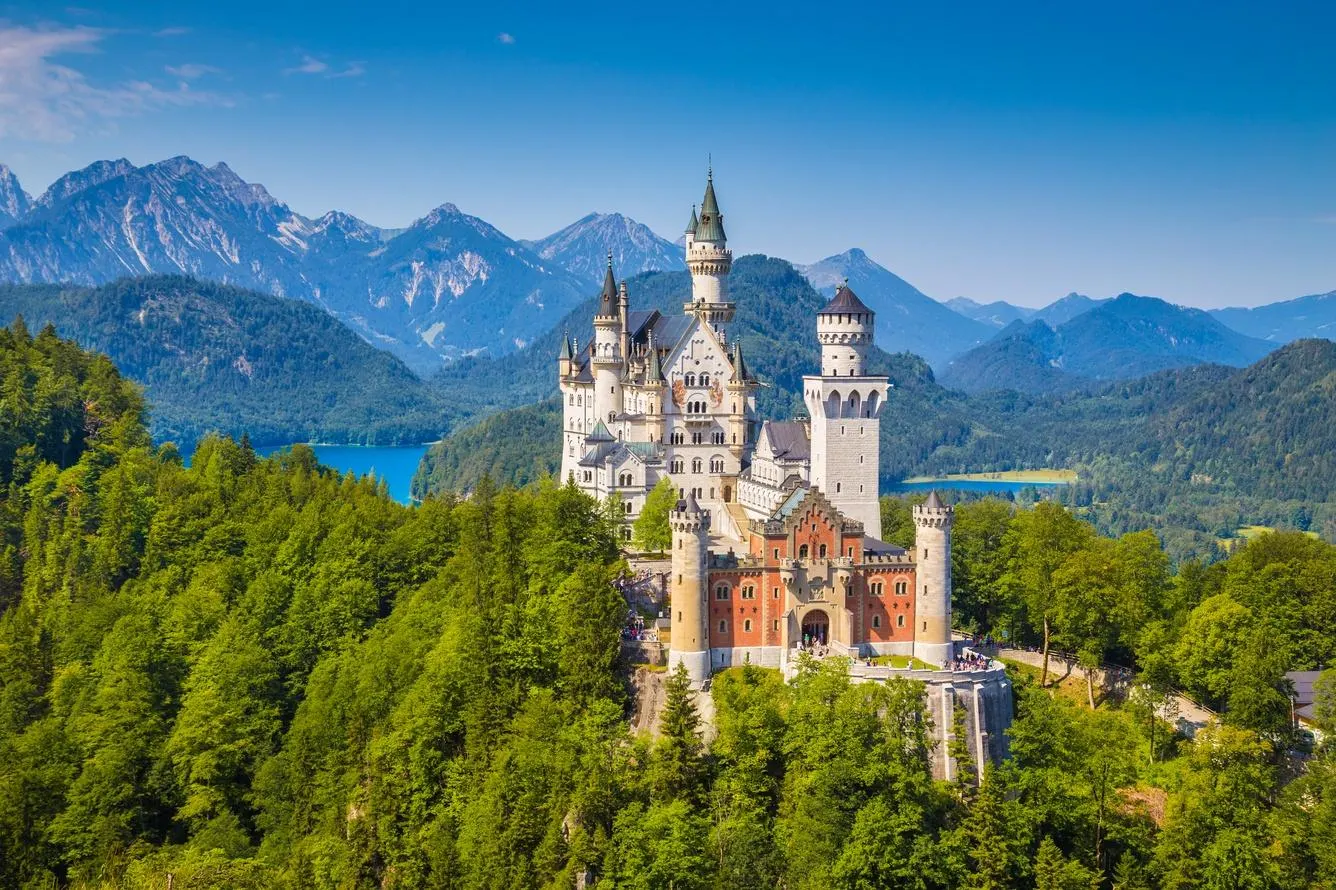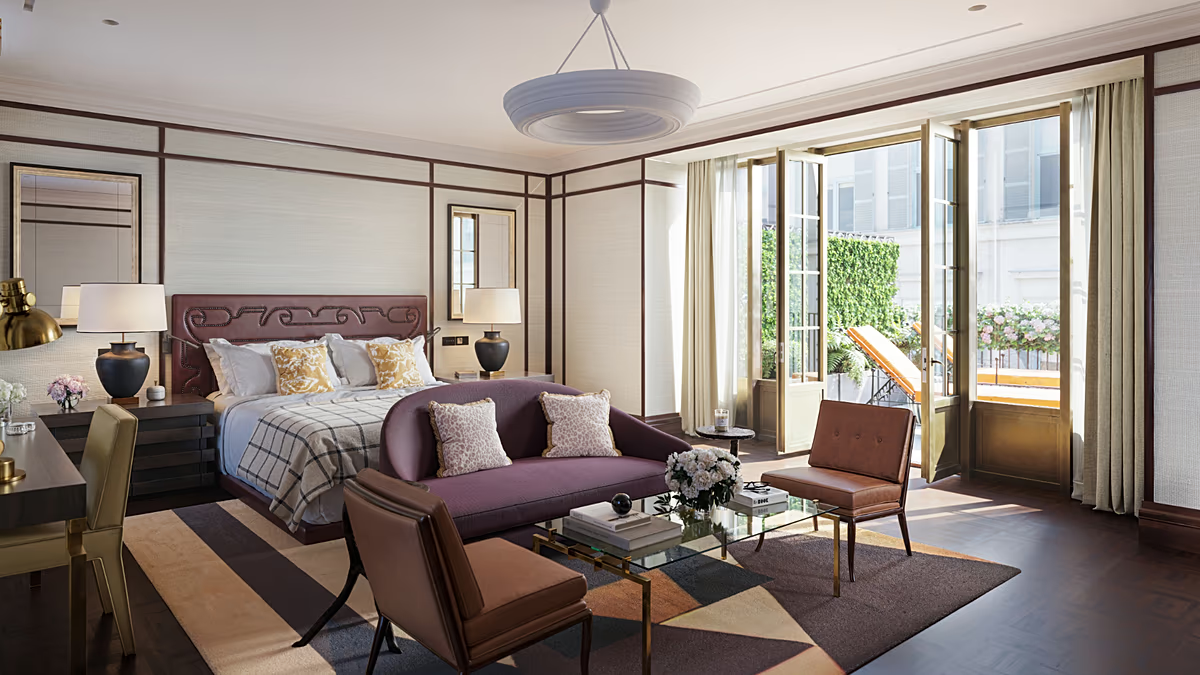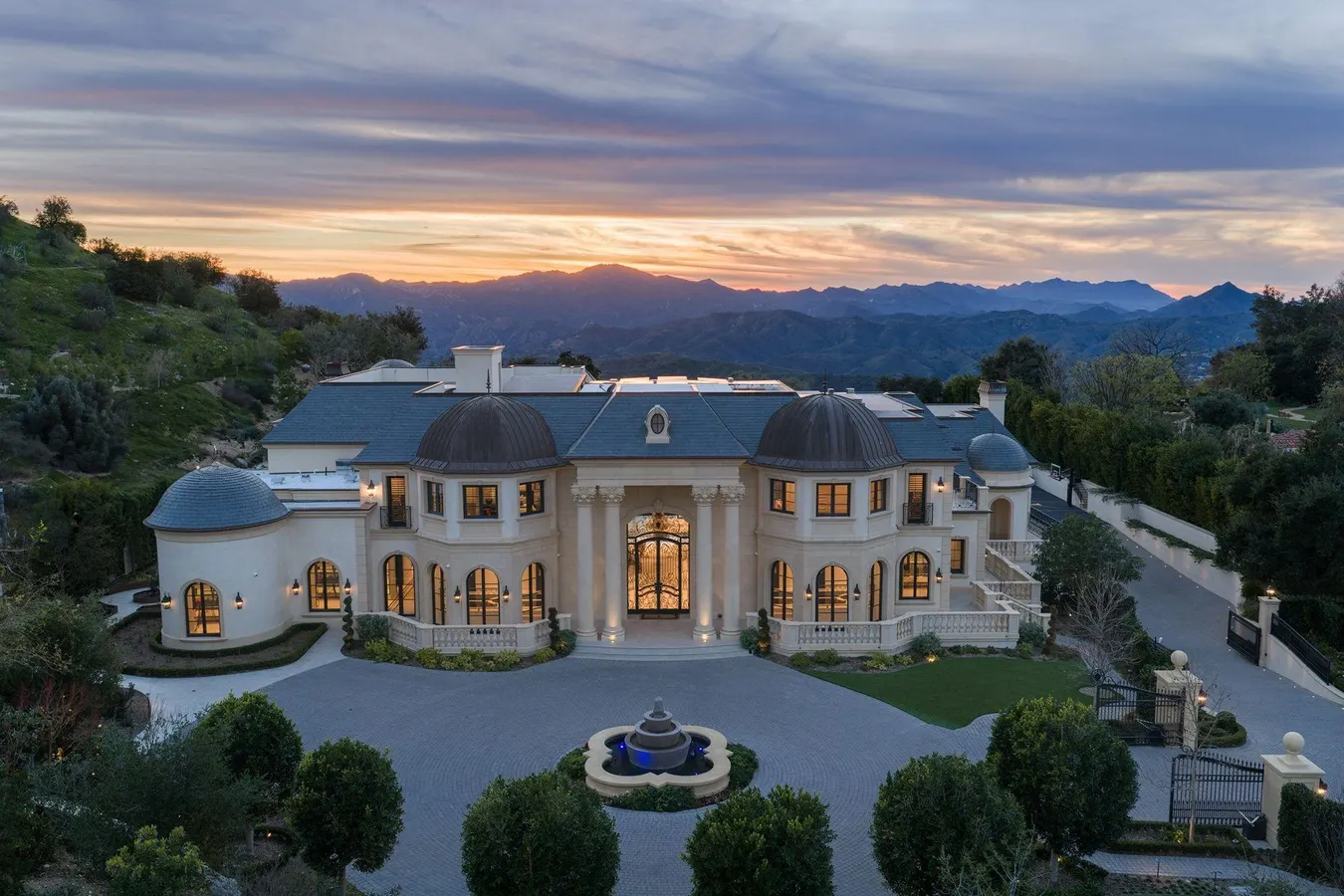
A European holiday may end at baggage claim. Its architecture, however, can travel farther.Courtesy Carolwood EstatesThe word souvenir comes from the French for to remember, which gives the humble travel trinket a rather grand job description. Europe, with its cathedrals, piazzas, villages and markets, has long supplied voyagers with more memories than a suitcase can reasonably hold. So we compress them. Florence becomes a postcard. An Italian market becomes a ceramic bowl. Provence holds a utility bill as a fridge magnet.For the ultra-wealthy, however, remembrance needn’t remain symbolic, nor travel size. The atmosphere of a memorable European holiday—a shorter, more comfortable, 21st-century version of a Grand Tour—can be reconstructed and occupied, from its materials and proportions to its gardens and particular way of arranging a day. Why merely recall Provence when its limestone walls and shuttered windows can follow you to California? Why limit a Japanese mountain home to a strictly local vocabulary when your tastes run decidedly Belgian? The holiday ends. Its sense of place acquires a new address.The appeal, of course, isn’t always nostalgia for somewhere personally visited. Sometimes it’s simply an affection for the way Europe has designed its houses and, by extension, the lives conducted inside them. The symmetry. The ceremony. The rooms and terraces built to let the day grow long.The clink of the boules, the perfume of sun-bathed herbs… Long summer evenings on a Provençal pétanque pitch (or bocce in Bologna, if you prefer) are evoked at this sultry California estate with views across the hills of Malibu.Courtesy Carolwood EstatesIndeed, Europe offers an unusually deep architectural catalogue. Victorian exuberance, French formality, Italian classicism and Scandinavian restraint, to name a few. Each emerged from its own ideas about climate, craftsmanship, status and domestic life. None stayed neatly within national borders. Styles traveled through trade, migration, empire and fashion, then through pattern books, magazines and film. The internet and the ephemeral scroll of social media have since removed what little travel time remained. A stone château, Nordic interior or hand-hewn Alpine frame can enter a future homeowner’s imagination before breakfast.However the influence arrives—through travel, inheritance or a lost hour on Instagram—the best results aren’t replicas deposited on foreign soil. They’re translations of Europe’s many architectural languages. Local climates alter the materials, landscapes challenge the proportions and regional craftsmen introduce accents of their own. Like the best cultural hybrids, these homes take something recognizable, place it somewhere unexpected and return it changed. Gables On The Gulf | Pensacola, FloridaA Victorian estate may not be the first thing that comes to mind when picturing a Florida home. Then again, Pensacola isn’t your average Florida town.Courtesy Levin Rinke RealtyArchitectural consistency would be slightly out of character for Pensacola. Known as the City of Five Flags, the Florida port has flown the flags of Spain, France, Britain, the Confederacy and the United States.Even so, the regal Victorian-era, Queen Anne-style house at 714 East La Rua Street cuts an unexpected figure near the Gulf. Built in 1890 and historically known as the Old Spanish Consulate, it’s an American interpretation of an English style, complete with turrets, porches, ornamental woodwork and no apparent fear of asymmetry.Against the palms and coastal light, its steep gables appear conspicuously overdressed. Yet the house is decidedly at home in Pensacola, where sugar-white beaches coexist with brick streets, colonial forts and neighborhoods shaped by centuries of changing rule. Unlike the purpose-built resort towns lining much of Florida’s coast, Pensacola offers more than scenery. It has a past, and this Victorian outlier makes that distinction visible.A Whole Continent On Two Acres | Calabasas, CaliforniaLos Angeles has no shortage of elaborate, oversized manors. Far fewer carry their grandeur with the European poise of this hillside estate overlooking Malibu State Park.Courtesy Carolwood EstatesThis two-acre estate in the Calabasas hills isn’t so much faithful to one European tradition as fluent in several.Spanish limestone meets French wall coverings, formal gardens and a Louis XIV-inspired dining room. Bocce joins the itinerary, as does a French-style cinema. Vastu and feng shui principles broaden the tour farther east, suggesting that even Europe wasn’t sufficient.At nearly 29,000 square feet, the house has enough room for its influences to avoid a diplomatic incident. California contributes the terraces, broad views and appetite for indoor-outdoor living. Several centuries of imported design handle the presentation. The result resembles a grand tour of Europe completed without ever leaving the Southern California sunshine. Michelangelo Meets Minimalism | Florence, ItalyFlorence has many architectural virtues. Sleek modernity is not usually one of them. This renovated four-story residence near the Arno changes the vocabulary with a distinctly Scandinavian cool.Courtesy Building HeritageEuropean architectural influence doesn’t only travel outward. It ricochets around the continent, too. Florence has spent centuries teaching the world the virtues of marble, fresco and ornament. This San Niccolò residence in the heart of the city distinguishes itself by ignoring the lesson.Instead, it imports a cooler northern vocabulary of pale materials, spare lines, composed rooms and a private spa offering the restrained indulgence Scandinavia has made a national export. The contrast is sharp, though not hostile. Renaissance design and Nordic modernism share a devotion to proportion, craftsmanship and carefully managed light. They mainly disagree over how much decoration should attend the proceedings.Here, Europe borrows from itself. Scandinavian restraint enters one of Italy’s most expressive cities and proves that understatement can still make a scene.Belgian Frame, Japanese Hand | Karuizawa, JapanIn Karuizawa, a mountain resort near Nagano, this Belgian-inspired timber-frame residence pairs the warmth of a European farmhouse with the exacting restraint of Japanese craft.Courtesy TonTon IncJapan isn’t short on distinguished timber traditions, which makes a Belgian farmhouse an unlikely starting point. Master carpenter Shohei Hishida makes the detour seem entirely reasonable.Drawing on decades of work with European artisans, Hishida built this Karuizawa villa around thick, hand-selected chestnut beams. Curved timbers and scissor-shaped supports give it the muscular frame of a rural Belgian house. Intricate joinery, earthen walls and an exacting respect for natural irregularity reveal who did the building.At roughly 1,000 meters above sea level, Karuizawa supplies dense forest, mountain climate and views toward Mount Asama—conditions that sturdy farmhouse architecture understands. Local stone, timber and earth settle the European form into Japan. Designed to age beautifully, the house treats patina not as damage, but as evidence that the two traditions are becoming comfortably acquainted.Europe Goes Rogue (River) | Grants Pass, OregonOregon’s open countryside makes a natural setting for the country house. At this Grants Pass estate, that rural ideal takes its cues from the grand estates of Europe.Courtesy LUXE English and French country house have crossed the Atlantic before. At 503 Quail Lane, these styles have ventured considerably farther west.Set on nearly 18 acres along the Rogue River, the estate exchanges English hedgerows for almost 1,500 feet of waterfront. The manners remain intact with custom millwork, hand-scraped walnut floors, a carved Carrara marble fireplace and bluestone paths winding through manicured grounds. Beyond them, the landscape loosens into riverbank, sandy beach and forest.The traditional machinery of country life has made the journey as well, including a barn, a greenhouse and a garden spanning 15,000 square feet. Climate lends credibility to the arrangement. England’s lush, rain-softened countryside finds an easy counterpart in the misty Rogue River Valley. Select featured properties represented by members of Forbes Global Properties, the invitation-only network of top-tier brokerages worldwide and the exclusive real estate partner of Forbes.
Five Global Homes That Speak With A European Accent
In an increasingly connected world, architecture travels well. Few traditions have crossed borders with as much romance, variety and staying power as Europe’s.
1,226 words~6 min read