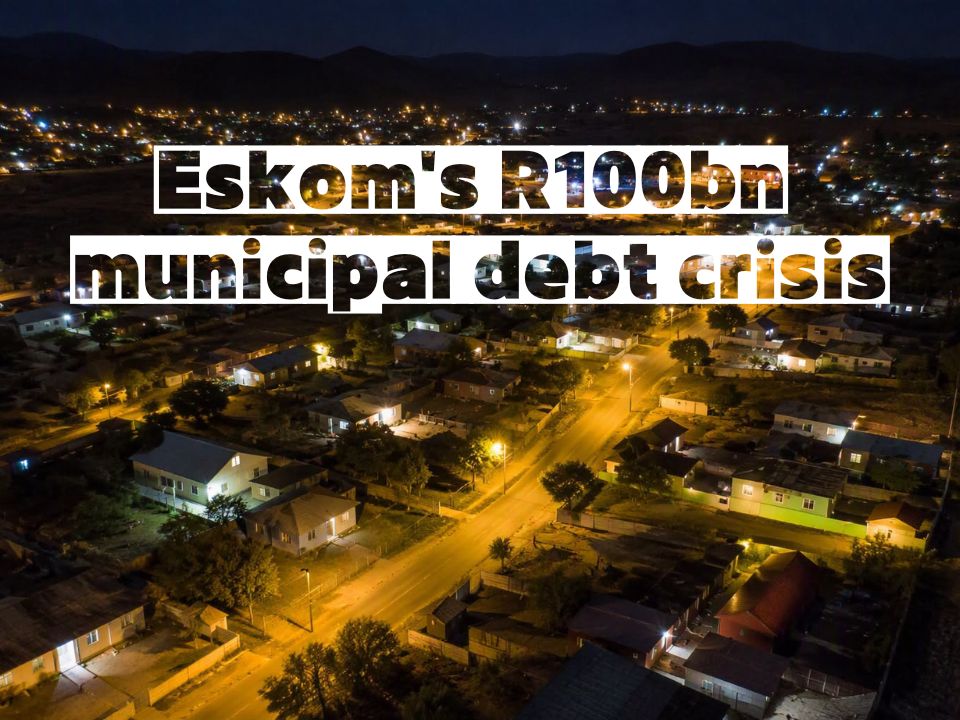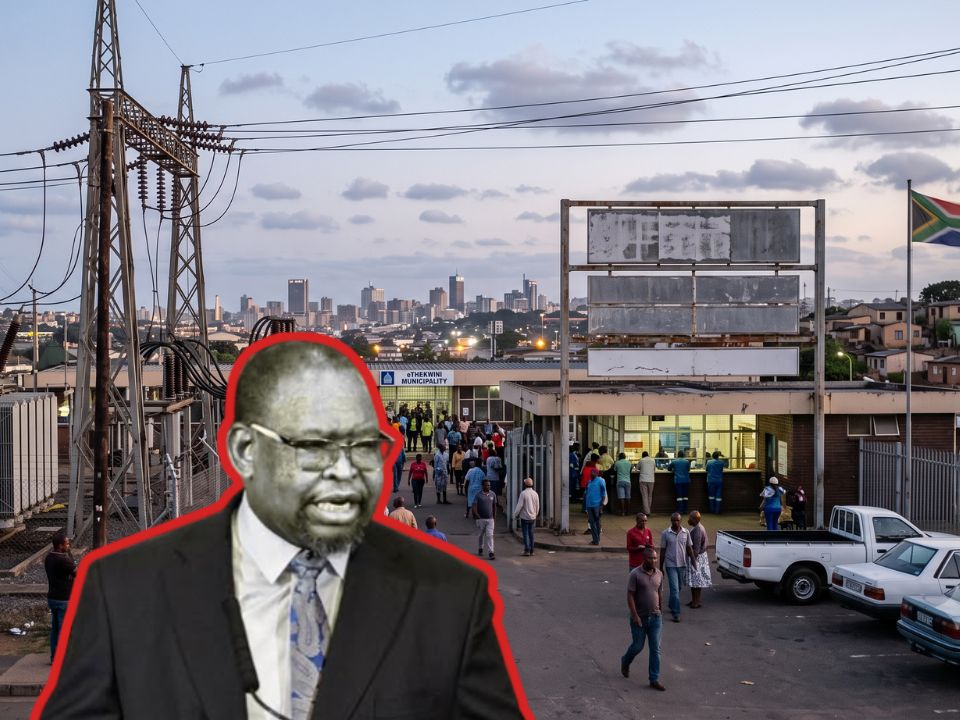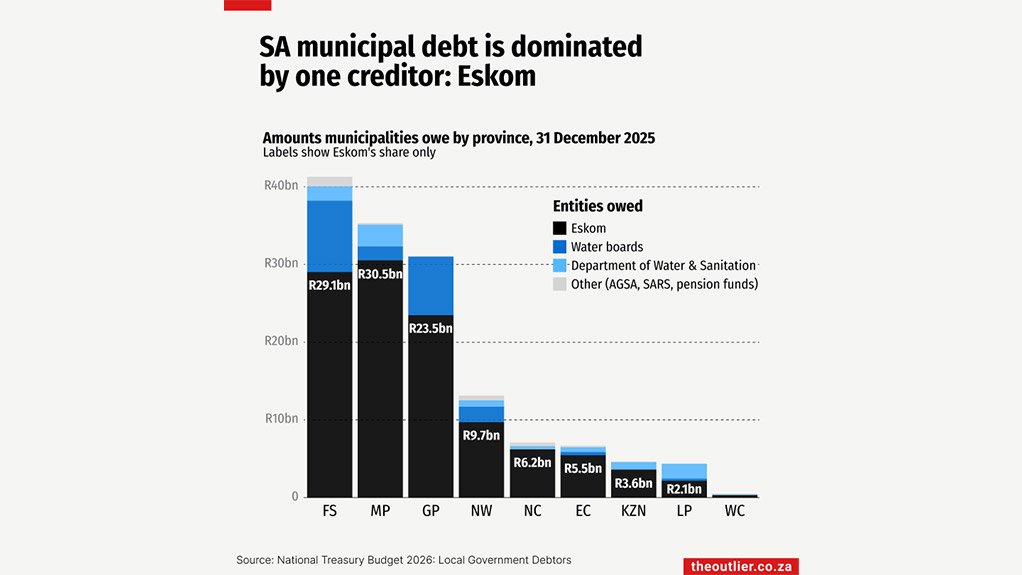
It is easy to blame the soaring municipal debt to Eskom on fiscal illiteracy or corruption. However, that approach ignores the fundamental causes of the debt. Most immediately, unchecked and extravagant Eskom tariff increases since 2008 have fuelled consumer resistance and squeezed municipal budgets. More fundamentally, the debt reflects the broader failure to address South Africa’s extraordinary economic inequality, which leaves many households and businesses unable to pay for basic services. Unless we do more to resolve these challenges, we will not stabilise either Eskom’s finances or municipal governance. Municipal debt to Eskom reached R112bn in early 2026, from under R1bn in real terms before 2008. From 2023/24 to 2025/26, it grew 15% a year. It now exceeds 10% of Eskom’s assets. While poor municipal management undoubtedly contributes to escalating debt, it is at least matched by soaring costs for bulk electricity. In real terms, municipalities now pay more than four times as much per kilowatt hour as they did 20 years ago. The inexorable rise in Eskom prices makes it increasingly difficult for municipalities to pass the cost on to customers, both households and businesses. As a result, the average municipal margin on electricity sales plummeted from 35% in 2015 to under 15% a decade later. In 2024/25 more than 50 municipalities, or almost 30% of those licensed to distribute electricity, paid more to Eskom than they received in electricity revenue. The number was up from just more than 30 in 2015 and almost none in the early 2000s. The consequences have been vastly aggravated by a further strategic failure: the reluctance to reckon fully with the fiscal implications of the inequalities entrenched by apartheid both within and between municipalities. Escalating Eskom tariffs foreground the inadequacy of the user-pays assumption in South Africa’s deeply scarred economy. The share of electricity in household budgets at least doubled in 2006-23, the latest available data. In 2023 it reached more than 5% of total expenditure for the poorest 60%. For the richest decile, the figure was just 3%, though these families used three times more electricity. Escalating Eskom tariffs foreground the inadequacy of the user-pays assumption in South Africa’s deeply scarred economy. For the poorest families the average cost was boosted as more households gained access to electricity. In 2006 only about 65% of the poorest 30% had a connection to the mains. By the early 2020s the figure had climbed to 85%. These trends had real consequences for municipal budgets. In 2025 about 2.6-million households with mains connections, or about one in seven, did not pay for their electricity. Businesses also fell behind on payments. In early 2025, 10 cities accounted for 80% of all municipal debt to Eskom. Johannesburg and Tshwane each owed about R5bn, or R5,000 per household. All but one of the remaining eight were secondary cities in the Vaal Triangle and Free State. They were hit by the decline in gold mining and heavy industry, the latter partly due to rising electricity prices. They owed between R2bn (Ngwathe) and R10bn (Emalahleni). For six of these towns, their Eskom debt exceeded R50,000 per household, 35% more than their average annual household income. Present proposals to resolve the electricity debt crisis centre on compelling the most indebted municipalities to turn electricity distribution over to Eskom in return for partial payment of past debts by the National Treasury. These proposals face obvious constitutional hurdles. Moreover, it is not clear how much they will have to pay Eskom. In the three deals so far, Eskom is taking 4%-10% of electricity revenues. This approach simply ignores the underlying problem. Unless accompanied by far stronger efforts to improve employment and incomes for the majority, the user-pays principle risks just cutting back on services for the historically excluded. Ultimately, if we want to extend services to all citizens, we have to empower them to meet the costs. • Makgetla is a senior researcher with Trade & Industrial Policy Strategies.
NEVA MAKGETLA | The roots of municipal debt to Eskom
Unless SA does more to resolve extravagant Eskom tariff hikes and deep inequality, municipalities’ arrears will continue to mount
655 words~3 min read