The question 'who is responsible for generated code' is becoming urgent as more teams ship AI-assisted work. But framing it as pure ownership misses the real problem: accountability without clarity kills velocity and quality.
Here's what actually matters:
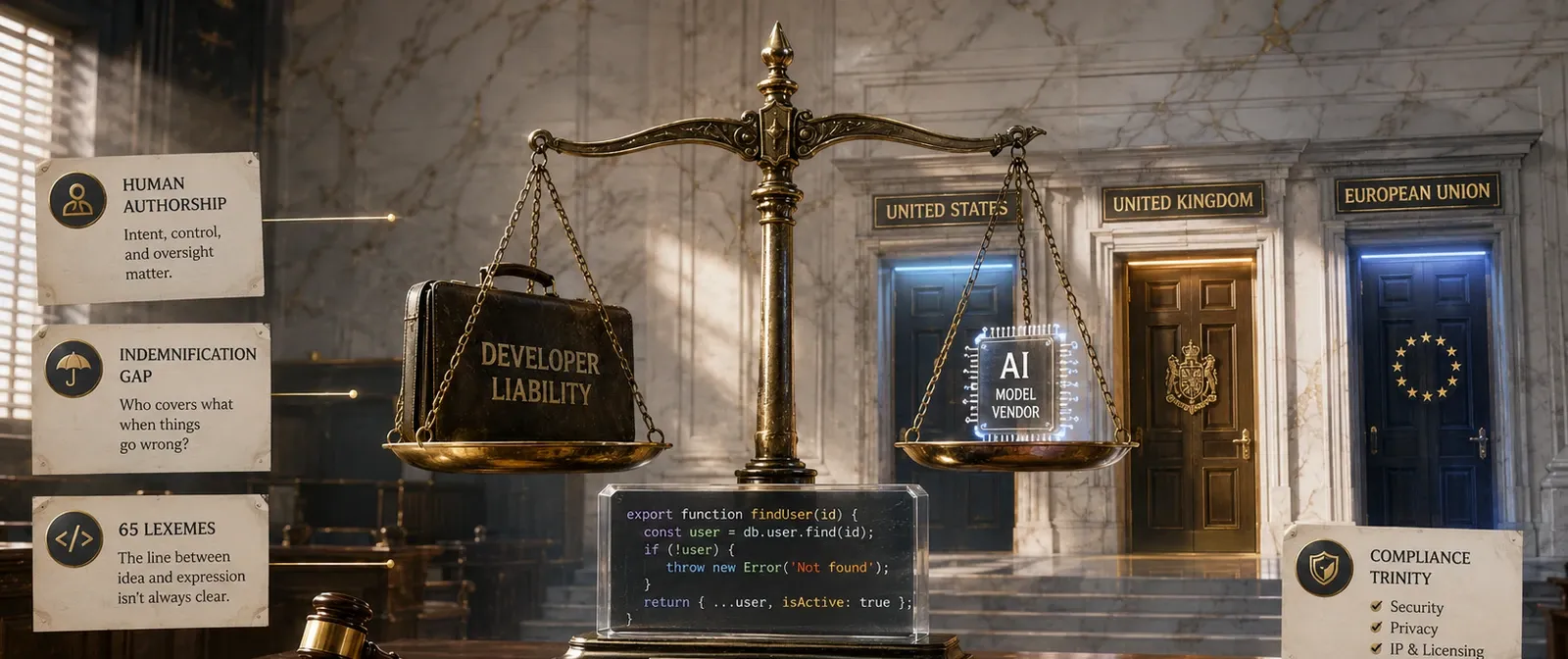
The human who ships it owns the outcome. That's non-negotiable. Whether the code came from an AI or a teammate, if it's in production with your name on it, you're responsible for correctness, security, and maintainability. The tool doesn't change that.
But responsibility isn't one-way. The person who wrote the original prompt or spec carries accountability for clarity. Vague or incomplete briefs produce vague or incomplete code, AI or not. If you're handing off to an AI system without being specific about constraints, edge cases, and non-functional requirements, you've already lost. This is the same discipline that applies to code review of human-written work.
Teams need a clear handoff protocol. Does the AI-generated code get a full review cycle? Does it skip certain checks? Are there domains (auth, crypto, compliance) where you never let AI be primary? Writing this down prevents the 'well, I thought it was obvious' blame game later.