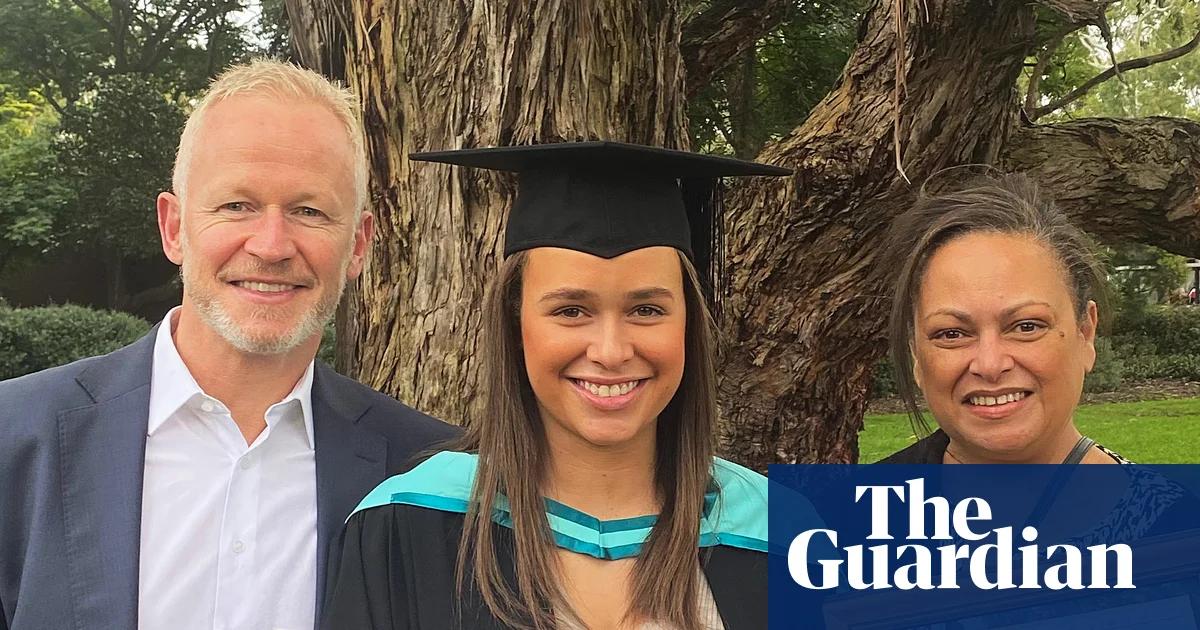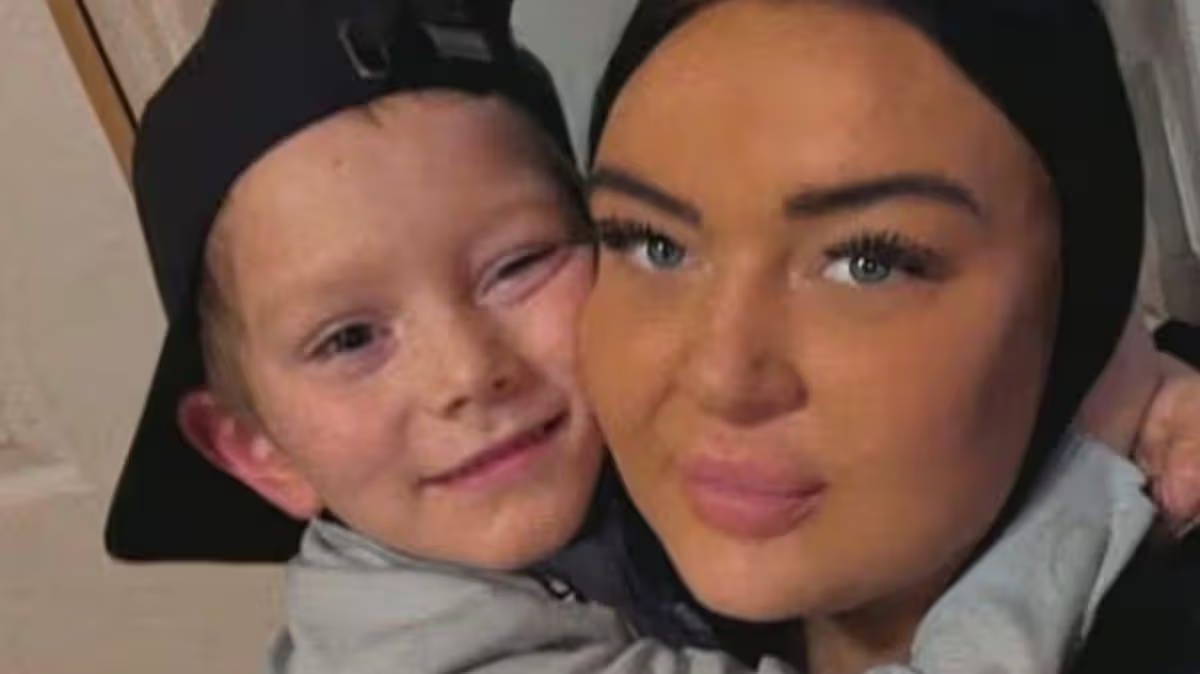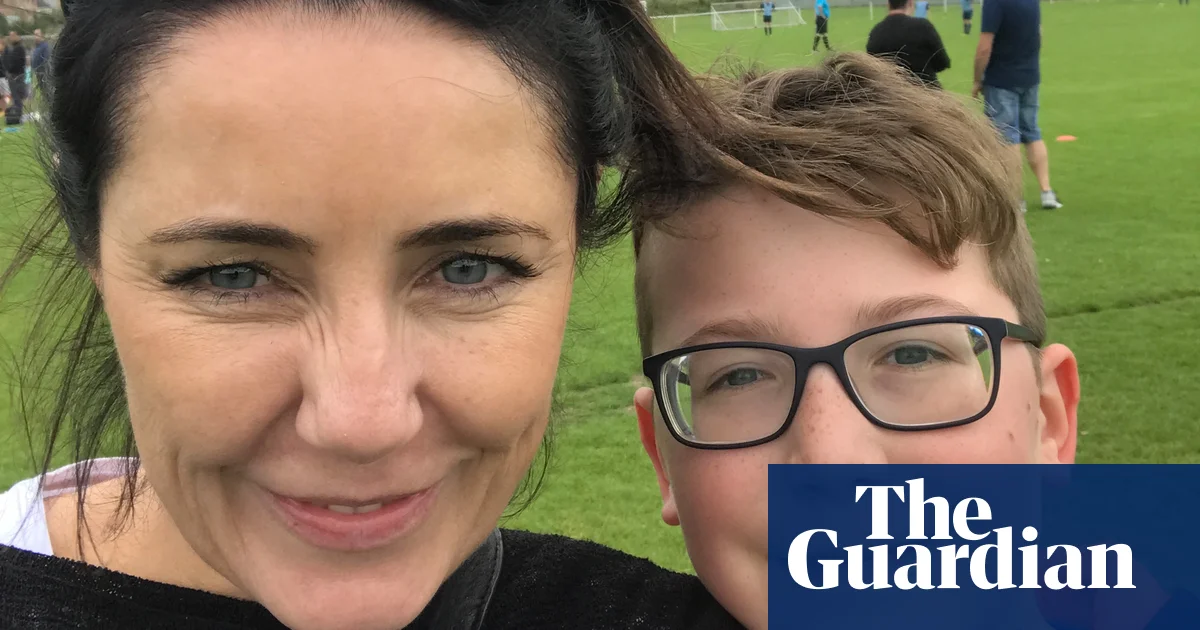
Fiona Connolly often reflects on the moment she saw her 14-year-old son, Max, collapsed on a Sydney basketball court, heart no longer beating.She recalls the glow of the red and blue ambulance lights illuminating the faces of Max’s friends, watching silently.She recalls seeing Max’s glasses on the ground near where he fell, and feeling a mother’s urge to put them back on him.She recalls her own guttural wailing as the paramedics pumped Max’s chest.“I think about that time and the sound that was coming out of me, and the terrified look on those boys’ faces,” Connolly says.“I wish I could take that back for their sake.”Max had seen a GP hours earlier for a routine referral. He received the usual checks and was healthy by all official measures.There had been no prior symptoms, just an instant stop to a seemingly healthy young heart.Max’s heart stopped while playing basketball. It was a case of 'sudden cardiac arrest' – videoResearch suggests one person under 35 experiences a sudden cardiac arrest every day in Australia, and studies put the fatality rate at 90%, making it one of the biggest killers of young people.The first sign of a sudden cardiac death can be simply that the heart has stopped.In recent decades there has been virtually no reduction in the prevalence of sudden cardiac death among young people.There are no widespread public campaigns. There is no national registry, making it difficult to track at-risk people.Representatives of the Australian Sudden Cardiac Arrest Alliance (AuSCAA) as well as survivors and bereaved family members are in Canberra this week to ask the federal government to declare the issue a public health emergency, and fund an immediate response.On 11 March 2021 more than a dozen emergency personnel worked on Max after he was rushed from the basketball court to hospital, where Connolly pleaded with staff to save her son.She told them to treat Max as if he were their own child.Given more time, she would have told them that Max didn’t particularly like sport, but he loved hanging out with friends, which is why he was playing basketball.She would have told them that even though he had “the worst eyesight in the suburb” it never hindered his learning.Max loved his family, friends and computers. He even had a side hustle of offering online software support, Connolly recalls. Photograph: Blake Sharp-Wiggins/The GuardianMax with his mumMax was bright and loved computers. He even had a side hustle of offering online software support, which Connolly discovered only after seeing her PayPal account full of US dollars from paying customers.She would have told them that Max was so interested in learning he didn’t care about fashion, which explains why he wore slides in the freezing cold. He would have preferred to spend time on his computer than tying shoelaces.Max had a small group of very close friends. Max gave enormous bear hugs. Max loved his family. Max really loved his little brother.There was never even the faintest of heartbeats. Soon, his organs began to shut down.Hours later, Connolly would leave the hospital to tell her youngest son, Archie, that his big brother was never coming home.The task of reducing sudden cardiac arrests can feel insurmountable but families point to the success of campaigns against sudden infant death syndrome (Sids), in which research and awareness have cut fatalities by 80% in recent decades.Much of the problem lies in the complexity of sudden cardiac death, where the specific trigger can be a mystery.Many families believe their child’s case is a one-off, says Associate Prof Jodie Ingles, the laboratory head and a cardiac genetic counsellor at the Garvan Institute, when it is actually part of a broader health problem.“For a lot of families, we will get an answer over time as we do more research and better understand the causes,” Ingles says.“At the moment we can’t even tell a lot of these families what happened to their child.”Autopsies on children often find a heart without an obvious defect, resulting in an inconclusive finding that accounts for roughly two in five fatalities, including Max.skip past newsletter promotionafter newsletter promotionIn affected children and young adults, the cause is usually believed to be a misfire of the heart’s electrical signals linked to inherited arrhythmias and cardiomyopathies.Genetic testing can provide some answers, which is important for tracking at-risk people in a family line, but the field of study is highly complex, given everyone has millions of genetic variants and most don’t pose a problem.“Sometimes we suspect there are a combination of factors. Maybe there’s lots of small genetic changes working in combination with environmental factors, and on a particular day several unfortunate forces have collided,” Ingles says.Australia’s annual investment in research per sudden cardiac death is $887, according to a study released this year. By comparison, breast cancer receives $4,673 per death, and renal failure $5,957.‘I haven’t done an interview – until now – and that is because I find it so much easier to shove it away because it’s too painful,’ Connolly says. Photograph: Blake Sharp-Wiggins/The GuardianWhile some cardiac survivors report prior symptoms – such as blackouts, fainting, and palpitations during exercise – an arrest often strikes without warning, complicating policy responses.AuSCAA wants the government to prepare communities for the country’s “most time-critical and preventable causes of death” by ensuring widespread access to automated external defibrillators, used to shock a heart back into rhythm.The few who do survive, who include the original yellow Wiggle, Greg Page, and the Danish footballer Christian Eriksen, received almost immediate CPR and defibrillation.Reactive measures are not enough. CPR and defibrillators greatly increase survival, but many still never regain consciousness, and most suffer arrests alone or asleep.Prof Jamie Vandenberg, the head of the heart rhythms division of the Victor Chang Cardiac Research Institute, says researchers need more precise data to identify the underlying causes “so we can determine exactly what we need to prevent it”.“If you really want to make a big dent in the number of fatalities, you’ve got to prevent cardiac arrests happening in the first place, because even with best response practices, you’re still going to have a lot of people dying,” Vandenberg says.In her light-filled lower north shore apartment, Connolly says she is rarely lost for words, having made a career out of telling stories, first as a newspaper reporter, then editor of Woman’s Day and later a publisher overseeing numerous magazine brands.But she stumbles when I ask if she has any routines to remind her of Max.“The reason why I’m struggling to answer that question is because I try and shut it out,” she says.“I’m a bit different to other people. There’s no Max fun run. I’m not funding a whole lot of defibrillators around the area. I haven’t written a book. I haven’t done a memoir. I haven’t done an interview – until now – and that is because I find it so much easier to shove it away because it’s too painful.”Connolly says she only started to find her voice a few months ago after speaking with other families who have lost children. Photograph: Blake Sharp-Wiggins/The Guardian‘It’s hard to fathom’ … young Max at the beachConnolly never visits Max’s grave, but often walks to the basketball court where his “soul left the earth”.It took almost a year for her to get the coroner’s report, which provided no answers.No one mentioned sudden cardiac death and there was no advice on what to do next.AuSCAA says access to appropriate support is “fragmented and inconsistent” across Australia, leaving many to navigate complex pathways during periods of distress.Connolly says she only started to find her voice a few months ago after speaking with other families who had lost children to sudden cardiac death.“I’ve found a community of people who have lost sons and daughters in an instant. It’s hard to fathom and we need answers,” she says.“How can these seemingly healthy young hearts just stop?” Jonathan Barrett is Guardian Australia’s business editor. His father died from a sudden cardiac arrest caused by an undetected genetic heart condition in 1998, aged 57
Fiona’s 14-year-old son Max was bright and gave enormous bear hugs. She lost him in an instant when his heart suddenly stopped
The Sydney mother wants Canberra politicians to hear people who have lost children to sudden cardiac death, saying ‘we need answers’
1,339 words~6 min read