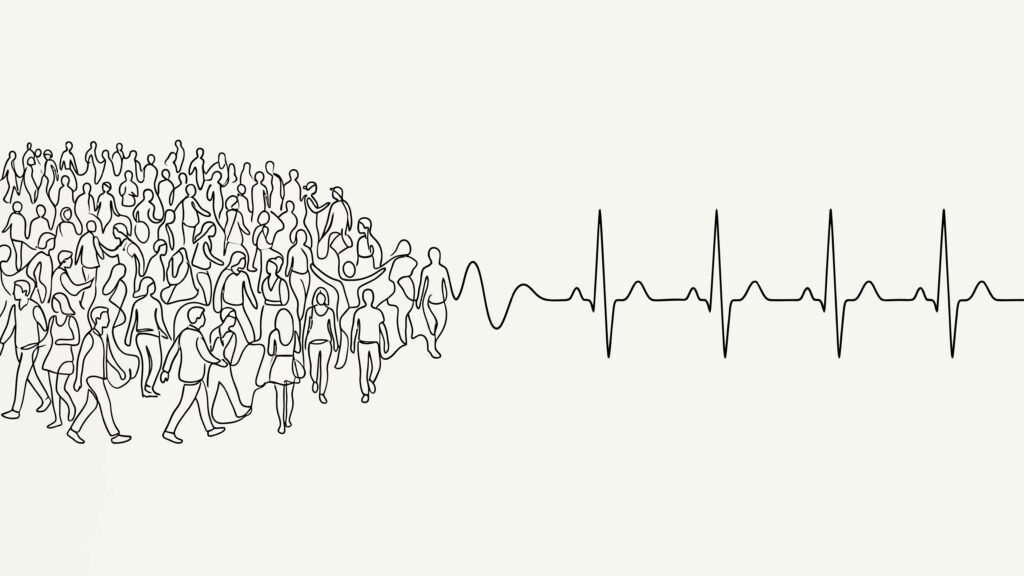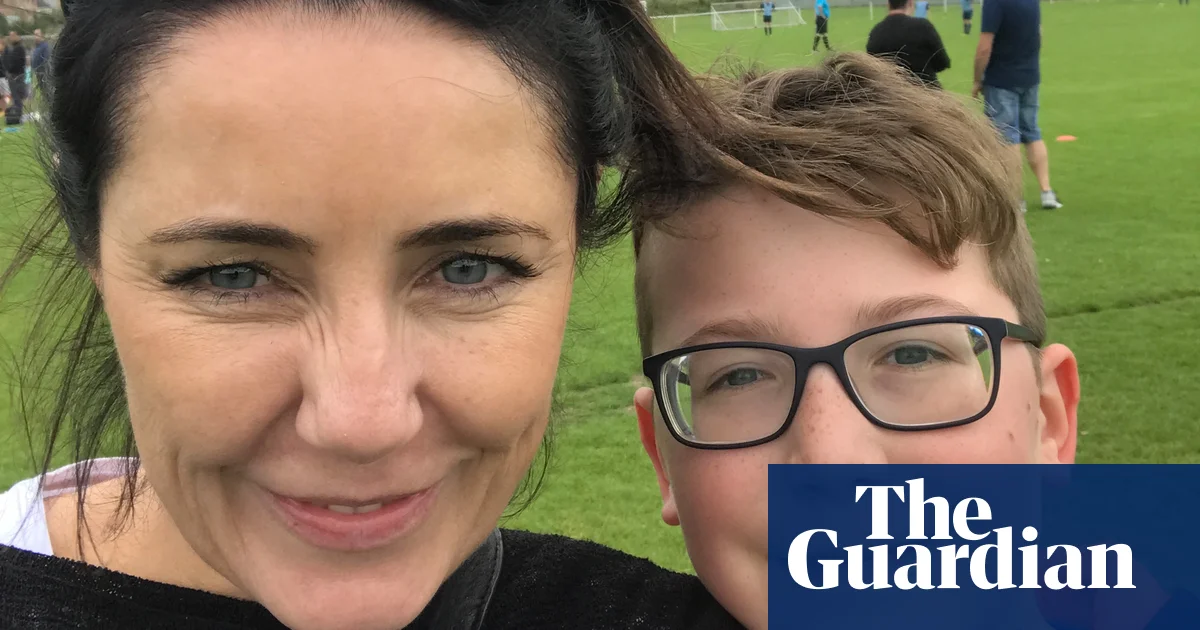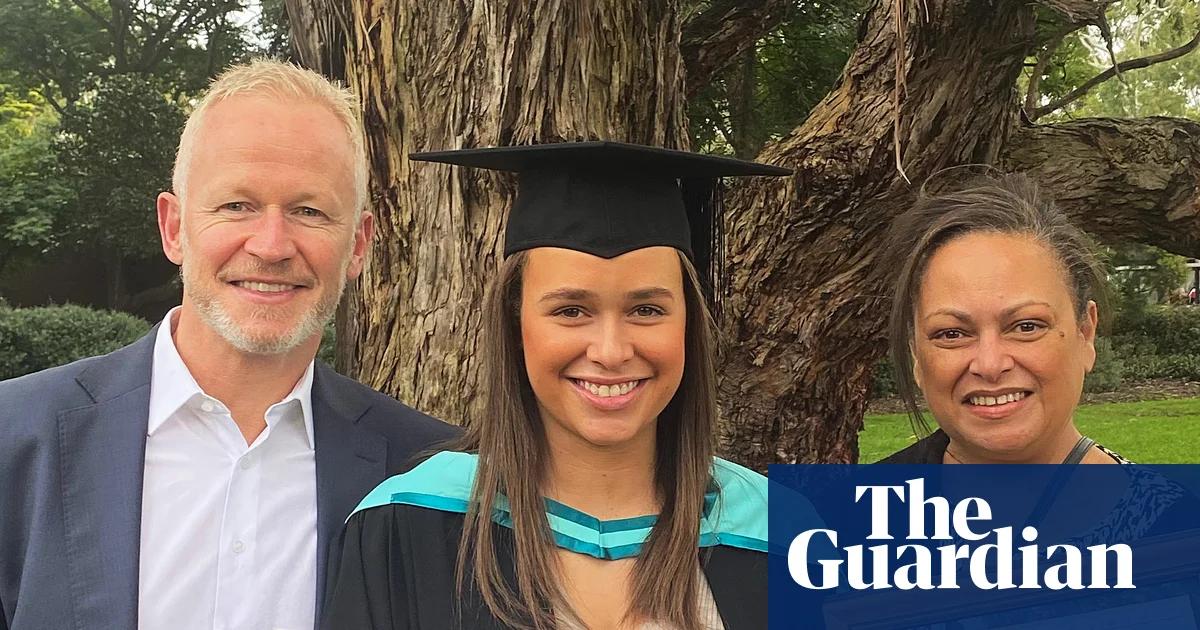
Before Alexandra Thoms goes to sleep, she puts together a flat-pack dining table with her father, Gordon. She needs the table for her otherwise sparse two-bedroom Melbourne apartment which she has moved into just weeks earlier.At 23, Alexandra has met the milestones of an ambitious life at lightning speed. She is well travelled, has earned a double university degree and a graduate job at Deloitte. She is healthy; an avid skier and gymgoer. Now, she is also a homeowner. She didn’t have a formal housewarming, though, as most of her friends still live at home.Alexandra is excited about her independence but, even after moving out, she regularly goes to her parents’ home nearby armed with ingredients and a meticulously researched new recipe to make them dinner.‘She lived her life almost as if she knew tomorrow may never come’ … Alexandra Thoms died of a sudden cardiac arrest in 2023She likes to watch Australian rules football with her dad.On the evening of the flat-pack table, she sends her parents a picture of the food she prepared for dinner. She goes to bed, places her phone next to her pillow and falls asleep for the last time.It is Sunday 27 August 2023.When a heart’s electrical signals are firing correctly, the body’s most important muscle beats in rhythm.Lub-dub, lub-dub, lub-dub.During malfunction, it quivers, and oxygen-rich blood is no longer pumped to vital organs, including the brain.Lub-dub, lub-uh-dub … l-l-l-l, lub-d-d-d.And when it doesn’t self-correct?Lu- ... du-b-b-b … b … b …Sudden cardiac arrest kills millions of people around the world each year.Among those, every week in the UK, at least 12 seemingly healthy people aged 35 and under die from undiagnosed heart conditions. In the US, about 2,000 people aged under 25 die each year of sudden cardiac arrest. Studies suggest that, on average, one person under 35 experiences a sudden cardiac arrest every day in Australia. Most die.There was 17-year-old Edward Millear, who died last year after rowing training on the banks of the Yarra River in Melbourne. Joshua Oguns, a 14-year-old schoolboy from Canberra, succumbed during a game of basketball. Fifteen-year-old Perth schoolboy Kent Yamazaki died playing tennis.The fatality rate for sudden cardiac arrest is extreme, with studies putting it at 90%. It is then classified as a sudden cardiac death. Over the past 50 years, public health campaigns and advances in screening and treatment have led to rates of cardiovascular disease death dropping by 80%. Over the same period, experts say, the rate of sudden cardiac death – an unexpected cardiac death that occurs within an hour of first symptoms – among young Australians has remained virtually unchanged.Thoms says while nothing can bring his daughter back, sudden cardiac arrest needs to be taken more seriously. Photograph: Christopher Hopkins/The GuardianStatistically speaking, it’s a rare cause of death. But when it comes to children and young adults, it ranks among the leading causes of fatalities, surpassing deaths from car accidents and various forms of cancer.“It’s just such a shock to the families,” says André La Gerche, an academic cardiologist and the head of the Heart Laboratory, supported by St Vincent’s Institute of Medical Research and the Victor Chang Cardiac Research Institute. “The child goes off to school and doesn’t come home, or goes to bed and doesn’t wake up. They go from being perfectly well to not being there at all.“It’s near the top of the reasons why a young person dies, and even when there’s a high‑profile case, it’s often soon forgotten.”La Gerche, who chairs the Australian Sudden Cardiac Arrest Alliance, says research is underfunded and public awareness is low, even in the broader medical community.“Even professionals sort of fall back on the idea that young people don’t die very often.”Alexandra Thoms speaks to her parents, Gordon and Bronwyn, every day. She is usually the one to phone first.On Monday 28 August 2023 she doesn’t call.Gordon and Bronwyn try calling her. No one picks up.They think Alexandra must be unwell. At night-time, there’s still no answer. They start to worry.The exact cause of sudden cardiac arrest often differs but there is one element that characterises them all: an immediate loss of consciousness.“A sudden cardiac arrest is dramatic,” says Elizabeth Paratz, a cardiologist at St Vincent’s Institute of Medical Research and the Victor Chang Cardiac Research Institute.“That’s when the heart stops suddenly and you need resuscitation. It’s an endpoint. The heart has stopped, and it can stop for a whole heap of reasons.”Cardiac death in children is typically caused by inherited conditions – arrhythmias – that interfere with the tiny impulses that tell the heart muscle to squeeze. In older teenagers and young adults, inherited structural abnormalities – cardiomyopathies – are more prevalent. They can also cause an electrical short-circuit or pump failure.But forensic pathologists conducting autopsies on young people often find a heart without an obvious flaw. The cause is considered to be “unascertained”; a classification given to about 40% of fatal cases.“The younger you go, the more likely it is that the heart will look entirely normal and you won’t find a reason,” Paratz says.Danish footballer Christian Eriksen. The ‘paradox of exercise’, says cardiologist Belinda Gray, is that it increases the risk of sudden cardiac arrest for elite athletes. Photograph: NurPhoto/Getty ImagesFor families mired in grief after the loss of a child to sudden cardiac death, there’s an extra layer of pain and confusion when a genetic cause is identified – what does it mean for younger brothers, sisters or other family members?The prevalence of cardiac arrest rises as lifestyle factors, rather than genetics, become the dominant risk. Towards middle age and beyond, the likely cause of heart failure shifts to coronary artery disease, whereby cholesterol deposits are often the culprit.
‘A child goes to bed and doesn’t wake up’: the families left in shock after the sudden death of their healthy children
Sudden cardiac arrest is statistically rare but among the leading causes of death for children and young people. And families often have no idea of the risk until it’s too late
2,744 words~12 min read