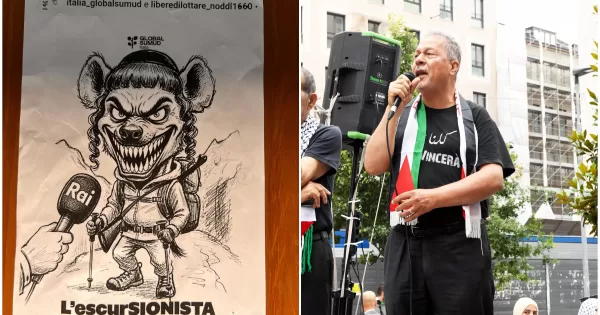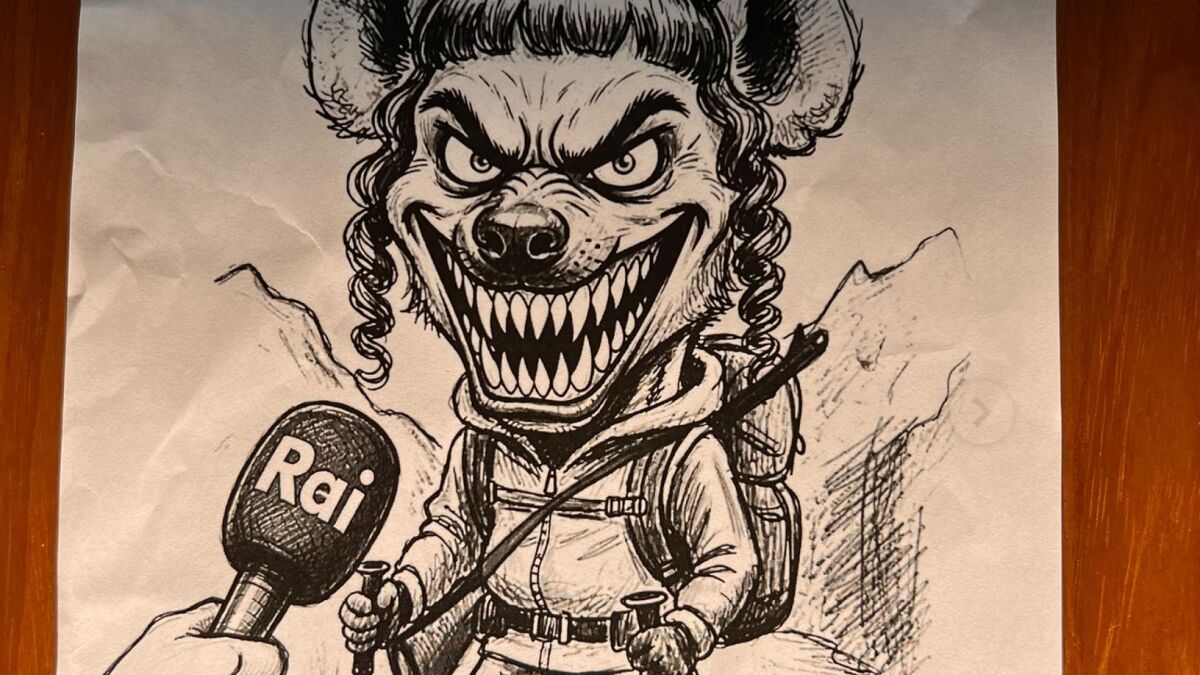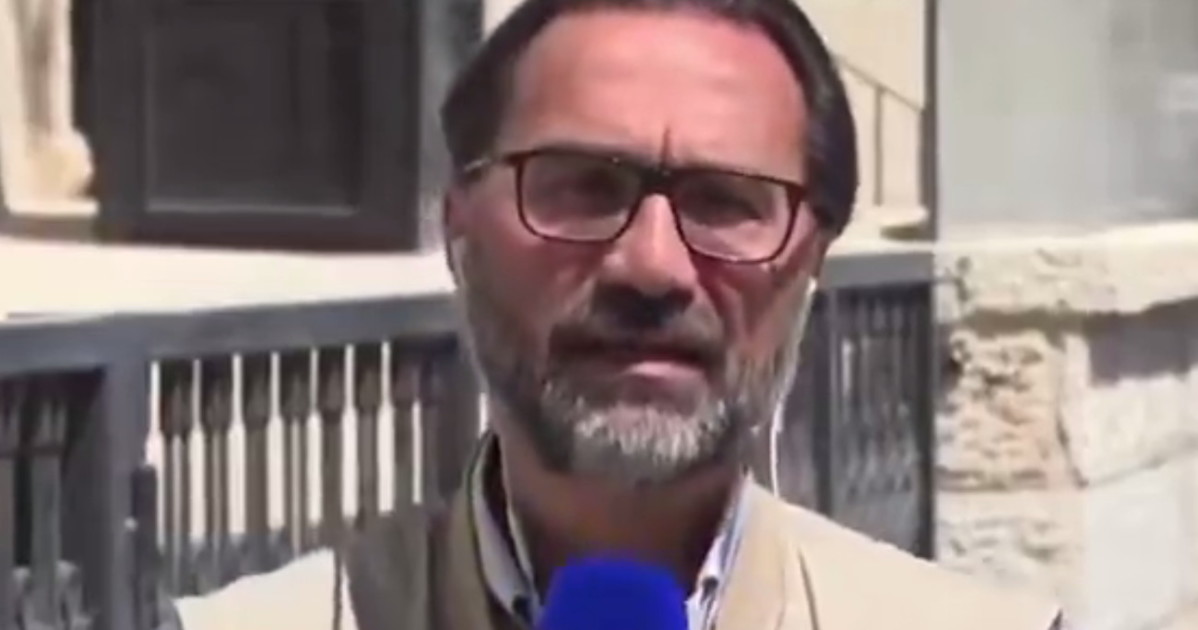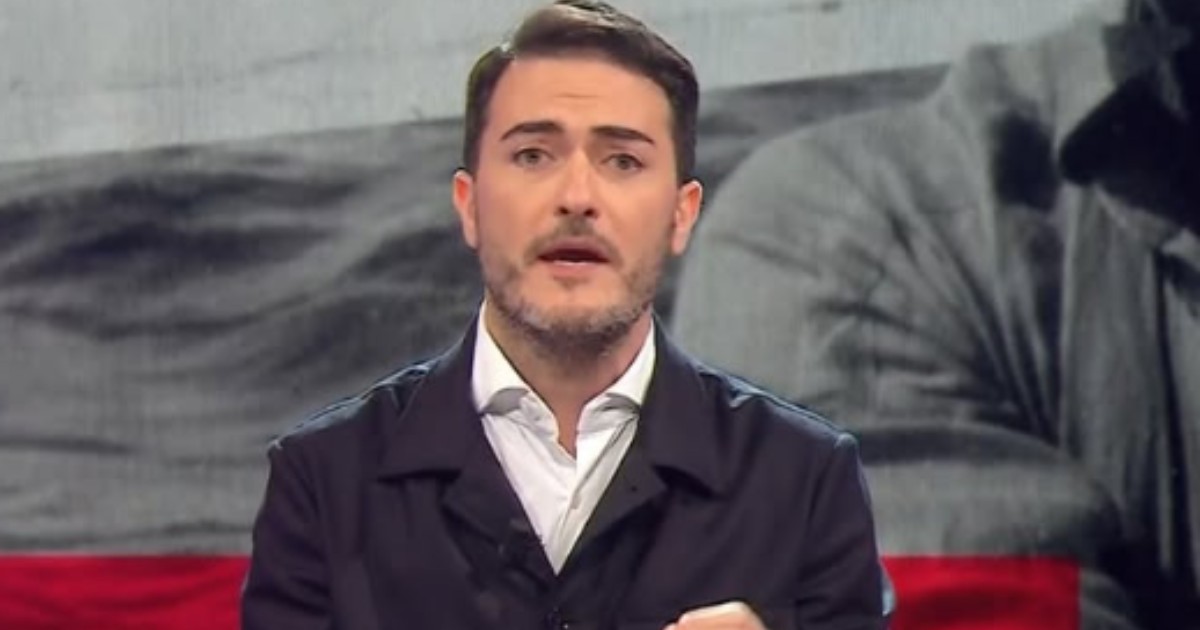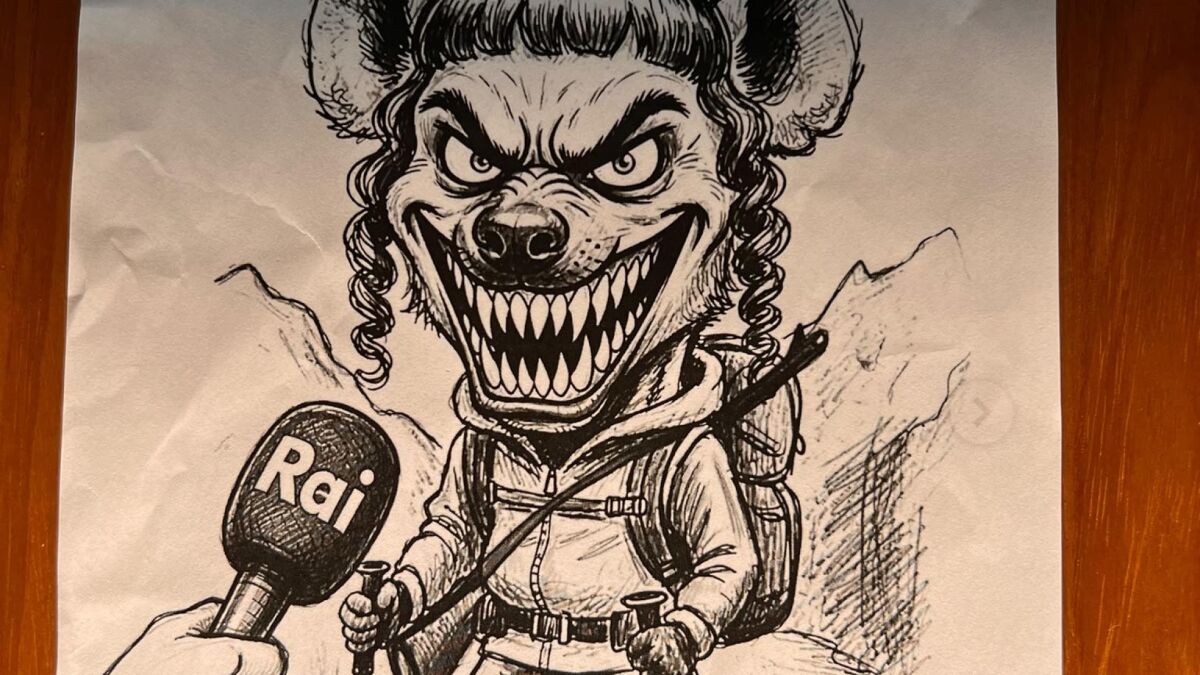
Giovan Battista Brunori says pro-Palestinian activists targeted him and his family after his report on two Israelis killed near a Palestinian village; RAI condemned an antisemitic cartoon depicting him as a rat with sidelocks and a kippahAn Italian public broadcaster correspondent based in Jerusalem has become the target of death threats, abuse and an antisemitic cartoon after describing a group of Israelis involved in a deadly West Bank incident as “hikers.”Giovan Battista Brunori, Jerusalem correspondent for Italy’s RAI public broadcaster, reported two weeks ago on an incident near the Palestinian village of Tell in which Israeli security coordinator Benayahu Melt and IDF officer Yuval Ezra were killed after a Palestinian seized Melt’s weapon and opened fire.GalleryGiovan Battista Brunori (Photo: Ravid Biran)In his report, Brunori described the Israeli victims as part of a “group of hikers” who had come to the area.That single word triggered a fierce backlash in Italy.Since the report aired, Brunori says he has been subjected to abusive messages, threats against his life and his family and antisemitic attacks. Pro-Palestinian activists on the Italian left, along with Palestinian activists operating in the country, have led a campaign against him and called for his dismissal.Two of Brunori’s RAI colleagues have also been targeted.Incoronata Boccia, head of RAI’s communications department, drew criticism after speaking at an event organized by the Jewish community and expressing solidarity with Israel. Popular television host Antonino Monteleone was attacked after publicly challenging claims widely repeated in parts of the Italian media accusing Israel of deliberately starving Gaza and committing genocide there.Monteleone published a series of posts rejecting those accusations, prompting pro-Palestinian activists to demand that he also be removed.The campaign spilled into RAI itself.One of the broadcaster’s senior labor unions, described as strongly anti-Israel and pro-Palestinian, accused Brunori of having “become a tool of occupation propaganda.” Another journalists’ union came to his defense, rejecting the accusations and pointing to what it described as his established professionalism and journalistic record.The controversy escalated further when pro-Palestinian activists circulated a cartoon using an Italian wordplay based on the term “hikers,” accusing Brunori of normalizing a “Zionist” narrative.The cartoon depicted him as a rabid rat wearing long sidelocks and a kippah.RAI eventually issued a strong defense of Brunori and condemned the campaign against him.RAI CEO Giampaolo Rossi called the threats and intimidation “an extremely serious incident” directed against a correspondent who had worked professionally for years in one of the world’s most dangerous and complicated reporting environments.The cartoon circulated by pro-Palestinian activistsRossi said the cartoon drew on stereotypes associated with some of the darkest antisemitic propaganda in European history and had no place in democratic debate or freedom of information.Brunori said he was particularly shocked to discover that one of the leading figures behind the campaign against him was Mohammad Hannoun, a Palestinian suspected by Italian authorities of acting as a Hamas frontman in the country and raising funds for the terror organization.Hannoun headed an organization that presented itself as collecting donations in Italy for Palestinians and war wounded. He was arrested several months ago following a lengthy investigation by Italian security authorities, amid suspicions that he had helped run an Italian and international network supporting Hamas and was himself a senior Hamas figure operating under civilian cover.Hannoun’s organization sent RAI a legal warning demanding major changes to Brunori’s report about the incident near Tell. It insisted that RAI clarify that the Israelis involved were violent settlers who had come to harm Palestinians.Brunori rejected that characterization.“In my report for RAI Channel 1’s news broadcast, I described the events as they were,” he told ynet.“Just as I described destruction and violence by violent settlers in Palestinian villages, I also described what happened near Tell, where a group of unarmed settlers, families with children and women from Havat Gilad, went hiking in the area.”Pro-Palestinians protestors in Italy (Photo: REUTERS/Claudia Greco)He acknowledged that the group had left their community and that Palestinians may have regarded their presence as provocative, but said they were not violent settlers.“In all my many reports, I have made sure to show all sides and all the complexity of the story,” he said. “I showed incidents of violent settlers burning mosques, but I also showed the Israeli group that was attacked that Friday by a group of Arabs. These were two different groups, and I present the complexity of this land.”Brunori said the campaign has included vicious abuse directed at both him and his family.“I’ve had mud thrown at me and my family, terrible things said, but I will continue doing my job,” he said.“Most of the people attacking me online do not know the facts. They are only reacting to incitement online and calls by influencers to join the accusations. And that can be dangerous.”He said criticism was legitimate but argued that the campaign had crossed a line.“This is the poisoned culture of wokeism, the method of trying to silence anyone who thinks differently, at any cost,” he said.The attacks against Brunori have drawn condemnation from figures on the Italian right as well as from Walter Meghnagi, head of Milan’s Jewish community, who called for “swift action by the judicial system.”Francesco Filini, a lawmaker from Prime Minister Giorgia Meloni’s party, accused leaders on the left and political organizations of helping fuel the campaign.“Leaders of the left and political organizations contributed to this campaign through statements and public attacks, feeding the hostile atmosphere toward a public-service journalist,” he said.
RAI reporter calls murdered Israelis ‘hikers’ and faces death threats
Giovan Battista Brunori says pro-Palestinian activists targeted him and his family after his report on two Israelis killed near a Palestinian village; RAI condemned an antisemitic cartoon depicting him as a rat with sidelocks and a kippah
901 words~4 min read