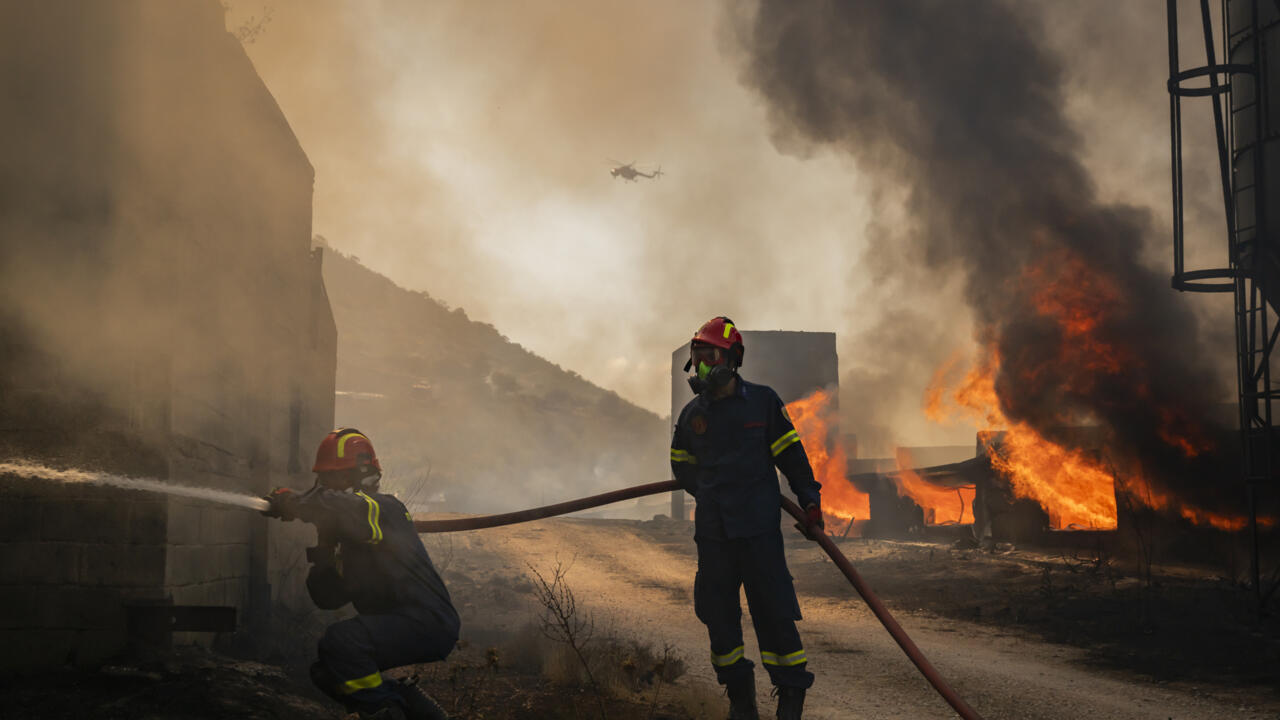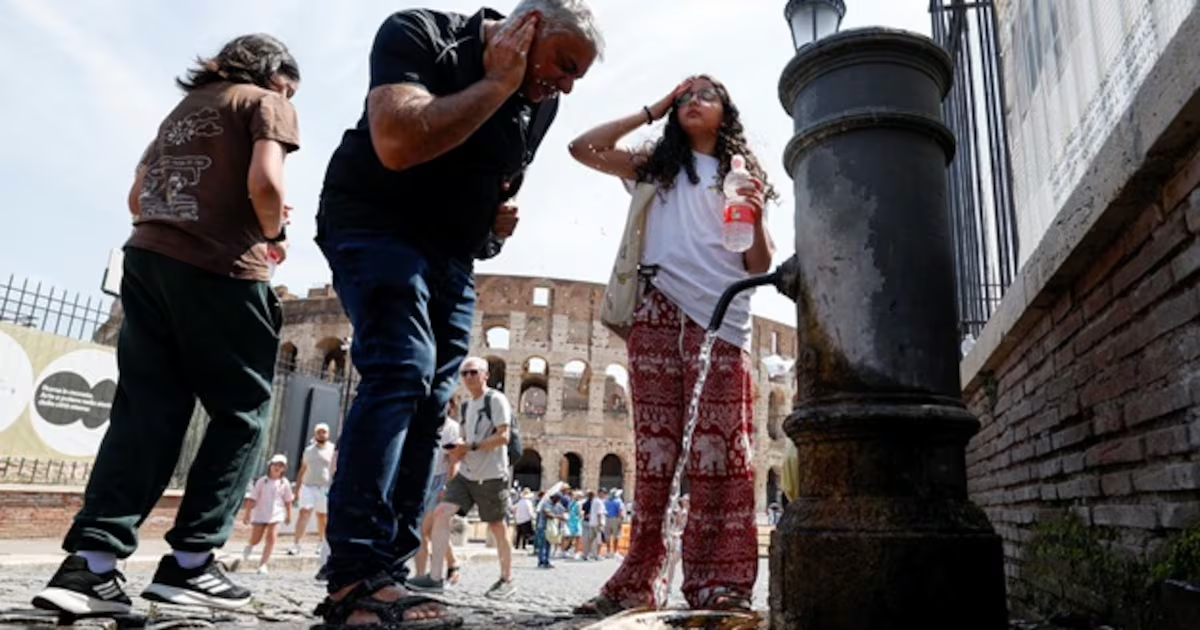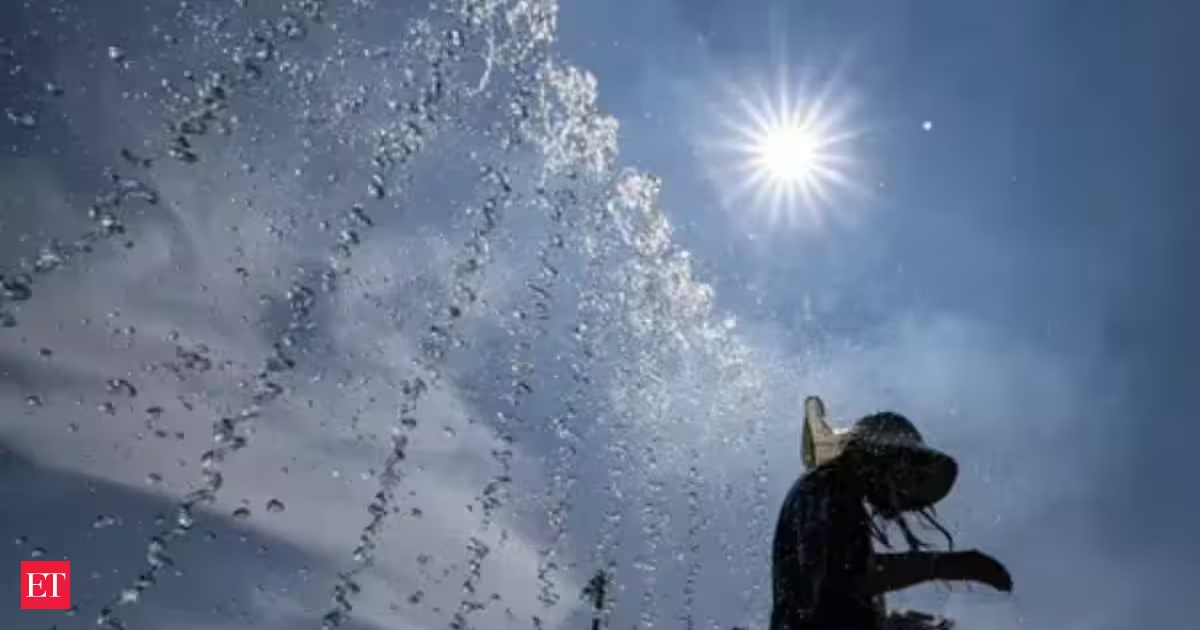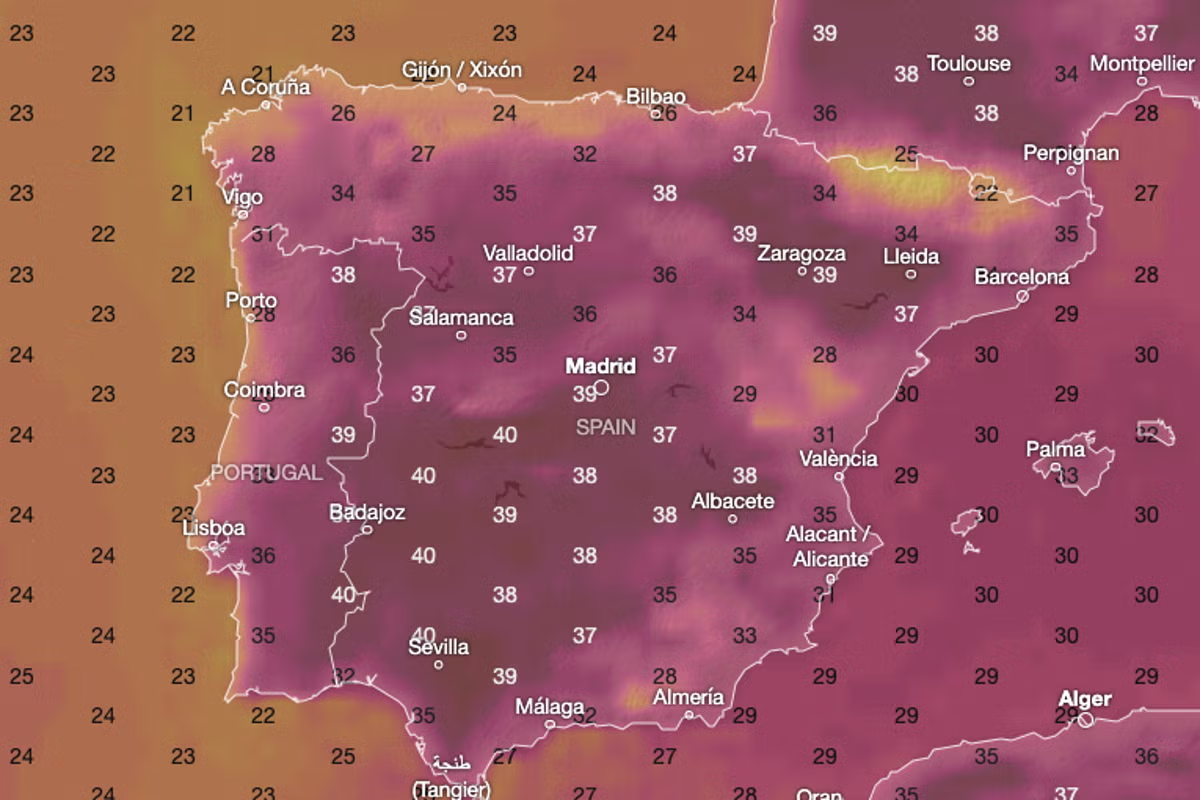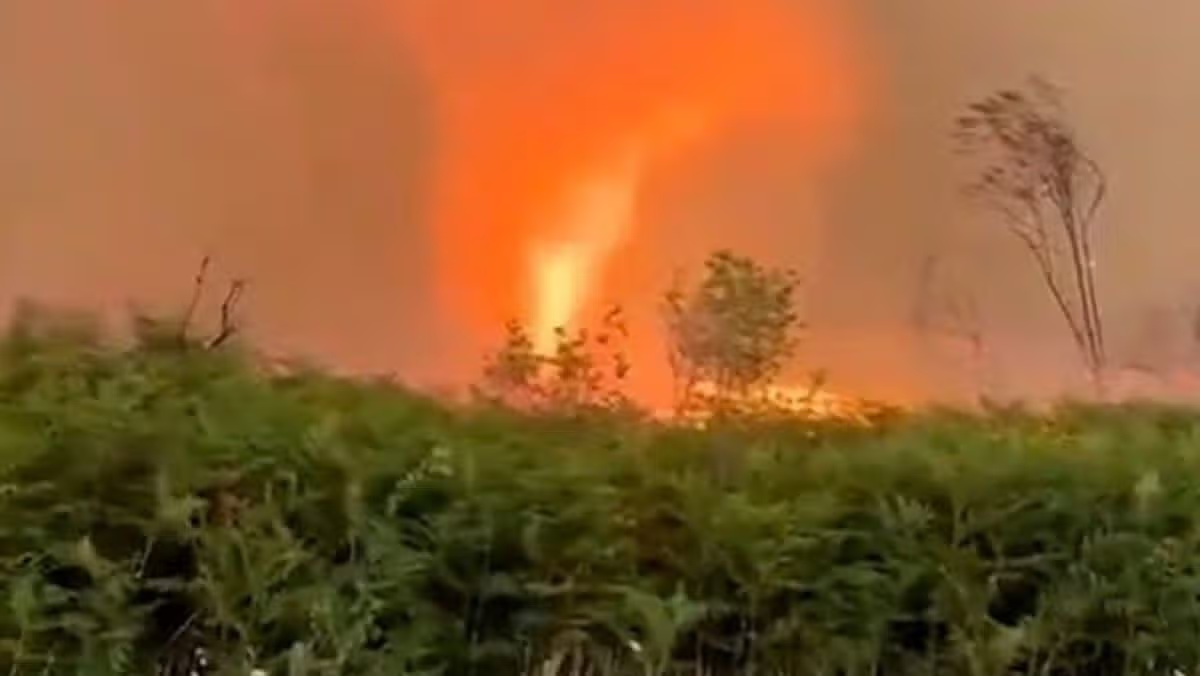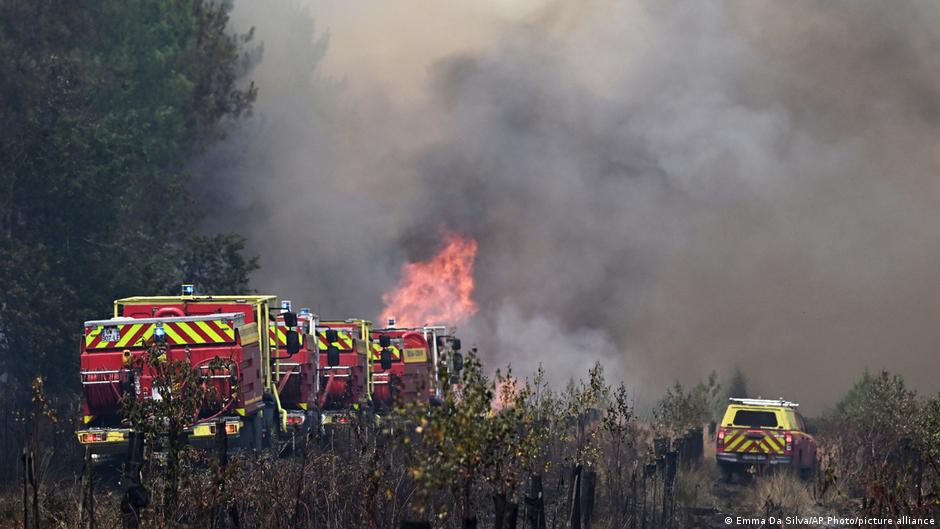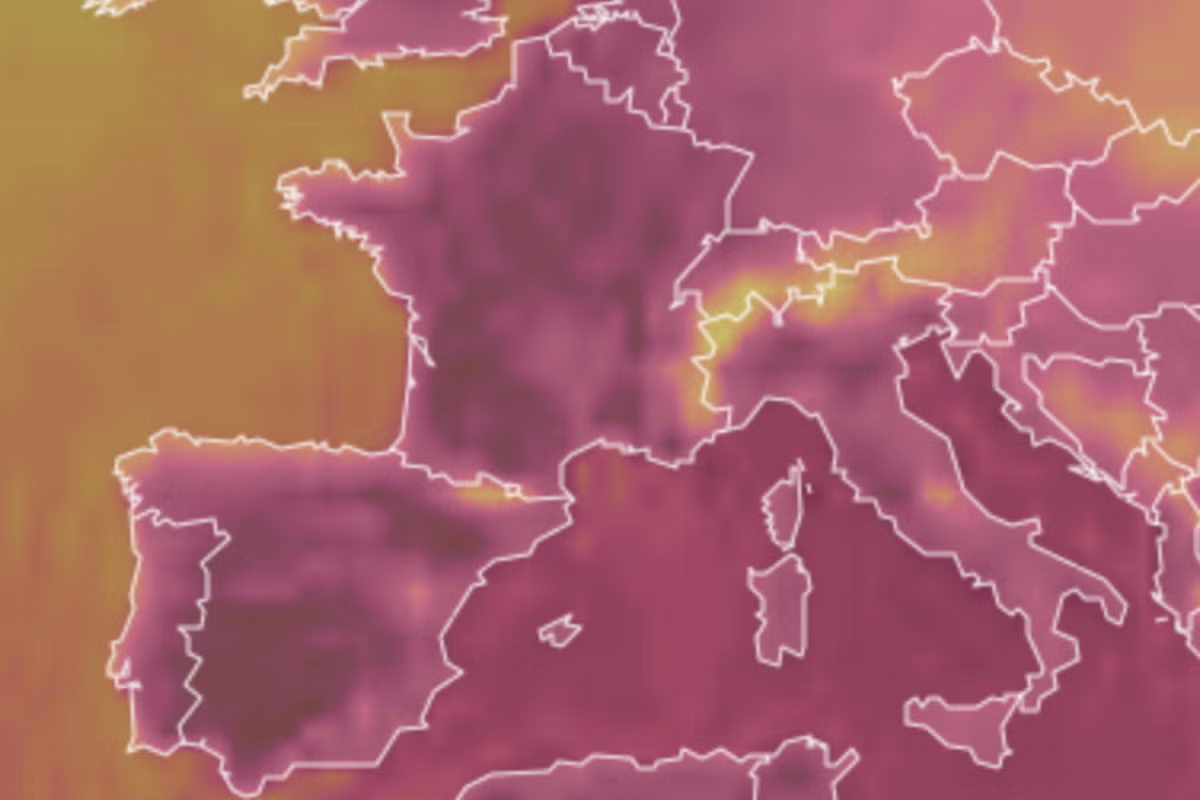
Europe is bracing for another scorching heatwave set to sweep across the continent, once again driving up the threat of devastating wildfires. Spain could see temperatures as high as 43C later this week in what will be Europe’s fifth heatwave of a record-breaking summer, which has seen several countries suffer a record-breaking number of fires due to persistent dry conditions and extreme heat. France and Italy will also see scorching temperatures, before the heatwave moves eastwards into Central and Eastern Europe, with temperatures set to near the 40s in Hungary, Serbia and Romania. The extreme heat has led to 25,000 related deaths this year, according to Bloomberg research covering Spain, France, the UK, the Netherlands and Switzerland. Wildfires have scorched more than 550,000 hectares of land across the continent during the same period. Western Europe will see scorching temperatures as high as 43C on Thursday (Ventusky.com)Western Europe is in the midst of its hottest ever summer, with a record-breaking 24-hour average temperature of 21.62 degrees for June and July recorded this year, according to a report the EU’s Copernicus climate change service released on Monday. This is 2.79C above the average temperature during the 1991 to 2020 period, smashing the previous heat record set in 2022. Spanish forecaster Aemet says that tourist hotspots in Spain including Cordoba (43C), Sevilla (40C), Granada (39C), and Madrid (39C) will all see temperatures in the region of 40C, while other touristy areas including Barcelona, Malaga and Alicante are all forecast to be in the mid 30s. Aemet has placed varying parts of the country under yellow and amber warnings for the next three days.Spain will experience scorching temperatures, especially on Thursday (Ventusky.com)France will see temperatures in the mid-to-high 30s, Meteo-France says, including in Paris (35C), Toulouse (36C) and Bordeaux (39C), which was the site of a vast wildfire last month that forced 200,000 people from their homes. aMeteo-France has placed much of the country’s south east under an amber heatwave warning, with the rest of the country, barring the north, under a yellow warning. Last Thursday, all 27 Italian cities that are monitored through the Health Ministry’s national heat surveillance system were placed on red alert. In the next three days, Rome (38C), Milan (37C), Florence (37C) and parts of central Sardinia (40C) will be among the hottest parts of Italy in the coming week, Italy’s Meteo Agency said. It comes after Slovakia recorded a temperature 42.2C, becoming the latest country, including Hungary and Austria, to set an all time record. Greece, which earlier this month was battered by dramatic wildfires in which several people were killed, is set to avoid the worst of the upcoming heatwave, with temperatures not expected to surpass the mid-30s. France has suffered several intense heatwaves in 2026, causing thousands of excess deaths (Ventusky.com)Italy's Health Ministry put 27 cities on red alert last week (Ventusky.com)Three consecutive months of exceptional heat in western Europe are the result of persistent high-pressure systems which have trapped heat over the region, a weather event also known as a ‘heat dome’, said Dr Samantha Burgess, deputy director of the Copernicus Climate Change Service.Half of England and Wales have already been plunged into drought, with more regions likely to be declared on Monday afternoon when officials meet at the National Drought Group, before temperatures soar as high as 36C later this week.“The extreme temperatures also amplified widespread drought,” said Dr Burgess. “As soils dry out, they lose their ability to provide natural cooling, allowing heat to build more readily. This is a clear example of how climate change is intensifying heat extremes, with heat and drought increasingly reinforcing one another.”Eastern Europe is also currently in the grip of an intense heatwave, with temperatures as high as 36C in Serbia and Hungary on Tuesday, and set to hit 38C on Tuesday. A firefighter battles a wildfire in Deliblatska Pescara (Deliblato Sands), near the village of Dubovac, some 70 kilometres northeast of Belgrade, Serbia (AFP/Getty)After a brief midweek reprieve, scorching temperatures will return to Croatia, Hungary, Serbia and Romania this weekend, as most of France and Spain cool into the mid-to-low 30s. Some parts of Hungary, Romania and Serbia - particularly around the borders where the three countries meet - are also bracing for an ‘extreme danger’ of wildfires this week, according to the Copernicus European Forest Fire Information System (EFFIS). The danger will peak on Wednesday, after a spell of extreme high temperatures this week. Towards the end of the week, large parts of Spain and patches of France will be under ‘extreme’ and ‘very high’ wildfire danger warnings. “Climate change is increasingly bringing the kinds of hot and dry conditions that favour large, high-intensity wildfires in southern Europe while extending the fire season northwards,” said Laurence Rouil, director of the Copernicus Atmosphere Monitoring Service (CAMS) at ECMWF. “Larger fires produce more smoke and inject it higher into the atmosphere, meaning it can travel further and impact air quality not only locally, but across the wider region. Much of the continent remains at risk of further wildfires, AccuWeather warns (AccuWeather)“Countries that experience relatively few wildfires may be increasingly impacted by long range transport of smoke, even if they are thousands of kilometres away.”The threat from wildfires in western Europe far from over, with vast swathes of the continent under extreme wildfire warnings, as experts warn that the wildfire season is increasing in length and intensity each year.In France and Spain, more than 300,000 people were forced to flee their homes, in an evacuation operation that now ranks among the largest the continent has seen since World War II.The fires have already cost the continent up to £16.4 billion in economic costs, estimates published by forecaster AccuWeather showed on Thursday. This includes the cost of emergency response, damage to property, and health impacts.The cumulative number of wildfires in France, Spain and Italy this year dwarfs the average from the previous two decades, figures from Copernicus’ European Forest Fire Information System (EFFIS) show.
Mapped: Spain and France braced for yet another heatwave as temperatures to hit 43C
Europe is bracing for its fifth heatwave of a record-breaking summer, with the threat of further devastating wildfires
995 words~5 min read