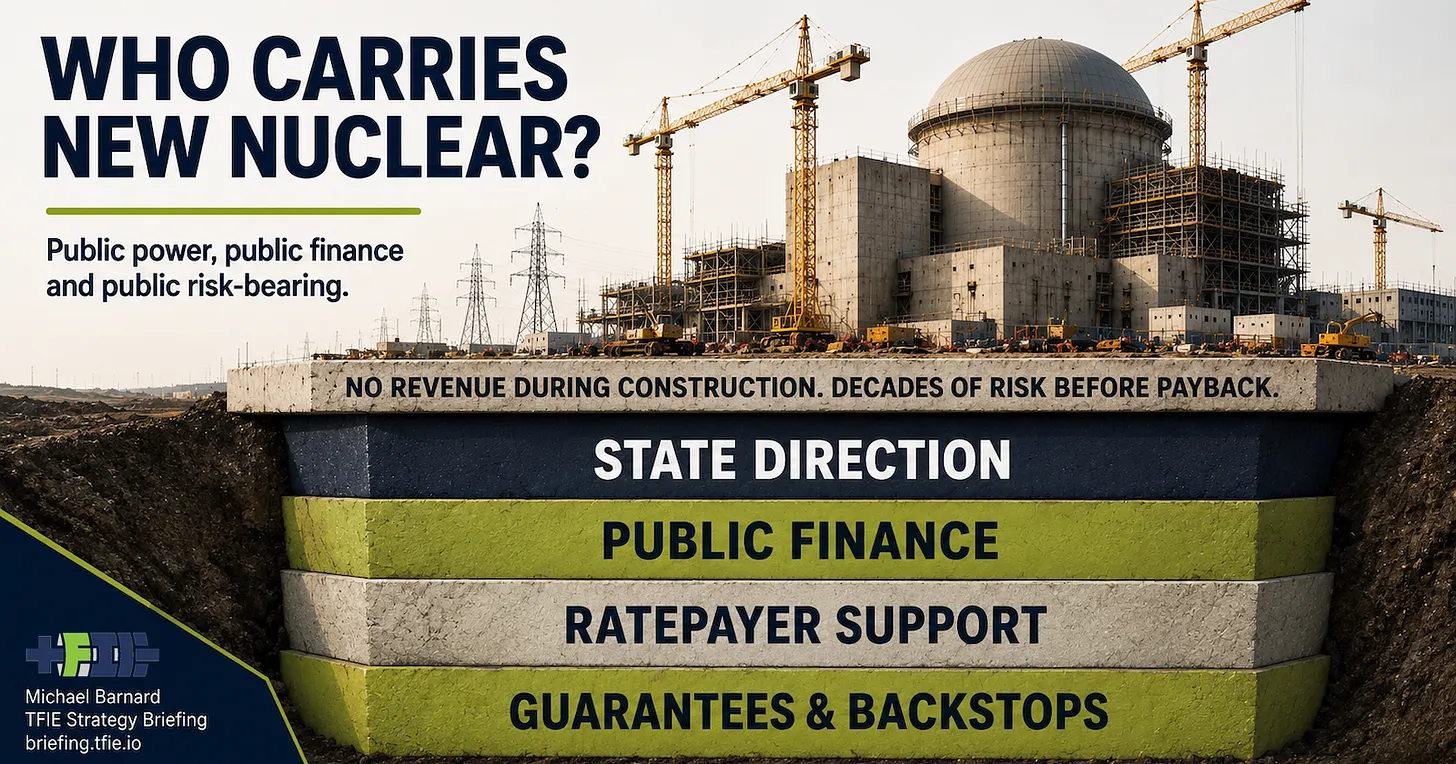
New nuclear becomes financeable by shifting construction, financing or revenue risk toward governments, state institutions and regulated electricity customers.
Support CleanTechnica's work through a Substack subscription, on Patreon, or on Stripe. Help us produce all of the high-quality, original content we publish week after week despite the challenges of content-scraping AI, antisocial media, inflation, and other hurdles.
Nuclear power works. It produces low-carbon electricity, avoids the health burden of fossil-fuel combustion, provides firm generation and can operate for many decades. My skepticism about building large new nuclear fleets has never depended on pretending otherwise. The more interesting question is why countries that have built nuclear successfully have generally done so through national industrial programs, while attempts to turn reactors into ordinary merchant-market investments keep running into the same financing problem.
When I first wrote about this in 2023, I used the deliberately provocative headline that nuclear energy and free-market capitalism were incompatible. That was shorthand, not a claim that private companies cannot manufacture equipment, construct plants, operate reactors or invest in nuclear businesses. They obviously can. The narrower point has held up well: new nuclear is a poor fit for hands-off merchant project finance. The programs that scale best are usually ones in which governments constrain technology choices, organize financing and regulation, develop supply chains and workforces, and commit to enough reactors over enough time for learning to carry from one project to the next.