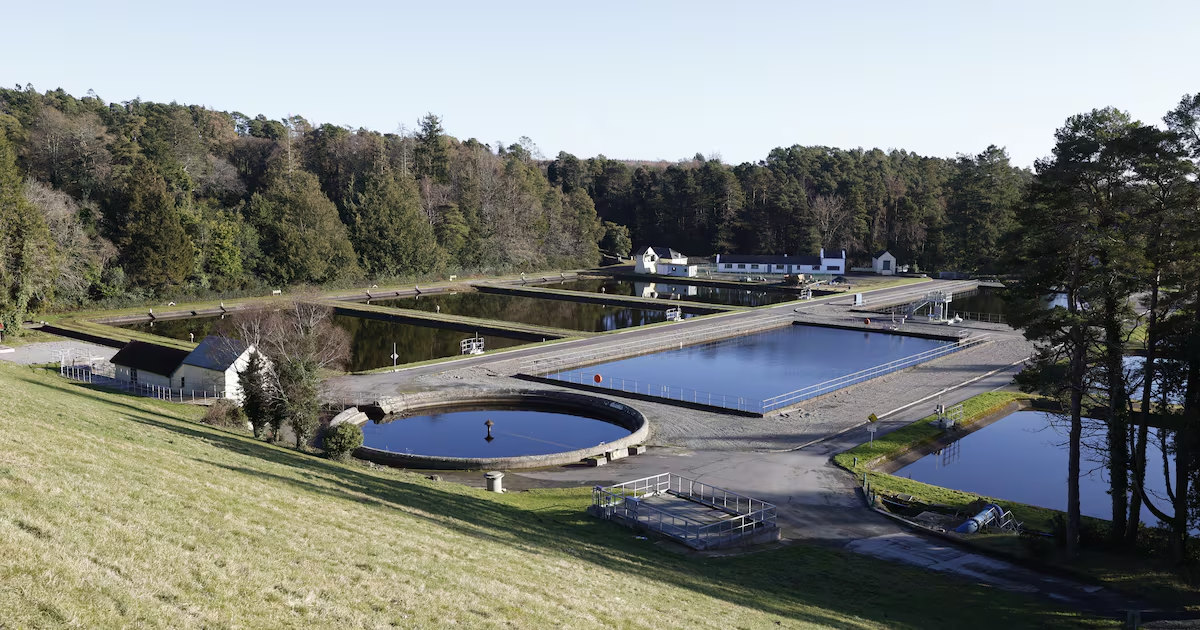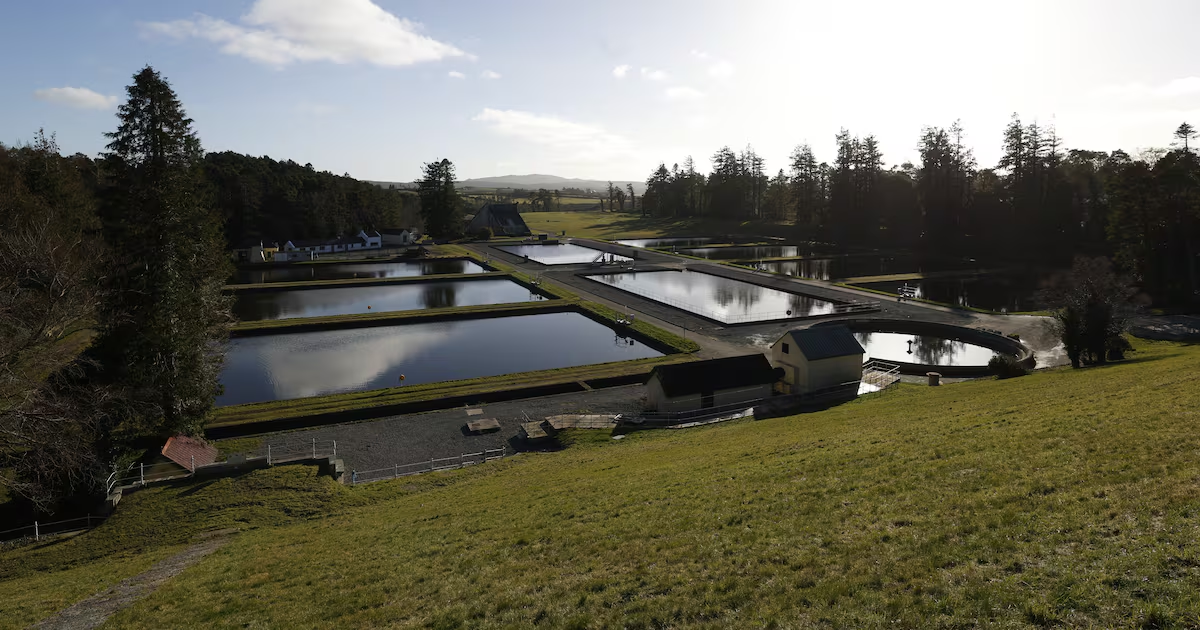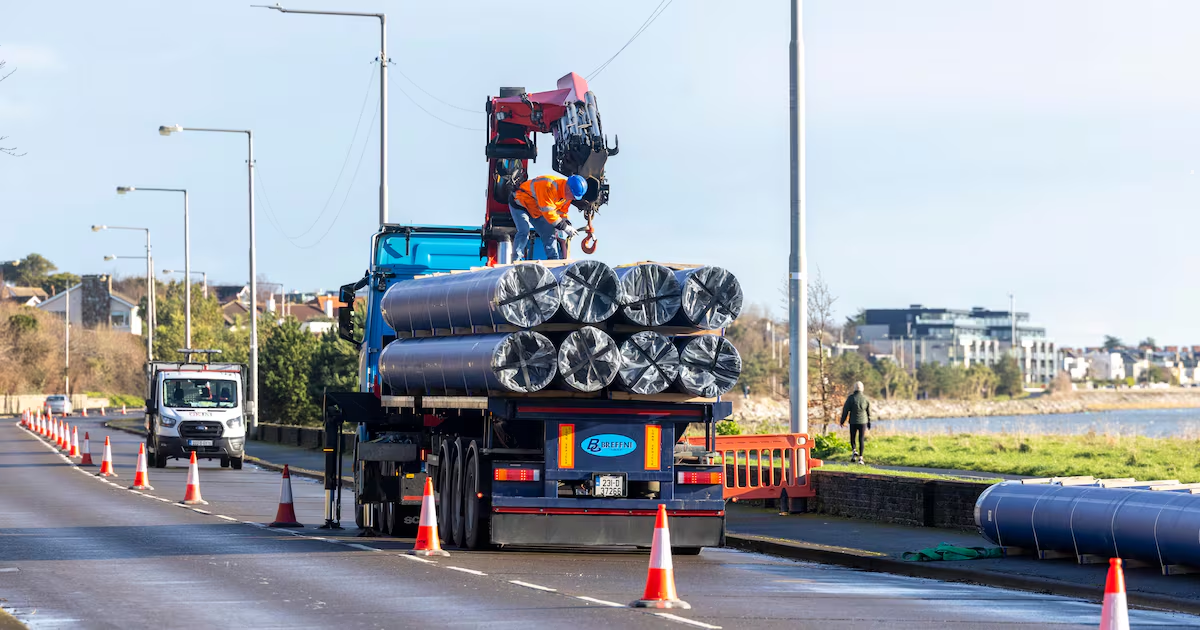
In the decade after its incorporation in 2013, Uisce Éireann was primarily focused on upgrading existing infrastructure and fixing problems. The national water utility was busy during its early years, dealing with 50 locations across the State discharging raw sewage into the sea, according to the organisation’s head of water network management, Alan Milton. But there has been a big shift in the past 16 months or so, he says, with an injection of €2 billion in State funding specifically targeted at growing infrastructure to unlock sites for new housing.The Government asked Uisce Éireann how it was going to contribute to achieving the target of building 300,000 houses by 2030, he says.The organisation’s existing budget of €10.3 billion for 2025-2029 was geared towards improving compliance, resilience and catering to “existing growth”, he says. “We’ve had a big enough problem fixing the existing assets that we have and making sure they don’t cause any harm to our environment. It hasn’t been in our mandate to build new assets for new growth.” That is not to say no new capacity was added in those years. Milton says the utility’s workers, if dispatched to fix a treatment plant discharging raw sewage, would fix the issue and might also increase capacity for new growth in that existing town.Through this “tinker[ing] around the edges” approach, he says, Uisce Éireann added capacity for about 40,000 new homes last year and 30,000 the year before. “By fixing our assets […] we can make small adjustments for growth. But if we’re to support this substantial housing target, we’ve got to do something different, and that difference was the €2 billion the Government gave us to support new housing,” he says.To ascertain how it could specifically facilitate housing growth, Uisce Éireann assessed where its work would have the most positive impact. Milton says the team looked at spatial and development plans at national, regional and local authority levels. They examined zoning sites and engaged with the Local Government Management Agency and developers. Milton says the team works closely with the Housing Activation Office, which was formed last year to remove obstacles to housing delivery.“At Uisce Éireann we don’t decide where people should live. That is not our job. It’s our job to look at what the planners at a regional, Government and local level have decided,” he says.They identified 72 settlements where development opportunities could be activated if Uisce Éireann ensured four criteria were met. These areas, spread across cities and towns throughout the State, “would not have been on our radar to service” but could now be opened up for new housing in the coming years, he says, adding that some could be “very quick wins”.Homes can only be delivered if the areas have four “green lights”: sufficient water treatment capacity, water networks, wastewater treatment plants and wastewater networks. “Unless we have four green lights in an area, we can’t say okay to the housing applications,” says Milton, adding that many of the sites require an extension of the water networks via the laying of additional pipes.[ The Dunsink plan shows Ireland has a lesson to learn from the SovietsOpens in new window ]He gives the example of land parcels on the northside of Cork city that could hold about 3,350 new homes if there was a water main and better wastewater facilities in the area. Nearby is another site with the potential for hundreds of new houses. He says the laying of about 200 metres of pipe would “unlock” this land for homebuilding. Developers who benefit from Uisce Éireann’s growth works will have to pay a water connection fee like every other housebuilder, Milton says.He expects the €2 billion funding will allow for the laying of an additional 400-500km of water mains to service new sites over the next five years. “It’s a significant piece of work and a very big project for us. It’s something we’re really looking forward to getting our teeth into,” he says.Milton says there is “real momentum” behind this work. “This is going to make a difference to people. This is us laying pipelines out to new pieces of land to allow people to build and buy homes ... You cannot build a house without water to flush the toilet […] without water to drink from the tap, so we have got to do this.”Working closely with the Housing Activation Office ensures a “joined up approach” between all essential utility providers, Milton says. [ Plan for new town at Dunsink ‘requires €7.3bn water investment’ to proceedOpens in new window ]To meet the ambition of facilitating 300,000 homes by 2030, Uisce Éireann’s focus is on “scale”. While people may want to live outside the 72 identified areas, the State will not get a sufficient housing return if the utility spends its time laying pipelines for very small settlements, Milton says, adding that the team has to target sites that can facilitate large growth.While much of the work so far has been focused on identifying the 72 key areas and their water deficiencies, Milton says some growth projects have entered the construction phase. The team has an “ambitious” delivery plan, but it is still in its “infancy stage”. Organising contractors takes time, he says, but the organisation has, on occasions, diverted crews to quickly lay a new pipeline for a site that is the subject of a planning application or otherwise primed for development.Although they will add significant capacity and enhance housing development potential, “generational” projects such as the Greater Dublin Drainage wastewater treatment scheme, which will cater to 500,000 residents, and the Water Supply Project, which would bring water from the river Shannon to the eastern and midlands regions, do not fall under the €2 billion growth remit. Milton says these schemes were needed to address compliance issues but are also “critical” for new house building.Milton says the recent water conservation order imposed on the eastern region is further proof of the Water Supply Project’s exigency. Uisce Éireann had been hoping for a decision on the planning application by July this year but was recently informed that An Coimisúin Pleanála now expects to make a decision by July 2027.Preliminary works have now commenced for the Greater Dublin Drainage project, which was held up by planning delays and a High Court challenge. Milton says Uisce Éireann hopes to publish tender documents for the scheme soon. “We have got to deliver the infrastructure at pace,” he says. “We have to get momentum, if we’re going to deliver for our communities and customers, and if we want to enable people to get into these houses.”
‘We have to deliver infrastructure at pace’: Uisce Éireann shifts focus to facilitate housing
‘If we’re to support this substantial housing target, we’ve got to do something different’
1,099 words~5 min read