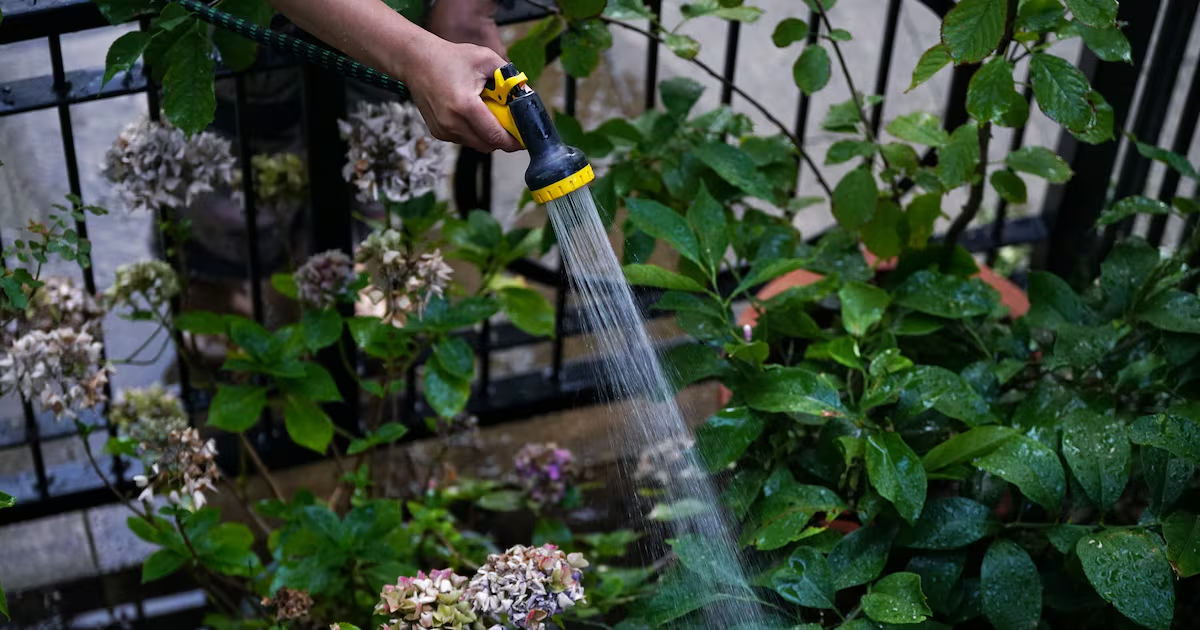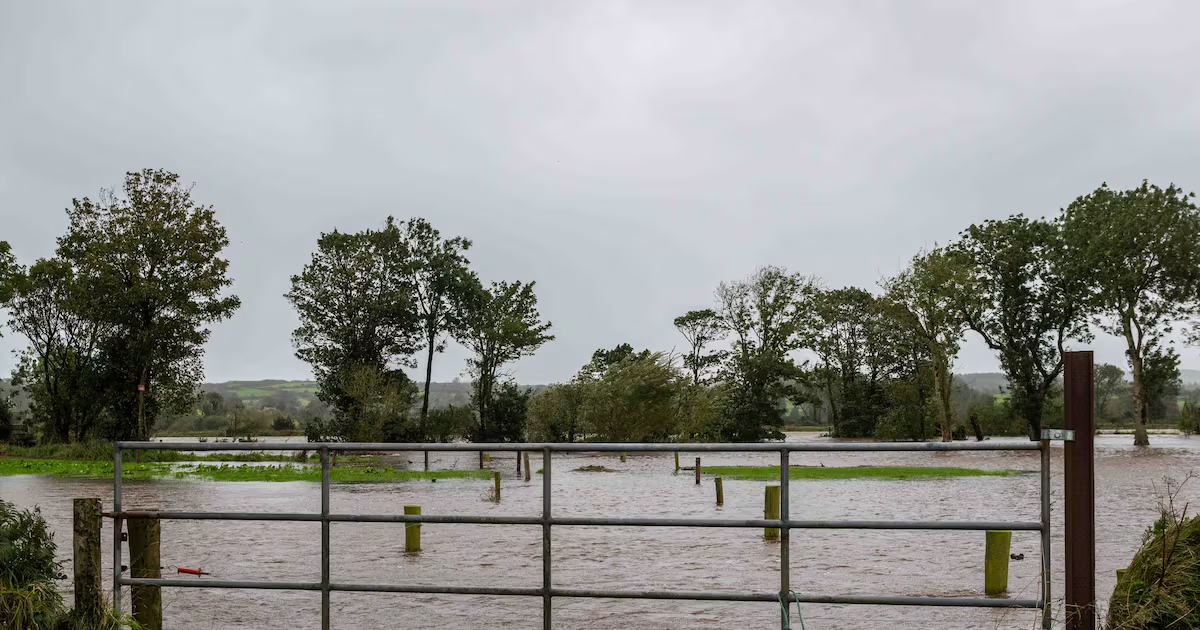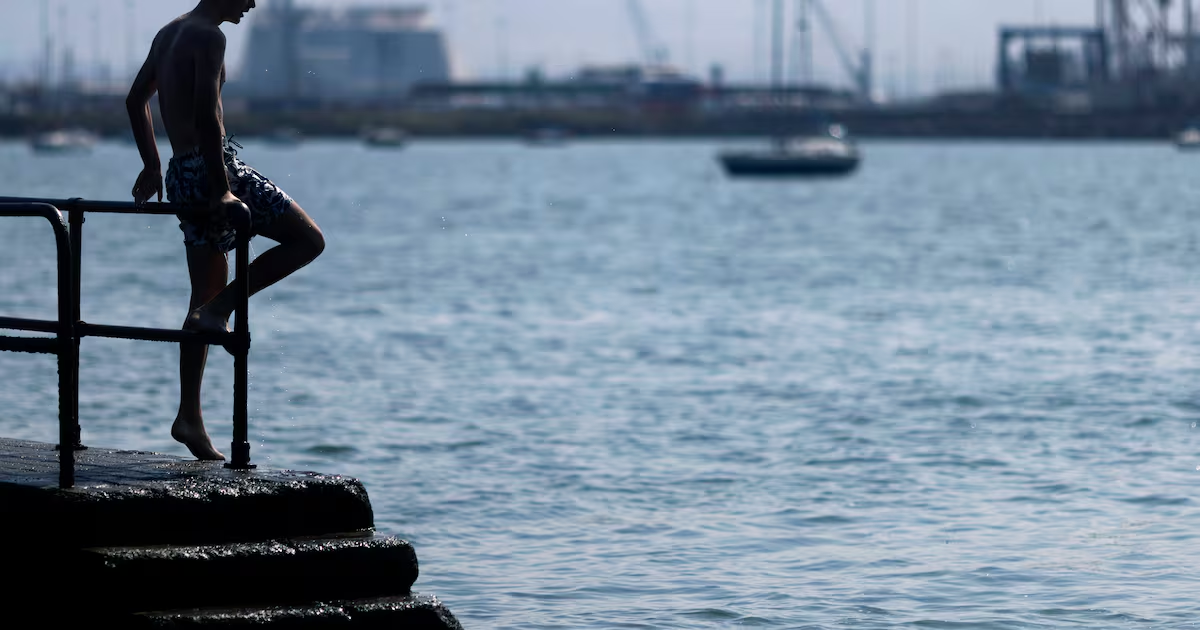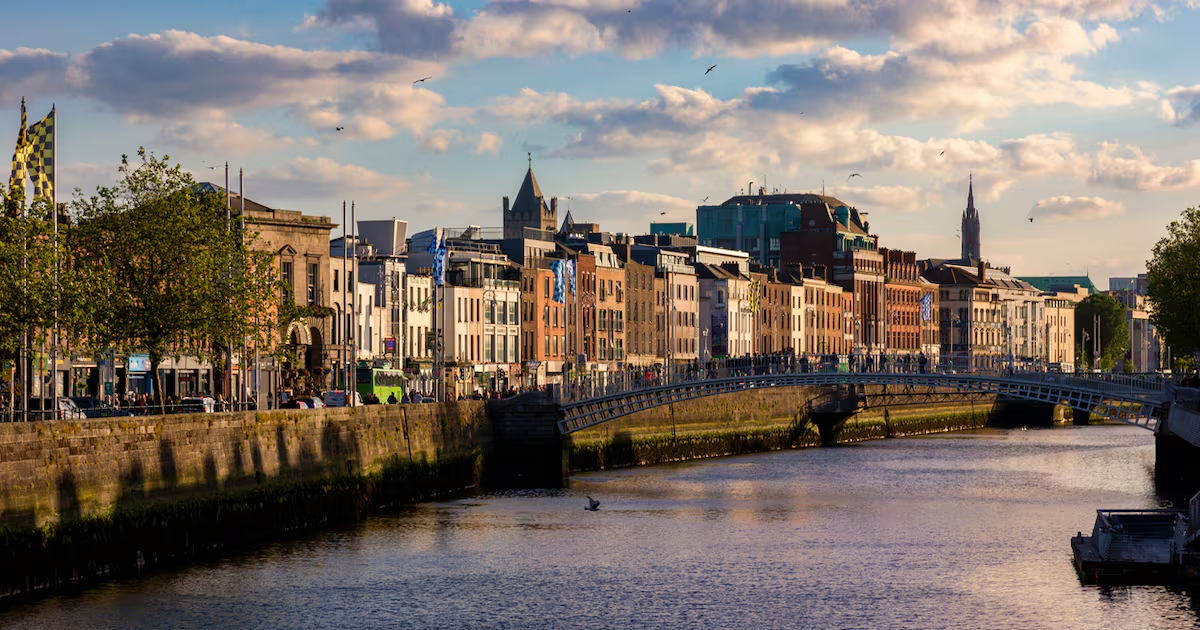
Considering how heavy rain overwhelmed our homes, businesses, roads and rivers earlier this year, it can feel strange to talk about a lack of drinking water. Yet this apparent contradiction sits at the heart of Ireland’s water reality: we can have too much water and still face serious risks to reliable supply where and when people need it.People often ask how a rainy country like Ireland, where flooding unfortunately is becoming more frequent, can face water shortages or drought. January 2026 was one of the wettest months on record and yet pressure on drinking water supplies nationally continues to grow.The issue is not how much water we have but how we store water in times of plenty and ultimately how resilient our system is in managing weather extremes.The reality in 2026 is that Ireland’s water infrastructure reflects decades of underinvestment, climate change and growth in demand. More intense rainfall, longer dry spells and greater demand from a growing population and economy are all placing strain on systems that were never designed for this level of demand and climate volatility.At the same time, Ireland needs to deliver 300,000 new homes by 2030, and continue to support businesses and foreign direct investment, something that will not be possible without expanded and resilient water services.For most people, water works best when it is invisible – safe, reliable and there when you turn on the tap. We only notice it when something goes wrong: a burst main, a weather event affecting a treatment plant or restrictions during dry periods. Building resilience is about preventing those moments through long‑term planning and collaboration, not short‑term fixes.Nowhere is this challenge more acute than in the eastern and midlands region, including the Greater Dublin Area. Around 1.86 million people in this part of the State depend on a couple of sources and most heavily on a single source, the river Liffey, for drinking water. The river Liffey is the 19th largest river in Ireland and every year 40 per cent of its flow ends up in our pipes, providing 85 per cent of the daily drinking water needs to the Greater Dublin Area. Even with continued leakage reduction, that level of reliance on a single source leaves communities and the wider economy exposed to contamination, equipment failure or severe weather events. In a changing climate this is not sustainable and it is not a risk the country can afford to take. [ Councils warn of risks to tourism and agriculture from Shannon water projectOpens in new window ]That is why Uisce Éireann developed a 25-year National Water Resources Plan, the first evidence‑led, long‑term strategy to secure Ireland’s drinking water future. Before this plan, there was no national framework to answer a basic but critical question: will we have enough water and the correct assets in the right places at the right time to support people, communities, industry, agriculture and the environment?The plan examined population growth, housing demand, economic activity, agriculture, climate change, rainfall patterns and the capacity of our rivers, lakes, reservoirs and groundwater. It assessed infrastructure needs across treatment plants, pipelines, storage and alternative supply options.The conclusion of the plan for the eastern and midlands region, independently reviewed, was clear. More than 500 water supplies were analysed and over a thousand potential options were tested for environmental impact, cost, risk and deliverability. The Water Supply Project to draw supplies from the Shannon system at Parteen Basin will be one of the largest infrastructure investments in the State’s history, estimated to cost €4.5 billion-€6 billion. Drawing a small, carefully managed abstraction from the Shannon system at Parteen Basin, offers the greatest resilience benefit to the largest number of people, with the least environmental impact and it directly benefits Tipperary, Offaly, Westmeath, Meath, Wicklow and Dublin. There is no other credible alternative that can meet the scale of need identified, with demand for water in the region expected to rise by about 40 per cent by 2050. This is not about “taking over” a river. It is about using a tiny fraction of an abundant resource, often described as a tablespoon from a pint, to safeguard essential services for decades to come for almost half of the population, while underpinning population growth, economic growth and future foreign direct investment.Some ask why we do not simply build new reservoirs instead. The reality is that suitable sites are rare, environmental standards are rightly high and many of the best locations were developed more than a century ago. Damming valleys and flooding homes and villages to build reservoirs during a housing crisis is not a viable option. It is more sustainable and less disruptive to move water carefully from where it is abundant to where it is needed.Climate resilience also means looking beyond drinking water supply alone. Photograph: iStock Climate resilience also means looking beyond drinking water supply alone. Flooding earlier this year highlights the pressure on older urban drainage systems during intense rainfall, particularly in urban areas where rainwater and wastewater share the same pipes. Nature‑based solutions are about working with nature rather than against it. Measures such as wetlands, green spaces, permeable surfaces and sustainable drainage allow rainwater to soak into the ground, slow its journey through the system and reduce pressure on sewers and rivers during heavy rainfall. As well as lowering flood risk, they deliver wider benefits, from cleaner water and healthier ecosystems to greener, more liveable towns and cities.Ultimately the challenges in providing a resilient water and wastewater service to communities is being exacerbated by climate change and means that a collaborative approach is required to solutions, bringing together Uisce Éireann, local authorities, planners, developers, regulators and communities.The lesson from recent weather extremes is not that Ireland lacks water, but that we must manage it far more intelligently meaning having the right assets in the right place. Resilience means planning ahead, investing based on evidence, and working together across society for the benefit of all. That work is now under way and it is essential if we are to protect communities and adapt confidently to a changing climate.Sean Laffey is executive director of asset management and sustainability at Uisce Éireann
Ireland’s water challenge isn’t shortage – it’s resilience
State’s water infrastructure in 2026 reflects decades of underinvestment, climate change and growth in demand
1,023 words~5 min read