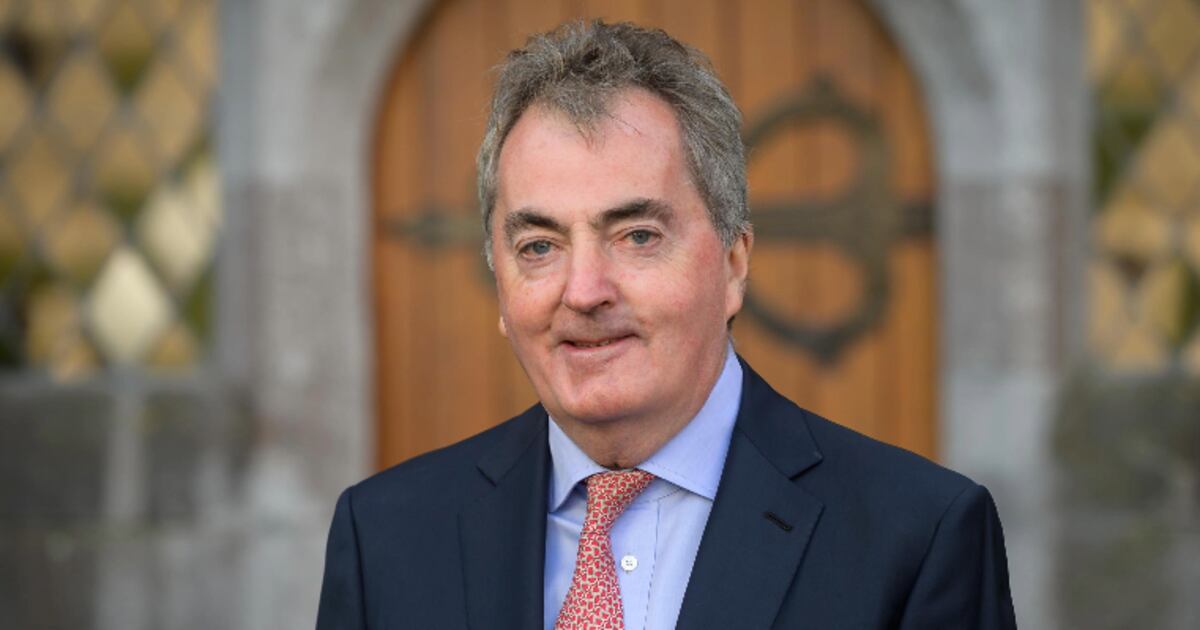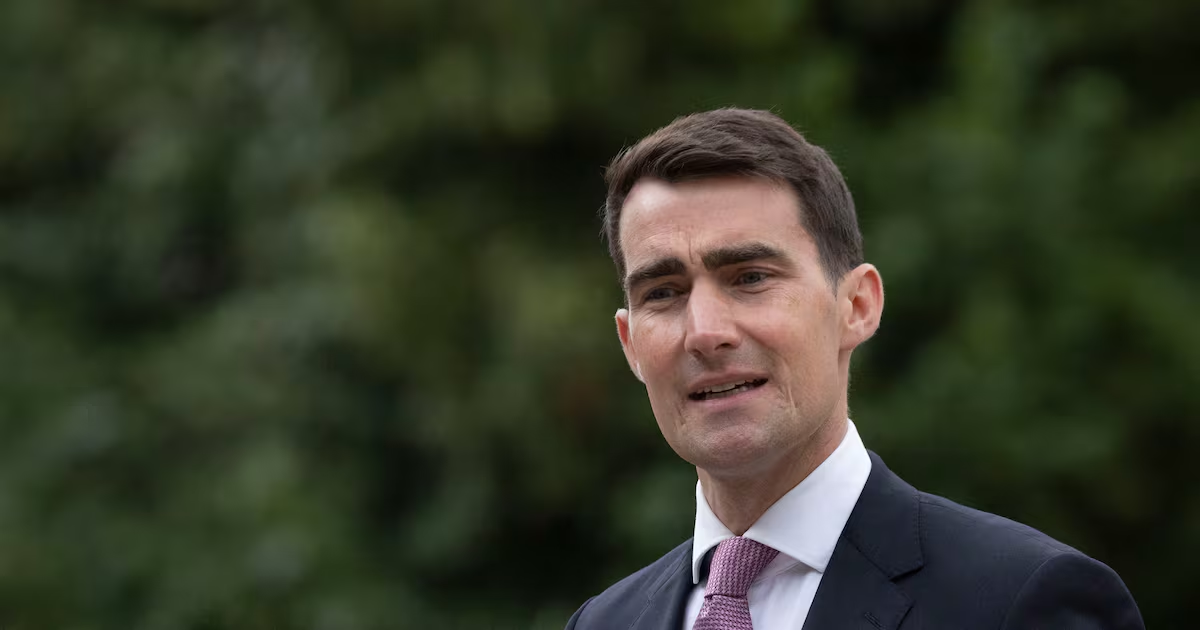
Top-ranking Government adviser Sean O’Driscoll made waves in January when he said Ireland was losing billions of euro in new jobs projects because global companies cannot access electricity and infrastructure. Six months later, O’Driscoll is adamant that new planning laws and legal reforms herald decisive progress in the quest to boost creaking national infrastructure. But he insists more needs to be done to tear down the barriers to delivery, saying local authorities, utilities and regulators must step forward with action to quicken their work. “Sometimes you can be pennywise and billions foolish,” O’Driscoll says of the State’s approach to big projects over the years. He goes on criticise the impact of sweeping environmental laws, saying they have been “weaponised against us” when it comes to infrastructure projects that have held back industry and housing. “To be fair to the Greens, who were responsible for a lot of this climate legislation, it was very well-intentioned. But it was so expansive and so extensive that it just gave rope for serial objectors to just tie the whole system up in knots,” he says.“Whatever the European directives are, they will be adhered to. But it is where we have gone way, way in excess of that – that’s where they will be rolled back.”Sean O’Driscoll: 'The oldest trick in the book that they have been using to get around statutory timelines is a thing called RFIs – requests for further information.' Photograph: Provision O’Driscoll is a former chief executive of electrical goods giant Glen Dimplex. Last month he finished his second term as chairman of the Economic and Social Research Institute (ESRI), the public think tank. Minister for Public Expenditure Jack Chambers made him chairman of an infrastructure taskforce in May last year, charged with bringing forward an ambitious master plan to unclog energy, water and transport projects. “There’s huge momentum,” he says, citing recent the enactment by a large Dáil majority of the Critical Infrastructure Bill to speed designated public projects and exempt them from national climate goals. “That demonstrates cross-party support and it also, in my view, reflects public opinion,” he adds, saying climate measures passed with good intentions spurred objectors to delay and block key projects. Caps on legal costs borne by the State in environmental cases are already having an impact, he says. Citing An Coimisiún Pleanála figures, he says the number of new judicial review planning actions dropped to 51 in the first half of this year from 88 in the same 2025 period. New draft planning laws to reduce delays are welcome. “That’s a very, very significant piece of legislation,” O’Driscoll adds, saying expected enactment before the summer recess is akin to moving at “the speed of light”. An ongoing review of environmental impact assessments presents an opening to dismantle what he describes as unnecessary hurdles. Such assessments evaluate the environmental aspects of projects before they go ahead but O’Driscoll argues Ireland has “gone to extreme” when transposing European directives into national law – to the extent that measures are used “tactically” in litigation. Although EU directives require environmental impact assessments for wastewater plants serving more than 150,000 people, Irish law sets the limit at 10,000 people. There were 253 environmental impact assessments in Ireland in 2022. “In Germany, which is a country of nearly 18 times the population of Ireland, they did 217. In Denmark, which is a country slightly larger, about 10 per cent larger than us population-wise, they did eight,” O’Driscoll says. “If it comes to a standout country that gets infrastructure right, gets long-term planning right, that it gets the renewable energy right, it’s Denmark,” he adds.“In my view, there’s a direct correlation: 93 per cent of Denmark’s energy comes from renewables. If you get more granular, 55 per cent of its energy comes from wind. Now, they get there and have got there while only undertaking in that year – in 2022 – eight environmental impact assessments. “They get on with it – and they don’t allow environmental legislation to be weaponised the way we have done up to now.”But what of those who say it was right to have laws in the interests of Ireland’s environment? “I would just fundamentally disagree with that,” O’Driscoll replies. Noting the settlement of High Court action against the greater Dublin drainage scheme, he says one critical reason for delaying the project was on environmental grounds. “That’s the irony of it,” he says. “For five years, there was waste water going into the waterways of north Co Dublin, damaging the environment.” He sees the ending of the High Court case against MetroLink as another positive steps and notes an acceleration in file processing by An Coimisiún Pleanála. ESB Networks has reported Pleanála decisions within 18-26 weeks instead of the 48-week statutory timeline, he says.This contrasts with the breaching of mandatory deadlines by local councils, utilities, regulators and consenting agencies. “The oldest trick in the book that they have been using to get around statutory timelines is a thing called RFIs – requests for further information,” he says. “So a day before the statutory timeline expires or a week before it, a letter goes out ... with a request for further information and the clock starts all over again.”He criticises the lack of standardisation on local authority planning timelines. “They all operate at different agendas.” He goes to say private energy developers in sectors such as wind and solar power and battery storage have reported “a huge level of dissatisfaction” with how Irish utilities and regulators engage with them.Decisions taken at engineering level – but “not executive level” – were often “disproportionate to the overall national interest”.O’Driscoll says the elimination of a Department of Public Expenditure requirement for “external evaluation” of plans has cut six months from water projects, with similar Department of Transport measures also cutting timelines by many months. He anticipates imminent moves by Cabinet to allow the State assume greater risk in infrastructure projects, the aim being to encourage greater private sector participation.This meant the Government will tell civil servants: “Don’t hide. You can’t hide behind risk aversion any more because we have given you stated guidelines on the level of risk that the state should be undertaking on behalf of the taxpayer.”
‘Pennywise and billions foolish’: Infrastructure chief criticises historic State approach to big projects
Climate legislation was well-intentioned but ‘just gave rope’ to serial objectors, says Sean O’Driscoll
1,039 words~5 min read