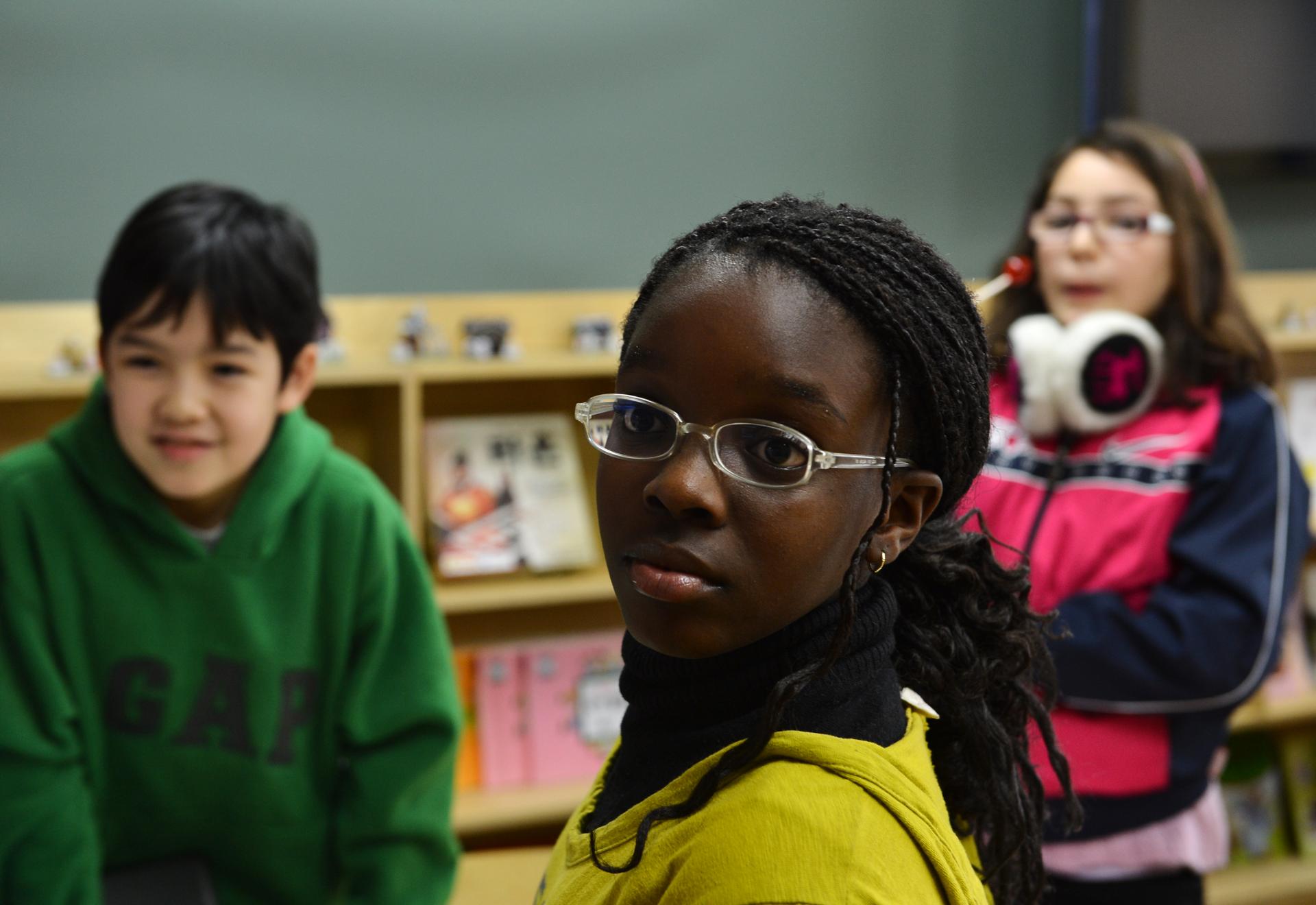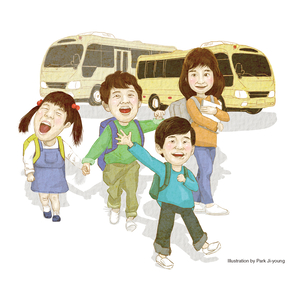
An illustration depicting children going to school (Park Ji-young/The Korea Herald) Having a Korean passport does not necessarily mean a child's family is treated exactly the same as every other Korean household under government policy.In South Korea, children whose families fall under the legal definition of a “multicultural family” may be eligible for additional language, education and childcare support. Some protections extend further: Foreign children without legal immigration status can attend school, while certain children who are undocumented long-term may qualify for temporary legal residence.Here is what parents should know.Who counts as a child of a multicultural family?Under Korean law, a multicultural family is generally one formed between a Korean national and a foreign national or a naturalized Korean.A child born to a Korean national and a foreign spouse will generally acquire Korean nationality at birth. But Korean nationality is not required in every case for a child to fall within the government’s category of a multicultural family.The term has at times drawn criticism for categorizing families according to national or ethnic background. Legally, however, being designated as a multicultural family does not restrict a child’s rights. In some areas, it can make additional support available.Extra help at schoolChildren from multicultural families have the same right to education as other children in Korea.The Elementary and Secondary Education Act requires the central and local governments to take measures to ensure equal educational opportunities for multicultural students, including children from multicultural families and foreign-national students attending Korean schools.Schools and education offices can provide additional Korean-language instruction or operate special classes for students who need help following regular lessons because of limited Korean proficiency. The law also provides a basis for learning support and educational materials tailored to multicultural students.For parents, that means admission to school does not necessarily end the support available. If a child is struggling with Korean or adjusting to classes, parents can ask the school or local education office what Korean-language or tutoring programs are available.Education money for lower-income familiesSome financial assistance is also available.In 2026, the government offered education activity subsidies to children ages 7 to 18 from multicultural families with household income at or below 100 percent of the national median income, excluding children already receiving the separate education benefit.The annual subsidy is 400,000 won ($283) for elementary school students, 500,000 won for middle school students and 600,000 won for high school students. The money can be used for expenses such as textbooks, study rooms, arts and sports activities, vocational training materials and certification programs.Applications for the 2026 program ran from June 1 to June 30, with payments made in points through an NH NongHyup card in August.This year’s application period has already closed, but parents who may qualify should watch for next year’s program.Local governments and family centers also run their own programs, so available support can vary depending on where a family lives.The government-run Danuri portal provides information on services for multicultural families in multiple languages. Parents can also contact the Danuri Call Center at 1577-1366.What if a child has no legal immigration status?A child’s immigration status does not automatically shut the school door.Foreign children living in Korea can attend Korean schools even if they do not hold Korean nationality, and Korea’s education laws provide protections intended to ensure equal educational opportunities for foreign and multicultural students.For some undocumented children who have grown up in Korea, the government also operates a temporary program allowing them to obtain legal status so they can continue their education.The current program runs from April 1, 2025, through March 31, 2028.To qualify, a child must be attending an elementary, middle or high school in Korea, or have graduated from a Korean high school, and meet one of two residency conditions.A child born in Korea or who entered before age 6 must have lived in the country for at least six years. A child who entered at age 6 or older must generally have lived in Korea for at least seven years.The program is particularly important for families whose children have spent most of their lives in Korea but remain undocumented because of their parents’ immigration status.Eligible children and their parents can apply through immigration authorities, with the child’s and parents’ status handled under separate rules. The government advises applicants to check the required documents and individual conditions with the immigration office, as additional documentation may be required.The program is temporary rather than a permanent route available to all undocumented families. Its current application window ends March 31, 2028.For families whose immigration status is uncertain, that distinction matters: A child’s right to attend school and the family’s right to remain in Korea are not the same thing.Parents should therefore seek immigration advice separately rather than assuming that enrolling a child in school automatically protects the entire family from immigration enforcement.
Education support for multicultural children in Korea
Having a Korean passport does not necessarily mean a child's family is treated exactly the same as every other Korean household under government policy. In Sout
799 words~4 min read