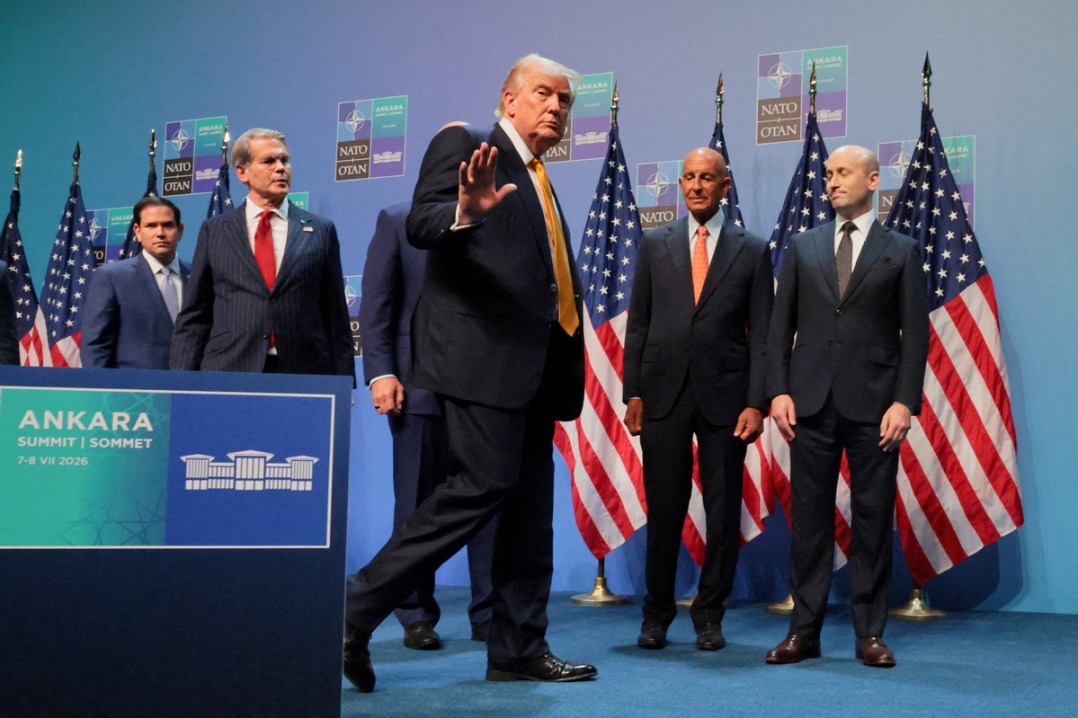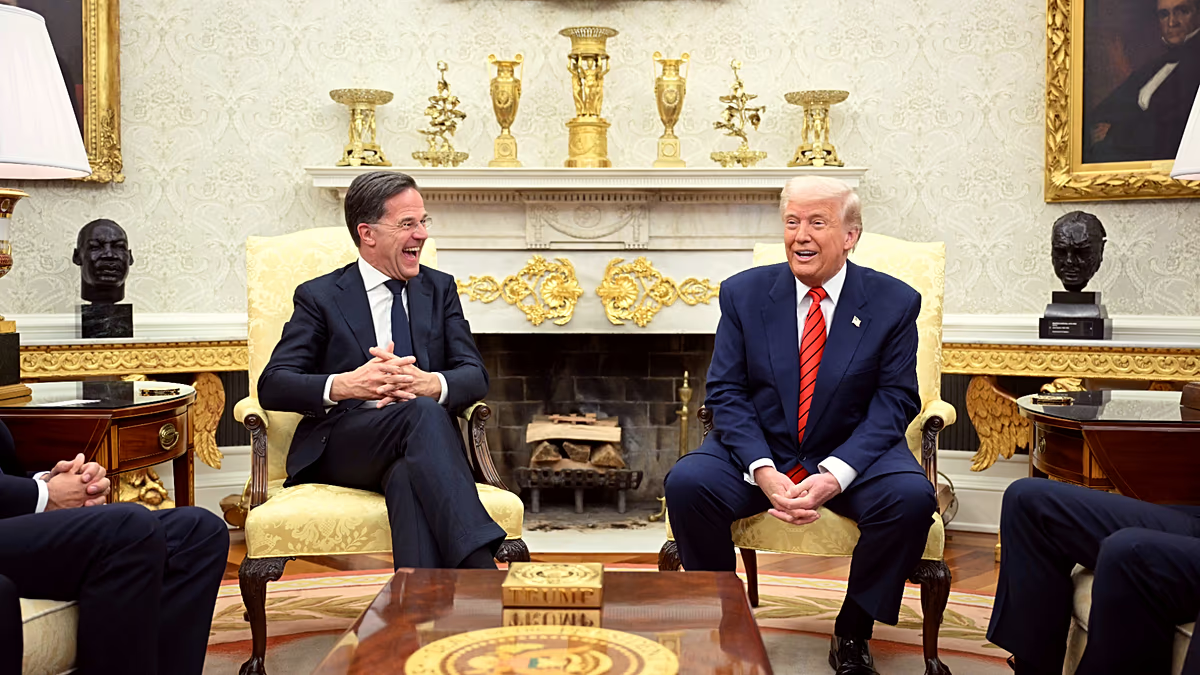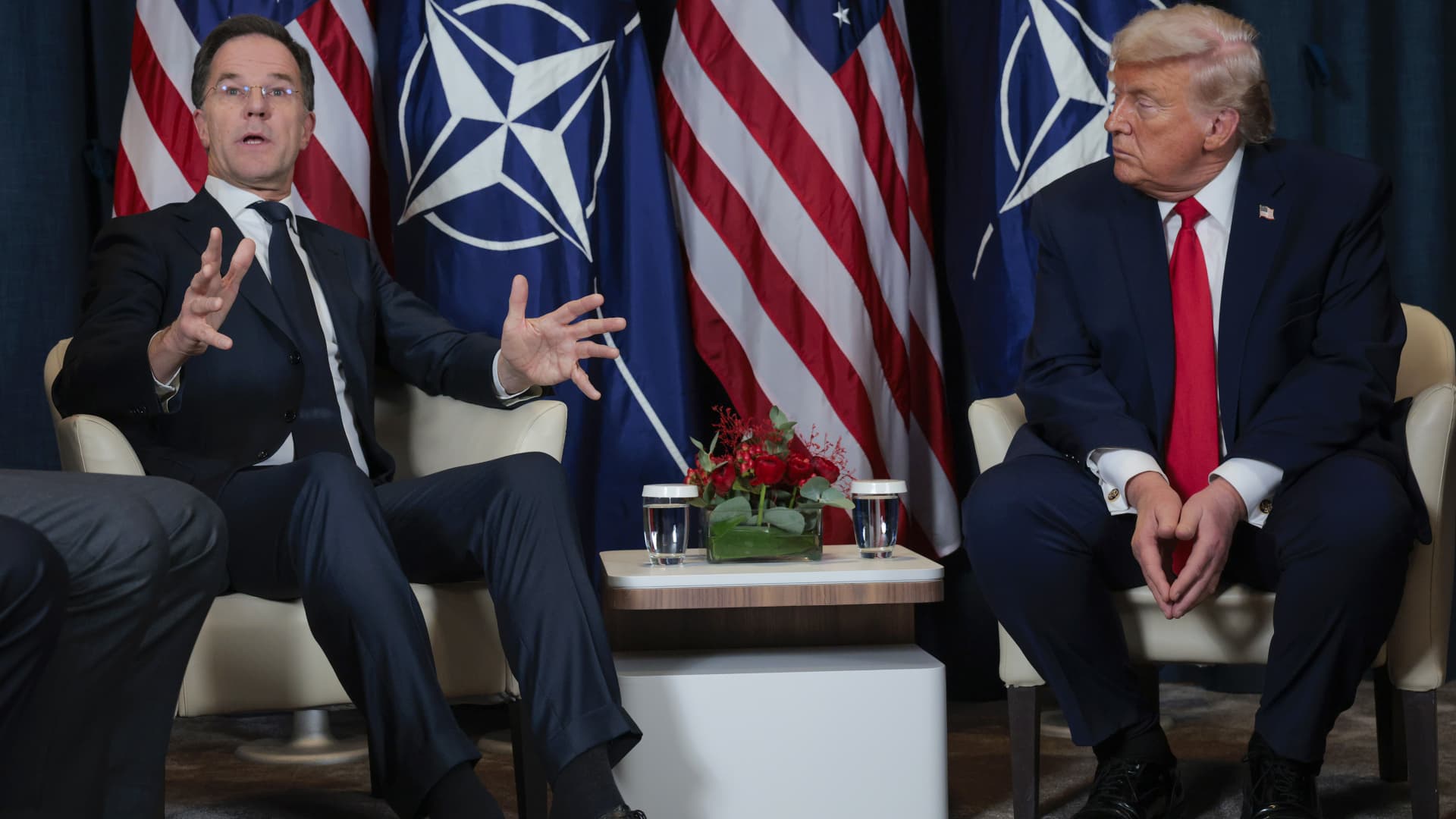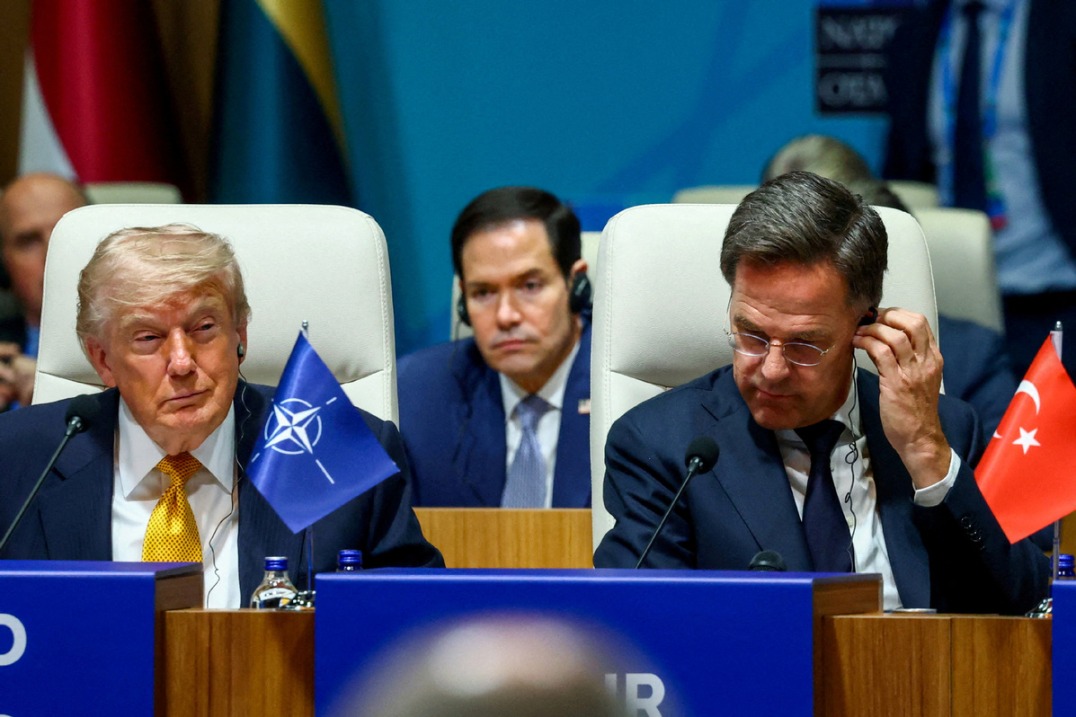
US President Donald Trump, US Secretary of State Marco Rubio and NATO Secretary General Mark Rutte attend a meeting of the North Atlantic Council during the NATO leaders' summit in Ankara, Turkey, on July 8. [Photo/Agencies]
Editor's note: Amid shifting global geopolitics in recent decades, the trans-Atlantic bond is being reshaped. China Daily will present a special series to examine these shifts and their long-term implications.
The trans-Atlantic alliance is facing growing uncertainty and increasingly pressing defense and security-centric challenges in recent years. While Washington has doubled down on its "America First" policy, it has simultaneously demanded that Europe shoulder greater defense responsibilities and called into question the sovereign interests and security of its European allies, analysts said.
Divisions between the United States and Europe over defense burdens, security guarantees and collective defense have hit the headlines from time to time, putting severe strain on the alliance formed after World War II, they said.
By seeking to shift more of the financial and defense-related burdens onto its European allies while reevaluating its own security commitments, the US is fueling growing doubts in Europe over the credibility of its security guarantees and the future of the NATO alliance, even as NATO's institutional framework remains intact, they said.